

Shopify’s one of the biggest names in ecommerce – and it’s easy to see why. Packed with features, it’s a great choice for building, managing and scaling your online store.
But, to be honest, Shopify isn’t for everyone.
Maybe the monthly cost is just too high to sustain. Or maybe you’re tired of those transaction fees or the rigid design controls that are holding you back. Or maybe you’re just curious to see if some other ecommerce platform might be a better fit for your needs.
Whatever the reason, you’ve come to the right place.
Below, I’ve put together the six best Shopify alternatives in 2026 – a mix of different use cases, business sizes and budgets.
6 Great Alternatives to Shopify
| Platform | Best For |
| Squarespace Commerce | Brands focused on design and content |
| Wix eCommerce | Beginners launching small stores |
| BigCommerce | Scaling mid-to-large ecommerce stores |
| WooCommerce | Full customization and control |
| Sellfy | Selling digital products and merch |
| Shift4Shop | Zero monthly fees with US-based sales |
Side by Side Comparison: A Quick Look at the Alternatives
| Platform | Monthly Cost | Free Trial | Best For | Templates | Transaction Fees |
| Squarespace | From $36 | 14 days | Design-first brands | 180+ | None |
| Wix eCommerce | From $27 | 14 days | Beginners and small stores | 800+ | None |
| BigCommerce | From $39 | 15 days | Growing ecommerce businesses | 150+ | None |
| WooCommerce | Hosting costs only | N/A | Full control and flexibility | 1000+ (WordPress) | Depends on gateway |
| Sellfy | From $29 | 14 days | Creators and digital sellers | Limited | None |
| Shift4Shop | $0 with conditions | No (instant use) | Free alternative for US merchants | 100+ | None (with gateway) |
Key Takeaways
- BigCommerce is a good choice if you don’t want to be fiddling with dozens of apps to get the features you want
- Wix is a more affordable and beginner-friendly alternative to Shopify with some really cool drag-and-drop design tools
- Squarespace is ideal for visually-driven brands – but it’s not built for large product catalogs
- WooCommerce is the best choice for developers and marketers who want total control over their store
- Sellfy is a quick and easy platform for creators selling digital files, subscriptions, or print-on-demand products
- Shift4Shop lets US merchants run an online store for free – as long as they use its payment processor
1. Squarespace Commerce: Top Pick for Style-Driven Brands

Overall Rating: 4.2/5
Monthly Price: From $36
Free Trial: 14 days
Squarespace is known for its knocking design templates – but it’s also a solid ecommerce platform – especially good for brands selling pretty products.
Strengths:
- Beautiful templates for creatives and small shops
- Booking and scheduling with Acuity built in
- Great for selling services or small product ranges
- Supports digital products and subscriptions
Weak Spots:
- Limited payment gateways (just Stripe, PayPal and Apple Pay)
- Not so great for large product lists or complicated store layouts
- Fewer third-party integrations compared to Shopify
Pricing:
| Plan | Price (Per Month) | Key Features |
| Business | $33 | Basic ecommerce, 3% transaction fee |
| Commerce Basic | $36 | No transaction fees, full store features |
| Commerce Advanced | $65 | Abandoned cart recovery, advanced discounts |
Business ($33/month):
This plan’s a good starter for service providers or creators with a limited product range. It comes with all the standard website features + basic ecommerce, but there’s a 3% transaction fee to bear.
Commerce Basic ($36/month):
Commerce Basic gets rid of Squarespace’s transaction fees and gives you the full store features including inventory management and customer accounts. It’s a no-brainer if ecommerce’s your main thing.
Commerce Advanced ($65/month):
This plan unlocks advanced marketing tools such as abandoned cart recovery and flexible discounting. It’s best for businesses that are looking to maximise conversions and scale.
If looks are a top priority for your brand and you’re not managing hundreds of products, Squarespace is a solid Shopify alternative.
2. Wix eCommerce – Best for Beginners
Overall Rating: 4.3/5
Price: From $27/month
Free Trial: 14 days
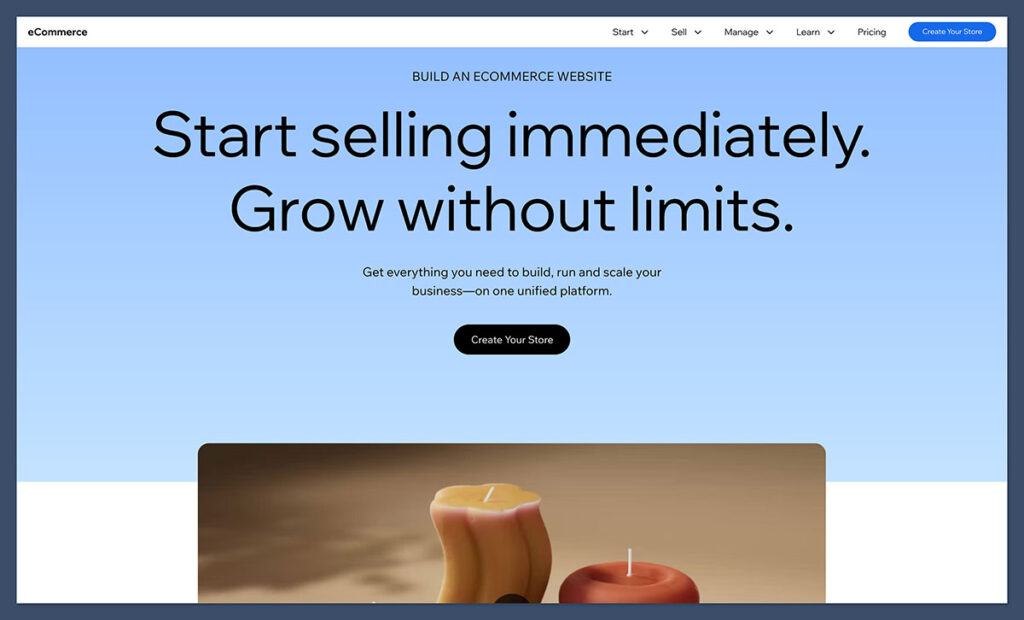
Wix has been a top website builder for ages – and its ecommerce plans are perfect for the total beginners who just want a simple store that looks good.
What Wix Does Well:
- Drag-and-drop tools make it super easy to customise your site
- 800+ professional templates to choose from
- Built-in tools for bookings, subs and events
- No transaction fees on any plan
Where Wix Could Do Better:
- There are probably a few areas where they could improve their platform
- Not suitable for big product catalogs
- Lacks flexibility in comparison to ecommerce platforms like WooCommerce
- Backend can get pretty cluttered
Pricing:
| Plan | Price (Per Month) | Key Features |
| Business Basic | $27 | Accept payments, basic ecommerce |
| Business Unlimited | $32 | Subscriptions, multi-currency, 100GB storage |
| Business VIP | $59 | Priority support, loyalty programs |
Business Basic ($27/month):
This plan is for small businesses with a first store – it’s got all the essentials to accept online payments, unlimited bandwidth, and 20GB of storage. It’s a good fit for those who don’t need advanced sales tools right off the bat.
Business Unlimited ($32/month):
This plan includes more storage (100GB) and the flexibility to sell subscriptions and digital products. You also get a pro logo maker and social media files. It’s best for businesses that need a bit more wiggle room.
Business VIP ($59/month):
The top-tier plan offers VIP support, priority responses and some advanced reporting. It’s perfect for businesses that are growing fast and want some extra insights and faster support without breaking the bank.
If you need to get a store up and running quickly and don’t need all the bells and whistles right away, Wix is a good bet.
3. BigCommerce – Best for Scaling Ecommerce Businesses

Overall Rating: 4.5/5
Price: From $39/month
Free Trial: 15 days
BigCommerce is a powerful ecommerce platform that’s really close in features to what you get with Shopify. It’s made for the big sellers who need to grow their online presence.
What BigCommerce Does Well:
- No transaction fees – even if you don’t use their payment gateway
- Super-advanced SEO tools, including customisable URLs and built-in schema markup
- Multi-channel integrations with the likes of eBay, Amazon, Walmart, Facebook, and Instagram
- B2B features like customer groups, price lists and quote requests are all available
Where BigCommerce Falls Short:
- It’s a bit harder to learn than Shopify or Wix\
- Plans are tied to your annual revenue, so your pricing can jump unexpectedly
BigCommerce Pricing:
| Plan | Price (Per Month) | Annual Revenue Limit |
| Standard | $39 | Up to $50,000 |
| Plus | $105 | Up to $180,000 |
| Pro | $399 | Up to $400,000 |
| Enterprise | Custom pricing | $400k+ |
Standard ($39/month): This entry level plan gives you the basics – unlimited products, multi-channel selling, coupons and discounts, real-time shipping quotes and professional reporting. It’s perfect for new businesses or stores making under $50,000 a year and don’t need the bells and whistles.
Plus ($105/month): You get everything in the Standard plan, plus some really useful features like customer segmentation, abandoned cart recover and persistent shopping carts. This plan is made for growing businesses that want to keep customers coming back.
Pro ($399/month): This plan’s ideal for high-volume sellers who need to get custom SSL certificates, Google customer reviews and some really advanced product filtering. It’s a good fit for businesses with lots of products and complicated product lines.
Enterprise (Custom pricing): This is your go-to option if you’re making over $400,000 a year and want a custom solution. You get priority support, custom API access, and your own team of account managers to help make sure your shop runs smoothly.
BigCommerce is a good bet if you need to scale and don’t want to spend a fortune on extra paid apps just to get the basics working.
4. WooCommerce: Best for Full Control & Tweaking
Overall Rating: 4.4/5
Price: Free (but you pay for hosting etc)
Free Trial: No such thing – you just install and go
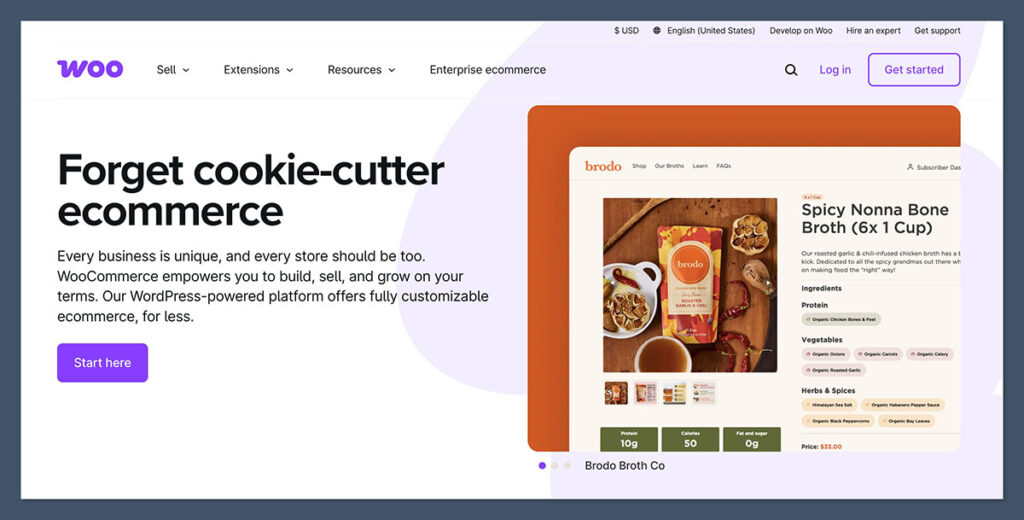
WooCommerce turns any WordPress site into a decent ecommerce store. It’s perfect for those who want full control over everything – design, functionality, hosting… you name it.
Nice Bits:
- Free to use (you just pay for hosting etc)
- Full access to the backend code
- Complex product types, subscriptions and bookings supported
- Loads of extensions and themes to choose from
Not So Nice:
- Requires some tech know-how
- Maintenance is down to you (security, updates, backups)
- Plugin conflicts can be a nightmare if not managed well
Typical Monthly Costs:

| Item | Typical Monthly Cost | Description |
| Hosting | $10–$30 | Needed to run WordPress and WooCommerce |
| Domain Name | $10–$15/year | Purchase separately from hosting or a registrar |
| Premium Theme | $50–$100 (one-time) | Optional, but recommended for professional design |
| Paid Plugins | Varies | Many are free, but premium tools (SEO, payments, shipping) may cost extra |
The plugin itself is free – you just pay for your hosting and any premium plugins or themes. This model gives you total flexibility to customise costs as you grow.
If you’re comfortable managing plugins, backups, and customizations, WooCommerce offers unmatched freedom—without monthly platform fees. You only pay for what you use, and there’s no vendor lock-in.
WooCommerce is the ideal choice if you’re already using WordPress or want to build an entirely custom e-commerce experience.
5. Sellfy: Perfect for Selling Digital Products and Print-on-Demand – but Not Perfectly Polished
Overall Rating: 4.1/5
Price: Ranges from $29/month
Free Trial: 14 days
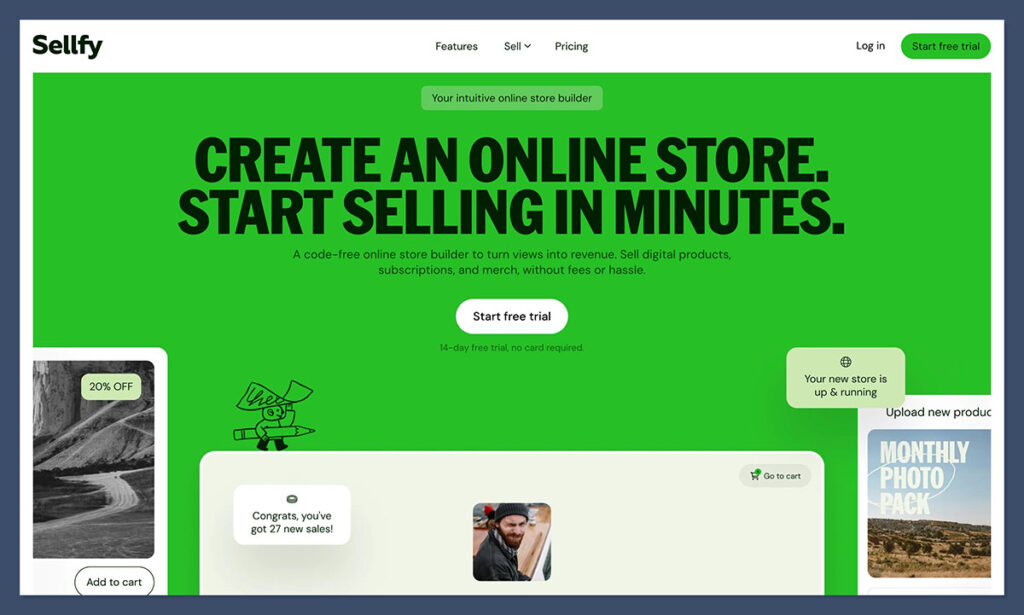
Sellfy is a platform designed specifically for creators. Whether you’re selling digital downloads, physical merchandise, or subscriptions, it’s one of the more user-friendly platforms out there.
What Sellfy Does Well:
- Instant delivery for digital products, which is a major plus for digital sellers
- It’s got built-in print-on-demand integration, making it easy to get started with POD sales
- Sell via your own domain or embed your store – lots of flexibility here
- No transaction fees – a big win for sellers
Where Sellfy Could Improve:
- Limited options for customizing your store – it looks pretty standard out of the box
- It’s not as feature-rich as some of the other big names in e-commerce like BigCommerce or Shopify – which can be a drawback for sellers with more complex needs
- Fewer design templates and app integrations – which can make it harder to customize and extend your store
Pricing:
| Plan | Price (Per Month) | Key Features |
| Starter | $29 | Up to $10k/year in sales, digital & physical products |
| Business | $79 | Up to $50k/year, email marketing tools |
| Premium | $159 | Up to $200k/year, product migration support |
Starter ($29/month):
The Starter plan gets you up and running quickly – with no transaction fees for either digital or physical products. It includes discount codes, embeddable buy buttons, and the ability to connect your own domain.
Business ($79/month):
This plan adds some serious firepower – including cart abandonment recovery, upsell features, and email marketing automation. It’s perfect for sellers who want to grow their audience and increase order value.
Premium ($159/month):
With priority support and free migration assistance, the Premium plan is designed for high-volume sellers who are raking in up to $200,000 in annual revenue. It’s the most hands-off plan for established digital businesses and creators.
If you’re a content creator or artist selling digital goods or merchandise, Sellfy is one of the fastest platforms to get up and running with.
6. Shift4Shop: Best Free Shopify Alternative (US Only – With a Catch)

Overall Rating: 4.0/5
Price: Free (with Shift4 Payments) – But Only for US Based Businesses
Free Trial: None – so you’re good to go straight away
Shift4Shop (formerly 3dcart) is a free e-commerce platform that’s only available to US businesses who use its built-in payment processor.
What Shift4Shop Does Well:
- No monthly fees – which is a big win for budget-conscious businesses
- It comes with over 200 built-in features – which is a lot
- Free SSL, unlimited bandwidth, real-time shipping tools – all included
- SEO-friendly URLs and structure – to help you rank higher in search results
Where Shift4Shop Could Improve:
- The interface is looking a bit dated compared to some of the other platforms out there
- Limited support and a pretty steep learning curve – which can be a pain for new sellers
- Only free if using Shift4 Payments (US only) – so not ideal if you want to use a different payment gateway
Pricing:
| Plan | Monthly Cost | Requirement |
| End-to-End | $0 | Must use Shift4 Payments |
| Paid Plans | From $29 | For non-US or non-Shift4 users |
End-to-End ($0/month):
Available only to US merchants using Shift4 Payments, this plan includes all the features you’d want for a basic e-commerce store – including unlimited products, real-time shipping, SEO tools, and advanced reporting – all completely free.
Paid Plans (from $29/month):
If you’re outside the US or prefer a different payment gateway, paid plans unlock the same ecommerce features with no revenue limits – but only if you’re willing to pay.
Shift4Shop is one of the few legit options for running an ecommerce store for free – but only if you’re based in the US.
What is Shopify?
Before we dive into our list of the best Shopify alternatives, it’s worth taking a moment to define Shopify itself.
- Shopify is one of the most popular ecommerce platform providers in the world today.
- The cloud-based platform is user-friendly and feature rich, with various options for companies of all sizes and backgrounds.
- You can migrate your existing website to Shopify to boost your chances of sales, or add a sales button to your website on another platform.
- Merchants can use Shopify to accept payments in a range of currencies, and sell virtually anything they can think of.
- The platform even supports multi-channel selling, with a free domain for your website, POS solutions for brick-and-mortar locations and integrations with social media channels.
- With Shopify, you get everything you need to build a scalable store built into one package, from website templates and marketing add-ons, to payment processor tools and inventory management.
What to Look for when Choosing a Shopify Alternative?
For ecommerce companies, Shopify stands out as one of the best ecommerce platforms available. There are countless built-in features to explore, as well as easy-to-use interfaces to make your life easier. However, it does have some downsides, such as additional transaction fees if you’re not using Shopify payments, and expensive enterprise plans.
When looking for a Shopify alternative, you’ll need to think carefully about what you need from your platform.
Some important points to consider include:
- Feature options: A wide range of features in your ecommerce platform will make it easier to build and scale your business. Make a list of the features important to you, such as omnichannel selling, multiple currencies, dropshipping integrations and so on. This way you’ll ensure you selecting the right service for your specific needs.
- Customer support: Even if you have quite a lot of experience running an ecommerce store, there’s a chance you’ll need help from time-to-time. There are dozens of platforms out there which provide exceptional chat, email, and phone support. You can check the quality of the service you’ll receive through review sites like Capterra and G2.
- Pricing: Although there’s more to choosing a great ecommerce platform than pricing, we all have budgets to consider. Make sure you’re getting great value for money, by comparing the feature set to the price you’ll be paying. Check for any add-on expenses you may need to consider, like payments for premium themes, add-ons, or transaction fees.
- Shipping options: The right logistics features will be crucial for any business selling physical products. Make sure you can choose from a wide range of different shipping options for your clients, including next-day and 2-day delivery where possible. An ecommerce platform that partners with a range of well-known shipping companies is often a good choice.
- Ease of use: Simplicity is essential when you’re building an online store. You’ll need to ensure the solution you choose is straightforward, convenient, and robust. The more complicated the technology, the more time you’ll need to spend learning how to use it. A complex solution can also mean you need to pay more for help and maintenance.
Final Thoughts – Which Shopify Alternative Is Right for You?
There isn’t a single “best” Shopify alternative – your choice depends on your store size, technical comfort, and what you’re actually selling.
Here’s a quick summary:
- Choose BigCommerce if you want Shopify-level power with better SEO and fewer apps to worry about.
- Choose Wix if you’re just starting out and want a simple, visual builder that’s easy to use.
- Choose Squarespace if branding and design are top priorities – but don’t expect to sell a ton of products.
- Choose WooCommerce if you want total control and flexibility.
- Choose Sellfy if you’re a creator selling digital or print-on-demand products.
- Choose Shift4Shop if you’re a US merchant who wants to run an e-commerce store for free – but only if you’re using its payment processor.* If you’re in the US and on the lookout for a free option, then Shift4Shop is one to look at.
Each of these platforms has its own unique pros and cons – what really matters is figuring out which ones fit your needs best.
Rather than take our word for it the best thing to do is look into their free trials and get a feel for what their dashboards have to offer in person.
Best Shopify Alternatives: FAQ
What are the best Shopify alternatives for large business?
There are a lot of things to consider when choosing the perfect Shopify alternative. The kind of website that you’re building will play a big part in finding the tool that works best for you. If you’re a particularly large company that needs to sell to customers around the world, you’re likely to have a better experience with solutions like BigCommerce and Magneto, than you would with Wix or Weebly.
What are the best open source Shopify alternatives?
Choosing the right Shopify competitor isn’t just about looking for something simple like Ecwid, or finding something that supports Shopify payments. If you’re looking for a Shopify alternative that gives you more freedom to customize, then you might want to opt for an open-source service, rather than something that’s hosted. WooCommerce and Magento, for instance, are both excellent open source tools which give you complete freedom over your website.
What is the best free Shopify Alternative?
There are a couple of free alternatives to Shopify available on the market today. Just keep in mind that although these tools appear to be free at first, they will come with costs for your online store, such as the price of premium wordpress plugins, or transaction fees for shopify payments. Square Online is one of the best free options for people who already take payments in-store and in person with a Square point of sale solution.
What is a cheaper Shopify Alternative?
When searching through tools like Ecwid, BigCommerce, Shift4Shop, Volusion, and more, you’re probably going to be keeping a close eye on the tools that match your budget. There are a more cheaper Shopify alternatives out there, from Weebly to WooCommerce. However, Big Cartel is one of the cheapest of all.



Shopify is at least one of the top eCommerce platforms for creating and managing online stores today. Of all the alternatives in this article, Wix, Weebly, WooCommerce are the best. Thanks for sharing this nice article.
👍👍👍
Thanks for sharing shopify alternatives, however i am using shopify for last 3 years and i have a great experience in shopify but i also love wix platform, its an easy and good platform! Thank you.
Awesome, thanks for sharing! 🙂
I’m looking at starting an online boutique for women and children. I like the idea of invoicing through a website, accepting multiple payment options, lowest transaction fees, cheapest fees per month, extensions for rewards for customers, etc. What are your top choices for me and why? Thanks!
Hello Christina, Shopify would be the best option for starting an online boutique, but Square Online and Wix could be some great options as well.
Hi Catalin,
we have a company in South Africa and like to sell up to 20 different non-alcoholic beverages (amount of beverages is growing) via an online shop. Which platform would you recommend?
Thanks for your support,
Palle
Hello Palle, in your case, I would go with Wix. Good luck with your business!
Hi i want to start a business selling T shirts and other thing with PrintFull, what of these is the best options that works with PrintFull, consider that i want PayPal like my Main payment method.
Hello John, I’m not sure I understand your question.
Which platform is best that accepts Paypal payments but is for small startups – about 7 items only
Hello, you can use PayPal with any of the platforms listed here. In your case I would go with Weebly or Big Cartel.
Hi!
I would like to start my eShop in Hungary. Which is the Top3 you would suggest from the known platforms and what are their pros/cons? Goal is to buy goods in other country (member of EU) cheap and sell it in Hungary (also EU member) on a real price. I do have contact to shipping company too and I would like to offer online payment too.
Thanks in advance!
Z
Hello,
Hello Soltan,
My top three would be Shopify, BigCommerce and Squarespace.
Good luck with your business!
–
Bogdan – Editor at ecommerce-platforms.com
Hi Catalin!
What would you recommend for selling coffee online?
Thank you!
Hello Jimmy,
If you’re on a bugdget you may start with Big Cartel (see our review here). They have a free plan if you sell 5 products or less.
–
Bogdan – Editor at ecommerce-platforms.com
Hi and thank you, Bogdan! I have been searching for this type of info for some time now. Greatly appreciated!
Glad you liked it Candy 😉
Hey I can’t use my Shopify payment Gateway because of some reasons Could you give me the best payment gateway I could use There’s too many Gateway’s to choose from and most of them I seen have bad complaints and bad review thanks.. (Located in the US)
Hi Jaques, You might consider using 2Checkout or PayPal. See our full 2Checkout review here and our PayPal review here.
Best,
–
Bogdan – Editor at ecommerce-platforms.com
Hello! I am in the beginning stages of starting a business selling early years (0 to 6) nature based, Waldorf inspired curriculum/resource packages. The target audience is both families and educators. These packages include original recorded songs, poems and stories along with lyrics, activities related to the five senses and craft suggestions. They will be available to purchase monthly, seasonally or yearly. I was curious if you could suggest the best online distributor to use! Thank you in advance!
Hi Mikel, I am trying to set up a website for a supplement product line with 5 products only. I will need a payment system, several tabs to house the text and youtube video, rather than many space for new products. In my case, which e-commerce site would you recommend? Thanks for your feedback.
In your case, LemonStand might be a good option. You can read our full review here.
Best,
I have a problem with shopify in that, apparently, it cannot calculate my VAT or give me a current stock holding valuation meaning I will have to do manual stock takes, whats the point of doing all the work to switch to a new system when it doesn’t offer this vital but very basic feature ! Does anybody know of another platform that does offer this feature ?
Hi Oliver, have you tried contacting their support?
–
Bogdan – Editor at ecommerce-platforms.com
my friend has it and she said it works perfectly with the stock count and billing info
Hello Catalin,
Which one would you choose or recommend to start a drop shipping store?
Thank you,
Hi Oscar,
I would go with Shopify 🙂
Check out this post for more info.
Cheers!
–
Bogdan – Editor at ecommerce-platforms.com
Hi Catalin! Thank you very much for all the useful info. I was planning to use the Shopify Buy Button on e-commerce site that has been already created, but payments are not supported in my country. Do you if any of the mentioned platforms offers a similar solution? Thank you very much again!
Hi Mikel, where is your business based?
Hi Bogdan! Is based in Spain. I’ll really appreciate any advice. Thank you very much!
Only Shopify Payments are not accepted in Spain but you are free to use an external payment gateway (you’ll pay a 2% transaction fee). Most of the major payment gateways are supported in Spain. Check out the complete list here
Cheers!