

Selz and Squarespace are two very different ecommerce solutions — one designed as a simple selling tool, the other as a full-featured website builder with integrated store capabilities.
But which one is the smarter choice for your online store?
I’ve tested both platforms and spent over 40 hours reviewing their pricing, features, usability, and marketing tools. Based on that testing, Squarespace is the clear winner for anyone starting or scaling an online business today.
Selz — while easy to use — has been in limbo since Amazon acquired it in 2021, and its future is uncertain. That makes it risky for new sellers.
Selz vs Squarespace: Quick Verdict
Squarespace – Best overall, ideal for building a professional brand with ecommerce tools.
Selz – Best for quick, simple selling (but not recommended for new stores due to limited updates).
Quick Comparison: Selz vs Squarespace
Get an instant side-by-side look at the two platforms:
| Feature | Selz | Squarespace |
|---|---|---|
| Best For | Quick product sales | All-in-one website + store |
| Pricing | $29–$199/month (before Amazon) | $16–$49/month |
| Templates | Limited | 140+ professional designs |
| Digital Products | Yes | Yes |
| Subscriptions | No | Yes |
| SEO Control | Limited | Advanced |
| Blogging | No | Yes |
| Support | Basic email/live chat | 24/7 live chat + knowledge base |
| Scalability | Low | Moderate to high |
Best for Pricing: Squarespace
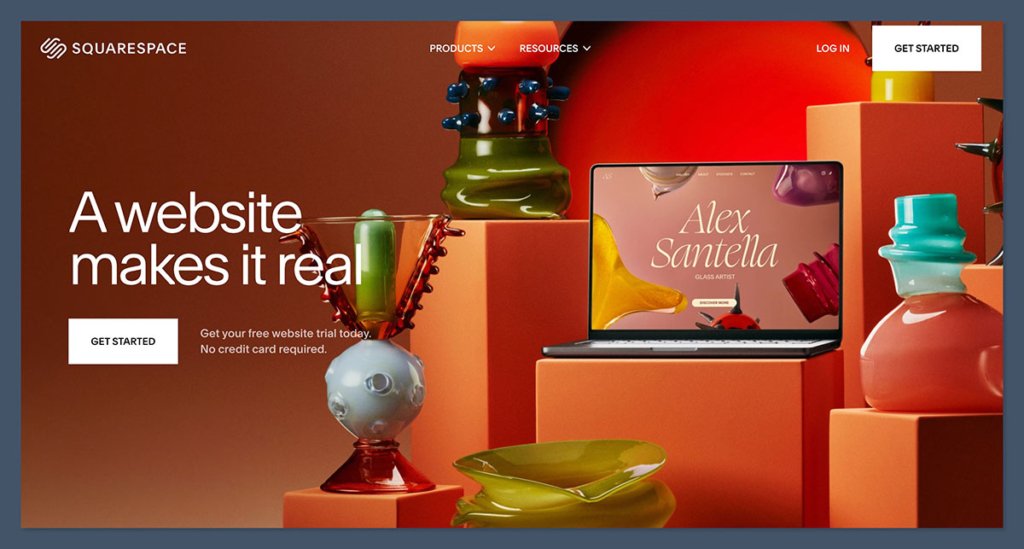
If you’re looking for affordability with long-term value, Squarespace wins here — not because Selz was overpriced, but because it’s no longer competitive.
Selz’s pricing (before the Amazon buyout):
- Basic: $29/month – 2% transaction fees, basic ecommerce tools
- Standard: $59/month – More payment options, reduced fees
- Advanced: $199/month – Advanced analytics, extra staff accounts
Squarespace’s pricing (billed annually):
- Personal: $16/month – No ecommerce
- Business: $27/month – Ecommerce with 3% transaction fee
- Basic Commerce: $36/month – No transaction fee, basic ecommerce features
- Advanced Commerce: $49/month – Subscriptions, advanced shipping, abandoned cart recovery
What I noticed in testing:
Squarespace includes hosting, design templates, SEO tools, and ecommerce in its price. Selz often required additional third-party tools for features like marketing, which added cost.
The Winner
Squarespace offers more value and predictable pricing for businesses that want growth potential without jumping platforms later.
Best for Selling Online: Squarespace
When it comes to ecommerce features, Squarespace is miles ahead for most businesses in 2025.
Both Selz and Squarespace allow you to:
- Sell physical and digital products
- Accept credit card and PayPal payments
- Offer discount codes
- Track inventory
Where Squarespace pulls ahead:
- Subscriptions – Sell recurring services or products directly from your store
- Advanced shipping – Calculate real-time rates and set rules
- Abandoned cart recovery – Email customers who leave items behind
- Better SEO control – Customize URLs, titles, and meta descriptions
Selz’s main advantage was speed — it was incredibly quick to set up a product and start selling, especially digital downloads. But Squarespace’s deeper feature set makes it a better long-term home for your business.
The Winner
Squarespace’s sales tools are more advanced and better integrated with marketing, making it the smarter choice for growth.
Best for Templates and Design: Squarespace

Your store’s design impacts trust and sales. Squarespace is famous for its premium, mobile-friendly templates.
Squarespace:
- Over 140 templates for different industries
- Fully responsive on mobile
- Drag-and-drop customization
- Integrated with ecommerce out of the box
Selz:
- Limited number of themes
- Less control over customization without coding
- Designs functional, but not brand-defining
When I tested Squarespace, I could preview templates by industry, switch them anytime, and customize colors, fonts, and layouts without touching code. Selz kept things simple but lacked that level of creative control.
The Winner
Squarespace offers modern, stylish, and customizable templates for a professional brand presence.
Best for Marketing and SEO: Squarespace
Marketing is what drives traffic and sales. Here’s the breakdown:

Squarespace marketing tools:
- Built-in email campaigns
- Social media integrations (Instagram, Facebook, TikTok)
- SEO-friendly blog
- Promotional pop-ups and banners
Selz marketing tools:
- Basic discount codes and sales tracking
- Facebook and Instagram store integration
- Limited SEO editing
In my testing, Squarespace’s blog and SEO tools gave it a major edge — blogging alone can drive significant organic traffic, which Selz can’t match without third-party integrations.
The Winner
Squarespace has a complete toolkit for promoting your products, attracting traffic, and ranking in search engines.
Best for Payment Gateways: Squarespace
Being able to offer customers multiple payment methods is essential for increasing conversions.
Selz payment options (before Amazon acquisition):
- Supported Stripe and PayPal
- Allowed major credit/debit cards
- Instant digital product delivery on payment
- Limited to the two main gateways, with no native “buy now, pay later”
Squarespace payment options:
- Supports Stripe, PayPal, and Afterpay (buy now, pay later)
- Accepts major credit cards, Apple Pay, and Google Pay via Stripe
- Multi-currency support on Commerce plans
- No extra transaction fees on Commerce plans
When I tested Squarespace, setting up Stripe took less than five minutes, and I could activate PayPal and Afterpay directly from the same settings page. Selz’s payment setup was also quick, but the lack of extra gateways and installment options limited flexibility for customers.
The Winner
Squarespace wins for broader payment choices, including Afterpay and multi-currency support, making it better for international and flexible payment options.
Best for Ease of Use: Tie
Selz was one of the easiest ecommerce tools I’ve tested — you could set up a product in under five minutes. Squarespace takes more time to learn but rewards you with more control.
Selz pros for ease of use:
- Minimal setup steps
- Simple, focused dashboard
Squarespace pros for ease of use:
- Guided onboarding
- Visual editor for pages and products
- Comprehensive setup checklist
If you need a store up today, Selz was faster. If you want a polished store with more control, Squarespace’s learning curve is worth it.
When I tested both, the main difference was how much customization each offered at the start. Selz kept things focused on getting products live quickly, while Squarespace encouraged building a brand from day one, which meant spending more time on design and setup.
The Winner
It’s a tie — Selz wins for instant setup, Squarespace for long-term ease once you’ve learned the platform.
Best for Support: Squarespace
Squarespace:
- 24/7 live chat support
- Email support
- Huge knowledge base and community forums
Selz:
- Email and live chat (limited hours)
- Smaller knowledge base
In my experience, Squarespace’s support team responded faster and provided more detailed guidance, especially on SEO and design questions.
During testing, I also noticed Squarespace’s help articles were far more comprehensive, often including screenshots and step-by-step walkthroughs. Selz’s resources were functional but far less detailed, which could slow you down if you’re trying to solve a complex issue.
The Winner
Squarespace offers broader and more accessible support.
Selz vs Squarespace: Pros and Cons
| Selz Pros | Selz Cons |
|---|---|
| Very quick setup | No longer actively marketed |
| Simple interface | Limited customization |
| Great for digital sales | Few marketing tools |
| Squarespace Pros | Squarespace Cons |
|---|---|
| Beautiful templates | Slight learning curve |
| Strong SEO tools | Some features only on higher plans |
| Integrated marketing | Transaction fees on Business plan |
Our Winner: Squarespace
For anyone starting an online store in 2026, Squarespace is the safer, more powerful choice.
Selz’s uncertain future and limited feature set make it risky for new sellers, even though it was once a great quick-start option.
Squarespace gives you design flexibility, built-in marketing, and a platform that can grow with your business.


I have found Selz to be a blessing to work with. I’m not the most, well, technology inclined person out there – so the simplicity Selz offers makes it really easy for me to get a great looking store up and running. They have many more themes now, I think, and I love the level to which I can customize my site. I sell my personal training plans online, and anytime I’ve had a question with the digital downloads, the customer service team has answered any questions I have had. I never tried Squarespace, but from my experience with Selz I don’t think I’ll be trying any other platform!
Hey Jawad, awesome post!
There are a few updates we wanted to share about what’s going on with Selz. Firstly, the current Selz standard fee is 4.9%+$0.30c (which is down from the 5%+$0.25 fee :)).
Additionally, we’ve transitioned Store Pro to Design & Pages, which is an app that allows you to add a customizable store and buy buttons to your existing site and social profiles. It’s a pretty great tool for managing customers, orders, and payments all in one simple place.
We’ve also released new app bundles (which can save you up to 36% instead of adding apps individually). If a seller installs our Plus or Pro bundle, the Selz processing fee drops to 1% and 0% respectively. More info about our new pricing changes and bundles can be found at https://selz.com/pricing/
You neglected one piece of information about Selz. Yes, Selz CAN allow Paypal payments, but only if the shop pays Selz $4.99 per month for processing Paypal transactions. (They will process Amex, MC, and Visa without the fee – since they can do Amex, MC, and Visa through their own payment gateway.)
Hey LM, you’re right that the PayPal app is $4.99 a month if you only install the PayPal app. We’ve got some exciting app bundles that make it more affordable and simple to use different additions to the forever free features of the Selz platform. The app bundles include big discounts on our most-loved and used apps, including PayPal.
Also note that Amex, MC, and Visa payments aren’t processed for free: there are still transaction fees imposed by us by those companies you mention (generally at the standard 2.9%+$0.30c.). The new bundles do include lower Selz processing fees (as low as 0%).