

Best for Building Your Own Brand

Shopify
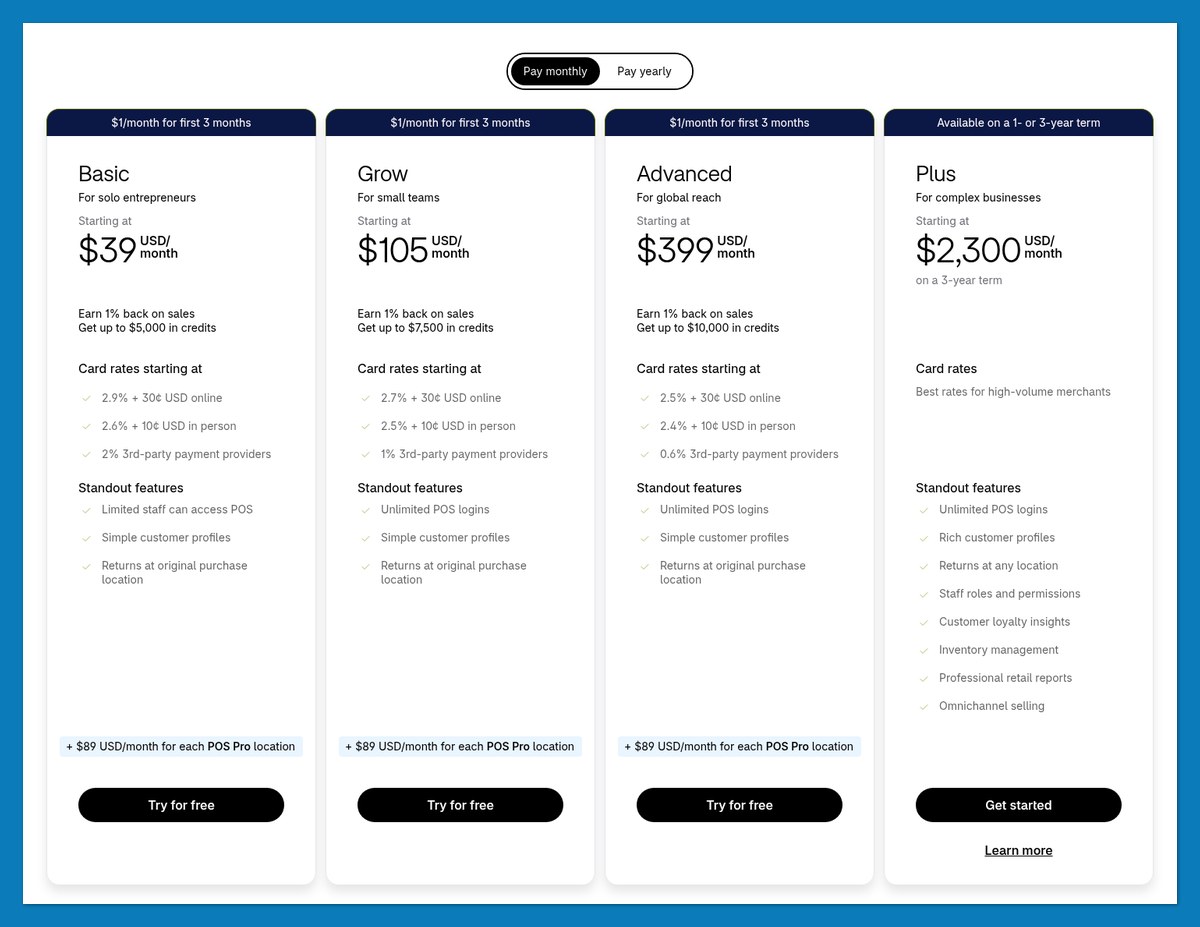
View Pricing Read Review →$39/month Basic, or $29/month billed yearly
2.9% + 30¢ per online card sale
- Your own domain and customer list
- Thousands of apps and themes
- Sells in AI chats and on major marketplaces
Best for Testing an Idea

Etsy
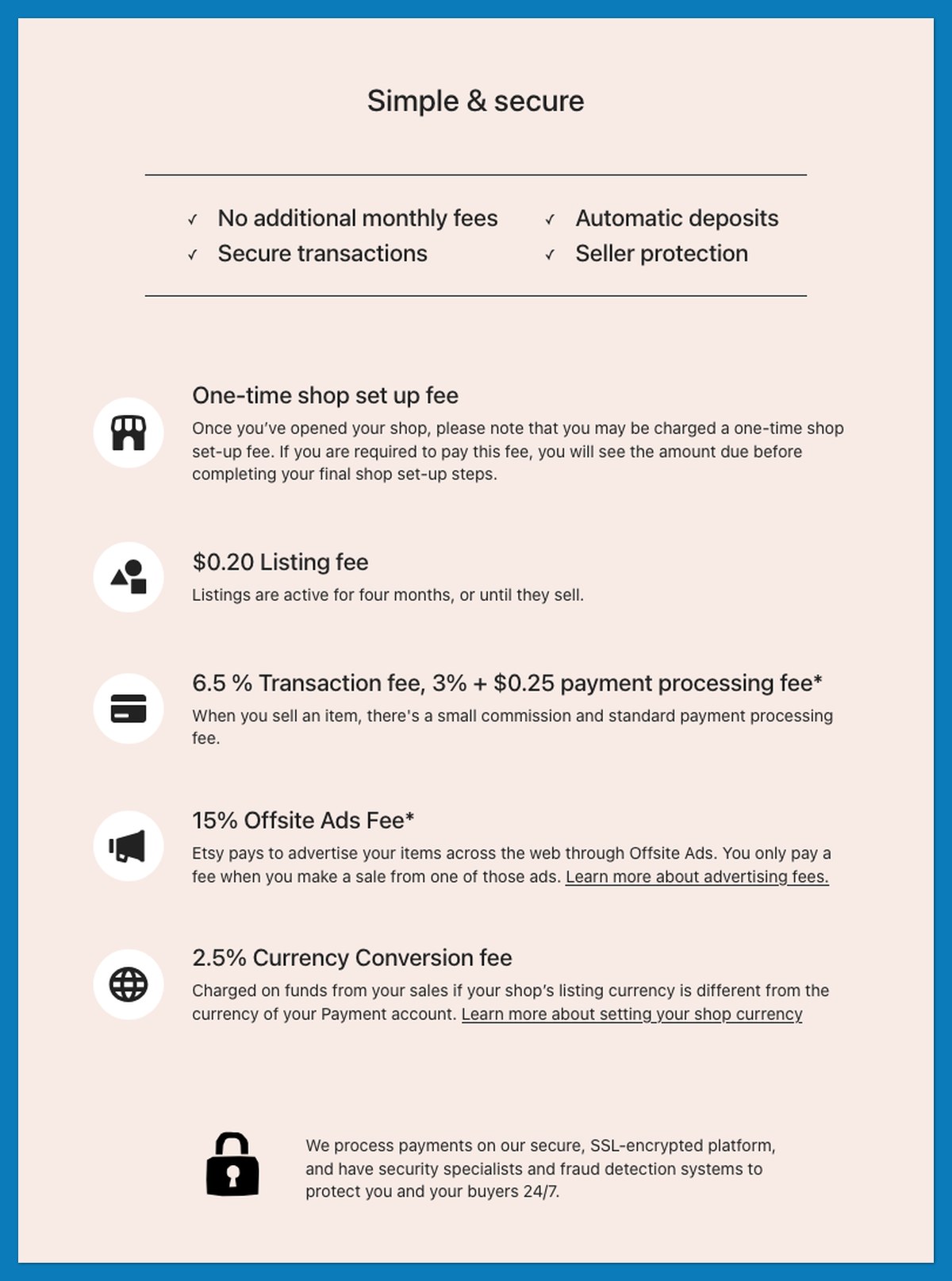
View Pricing Fee Calculator →$0/month plus $0.20 per listing
6.5% + 3% + $0.25 per sale in the US
- 88 million active buyers
- Etsy collects US sales tax for you
- Quick, simple shop setup
Our Methodology: We compared Shopify and Etsy using their own pricing, fee, policy, terms and help pages (checked November 2026) and Etsy’s Q3 2026 results, and weighted our scoring toward what makers and small store owners need.
For sellers comparing ecommerce platforms for creators, Shopify vs Etsy comes down to control versus discovery. After reviewing both platforms’ pricing, policies and terms, I recommend Shopify for building a business you own. Etsy remains the cheaper, easier way to test an idea without first building an audience.
I’ll compare seven areas, including fees, selling tools and control over your work. That last point deserves attention: longtime Etsy sellers cite its new AI-training terms as a reason for leaving, but Shopify’s content license needs scrutiny too.
💡 Key Takeaways
- Etsy is cheaper to start: no monthly fee, but it takes $5.20 (10.4%) of a $50 sale before ads, versus $1.75 (3.5%) plus the subscription on Shopify Basic.
- Shopify Basic becomes cheaper at $600 a month in sales: 12 orders of $50 on monthly billing, or $450 in sales on yearly billing.
- Etsy brings buyers to you: 88 million active buyers in the 12 months to September 30, 2026. A new Shopify store starts without traffic.
- Shopify leads for selling and branding: your own domain and customer list, built-in email and discounts, and thousands of apps.
- Etsy’s new Terms allow AI training from December 16, 2026. Shopify’s terms don’t mention AI but grant a broad content license; its default-on AI shopping channels have an off switch.
- Etsy collects and remits US sales tax. Shopify offers 24/7 live chat, but you file your own sales tax unless you’re in its managed-tax early access.
A Quick Comparison of Shopify vs Etsy
Shopify gives you an independent storefront; Etsy gives you marketplace access. Prices are US, in USD, as of November 2026.
| Shopify | Etsy | |
|---|---|---|
| Overall rating | 4.8/5 | 4.1/5 |
| What it is | Your own online store on your own domain | A shop inside Etsy’s marketplace |
| Starting price | Basic: $39/month, or $29/month billed yearly | Standard: $0/month • $0.20 per listing |
| Fees per sale | 2.9% + 30¢ on Basic with Shopify Payments | 6.5% transaction fee • 3% + $0.25 processing • 15% or 12% extra on Offsite Ads orders |
| Free plan or free trial | 3-day trial, then $1/month for 3 months | No monthly fee • Some new shops pay a set-up fee shown before opening |
| Built-in buyers | None: you bring traffic | 88 million active buyers (Q3 2026) |
| AI terms | Broad content license without an AI clause • AI channels default on for eligible stores, with opt-out | December 16, 2026 Terms allow AI training • No general US opt-out |
| US sales tax | Calculated; you file and remit, except managed-tax early access | Etsy collects and remits |
| Pros | Own domain, brand and customer list • Abandoned checkout, email, discounts and gift cards • Thousands of apps • Broader legal product range, including dropshipping, subject to policies • AI chats and major marketplaces | No monthly fee • Existing buyers • Simple setup • US sales tax handled • Purchase Protection up to $250 on eligible orders |
| Cons | Monthly subscription • No built-in traffic • Paid apps and themes • Broad content license | 10.4% on a $50 sale before ads • Mandatory Offsite Ads at $10,000 • Limited design • Reserves and suspensions • AI-training clause |
| Design options | Free and paid themes; featured themes cost $100 to $320 | Banner, logo and sections within Etsy’s layout |
What Kinds of Business Is Shopify or Etsy Best For?
Choose based on your audience and how much control you need:
Shopify Is Best for…
- Brands wanting their own domain, customer list and room to grow, particularly sellers with an existing social or Etsy audience who want more control over their work.
Etsy Is Best for…
- Makers, vintage sellers and print-on-demand designers testing an idea without a monthly fee, who want access to existing buyers and accept Etsy’s rules, including its AI-training terms.
1. Best for Pricing and Fees: Etsy (for Small Sellers)
The Winner
Etsy is cheaper until your sales grow
Etsy has no monthly fee, so a new shop pays only $0.20 per listing and its fees on each sale. Once you sell $600 a month in $50 orders, Shopify Basic costs less.
Etsy is the cheaper place to start with a handful of sales, excluding any one-time set-up fee. As orders grow, Shopify’s flat subscription becomes better value. Compare platform fees separately from the cost of bringing customers to your store.
How Much Do Shopify and Etsy Cost?
Shopify’s pricing starts at $39/month, or $29/month billed yearly, plus card fees. Etsy Standard has no monthly charge.
| Shopify Plan | Key Shopify Features | Etsy Option | Key Etsy Features |
|---|---|---|---|
| Basic: $39/mo, or $29/mo billed yearly | 2.9% + 30¢ online cards • 2% third-party provider fee • 10 inventory locations • 24/7 live chat | Etsy Standard: $0/mo | $0.20 listings, renewed every 4 months and as units sell from multi-quantity listings • 6.5% transaction fee on item price, shipping and gift wrap • US processing: 3% + $0.25 • Offsite Ads: 15% or 12% |
| Grow: $105/mo, or $89/mo billed yearly | 2.7% + 30¢ online cards • 1% third-party fee • 5 staff accounts | Etsy Plus: $10/mo | 15 listing credits and $5 Etsy Ads credit, expiring monthly • Restock requests • Extra customization • Standard per-sale fees |
| Advanced: $399/mo, or $359/mo billed yearly | 2.5% + 30¢ online cards • 0.6% third-party fee • 15 staff accounts • Enhanced live chat | Pattern by Etsy: $15/mo after 30-day trial | Synced website • No listing or transaction fees on Pattern sales • Processing applies • Domain extra; WHOIS privacy $3/year |
| Plus: from $2,300/mo on a 3-year term | 2.25% + 30¢ online cards • 0.2% third-party fee • Unlimited staff • Priority 24/7 phone support | Other Etsy fees | Possible one-time set-up fee • 2.5% currency conversion • Etsy Ads from $1/day |
Shopify charges no transaction fee with Shopify Payments. Basic’s standard online card rate is 2.9% + 30¢; premium cards cost 3.5% + 30¢, and international cards add 1%.
What One $50 Sale Costs
For a US seller and buyer, with shipping included in the $50 price and sales tax excluded:
| Fee on a $50 order | Etsy | Shopify Basic |
|---|---|---|
| Listing fee | $0.20 | $0 |
| Transaction fee | $3.25 (6.5%) | $0 with Shopify Payments |
| Payment processing | $1.75 (3% + $0.25) | $1.75 (2.9% + 30¢) |
| Total on a normal sale | $5.20 (10.4%) | $1.75 (3.5%), plus the monthly plan |
| If an Offsite Ad brought the sale | $12.70 (25.4%) at 15% • $11.20 (22.4%) at 12% | No equivalent fee |
Processing costs the same on this order; Etsy’s transaction fee, listing fee and Offsite Ads create the gap.
Offsite Ads apply when someone clicks an Etsy-placed ad and orders within 30 days, capped at $100 per order. You can opt out if your shop has never reached $10,000 in any consecutive 365 days; at $10,000, participation becomes mandatory for your shop’s lifetime at 12%, even if sales fall. Averaging $834 monthly crosses that threshold within a year.
Which Is Cheaper at Your Sales Level?
This illustration uses $50 orders and assumes one in five comes through Offsite Ads, not a typical attribution rate. The $250 and $500 rows assume eligibility for the 15% rate; higher rows assume the shop has reached the annual threshold for 12%. Your actual rate depends on sales history.
| Monthly sales ($50 orders) | Etsy, no ads | Etsy, 1 in 5 orders from Offsite Ads | Shopify Basic, monthly billing | Shopify Basic, yearly billing |
|---|---|---|---|---|
| $250 (5 orders) | $26.00 | $33.50 | $47.75 | $37.75 |
| $500 (10 orders) | $52.00 | $67.00 | $56.50 | $46.50 |
| $1,000 (20 orders) | $104.00 | $128.00 | $74.00 | $64.00 |
| $2,000 (40 orders) | $208.00 | $256.00 | $109.00 | $99.00 |
| $5,000 (100 orders) | $520.00 | $640.00 | $214.00 | $204.00 |
| $10,000 (200 orders) | $1,040.00 | $1,280.00 | $389.00 | $379.00 |
US seller and buyer; standard Shopify Payments rate; sales tax excluded; one $0.20 listing fee per sale. Unsold listing renewals and Etsy Ads are extra. Annual billing figures show the monthly equivalent.
- Break-even: Shopify wins from 12 monthly $50 orders ($600), or nine ($450) with yearly billing. Monthly-billing break-even is $550 for $25 orders and $600 for $100 orders.
- At $2,000 monthly: Etsy costs $208 versus Shopify Basic’s $109, saving $99 before Offsite Ads.
- Introductory offer: Shopify’s $1/month promotion makes it cheaper from the first $50 sale during those three months.
- Extras: budget for Shopify themes/apps or Etsy renewals, ads and currency conversion. Non-US rates differ.
Try your order size in our Etsy fee calculator and Shopify pricing calculator. These savings don’t establish that switching will produce the same number of orders.
💭 Our take
Etsy’s pay-as-you-go fees make it the cheaper experiment. At a dozen monthly orders, its fees can exceed a Shopify plan.
🤔 Do Shopify and Etsy Offer Free Trials?
- Shopify offers three days free, then $1/month for three months: see Shopify’s free trial. Starter is no longer listed on its pricing page.
- Etsy has no monthly fee, but some shops pay a set-up fee. Etsy publishes no amount; reports and third-party guides put it between $15 and $29. It’s shown before confirmation, non-refundable and sometimes waived. Pattern offers 30 days free.
If you’re testing an idea, open an Etsy shop without a monthly subscription.
2. Best for Selling Products: Shopify
The Winner
Shopify gives you more ways to sell, and fewer rules on what you sell
Every Shopify plan includes abandoned checkout recovery, discount codes, gift cards and in-person selling, plus thousands of apps. Etsy only allows items you made, designed, handpicked or sourced.
Based on both platforms’ pricing pages and policies, Shopify offers better sales features for growing stores. Etsy’s tools are simpler because it runs your checkout and storefront.
What Can You Sell on Each Platform?
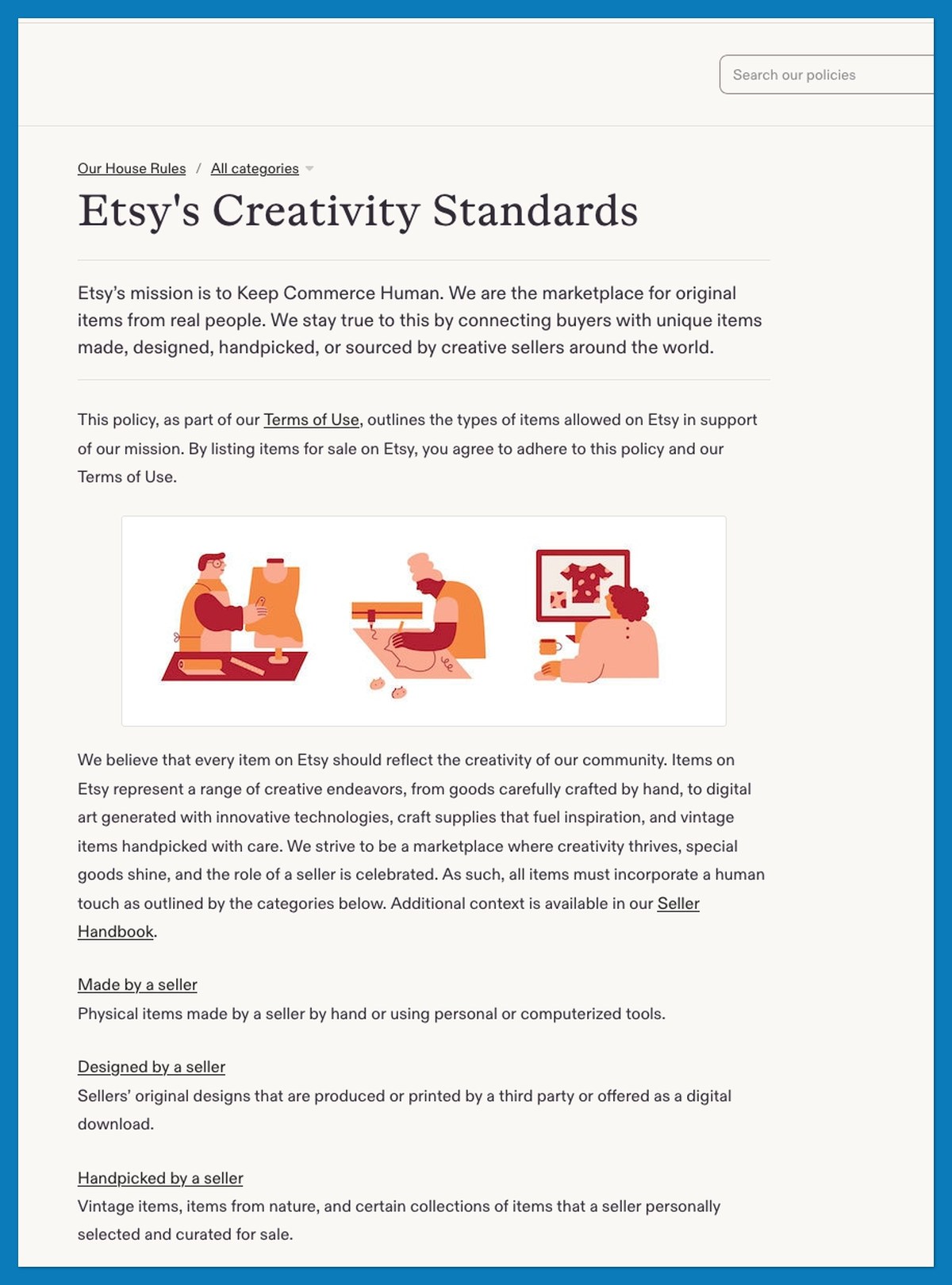
Etsy’s Creativity Standards cover:
- Made: items you make.
- Designed: your original designs, including digital downloads and print-on-demand.
- Handpicked: curated items, including vintage products at least 20 years old.
- Sourced: qualifying supplies and personalized items.
For POD, disclose your production partner and accurate ship-from location. Etsy’s policy gives the example of your original design printed on a blanket by a production partner. Our Etsy print on demand solutions guide explains the options.
AI art requires listing-description disclosure. Mass-generated listings, resold designs, other people’s work bundles and AI prompt bundles aren’t allowed. AI-generated patterns, recipes and plans have been banned since October 22, 2026. General resale and dropshipping of others’ finished products aren’t permitted.
Shopify supports a broader legal product range, subject to its policies:
- Physical products, services and dropshipping, including Shopify Collective sourcing.
- Digital downloads: see how to sell digital products on Shopify.
- Original merchandise through print on demand Shopify apps.
- B2B selling, with up to three catalogs on Basic.
Check Etsy’s product rules before planning a catalog around it. An original downloadable design qualifies; a bundle of someone else’s designs does not.
Sales Features
Shopify gives you your own checkout and more ways to sell beyond it:
| Sales feature | Shopify | Etsy |
|---|---|---|
| Checkout | Your Shopify checkout | Etsy-branded checkout |
| Discounts and gift cards | Both on every plan | Sales and coupons • Etsy Gift Cards accepted |
| In-person selling | POS on every plan • POS Pro: $89/month/location | Square reader; Square fees replace Etsy transaction/processing fees |
| Other channels | Social, marketplaces and AI chats | Etsy.com, Etsy apps and Pattern |
| Payments | Shopify Payments, PayPal, third-party providers; 2% extra on Basic | Etsy Payments only |
| AI assistant | Sidekick on every plan | Listing tools, translations and stats summaries, as Etsy describes them |
Shopify also includes abandoned checkout recovery on every plan. Round 3 covers its email tools and the separate challenge of attracting visitors.
App Market
Shopify’s App Store has thousands of apps, many free to install, covering reviews, email and wholesale. Free installation doesn’t mean every feature is free, so include app subscriptions in your budget.
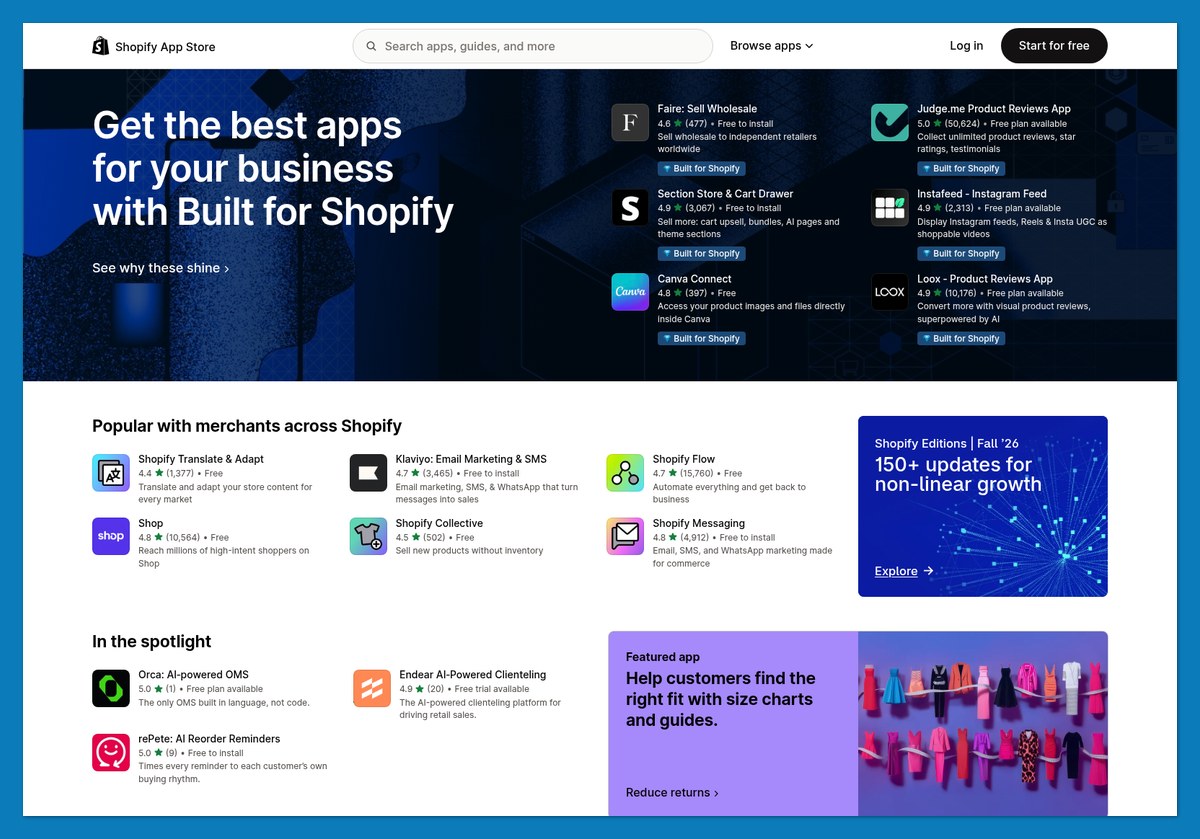
Etsy has no app store, though outside POD tools connect to shops.
Marketplace Connect supports Amazon, eBay, Target Plus and Walmart, not Etsy. Its first 50 synced orders monthly are free; additional orders cost 1%, capped at $99/month.
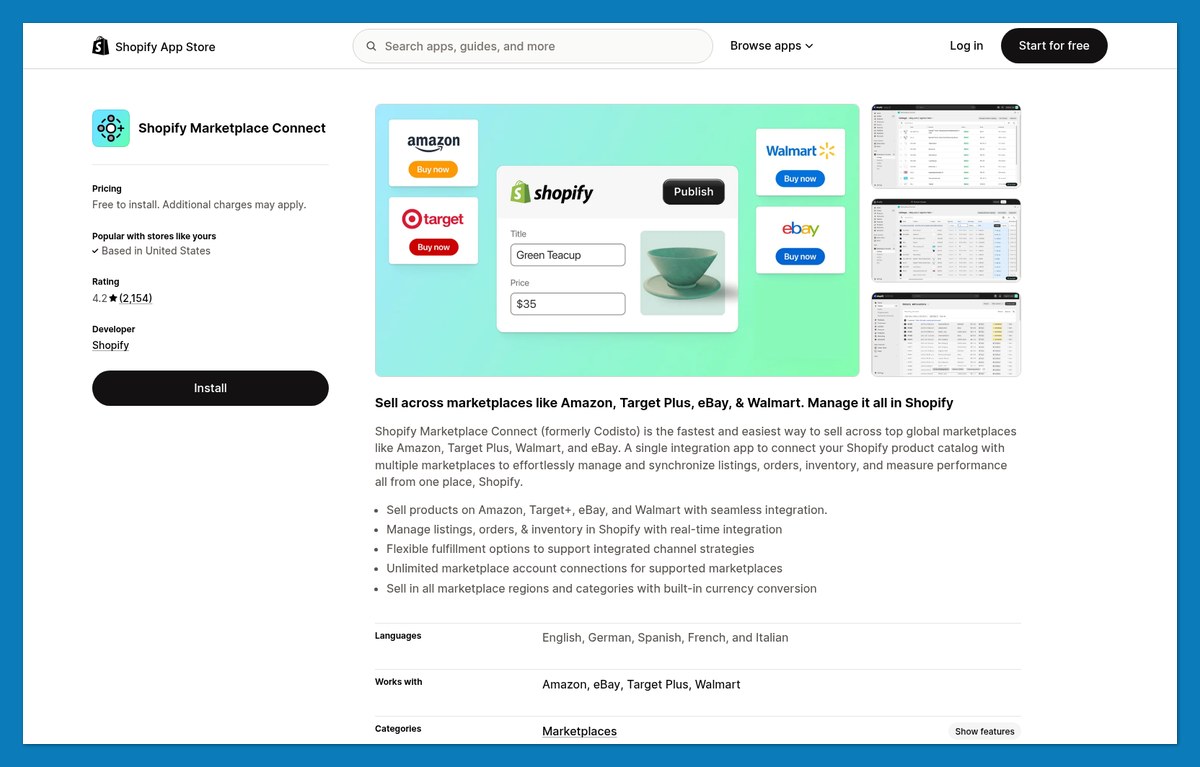
I recommend Shopify for broader inventory, bundles and wholesale. Our verdict covers using both platforms. Start a Shopify free trial to explore its tools.
3. Best for Getting Found: Etsy
The Winner
Etsy puts your products in front of buyers from day one
Etsy had 88 million active buyers in the 12 months to September 30, 2026. A new Shopify store starts with no visitors, though Shopify gives you stronger tools to build traffic you own.
Etsy has an existing audience; Shopify asks you to attract your own. Neither guarantees sales, and marketplace access doesn’t guarantee visibility for a new listing.
Built-In Traffic
Etsy’s Q3 2026 shareholder letter reports:
- 88 million active buyers: up 1%, its first growth in two years.
- 5.8 million active sellers: up 6.5%.
- $2.65 billion in quarterly marketplace sales: up 8.8%.
Your listings compete with those sellers. Etsy’s search considers:
- Query matches: titles, tags, categories and attributes.
- Listing factors: quality, recency and shipping price.
- Customer experience: recent reviews, response rates and cases.
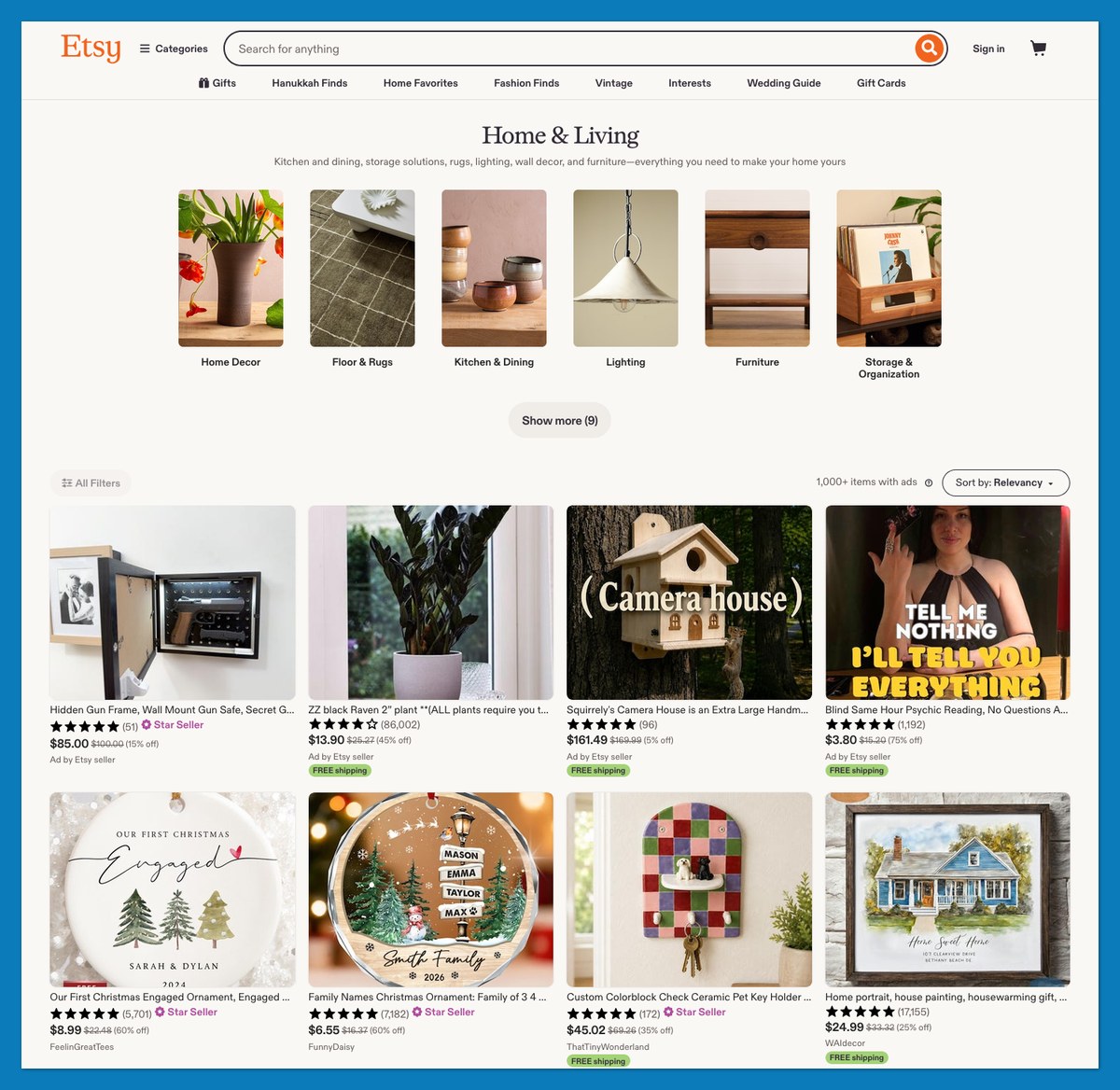
Etsy’s CFO said conversion-focused search had favored cheaper digital items; it now balances physical and digital listings by buyer intent. Consider this when comparing platforms to sell digital products.
Shopify Community sellers describe sales falling after moving from Etsy. Their advice: build repeat-customer traffic before closing your marketplace shop. For other marketplaces, see Amazon vs Etsy and Etsy vs eBay.
Marketing Tools
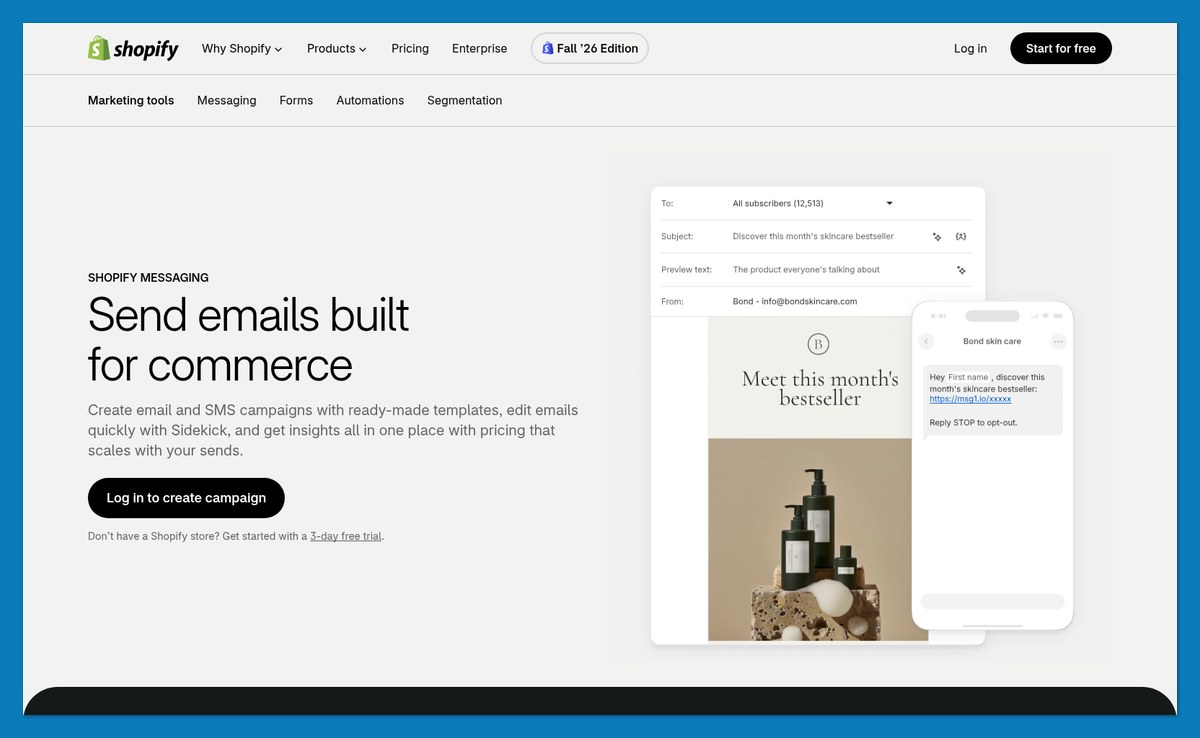
Shopify Messaging provides:
- Email and SMS campaigns with unlimited contacts.
- Customer segments and marketing automations.
- Abandoned checkout recovery, alongside Shopify’s discounts and Shop Campaigns.
Etsy relies more on marketplace advertising:
- Etsy Ads: pay-per-click, from $1/day; its handbook suggests $3 to $5/day for testing.
- Offsite Ads: 15% or 12% per attributed order.
- Share & Save: refunds 4% when someone orders within 30 days of clicking your shared Etsy link. Shopify links don’t qualify.
Etsy attributes its take-rate increase to 26.2%, up 50 basis points, primarily to Etsy Ads. Most ads revenue comes from sellers below $100,000 annual sales. That aggregate take rate includes ads and services; it isn’t the fee every seller pays.
SEO and AI Search
Shopify gives you SEO control on your domain, including editable metadata and URLs, a blog and Shopify SEO apps. Etsy listings build visibility for Etsy.com.
Eligible Shopify products reach AI channels by default. Google AI Mode, Gemini and Copilot support in-chat checkout; ChatGPT refers buyers to your checkout. Shopify’s Agentic plan serves non-Shopify brands for $0/month, with card rates from 2.9% + 30¢. Round 6 covers its terms.
Etsy’s ChatGPT app, in beta since May 5, 2026, lets shoppers tag @Etsy and browse, then pay on Etsy. Instant Checkout ended in March 2026.
| Shopify | Etsy | |
|---|---|---|
| Built-in shoppers | None | 88 million active buyers |
| Email and SMS | Campaigns, segments, automations | Not built in |
| Paid ads | Your ad accounts | Etsy Ads from $1/day • Offsite Ads: 15% or 12% |
| SEO | Own domain • Metadata and URLs • Blog | Etsy.com • Titles, tags and attributes |
| AI shopping | ChatGPT, Google AI Mode/Gemini, Copilot, Meta via Catalog | ChatGPT app beta; Etsy checkout |
💭 Our take
Etsy offers faster access to buyers, but its traffic increasingly costs ad money. Add your store address to order inserts for repeat customers, but never move an Etsy transaction off-platform in messages.
4. Easiest to Use: Etsy
The Winner
Etsy is quicker to get selling
Opening an Etsy shop is a short series of forms, and Etsy handles hosting, payments and US sales tax. Shopify guides you well, but you choose a theme and set up payments, shipping and taxes yourself.
Comparing the documented setup steps, Etsy is the easier start for first-time sellers. Shopify asks for more decisions in exchange for more control.
Opening an Etsy Shop
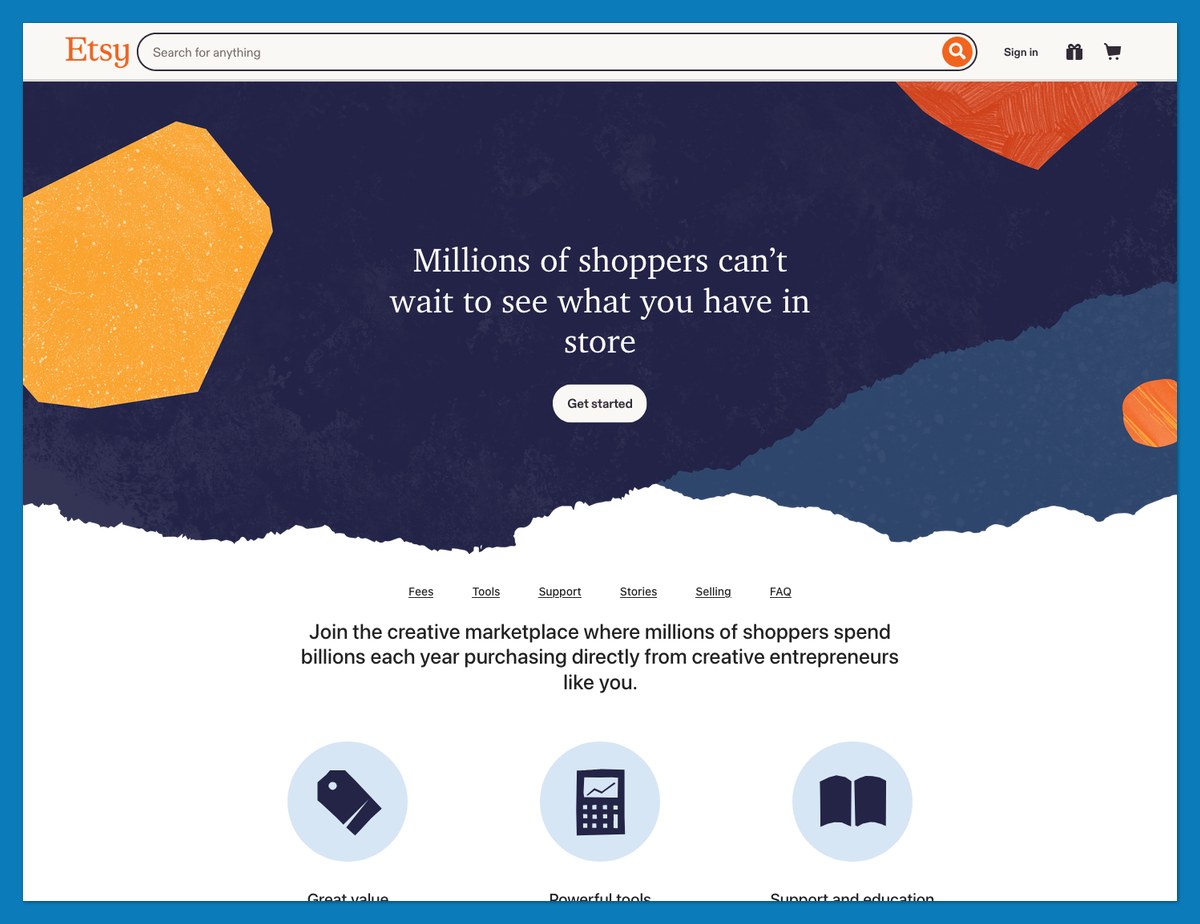
Etsy’s setup asks you to:
- Create an account and open Etsy.com/sell in a desktop browser.
- Choose your language, country and currency. Match your bank currency to avoid the 2.5% conversion fee.
- Name your shop and add listings, costing $0.20 each.
- Set up Etsy Payments and billing, authorizing a set-up fee if shown.
Setting Up a Shopify Store
Start the three-day trial, then:
- Choose a theme or describe your store to the AI website builder. Sidekick is included on every plan.
- Add products and activate Shopify Payments.
- Configure shipping and taxes; connect your domain. A free myshopify.com address is included.
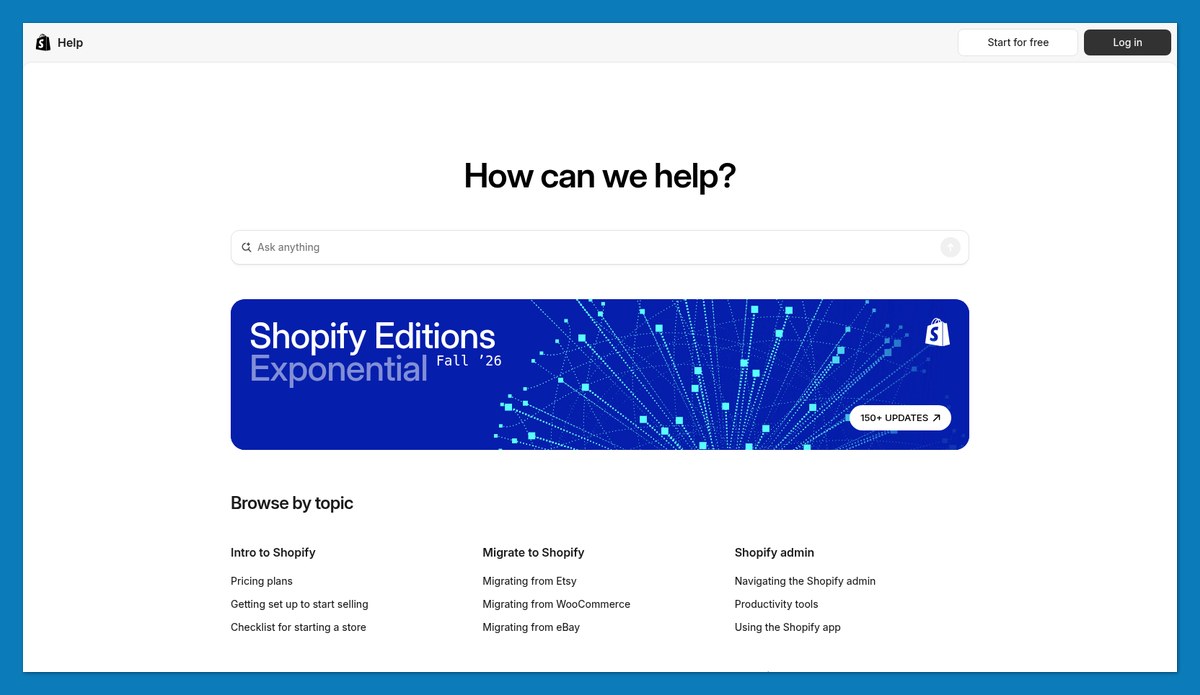
Shopify’s Help Center provides a starting checklist and an Etsy migration guide.
Follow our Shopify tutorial for beginners for the setup sequence. Our AI Shopify store builders guide compares options for creating the storefront.
What’s the Next Step After You Open?
On Etsy, work toward Star Seller:
- Answer 95% of first messages within 24 hours.
- Ship 95% of orders on time with tracking.
- Maintain a 4.8 review average and meet order/sales minimums.
Etsy reviews the preceding three months on each month’s first day. On Shopify, customize your theme and add relevant apps.
🎨 What About the Design Process?
Etsy offers a fixed layout; Shopify uses a section-based editor, not free-form drag-and-drop, with Sidekick-assisted changes. Neither requires code; round 5 explains their branding limits.
For the simpler start, start selling on Etsy.
5. Best for Branding and Store Design: Shopify
The Winner
Shopify lets your store look like your brand, not a marketplace
Every Shopify plan supports a custom domain and a theme you can customize down to the code. Etsy shops sit inside Etsy’s layout, with other sellers’ items and ads around yours.
I recommend Shopify over Etsy for branding. Your own storefront makes your business the focus, rather than the marketplace hosting it.
Shopify Themes and Domains
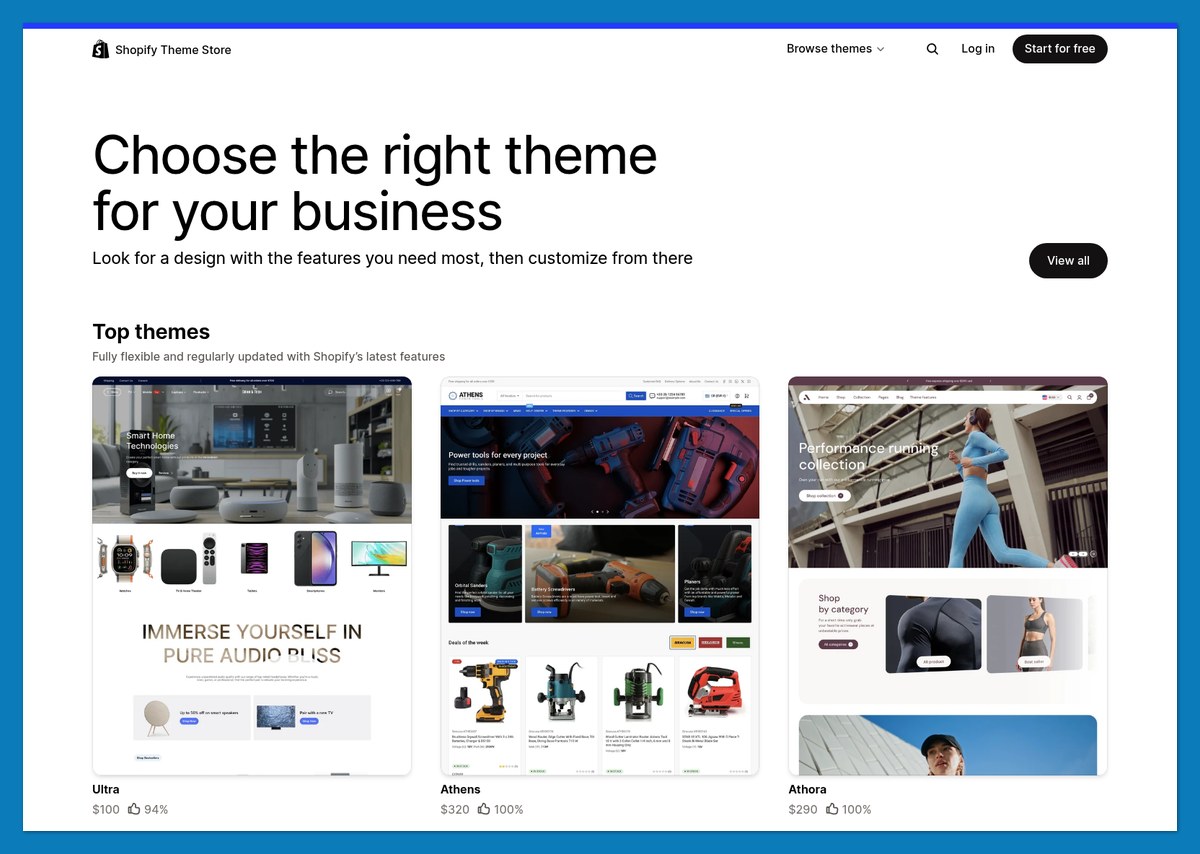
Shopify’s Theme Store sorts options by business type and features. Featured paid themes include:
- Ultra: $100
- Athora: $290
- Athens: $320
Free options are available too; see Shopify’s Horizon themes.
Every plan supports a custom domain, alongside a free myshopify.com address and SSL certificate. Domain support doesn’t mean registration is free. You can edit theme code for deeper customization, but you don’t need to write code to use a theme.
Etsy Shop Customization
Etsy lets you add:
- A shop banner and logo.
- An About section.
- Shop sections.
Etsy Plus adds customization for $10/month, but your listings remain on Etsy.com, under its branding. The category screenshot in round 3 shows how competitors’ listings and ads share the shopping experience.
What About Pattern by Etsy?
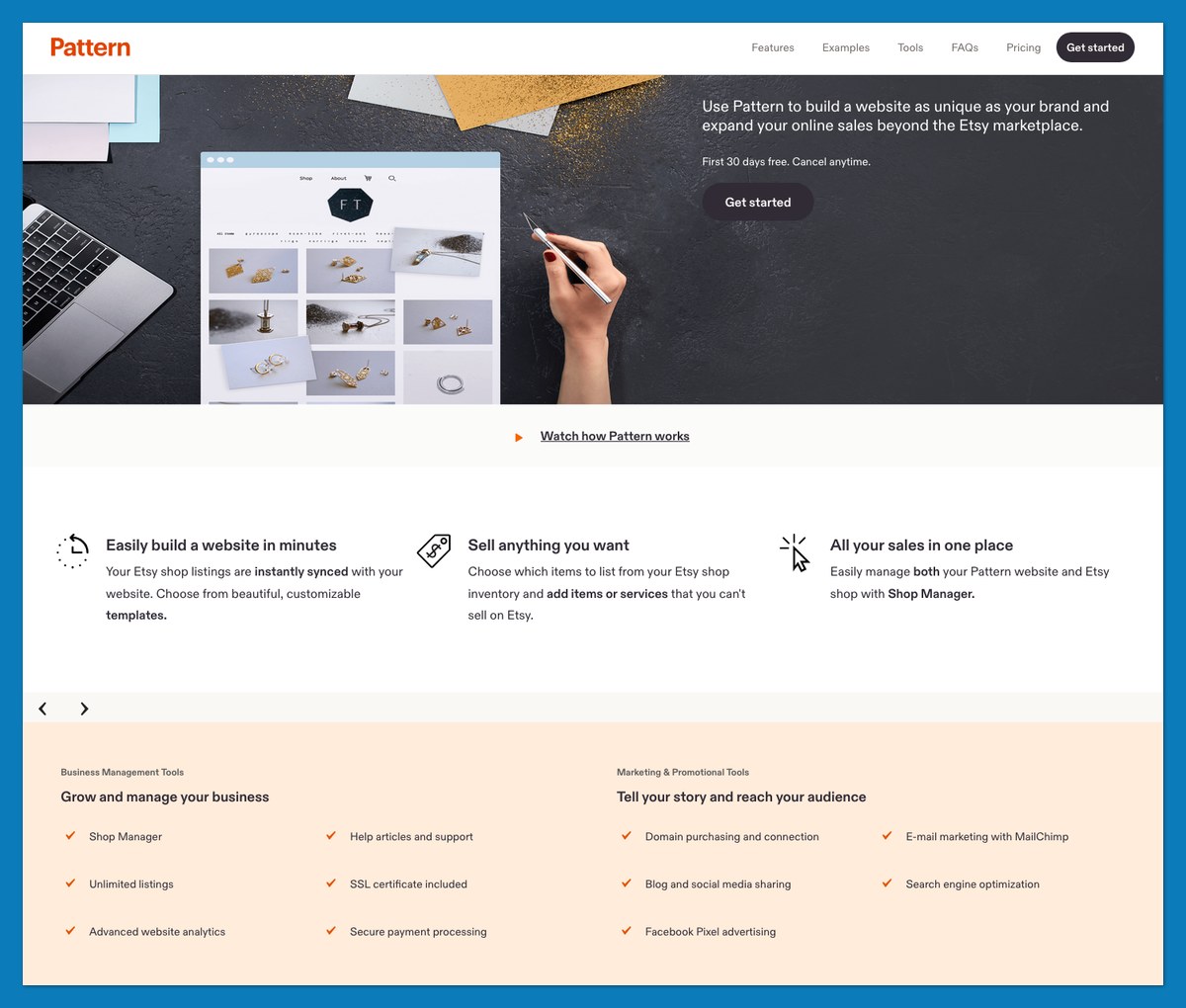
Pattern creates a separate site from your Etsy listings, with:
- Templates, Shop Manager and unlimited listings.
- Domain purchasing and connection.
- A blog, SEO tools and Facebook Pixel.
- Mailchimp email marketing.
It costs $15/month after 30 days free, without listing or transaction fees on Pattern sales. It’s cheaper than Shopify Basic, but has no app store, limiting expansion beyond Etsy’s tools. See Shopify vs Etsy Pattern.
Top Tip 💡
Sidekick, Shopify’s AI assistant, is included on every plan and can make theme changes from a typed request, so you don’t have to hunt through theme settings.
Try Shopify free and preview free themes before buying one.
6. Best for Control Over Your Work: Shopify
The Winner
Shopify leaves you more control, but read its license too
Your Shopify store sits on your own domain, you keep your customer list, and you can switch off Shopify’s AI shopping channels. Etsy’s new Terms let it use your content to train AI from December 16, 2026, with no general opt-out for US sellers.
I read both platforms’ terms to compare their permissions. Shopify’s AI-channel switches don’t remove its broad content license.
What Etsy’s New AI Clause Says
Etsy published revised Terms and Privacy Policy on October 26, 2026, effective December 16, 2026. Its “Your Content” license adds:
“This also includes the right for us and our third party partners and vendors to use Your Content to develop, train, test and improve artificial intelligence and machine learning technologies, including to improve the Services and/or help keep them safe, subject to any applicable opt-out rights described in our Privacy Policy.”
The same Terms prohibit others from using Etsy content “for the purpose of developing, training, fine-tuning, evaluating, benchmarking, testing, prompting, distilling, or otherwise contributing to any machine learning model, artificial intelligence system, or related technology, without our express permission.”
TNW reported on November 21, 2026 that neither document gives US sellers a general training opt-out.
Etsy’s response states: “We do not use your content to train AI models designed to copy your original work or replace your creativity. Again, this is not changing.”
Etsy says the wording clarifies:
- Translations and listing optimization.
- Stats summaries and fraud detection.
- Marketing.
The New York Times reported on November 20, 2026 that sellers were closing shops and Etsy promised revised terms “soon.” On November 23, 2026, no revision date had been given, and the clause remained published.
Of 353 sellers we tracked who publicly announced departures between November 14 and 23, 2026, these were the most-named destinations. Counts are approximate.
| Where they said they were going | Sellers |
|---|---|
| Their own website (Squarespace, Carrd and similar) | 118 |
| Ko-fi | 48 |
| Craft markets and conventions | 26 |
| Mayhem Marketplace | 14 |
| Big Cartel | 9 |
| ACGGoods | 8 |
| Fybe | 5 |
| Shopify | 5 |
Most sellers in this group aren’t choosing Shopify by default. Their first question about Etsy alternatives is whether those platforms train AI on their work.
What Shopify’s Terms Say
Shopify’s Terms of Service, updated October 20, 2026, grant it in section 8.1:
“a non-exclusive, transferable, sub-licensable, royalty-free, worldwide right and license to host, use, distribute, expose, modify, run, copy, store, publicly perform, communicate to the public (including by telecommunication), broadcast, reproduce, make available, display, and translate, and create derivative works of your Materials.”
Shopify may use that license to “operate, provide, evaluate, enhance, improve, and promote the Services”.
Section 8.2 states: “You irrevocably waive any and all moral rights you may have in the Materials in favour of Shopify”.
Section 8 doesn’t mention AI or machine learning. It neither explicitly grants an AI-training right nor rules one out.
Agentic storefronts are on by default for eligible stores. Shopify’s help page states: “Agentic storefronts is active by default for eligible stores, so you don’t need to turn it on.” Catalog distributes products to ChatGPT, Google AI Mode and Gemini, Microsoft Copilot and Meta.
The Agentic Storefronts Supplemental Terms, updated October 6, 2026, say the license “is sublicensable to Shopify partners and their affiliates operating Participating Channels” in section 5. Under section 9, the license, “including any sublicenses granted thereunder”, survives termination of both the Supplemental Terms and Shopify’s Terms of Service.
Whether those AI companies can train on Shopify’s product feeds depends on their own terms and remains unclear.
How to Switch Off Shopify’s AI Channels
- In your Shopify admin, go to Sales channels > Agentic.
- Turn off Allow Shopify to manage for me.
- Turn off Shopify Catalog access for each AI channel.
Shopify warns products “might still be displayed or referenced by the AI channel through other external discovery and listing methods, such as web crawling and indexing.”
Opting out stops future Catalog feeds; it doesn’t cancel the license.
Customer Data and Account Risk
Neither platform guarantees continued account access, despite Shopify’s greater independence.
| Shopify | Etsy | |
|---|---|---|
| Where your shop lives | Your domain | Etsy.com |
| Customer list | Yours; marketing requires consent | Etsy buyers; off-platform transaction diversion banned |
| AI-training clause | None in section 8 • Broad license to “evaluate, enhance, improve” services | Explicit right from December 16, 2026 |
| AI opt-out | Per-channel Catalog switch | No general US opt-out, per press reports |
| Account termination | Shopify may suspend or terminate “for any reason, without notice and at any time (unless otherwise required by law)” | With “reason to believe” you breached Terms • You “may lose any information associated with your account, including Your Content” |
Etsy sellers report reserves holding “at least 75%” for up to 45 days, with other reports reaching 90 days. Community posts describe unexplained suspensions, automated appeals and $7,000+ held for six months. These are seller reports; Etsy’s handbook says Star Sellers aren’t placed on reserves.
💭 Our take
Neither platform’s terms justify relaxing. Shopify wins on domain, customer-list control and AI-channel switches, but its broad license partly survives your account. If training is your main concern, read both current terms before moving, particularly with Etsy promising revisions.
7. Best for Support, Tax and Compliance: It’s a Tie!
The Winner
Shopify is easier to reach; Etsy does your US sales tax
Shopify offers 24/7 live chat on every plan. Etsy calculates, collects and remits US sales tax for you, and its Purchase Protection covers eligible orders up to $250.
Shopify wins access to support; Etsy reduces tax administration. Choose based on the help you need, not an assumption that either platform handles every business obligation.
Shopify Support
✔️ 24/7 live chat on Basic and Grow; enhanced chat on Advanced
✔️ Sidekick on every plan
✔️ Help Center, starting checklist, Etsy migration guide and community forum
✔️ Priority 24/7 phone support on Plus
❌ Phone support requires Plus, from $2,300/month
❌ You file and remit sales tax outside managed-tax early access
Etsy Support
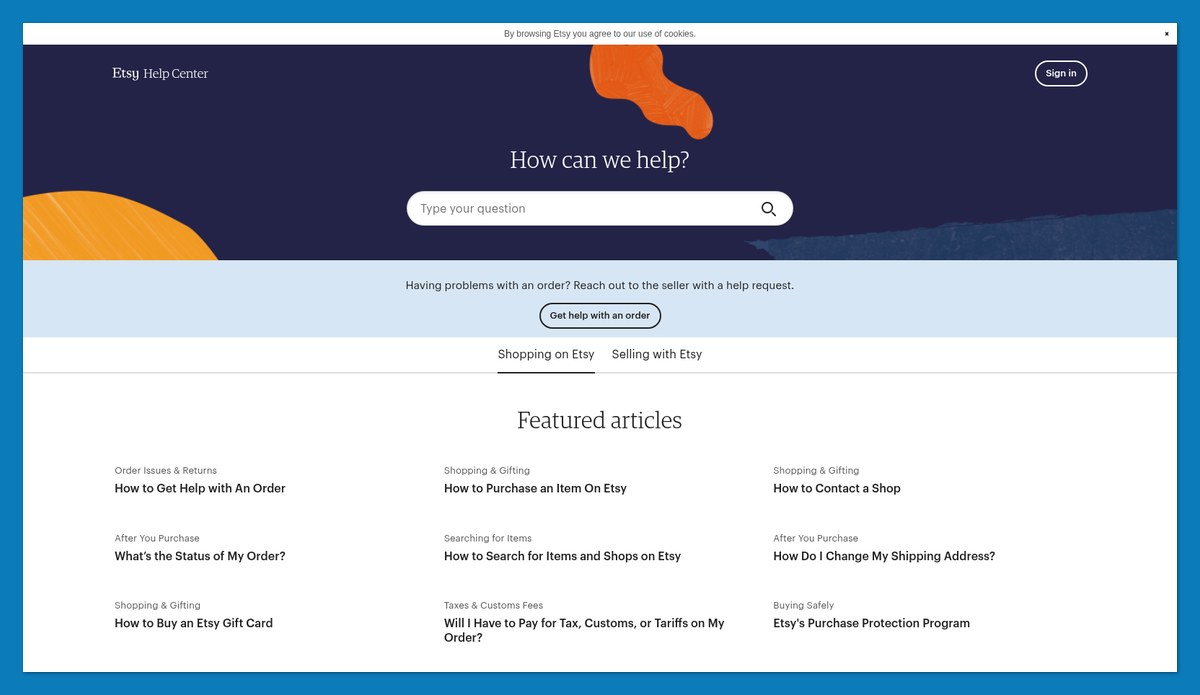
✔️ Help Center with Shopping and Selling sections, plus community forums
✔️ A case system for unresolved buyer-seller disputes
✔️ Purchase Protection refunds eligible buyers up to $250 while you keep earnings: covers non-delivery, 7+ days late, damage once yearly or not-as-described claims. Requires good standing, Etsy Payments and customer-service compliance
❌ Sellers report slow or automated suspension/reserve replies
❌ Etsy decides on reserves and suspensions, as covered in round 6
Sales Tax and Compliance
Etsy’s US sales tax handling doesn’t remove your income-tax responsibilities. Shopify leaves filing and remittance to you unless you qualify for managed-tax early access.
| Tax task | Shopify | Etsy |
|---|---|---|
| Calculate US sales tax | Automatic | Automatic |
| Collect and remit US sales tax | You; managed tax is early access | Etsy does, in every state with statewide sales tax |
| How tax hits your price | Added at checkout | Added above your price, not deducted |
| VAT | Validation, exemptions and invoicing | Collected on certain orders, including some digital downloads |
| Fees | Listed calculation fee: 0.35%; Plus: 0.25% | No separate tax fee |
| Income tax | Yours | Yours |
- Shopify-managed tax is early access only: qualifying US stores opened after October 27, 2026, in the early-access group, on Basic to Plus, using Shopify Payments, with all products published to Shop. Etsy uses listing categories for tax in some states, so categorize carefully.
- Store rules still apply: Shopify requires public contact details and terms, refund and shipping policies. Etsy requires Creativity Standards and AI disclosure. Its October 22 photo rule, revised November 7, requires one unedited real-item photo per listing, without lighting, exposure or color edits; proactive enforcement is planned for early 2027.
Trustpilot won’t settle this: on November 23, 2026, Etsy scored 1.4/5 and Shopify 1.3/5. Both pages skew toward complaints from buyers and support users. Choose Etsy if sales tax filing worries you most; Shopify if round-the-clock chat access matters more.
How We Test Ecommerce Platforms
Shopify wins on weighted criteria, not the number of rounds won. We prioritize what matters to small sellers building a business around their products:
- Pricing and Fees: 20% We compare subscriptions, per-sale costs and ads fees.
- Sales Features: 20% We assess permitted products, checkout, promotions, payments, POS and apps.
- Getting Found: 15% We weigh marketplace traffic against marketing, SEO and AI shopping.
- Control Over Your Work: 15% We examine content licenses, AI permissions, customer data and suspension terms.
- Ease of Use: 10% We compare documented setup steps.
- Branding and Design: 10% We assess themes, domains and customization.
- Support, Tax and Compliance: 10% We check support, tax, seller protection and customer ratings.
I reviewed both companies’ pricing, fee, policy, terms and help pages in November 2026, alongside Etsy’s Q3 shareholder letter. Screenshots show public pages, not account-level testing; seller experiences are attributed separately.
Departure figures come from public posts we tracked between November 14 and 23, 2026. Shopify’s wider advantages in selling, branding and control produce its 4.8/5 overall score against Etsy’s 4.1/5, despite three round wins each and one tie.
Shopify vs Etsy: Our Winner
For sellers building a business they own, Shopify is the better platform. It wins selling products, branding and control over your work. From $600 in monthly sales, or 12 orders of $50, Basic’s monthly subscription and processing cost less than Etsy’s standard fees. Attracting those customers remains your responsibility.
Etsy is the best place to test an idea: no monthly fee, 88 million active buyers, simpler setup and US sales tax handled. Its trade-offs include 10.4% fees on a $50 sale before ads, mandatory Offsite Ads once you reach $10,000 in qualifying sales, and terms allowing AI training on your content from December 16, 2026.
Use both by keeping Etsy for discovery while Shopify builds its own traffic. Shopify’s Marketplace Connect doesn’t support Etsy, so consider a third-party sync app:
- CedCommerce Etsy Integration: 4.5 stars from 1,244 reviews.
- InfoShore: 4.9 stars from 31 reviews.
Our Etsy apps for Shopify guide compares the options. Include your store address in order inserts, but never divert an Etsy transaction through messages. If neither fits, explore Fourthwall vs Etsy and Shopify alternatives.
While Shopify is our top choice overall, I recommend Etsy for testing demand and Shopify once you have an audience of your own. A dozen monthly $50 orders is the fee-comparison milestone, not a reason to close a marketplace shop that still brings you buyers.



thank you for the article, very useful
You’re welcome Sophie!
Very, very, very helpful ! Thanks !
You’re welcome! 👍
Nice write up, however Etsy fees are more that 5%, and they also take from your shipping as well now. Another big Con on Etsy is even if you are not buying their ads, they can do off site ads and take up to 18% and you have no say with being enrolled in this feature with having an offsite ad (like on google) Their fees are also really hidden on these extra ads and our a nightmare to find. We have been with Etsy for awhile and the seller keeps getting squeezed.
Thanks this was very helpful just now. Wasn’t sure if I should start with Shopify or rather Etsy.
Very goood summary. I know now where to go, Thank yoy!
You’re welcome Marie-Joelle!
Etsy does not help sellers with exposure either. Unless the seller is buying Etsy Ads, on top of them taking 5% per product sold or already have a strong presence on social media, they are likely to see zero to few visitors. In addition, you have to keep in mind that Etsy puts your product up against competitors. So if searching in the same category, a new seller may find their product on say page 8 or further back (thus almost never seen).
Other eBay alternatives like WebStore or TrueGether do the same thing as Etsy, but at least there are no listing or transaction fees. Another one, Bonanza, at least gives you the option of paying for advertising by a percentage of sales (ranging at various levels up to 30% per). In that way, the seller isn’t losing money, they only pay if a sale happens (even if one might think the cut is too high or the promotion is not of enough value).
Sadly and arguably, there are only a few sites like eBay and Amazon that will allow a seller to just have a product listed and get views from passing traffic. People are way too conditioned and programmed to almost always make them among their first online choices. Of course that comes at a price, since eBay and Amazon create numerous inconveniences, abuse, and suspend sellers at their whim. And this almost online monopoly, aided by Google and Bing allows them to choke out any competition (but then consumers wonder why they don’t have viable options).
Hello Tolanz,
Thanks for the great insights!
nice informative article, Rosie. Thanks
👍👍👍
Mil gracias Rosie
You’re welcome!