



Podia and Thinkific are two of the most well-known platforms for selling online courses, digital products, and memberships — but which one is the better choice?
We’ve spent over 200 hours testing and analyzing online course platforms, especially through the lens of ecommerce sellers who want to diversify into digital products.
If you’re looking to launch a digital course, build recurring revenue from memberships, or sell downloadable files, you’re in the right place.
Based on testing and user feedback, Podia is the better all-in-one solution for ecommerce sellers who want to get up and running fast.
Podia vs Thinkific: Quick Verdict
Podia – Best overall for ecommerce businesses selling digital products alongside physical goods
Thinkific – Best for advanced course builders or education-focused businesses
In this review, I’ll break down how Podia and Thinkific compare on pricing, product features, design flexibility, ecommerce tools, support, and ease of use.
If you’re unsure which to choose, you’ll know by the end.
Quick Comparison: Podia vs Thinkific
Here’s a side-by-side view of the two platforms:
| Feature | Podia | Thinkific |
|---|---|---|
| Best For | Digital creators, ecommerce sellers | Educators, course creators |
| Free Plan | Yes, 8% transaction fee | Yes, no transaction fees |
| Transaction Fees (Paid Plans) | None | None |
| Digital Product Support | Strong | Strong |
| Membership Support | Yes | Yes |
| Built-in Email Marketing | Yes | No |
| Affiliate Program | Built-in | 3rd-party apps |
| App Store | No | Yes |
| Design Customization | Limited | Strong |
| Customer Support | Live chat | Email only |
Best for Pricing: Podia Wins for Value
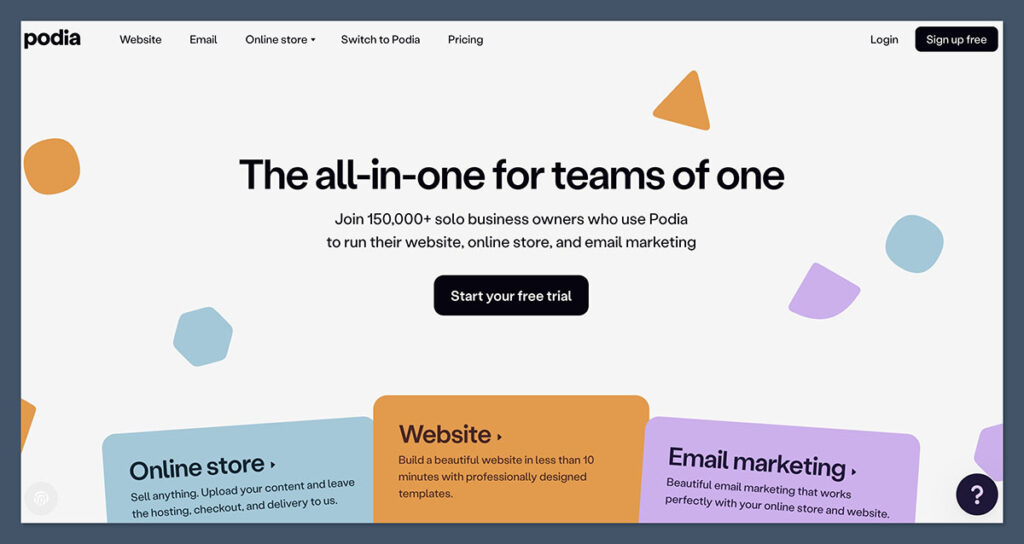
When looking purely at pricing, both Podia and Thinkific offer competitive plans — but Podia gives you more tools built-in for the same or lower cost.
Podia Pricing (USD)
- Free: $0/month – 8% transaction fee
- Mover: $39/month – All core tools
- Shaker: $89/month – Includes memberships, affiliates, email
- Earthquaker: $199/month – Priority support, onboarding
Thinkific Pricing (USD)
- Free: $0/month – Basic course builder
- Basic: $49/month – Drip content, coupons, custom domain
- Start: $99/month – Includes memberships and bundles
- Grow: $199/month – Advanced segmentation and API access
The Verdict
Podia gives you more built-in marketing tools (like email and affiliates) even on lower plans. While Thinkific has stronger course features at higher tiers, you’ll often need third-party tools for things Podia includes.
Best for Selling Digital Products: Podia
Both platforms allow you to sell courses, downloads, and memberships, but Podia makes the process much smoother — especially if you’re already running an ecommerce store.
Podia Product Features
Podia supports a wide range of digital products:
- Online courses
- Digital downloads (eBooks, templates, PDFs)
- Webinars
- Coaching
- Memberships and subscriptions
Everything from checkout to content delivery is handled in one place. Podia also includes email marketing and affiliate tools to help you promote your offers without third-party apps.
Thinkific Product Features
Thinkific shines when it comes to structured online courses:
- Advanced course builder with quizzes, prerequisites, and certificates
- Drip scheduling
- Student assignments and assessments
- Course compliance (e.g. must complete lessons in order)
It’s built more for traditional online learning experiences than ecommerce-style product launches.
The Winner
Podia is better for ecommerce-style digital product sales (downloads, workshops, subscriptions).
Thinkific is better for formal, structured course creation.
Best for Templates and Design: Thinkific

If you want creative control over how your digital storefront looks, Thinkific has the edge.
Podia Design Options
Podia is streamlined. You can:
- Customize colors, fonts, and logo
- Choose from a few page templates
- Build landing pages with a simple editor
But you won’t get deep customization or full control over layout.
For creators who want simplicity and speed, Podia’s design tools are more than enough.
You won’t be bogged down with technical choices or design settings.
It’s perfect for getting a clean landing page or sales page live quickly — especially if design isn’t your strong suit or you’re working solo.
Thinkific Design Options
Thinkific gives you:
- More theme options
- Section-based site builder
- Access to custom CSS for developers
- Branded course player
This means you can design a more personalized and polished brand experience.
You also get access to site-wide customization tools that let you edit headers, footers, and navigation.
For brands with existing visual guidelines — or agencies creating course portals for clients — Thinkific’s layout options provide more room for full branding and user experience consistency.
The Winner
Thinkific offers more flexibility in how your website and course pages look. If design is a top priority, it’s the better choice.
Best for Sales Tools: Podia
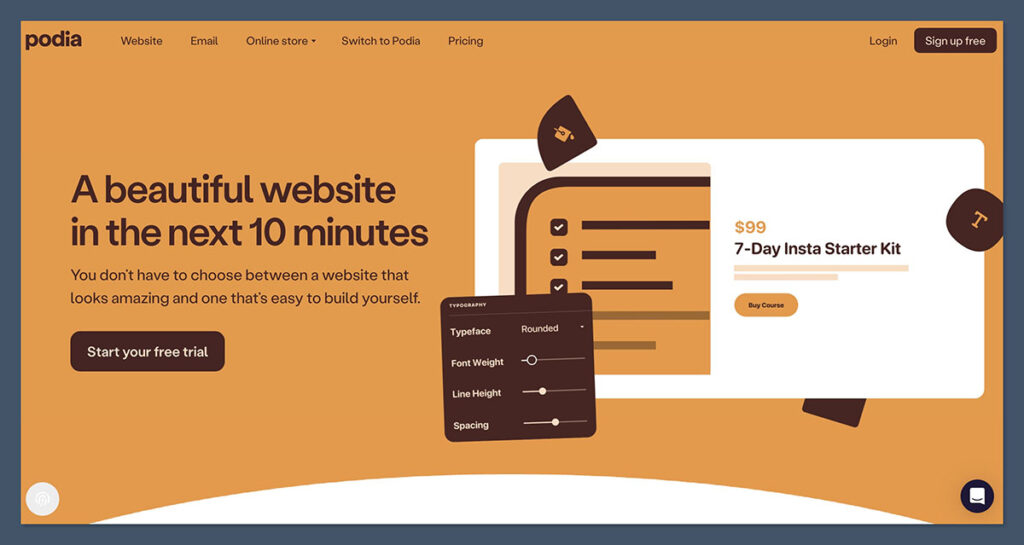
When it comes to turning clicks into conversions, Podia comes out ahead with more ecommerce-style features built in.
Podia Sales Features
- Built-in checkout system with 1-click upsells
- Multiple product pricing (tiers, payment plans, subscriptions)
- Built-in email campaigns (broadcasts, automations)
- Affiliate marketing tools
- Embeddable buy buttons to sell on your own site
All of this is native — no plugins or integrations required.

These features are a major advantage for ecommerce sellers who already use platforms like Shopify or Etsy for physical goods.
Podia lets you extend your catalog into digital products without needing a custom funnel or sales tool. It’s all managed in one dashboard — including checkout, marketing, and product delivery.
Thinkific Sales Features
Thinkific handles basic ecommerce features well:
- Secure Stripe/PayPal checkout
- Product bundling
- Coupons and discounts
- Membership pricing
- Custom domain setup
But you’ll need to add external tools (via integrations or the app store) for upsells, email marketing, and affiliates.
You can certainly create a profitable course business on Thinkific, but it often requires a piecemeal setup — connecting apps like Deadline Funnel for scarcity, or LeadDyno for affiliates.
If you enjoy having granular control over each step of the sales journey, this approach gives you that freedom, but it adds complexity.
The Winner
Podia is the better all-in-one ecommerce platform for digital products.
Best for Marketing Tools: Podia
If you want to drive traffic and nurture leads, Podia gives you more out of the box.
Podia Marketing Features
- Email broadcasts and sequences
- Lead magnets and opt-in forms
- Affiliate dashboard
- Built-in checkout pages
- Community features (group discussions, posts, etc.)
You don’t need any outside software to run campaigns.
The built-in email marketing alone makes Podia stand out. You can send automated welcome emails, nurture sequences, and course reminders — all without paying for ConvertKit or Mailchimp.
For creators just starting out, this can easily save over $50/month in extra tools, not to mention setup time.
Thinkific Marketing Features
- Integrations with ConvertKit, Mailchimp, ActiveCampaign
- Integration with affiliate software (LeadDyno, Rewardful)
- App store offers tools like Deadline Funnel, SEO plugins
But none of it is native, and setting up campaigns requires more time.
If you already use a marketing automation platform, Thinkific integrates well with them.
It’s flexible and scalable for businesses with a dedicated marketing workflow, but you’ll need to invest more time connecting and configuring each tool to match Podia’s all-in-one experience.
The Winner
Podia offers fewer moving parts and gives ecommerce sellers everything they need to launch and sell a product without a marketing tech stack.
Best for Apps and Integrations: Thinkific
If your tech stack is important, Thinkific’s app store gives you more flexibility.
Podia Integrations
- Stripe, PayPal
- Email (ConvertKit, Mailchimp, Drip)
- Calendly
- Zapier for everything else
That’s it — clean and simple, but not very expansive.
While Podia is intentionally minimalist, it can be limiting as your business grows.
For example, if you want to integrate with advanced analytics tools, CRMs, or marketing automation software beyond email, you’ll probably find yourself relying on Zapier as a workaround — and that comes with its own limitations.
Thinkific App Store
- Over 90 apps
- Categories include checkout, CRM, marketing, course tools
- Deeper integrations with tools like Segment, Google Analytics, Salesforce, HubSpot
If you want more customization and automation, Thinkific is a better long-term fit.
You can also extend Thinkific with custom API integrations, which makes it ideal for developers or teams building out full tech ecosystems.
Whether you’re integrating into a broader ecommerce platform or syncing with internal systems, Thinkific gives you the flexibility Podia simply doesn’t support.
The Winner
For teams or advanced users who want to build a tech stack, Thinkific is the winner.
Best for Support and Onboarding: Podia
Support matters, especially if you’re new to selling digital products.
Podia Support
- Live chat support on all paid plans
- Helpful tutorials and quickstart guides
- Responsive support team praised by users
- Weekly live Q&A calls for users
You can ask a question and get help within minutes.
This makes Podia ideal for solo creators, side hustlers, or ecommerce brands adding digital products for the first time.
The support is quick, clear, and doesn’t require navigating through layers of ticketing systems or documentation just to speak to a real person.
Thinkific Support
- Email support only (except for enterprise)
- Onboarding webinars
- Help center and documentation
No live chat unless you’re on a high-tier plan.
That said, Thinkific’s documentation is strong and its onboarding resources are comprehensive.
If you don’t mind a slower support process, you’ll still get the answers you need — just not in real time. For more complex setups, the guides are helpful, but less personalized than Podia’s hands-on support.
The Winner
Podia makes it easier for solo creators or ecommerce sellers to get started and get help quickly.
Final Verdict: Podia vs Thinkific
So, which platform is better for ecommerce sellers?
Here’s how I’d break it down:
| Use Case | Best Platform |
|---|---|
| Selling digital products (downloads, PDFs) | Podia |
| Building a full online course academy | Thinkific |
| All-in-one marketing + sales stack | Podia |
| Deep customization + course features | Thinkific |
| Best onboarding and support | Podia |
| Best for scaling with tech integrations | Thinkific |
Podia is the winner for ecommerce sellers looking to launch quickly with everything in one place. You can upload a product, set a price, send emails, and collect payments — without leaving the platform.
Thinkific is the winner if your business is built around courses as your core product, and you need detailed student tracking, assessments, or custom integrations.
My Recommendation
Choose Podia if you’re selling downloads, webinars, or want fast product launches without needing third-party tools.
Choose Thinkific if you’re an educator building a full course catalog or certification program and need a more traditional LMS setup.
Both offer free plans, so try them side-by-side and see what works best for your business.



Comments 0 Responses