

Quick Answer: If you run a B2B ecommerce operation with complex pricing, catalogs, and workflows—and you’ve got access to strong dev resources—VirtoCommerce is a solid choice.
It’s open-source, API-first, and made for scale. But it’s not beginner-friendly. If you’re looking for plug-and-play simplicity, this isn’t it.
What Is VirtoCommerce and Who’s It Best For?
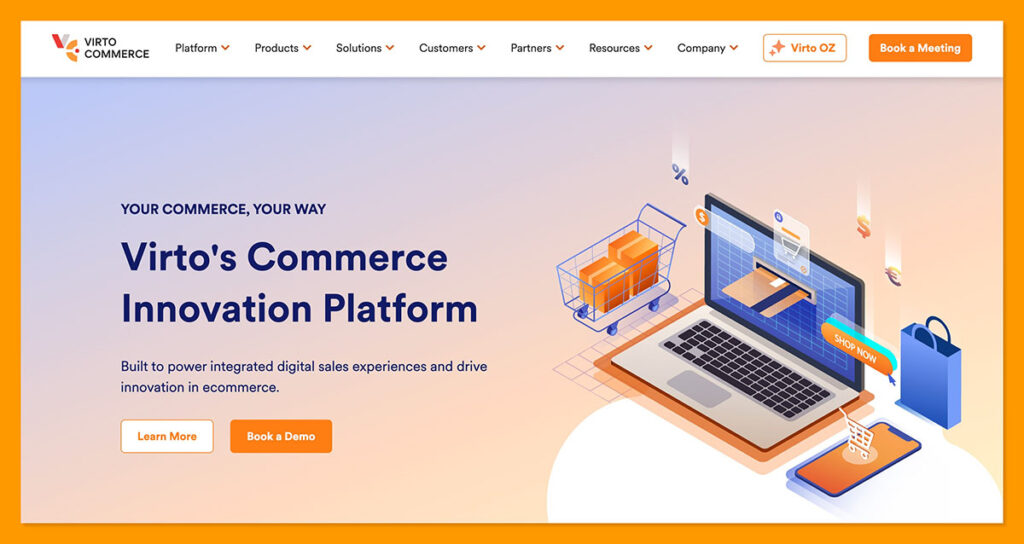
I’ve been in ecommerce for over a decade—seen platforms come and go. VirtoCommerce isn’t just another Shopify knockoff. It’s in a completely different league.
VirtoCommerce is an open-source, headless ecommerce platform designed for B2B and enterprise-level businesses. It’s modular, fully customizable, and focuses on delivering flexibility for complex sales structures.
Who It’s Built For:
- B2B companies with custom pricing, catalogs, or workflows
- Enterprise ecommerce teams needing API-first, headless flexibility
- Businesses operating across multiple markets, languages, or currencies
- Tech teams looking for a .NET-based architecture
Who It’s NOT For:
- Beginners with no dev team
- Small shops looking for drag-and-drop simplicity
- DTC brands just launching their first store
Pros and Cons
I’ve worked with brands using everything from WooCommerce to Salesforce Commerce Cloud. Here’s how VirtoCommerce stacks up:
Pros 👍
- Open-source – Total control over code
- API-first – Perfect for headless setups
- Modular architecture – Build what you need, ditch what you don’t
- Built for B2B – Tiered pricing, account-based access, quotes, etc.
- Strong community – Decent GitHub activity and support channels
Cons 👎
- Not user-friendly for non-devs
- No out-of-the-box themes or storefronts
- You’ll need a dev team or agency
- Can get pricey at scale if you’re paying for custom work
- Smaller ecosystem vs Shopify or Adobe
VirtoCommerce is not for everyone, but for the right team, it’s powerful. If you’ve got dev muscle and complex business needs, it’ll give you more control than BigCommerce or Adobe Commerce.
The technical trade-off is worth it if you want long-term control. Just don’t expect a plug-and-play store in a weekend.
VirtoCommerce Features – Full Breakdown
Over the past 10+ years, I’ve worked with nearly every ecommerce platform out there.
What makes VirtoCommerce stand out isn’t flashy templates or drag-and-drop tools—it’s how deep and flexible the backend architecture is.
This thing was built for serious B2B ecommerce teams who don’t want to bend their business to fit a platform. Instead, it lets the platform bend around your business. Here’s exactly what you get.
Product Catalog Management
VirtoCommerce gives you enterprise-level control over your catalog. It’s made for companies with thousands of SKUs, variants, and complex category trees.
Here’s what you can expect:
- Hierarchical categories – Multi-level nesting and advanced filtering
- Flexible product types – Simple, variable, kits, bundles, digital
- Attributes engine – Set custom attributes by product type or customer group
- Bulk tools – Import/export via Excel or API
- SEO management – Meta tags, slugs, and multilingual SEO fields
- Content versioning – Rollback support, version control for updates
This is built for scale. You’re not stuck with one-size-fits-all products like in Shopify. You can run a global catalog with thousands of variants and multiple catalogs per region or client.
Pricing and Promotions Engine
This is a big reason B2B brands love VirtoCommerce.
You’re not stuck with a flat price or basic discount. You can define pricing rules per account, group, region, or currency, and even handle complex quote-based pricing.
Key capabilities:
- Tiered pricing – Quantity-based discounts
- Customer-specific pricing – Set pricing rules per customer or company
- Contract pricing – Upload negotiated pricing agreements
- Promotions and coupons – Stackable discounts, expiration rules
- Pricing by currency, channel, or market
You also get price lists that can be layered, meaning you can combine base pricing with overrides for specific scenarios. Super useful if you sell the same product across regions or with channel partners.
Order Management and Workflows
This is where VirtoCommerce goes way beyond a standard ecommerce cart.
Unlike Shopify or BigCommerce, which are focused on B2C simplicity, VirtoCommerce gives you B2B sales flows like:
- Quote requests (RFQs) – Customers can request quotes instead of ordering
- Partial fulfillment – Ship part of the order while others are pending
- Invoices and credit limits – Built-in support for offline payment terms
- Reorder flows – Easy repeat orders from past purchases
- Order approvals – Workflow for managers to approve employee orders
You also get customizable business rules: Want to route orders differently based on value, region, or account type? Done. Want to auto-apply fees based on shipping method? Easy.
Multilingual, Multi-Currency, Multi-Region
This part’s huge for companies selling across multiple countries or in regional B2B setups.
Here’s what you can configure:
- Multiple currencies – Real-time conversion or fixed rates
- Localization – Full support for translated product data, meta tags, UI
- Multi-store support – Set up regional stores under one platform
- Geotargeting – Show specific pricing or catalogs based on IP or user account
- Regional tax support – Custom rules per location or account type
This means you don’t need five different Shopify Plus instances. You can run everything from one centralized backend.
Modular Architecture
The platform is built around .NET Core and modular services, meaning you don’t have to take a bloated monolith. You only install the components you actually use.
Common modules include:
- Cart
- Catalog
- Pricing
- Promotions
- Customer accounts
- Inventory
- Order processing
- Search (Elasticsearch or Azure)
If you need something custom, you can build your own module and plug it in. It’s the opposite of being stuck with what the platform gives you.
Headless and API-First
If you’re going headless, this platform is ready from day one. There’s no theme system holding you back. You connect your own frontend—built in React, Vue, Angular, whatever you want—and call the backend via APIs.
Here’s what’s available:
- Full REST API – Nearly every function is exposed
- GraphQL support – In development but partially available
- Webhook support – For custom automations and third-party triggers
- Custom endpoints – You can build and expose your own routes
So if you want to plug in a mobile app, PWA storefront, or CMS like Contentful, it works out of the box.
Account-Based Commerce (B2B Features)
B2B brands usually run into a wall with most platforms. VirtoCommerce is built for this use case.
Out of the box, you get:
- Company accounts – With multiple users and roles
- Buyer roles and permissions – Set what each person in a company can see or do
- Custom catalogs per company
- Custom pricing per company or contract
- Quote workflows
- Purchase order flows
You can even allow customers to create requisition lists and reorders, which makes bulk purchasing easier.
Inventory and Fulfillment
Inventory isn’t just tracked globally—it’s warehouse-specific and channel-specific.
Here’s what you can manage:
- Multi-warehouse inventory – Stock by location
- Inventory rules – Buffer stock, lead times, replenishment logic
- Drop shipping support – Virtual stock linked to suppliers
- Order routing – Based on stock location or shipping rules
Perfect if you’re fulfilling across multiple countries or partners.
Search and Filtering
VirtoCommerce lets you hook in powerful search backends like Elasticsearch or Azure Search. You can also build faceted navigation to your exact spec.
Search features:
- Full-text search
- Attribute-based filters
- Synonyms and misspellings
- Search boosting rules
- Custom search APIs for frontend developers
This is where most ecommerce platforms fall flat—Virto gives you control over how products are found, which directly affects conversions.
Here’s the bottom line:
If you’re tired of trying to force your business into a boxed SaaS platform, VirtoCommerce is the build-your-own-enterprise-stack that gives you complete freedom. The features are not just deep—they’re designed for complexity.
But again, this power comes with a cost: developer time, custom setup, and serious planning. If you’ve got those, this is one of the most customizable ecommerce platforms you’ll ever use.
VirtoCommerce Pricing: What It Actually Costs
VirtoCommerce is open source, but let’s clear something up right away:
Open source doesn’t mean free.
Yes, you can download the platform and run it yourself. But the real costs kick in when you start hosting, customising, and scaling your store—especially in a B2B environment where the sales cycle is complex.
Here’s a full breakdown based on how most ecommerce teams will need to plan.
1. Licensing Costs
VirtoCommerce offers two versions:
Community Edition – Free
- Open-source MIT license
- Fully functional core features
- No licensing fees
- Access to GitHub repo and community documentation
You’ll need to manage everything yourself: hosting, updates, security, and support.
Enterprise Edition – Starts at $5,000/year
- Commercial license
- Priority support + SLA-backed services
- Feature enhancements
- Access to premium modules
- Roadmap input and solution architecture reviews
Most mid-to-large businesses go with Enterprise—especially if they want stable, long-term deployment.
2. Hosting Costs
VirtoCommerce is not a SaaS platform. It doesn’t run on their servers. You’ll be hosting it yourself—either:
- On your own servers
- In the cloud (Azure, AWS, GCP)
Here’s what you’re looking at monthly:
| Hosting Type | Cost Estimate (USD/month) | Notes |
|---|---|---|
| Basic Azure VM | $100–$300 | Small to mid traffic |
| Scalable Azure Setup | $500–$1,500 | Production-ready, HA |
| AWS EC2 (3-tier) | $300–$1,000 | Depends on load |
| Self-hosted | Varies | You manage infrastructure |
Don’t forget backups, storage, security patches—this isn’t managed hosting like Shopify or BigCommerce.
3. Development Costs
This is where most teams underestimate the cost.
VirtoCommerce is a developer-first platform. You’ll need experienced .NET developers to deploy and maintain your store.
Breakdown of costs:
- Initial setup + MVP: $15,000–$50,000
- Custom integrations (ERP, CRM): $5,000–$30,000+
- Theme/frontend build (headless): $10,000–$60,000
- Ongoing dev maintenance: $2,000–$10,000/month
This depends on whether you:
- Build in-house team
- Hire freelancers
- Work with an agency (Virto has partners globally)
Expect a 6–12 week deployment timeline, minimum.
4. Support and Maintenance Costs
If you go with the Community Edition, you’ll be relying on:
- Forums
- GitHub issues
- Docs (which are decent, not amazing)
If you go Enterprise, you get:
- Direct support from the Virto team
- Issue escalation
- SLA timelines
- Help with platform updates and security patches
Support packages typically start around $5,000/year and scale based on SLA, number of environments, and hands-on consulting hours.
5. Total Cost of Ownership (TCO)
Let me break it down like I would to a client.
For a mid-sized B2B business running on VirtoCommerce:
| Cost Area | Estimated Annual Cost (USD) |
|---|---|
| Licensing | $0 – $10,000 |
| Hosting | $3,000 – $18,000 |
| Initial Dev Work | $30,000 – $100,000 (one-time) |
| Ongoing Dev Support | $24,000 – $120,000 |
| Support/Consulting | $5,000 – $25,000 |
| Year 1 Total | $60,000 – $200,000+ |
After year one, your costs drop to mostly:
- Hosting
- Dev retainer
- Support/license renewal
ROI Potential: Why Some Teams Love This Model
Yes, it’s more expensive up front than Shopify or BigCommerce.
But here’s what clients tell me:
- No platform limits
- No % of revenue fees
- Full control over integrations and workflows
- Lower long-term costs if you build once and scale
If you’re doing $5M+ per year, VirtoCommerce can actually be cheaper and more flexible in the long run—especially if you’re replacing multiple tools with one centralised backend.
Final Verdict on Pricing
VirtoCommerce isn’t “cheap,” but it’s high-value—if you’re running complex ops.
For businesses with unique B2B flows, ERP systems, custom pricing, or multiple regional stores, it pays off fast. Just don’t go in underestimating the build and maintenance costs.
If you want plug-and-play ecommerce for $39/month, look elsewhere.
VirtoCommerce Integrations: Connect Everything—If You’ve Got the Devs
Let me be clear:
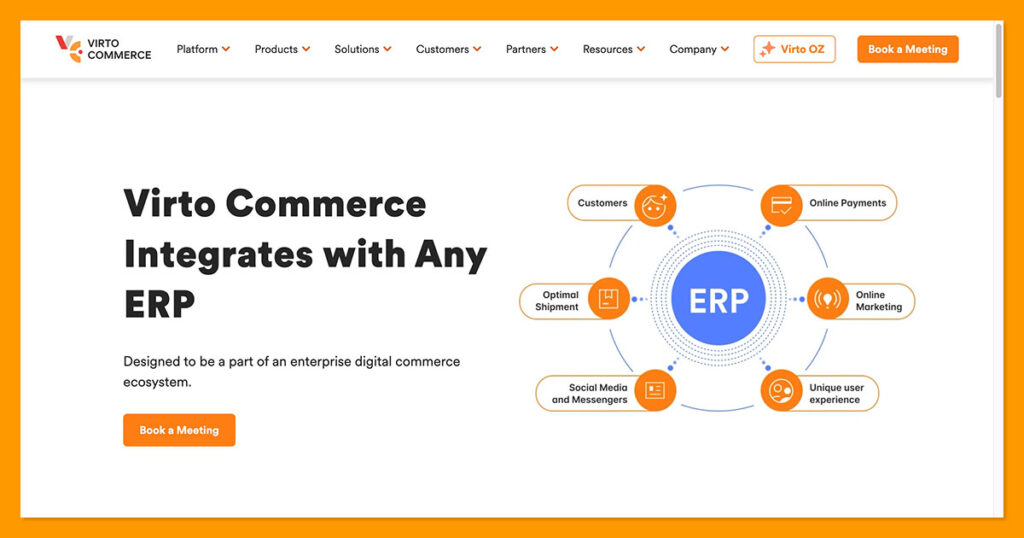
VirtoCommerce can integrate with almost anything—if you’ve got the right team.
It’s API-first. It’s modular. It’s built to connect with your full tech stack. But it’s not like Shopify where you go to the App Store, click install, and boom—you’re live.
With Virto, everything’s custom, everything’s flexible, and that’s both the blessing and the challenge.
Let’s break down how it works and what you can expect when it comes to third-party systems.
Out-of-the-Box Connectors
Some common integrations already have prebuilt modules or code libraries, especially for enterprise tools:
ERP Systems:
- Microsoft Dynamics 365
- SAP
- Oracle NetSuite
- Infor
These aren’t plug-and-play, but VirtoCommerce partners (or your in-house devs) can use existing integration templates to link customer data, orders, inventory, and pricing.
CRM Platforms:
- Salesforce
- HubSpot
- Zoho
- Microsoft Dynamics CRM
Integrations typically sync contact data, track leads from ecommerce touchpoints, and route B2B account activity into the sales pipeline.
Payment Gateways:
- Authorize.Net
- Stripe
- PayPal
- Adyen
- Braintree
These are usually handled through extensions or REST APIs. You can configure rules for each payment provider based on currency, country, or customer type.
Marketplaces:
- Amazon B2B
- eBay
- Alibaba (via middleware)
You’ll usually run these through middleware platforms like ChannelAdvisor or build custom connectors if you’ve got a dev team handy.
Shipping & Fulfilment:
- FedEx
- DHL
- UPS
- ShipStation
- ShipperHQ
Real-time shipping rates, fulfilment tracking, and logistics automations can be implemented through the platform’s API or third-party services.

Headless CMS and Frontend Tools
Since VirtoCommerce is headless by design, you’re not limited to any particular frontend or content system.
Popular integrations include:
- Contentful – Great for global content distribution
- Strapi – Flexible open-source CMS
- Umbraco – Pairs well with Virto’s .NET core
- Next.js, Vue Storefront, Nuxt, Angular – Build your frontend from scratch
Frontend teams love the clean REST API structure—they don’t have to fight the platform just to build a beautiful UX.
Custom APIs and Middleware
You can go completely custom.
VirtoCommerce gives you:
- Full REST API coverage – Nearly every service is exposed
- Webhooks – Trigger external actions on cart, order, account changes
- Custom modules – Build connectors inside the platform itself
- Middleware compatibility – Connect tools like MuleSoft, Zapier (for simple tasks), or Boomi
If your system uses XML, EDI, CSV imports, or FTP sync—you can build or script that out via Virto’s pipeline.
Real Use Case Examples
Here’s how clients I’ve worked with actually use these integrations in production:
B2B Auto Parts Brand
- ERP: SAP for inventory and order processing
- CRM: Salesforce to manage dealers
- PIM: Akeneo for product enrichment
- Payment: Authorize.net for card + invoice terms
- Custom connector: Quote engine API built internally
Global Industrial Supplier
- CMS: Contentful for 6 languages
- Frontend: Vue Storefront
- Fulfilment: DHL + local couriers via Shippo
- Analytics: Google BigQuery + Looker Studio
- Middleware: Custom Python service to sync pricing from legacy ERP
How Long Do These Integrations Take?
If you’re not using prebuilt connectors, custom integration work takes time.
Rough estimates:
| Integration Type | Time to Build |
|---|---|
| ERP (e.g. SAP) | 3–6 weeks |
| CRM (Salesforce) | 2–4 weeks |
| CMS + Frontend | 3–8 weeks |
| Custom API services | 2–6 weeks |
You can speed this up with experienced developers or an agency familiar with VirtoCommerce’s architecture.
Security & Compliance
- Supports OAuth2 for secure external access
- Role-based permissions for third-party apps
- Works with enterprise SSO like Azure Active Directory
- Audit logs for API usage
- Can be configured to meet GDPR, CCPA, and PCI-DSS
You’re fully in control of where your data goes and how third-party tools access it.
Final Verdict on Integrations
This is one of VirtoCommerce’s biggest strengths, but you need the right mindset and team.
If you want a tidy marketplace of apps, look at Shopify. If you want to build a fully-connected, B2B-ready commerce engine, VirtoCommerce can handle anything you throw at it—ERP, CRM, payments, PIM, you name it.
Just be ready to invest in integration work upfront to reap the long-term flexibility.
SEO Capabilities: Built for Technical Teams, Not Content Marketers
Here’s the real talk:
VirtoCommerce gives you full control over your SEO setup—but it doesn’t do the work for you. There’s no Yoast plugin. No guided checklists. You (or your devs) have to handle it manually.
But if you know what you’re doing, the platform gives you everything you need to rank.
URL Structure and Routing
VirtoCommerce gives you clean, customizable URLs right out of the box. You can:
- Manually set product and category slugs
- Create SEO-friendly paths like
/category/product-name - Avoid duplicate content with canonical tags
- Use dynamic routing based on language, region, or catalog
No weird query strings, no .html endings—you get clean, crawlable URLs.
Meta Tags and SEO Fields
You can manage all the essentials:
- Title tags
- Meta descriptions
- H1 and custom heading tags
- Open Graph and Twitter Card metadata
- Image alt text (manual input per product)
It’s built for SEO control, not automation. So if you want auto-generated meta tags, you’ll need to build that logic in yourself.
Multilingual and Multiregional SEO
This is where VirtoCommerce really shines if you’re international.
You get:
- Full support for hreflang tags
- URL structures for subfolders or subdomains (
/en/,/fr/, etc.) - SEO fields for each language version of a product
- Region-based canonical control
That means you can target users in the US, UK, France, or Germany—without duplicate content or SEO cannibalisation.
Technical SEO Features
VirtoCommerce gives your dev team the raw tools they need:
- Custom sitemaps
- Robots.txt control
- Schema markup support (you define it manually)
- Fast API delivery (great for Core Web Vitals)
- Headless support = blazing-fast frontends with modern frameworks
Pair it with a frontend like Next.js or Nuxt, and you’re looking at a Core Web Vitals-friendly, SEO-ready architecture—no heavy themes, no render-blocking scripts.
What’s Missing
To be clear, this is not a marketer-first platform. You won’t find:
- Built-in SEO audits
- Real-time keyword suggestions
- Automated schema markup
- Plugin marketplace for SEO extensions
It’s manual SEO—but it’s good SEO if you’ve got the right team or tools to execute.
Final Verdict on SEO
VirtoCommerce is SEO-friendly at the core, but you need dev resources to pull it off.
It won’t hold your hand, but it gives you all the levers: clean code, fast frontends, custom URLs, full metadata control, and multilingual SEO support.
If you care about long-term organic traffic and ranking globally, this platform can handle serious SEO—you just have to build the framework yourself.
Ease of Use: Built for Devs, Not DIYers
Let’s get this straight:
VirtoCommerce is not easy to use out of the box.
It’s a technical platform. It was built for companies that want custom ecommerce logic, not drag-and-drop simplicity.
I’ve worked with plenty of teams—some with full in-house dev squads, others who outsourced the build. Here’s what you need to know.
Backend Setup and Architecture
This isn’t a Shopify-style “sign up and go live” situation.
With VirtoCommerce, your team will need to:
- Set up your hosting environment (Azure, AWS, or on-premise)
- Deploy the platform manually or via Docker
- Configure databases, search indexing, caching
- Hook in a CMS or build your own frontend
Translation: If you’re not technical, you’ll need help. Period.
Admin Dashboard Experience
Once it’s installed, the admin dashboard is decent—but still very dev-focused.
Here’s what you’ll find:
What’s Easy:
- Managing product catalogs and SKUs
- Creating pricing rules and tiered pricing
- Setting up promotions and coupon codes
- Managing orders, returns, and customer accounts
- Exporting reports and product data
What’s Not:
- Customizing the frontend (there’s no built-in theme engine)
- Making visual changes (requires dev work or headless frontend)
- Learning the admin as a non-tech user (UI is functional, not polished)
If you’re used to Shopify or Wix, the UI will feel dry and a bit clunky. But if you’ve used Adobe Commerce (Magento), it’s actually cleaner and faster.
Developer Workflow
This is where VirtoCommerce wins hard.
If your developers are familiar with .NET Core, they’ll love how clean and modular the architecture is. They can:
- Extend functionality with custom modules
- Build headless storefronts with any framework (React, Vue, etc.)
- Use clean REST APIs to integrate with anything
- Leverage CLI tools for deployments
- Version control all configurations in Git
One client of mine had their entire storefront built in Next.js, pulling product data, cart logic, and promotions directly from the VirtoCommerce API—and it ran smooth as butter.
Learning Curve
The reality:
- Non-tech users = high learning curve
- Dev teams familiar with .NET = moderate learning curve
- Dev teams new to Virto = 2–4 weeks to ramp up
You’ll want at least one technical project manager or solution architect involved during the setup phase to handle API mapping, dev tickets, and backend logic.
Final Verdict on Ease of Use
This is not a user-friendly ecommerce platform—unless your “user” is a developer.
But if you want full backend control, and you’re okay with building a custom frontend or integrating with your own CMS, it’s one of the most flexible platforms out there.
If ease of use means launching tomorrow, this isn’t the platform for you.
If it means building something tailored to your business and owning it long-term, then it’s a smart play.
Customer Support: Community First, Enterprise When You Need It
Now let’s talk support.
One of the biggest pain points with open-source platforms is getting help when you’re stuck. With VirtoCommerce, you’ve got two main paths: community support (free) and enterprise support (paid).
Here’s what each one offers—and what I’ve seen work best.
Community Support (Free)
This is available to everyone using the Community Edition.
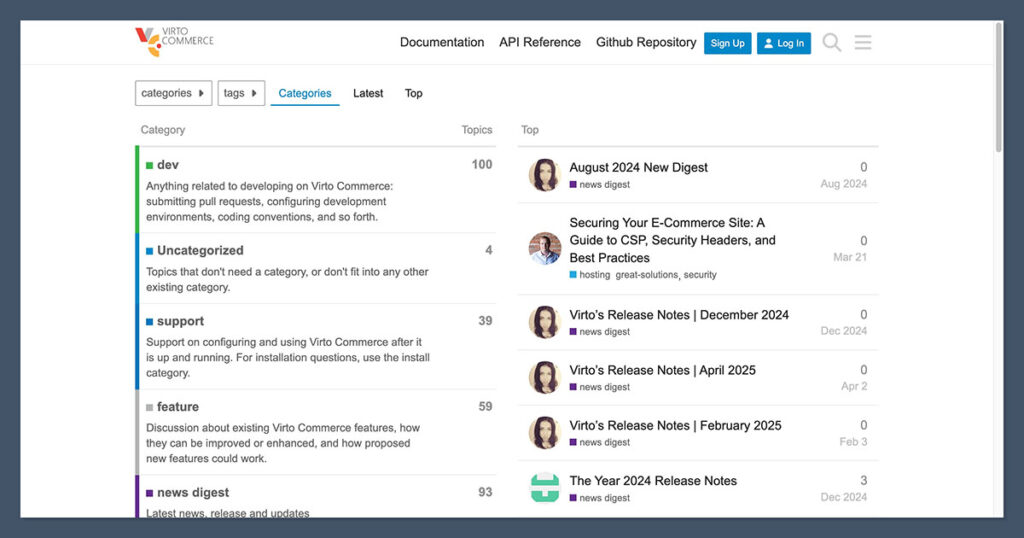
You get access to:
- Official Documentation – Good depth, a bit scattered
- GitHub Issues – Active repo with bugs, feature requests, and support tickets
- Community Slack – Decent developer activity, some partner help
- YouTube Tutorials – Mixed quality, but a few solid setup walkthroughs
If you’ve got a mid-level dev team, you can get pretty far with just these resources. I’ve had projects launched using nothing but the docs and GitHub discussions—but only because we had skilled devs leading the way.
Enterprise Support (Paid)
This is for businesses using the Enterprise Edition of VirtoCommerce—and it’s worth the money if you’re serious about uptime, scale, and custom builds.
Here’s what enterprise support gets you:
Direct Access to Core Devs:
- SLA-backed response times (usually 24–48 hrs)
- Escalation for urgent bugs or deployment blockers
- Architecture reviews and upgrade plans
Technical Consulting:
- Help planning integrations and custom features
- Optimization advice for performance, scaling, and security
- Deployment guidance for Azure and AWS setups
Priority Updates:
- Faster access to new features
- Fixes for security patches and version upgrades
Pricing usually starts at $5,000/year and can scale based on how much handholding you need. For some teams, this is non-negotiable.
My Real-World Experience with Support
Here’s how it usually plays out:
- Smaller teams use GitHub and Slack to get started, then bring in an agency for help when they hit a wall.
- Mid-sized orgs often run Community Edition for MVPs, then switch to Enterprise once they go live and need guaranteed support.
- Enterprise orgs bake support costs into their annual tech budget—it’s part of the build.
One project I worked on moved to enterprise support after hitting a scaling bottleneck with Azure. Within a week, Virto’s team jumped in, audited the environment, and gave us clear fixes. Worth every penny.
Final Verdict on Customer Support
For an open-source ecommerce platform, VirtoCommerce’s support options are solid—especially once you’re on the Enterprise track.
The docs are good. GitHub is active. Slack is helpful.
But if your store can’t afford downtime or bugs, buy the Enterprise license and get that support safety net.
You don’t want to be troubleshooting payment issues at 2am with no help in sight.
Final Verdict: Should You Use VirtoCommerce or Not?
After more than a decade helping ecommerce brands scale—from scrappy B2C startups to $100M+ B2B giants—I’ve learned one thing:
The ecommerce platform you pick either unlocks scale—or blocks it.
VirtoCommerce doesn’t pretend to be easy. It’s not for everyone. But for the right business model, especially complex B2B, it might be the most flexible open-source solution on the market.
Let’s sum it up.
Use VirtoCommerce If You:
- Run a B2B business with custom catalogs, contracts, or quote workflows
- Need enterprise-level customisation without Salesforce/Adobe pricing
- Have access to a .NET development team (or budget to hire one)
- Want to build a headless commerce stack that can scale globally
- Need to connect deeply with ERP, CRM, and legacy tools
Avoid It If You:
- Don’t have dev resources or can’t afford an agency
- Want a simple drag-and-drop website builder
- Sell B2C with one catalog and standard pricing
- Expect instant themes, plugins, or app store integrations
- Need to go live in under a week
How VirtoCommerce Compares to Other Platforms
Here’s a comparison I usually show clients when they’re deciding between the big players:
| Feature / Platform | VirtoCommerce | Shopify Plus | BigCommerce Enterprise | Adobe Commerce (Magento) |
|---|---|---|---|---|
| Best For | B2B, Headless, Enterprise | High-growth B2C brands | Mid-market B2B & B2C | Large global enterprise |
| License Type | Open-source + Enterprise | SaaS | SaaS | Open-source + Adobe Cloud |
| Headless Ready | ✅ Native API-first | ⚠️ Via Hydrogen or Storefront API | ⚠️ Limited, 3rd party frontend | ✅ Yes |
| B2B Features | ✅ Built-in | ❌ App-based workarounds | ✅ Decent native B2B tools | ✅ Advanced but complex |
| Ease of Use | ❌ Devs required | ✅ Super easy | ✅ Easy-ish | ❌ Steep learning curve |
| Flexibility | ✅ Total control | ❌ SaaS limitations | ⚠️ Limited by platform | ✅ Extreme flexibility |
| Integrations | ✅ API or custom | ✅ Huge App Store | ✅ Good app ecosystem | ✅ Tons of modules |
| Speed to Launch | ❌ 6–12 weeks dev time | ✅ Days or a week | ✅ Fast | ❌ Long setup time |
| Hosting | Self-hosted (Azure/AWS) | Shopify Cloud | BigCommerce Cloud | Adobe Cloud / Self-hosted |
| Support Options | Community + Paid SLA | 24/7 Premium Support | 24/7 Support | Enterprise support (Adobe) |
| Total Cost (Year 1) | $60K – $200K+ | $24K – $100K+ | $30K – $150K+ | $100K – $500K+ |
Key Insight: VirtoCommerce shines when your business model is too complex for SaaS platforms—but it requires serious planning and technical execution.
What I Recommend
- If you’re a lean B2C team? Go Shopify Plus or BigCommerce. Get your product live fast. Focus on marketing.
- If you’re a scaling B2B company with regional catalogs, custom pricing, and legacy systems? VirtoCommerce might be your best long-term investment.
- If you’re enterprise-level with a global footprint, and have budget + devs to burn? Adobe Commerce still holds weight—but it’s bloated, expensive, and painful to scale without expert help.
Long-Term Play: What You’re Really Buying
With VirtoCommerce, you’re not buying a “platform” so much as you’re building an ecommerce engine around your business model. That takes longer. Costs more upfront. But gives you 10x control and flexibility.
And if you’re thinking 3–5 years out?
That control is what saves you millions in tech debt and rebuilds.
Final Verdict: My Honest Take
If you’re running complex B2B ecommerce, want total freedom over your stack, and have real dev power—VirtoCommerce is a beast.
But if you’re looking for easy, fast, or “pretty,” this isn’t it. You’ll hate it unless you’re ready to build.


Comments 0 Responses