



ShipBob and Shippo are two big names in ecommerce fulfilment — but which one is actually the better fit for your business in 2026?
We’ve spent over 100 hours researching, comparing features, reviewing pricing models, and testing both platforms hands-on with real Shopify stores.
If you’re running an online shop and want smoother, faster, and more cost-effective shipping — this breakdown is for you.
ShipBob vs Shippo: Quick Verdict
ShipBob – Best for fast-growing ecommerce brands that want to outsource fulfilment
Shippo – Best for small stores that want cheaper shipping rates without giving up control
In this comparison, I’ll walk through where each tool shines (and where it doesn’t), covering everything from setup and cost to carrier support, inventory management, integrations, and more.
| ShipBob is best for: | Shippo is best for: |
|---|---|
| Brands scaling past DIY fulfilment | Small ecommerce stores shipping from home or office |
| Outsourcing warehousing and packing | Saving money on postage and batch shipping |
| Streamlining logistics across regions | Comparing live carrier rates and printing labels |
| Selling across the US, UK, Canada, EU | Budget-friendly ecommerce operations |
Updated July 2025 — This guide reflects the latest platform changes and current pricing.
Quick Comparison: ShipBob vs Shippo
| Feature | ShipBob | Shippo |
|---|---|---|
| Type | 3PL fulfilment | Shipping label software |
| Fulfilment handled for you | ✅ Yes | ❌ No |
| Warehousing | ✅ Global locations | ❌ None |
| Label discounts | ✅ Included in cost | ✅ Up to 90% off USPS/UPS |
| Real-time shipping rates | ❌ Not user-facing | ✅ Yes |
| Setup time | 7–14 days | 10–15 minutes |
| Best for | Scaling logistics | DIY shipping automation |
| Inventory management | ✅ Built-in | ❌ External only |
1. Best for Fulfilment: ShipBob
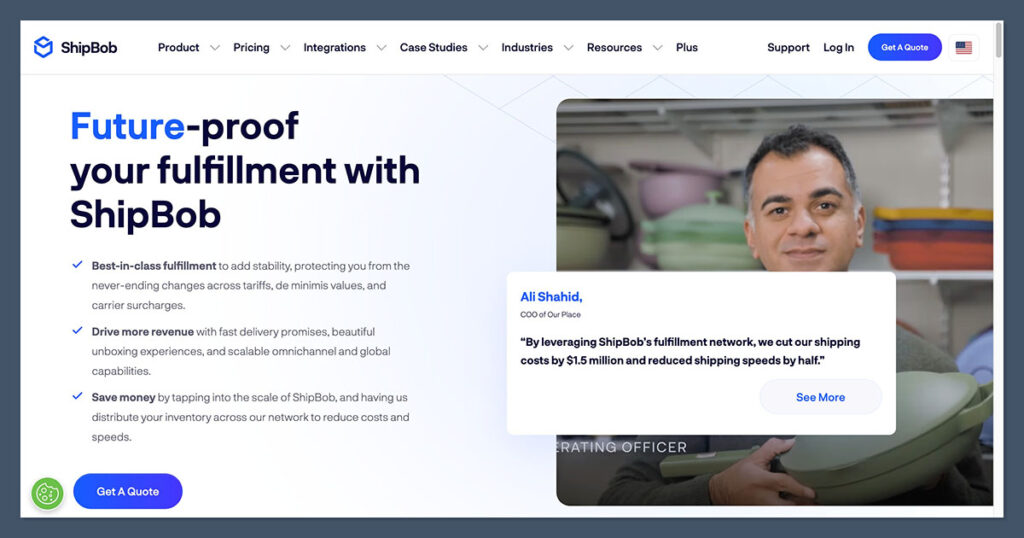
The Winner: ShipBob
ShipBob is more than a shipping service — it’s a full-service third-party logistics provider (3PL). If you’re at the stage where fulfilling orders in-house is slowing you down, this is where ShipBob shines.
Once your inventory is stocked in their warehouses, you don’t lift a finger.
Here’s what ShipBob takes care of:
- Picks, packs, and ships every order automatically
- Offers 2-day shipping to 99% of the US
- Handles wholesale, DTC, subscription boxes, and marketplace orders
- Sends branded tracking notifications to customers
- Manages inventory levels across locations in real-time
What makes it so powerful is the distributed warehouse network. You can split inventory across the US (and globally) and reduce last-mile shipping costs while keeping delivery fast.
Platform integrations are seamless:
- Shopify
- BigCommerce
- WooCommerce
- Walmart
- Amazon
- And 50+ more, including inventory and order management tools
That means your store and ShipBob stay perfectly synced — no messy imports or duplicate SKUs.
Good to know:
- They offer branded packaging and custom kitting
- You can get analytics on fulfilment speed, late orders, and inventory turns
- Their B2B fulfilment works for wholesale and retail store shipments, not just DTC
Real Example:
A fashion brand doing 700+ orders/month used ShipBob to cut fulfilment costs by 28% after moving from an in-house warehouse and part-time staff. Returns were also processed faster, which helped with customer retention.
Verdict:
Use ShipBob if you’re scaling and logistics is your bottleneck. You’ll offload fulfilment completely and give your customers Prime-like delivery — without Amazon fees.
2. Best for Shipping Rates and Label Control: Shippo
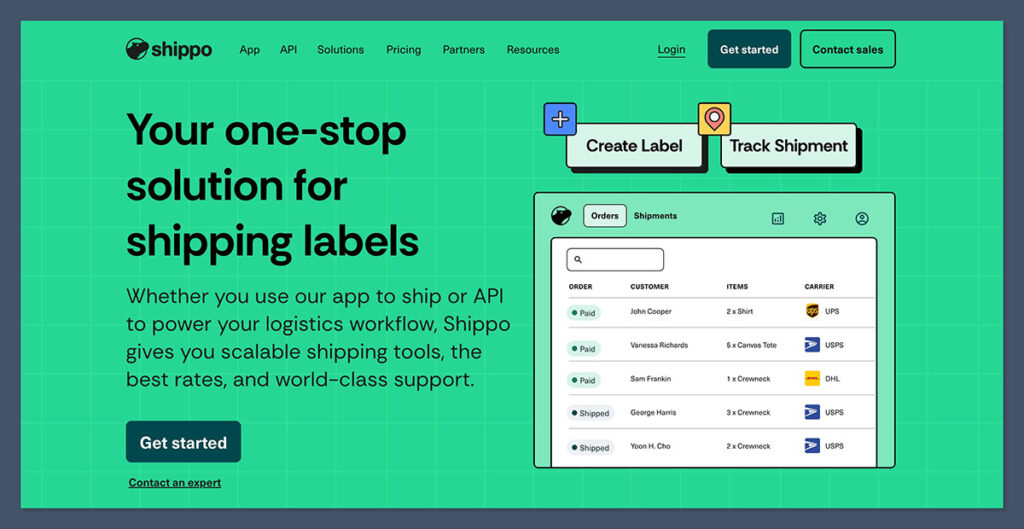
The Winner: Shippo
Shippo is the best option if you still pack and ship in-house, but want better shipping rates and automation. It’s not a fulfilment service — it’s a shipping management tool.
With Shippo, you get:
- Access to 85+ carriers, including USPS, UPS, FedEx, DHL, Canada Post, and more
- Real-time rate comparisons from all your connected carriers
- Batch label printing for up to 100 shipments
- Automated tracking emails sent to customers
- Easy returns with pay-on-use return labels
The flexibility is unmatched. You can:
- Choose the cheapest carrier for every order
- Set rules for shipping speed (e.g. free standard, paid express)
- Integrate with most ecommerce platforms (Shopify, Wix, BigCommerce, WooCommerce, Squarespace, Amazon, etc.)
Use Case:
One handmade jewellery store was shipping 30–50 orders a week. By switching to Shippo, they reduced shipping costs by nearly 40% just by using discounted USPS rates — no fulfilment partner needed.
Bonus features worth noting:
- Shippo supports international shipping documents, like pre-filled customs forms
- You can build branded tracking pages
- Labels are easy to create from CSV files or store order data
Setup is fast — under 15 minutes. You can be up and running the same day.
Verdict:
Use Shippo if you want full control over your shipping process, need to save money on postage, and still fulfil orders yourself. It’s powerful, flexible, and scales with you — without big overhead.
3. Best for Pricing: Shippo
The Winner: Shippo
When it comes to affordability and predictability, Shippo is the clear winner — especially for small and midsize ecommerce brands.
Here’s a breakdown of Shippo’s pricing:
| Plan | Monthly Cost | Label Discount |
|---|---|---|
| Free | $0 | Yes (USPS, UPS) |
| Starter | $10/month | Advanced automations |
| Pro | Custom | Team accounts + API |
- You only pay for what you use
- USPS Priority labels can be as low as $2.94
- Branded tracking, address validation, and insurance are optional add-ons
ShipBob, on the other hand, uses custom pricing — and it can get expensive.
Here’s what I was quoted (1,000 orders/month):
- Pick & pack: $5 per order
- Storage: $40/pallet/month
- Return processing: $3–5 per item
- Branded packaging: extra
So yes, while you offload the work, you’re paying for every part of the process.
Pro tip: If you’re shipping under 300 orders/month, ShipBob may not make financial sense yet. But when you start scaling, the cost of internal fulfilment (labour, space, errors) often outweighs their fees.

Verdict:
Shippo wins for affordability and flexibility.
ShipBob makes sense when you’re doing volume and want to avoid fixed fulfilment overhead.
4. Best for Setup and Usability: Shippo
The Winner: Shippo
Getting started with Shippo is quick and painless — one of the platform’s biggest strengths. The dashboard is clean, intuitive, and designed for users who don’t want to mess with code or logistics jargon.
Here’s what setup looks like:
- Create an account
- Connect your ecommerce store (Shopify, BigCommerce, etc.)
- Sync orders and start printing discounted labels
It’s beginner-friendly, but still packed with features:
- Create shipping rules (like free shipping thresholds)
- Schedule pickups with select carriers
- Automate returns and refund labels
- Build branded tracking experiences
By contrast, ShipBob takes more time:
- You’ll need to prepare and ship inventory to their fulfilment centre
- Map SKUs
- Sync with your store
- Wait for warehouse receiving and test orders
For me, the process took nearly 2 full weeks to complete before orders could start going out.
That said, they do assign you an onboarding specialist — and it’s very hands-on.
Verdict:
Use Shippo if you want something you can start using right away, without help.
Use ShipBob if you’re ready to invest in a longer onboarding for a more automated future.
5. Carrier Access and Speed: ShipBob
The Winner: ShipBob (Speed) / Shippo (Control)
Both tools approach shipping differently, and your decision comes down to what matters most — speed or control.
| Feature | ShipBob | Shippo |
|---|---|---|
| Carrier Choice | ❌ Pre-selected | ✅ Choose from 85+ carriers |
| 2-Day Shipping | ✅ Yes (99% US covered) | ❌ Depends on carrier |
| Custom Packaging | ✅ Yes | ❌ No |
| International Support | ✅ Yes | ✅ Yes |
| API Access | ✅ Yes | ✅ Yes |
ShipBob automatically chooses the fastest, most affordable shipping option based on where your customer lives and where your inventory is stored.
Their smart routing system means orders are shipped from the closest warehouse, with 2-day delivery almost guaranteed across the US.
Shippo, on the other hand, puts you in the driver’s seat. You compare carriers, choose your service level, and decide what’s best for each shipment.
Hybrid Model:
Many brands use both tools together — ShipBob for stocked SKUs, and Shippo for on-demand, international, or niche orders.
Verdict:
- Go with ShipBob for fast, automated, Prime-like delivery
- Go with Shippo for complete control and flexibility
6. Best for Analytics, Returns, and Inventory: ShipBob
The Winner: ShipBob
ShipBob offers a full backend for ecommerce logistics, not just shipping. Everything is built into their dashboard, including:
- Real-time inventory levels across all fulfilment centres
- SKU-level tracking and forecasting
- Fulfilment performance metrics (e.g. late shipments, error rates)
- Automated return label creation and processing
- Alerts for low stock, restocking needs, and order issues
It’s a data-driven platform, designed for growing businesses that need to understand logistics costs, track efficiency, and make decisions based on hard numbers.
Shippo, while feature-rich for shipping, doesn’t offer:
- Inventory tracking
- Supply chain visibility
- Returns processing dashboards
You’ll need to connect other tools (like Inventory Planner or Returnly) to get those functions.
Verdict:
Choose ShipBob if you want centralised logistics, supply chain insights, and built-in returns management.
Choose Shippo if you’re focused on shipping and using separate inventory tools.
7. Best Support: Tie
The Winner: It Depends on Your Plan
| Support Type | ShipBob | Shippo |
|---|---|---|
| Live Chat | ✅ Yes | ✅ Yes |
| Email Support | ✅ Yes | ✅ Yes |
| Phone Support | ✅ Enterprise Only | ❌ None |
| Dedicated Manager | ✅ On higher-tier accounts | ❌ Not available |
| Onboarding Help | ✅ Included with setup | ✅ For paid plans |
ShipBob’s support is stronger if you’re on one of their larger plans.
You get a dedicated account manager, real-time order issue support, and direct access to their ops team. This is especially important when things go wrong — like delayed shipments or lost inventory.
Shippo, on the other hand, is built for self-service. Their support works well via email and live chat, and their help center is loaded with:
- Tutorials
- Troubleshooting articles
- Developer docs (for API users)
- “Shippopedia” and eBooks
And if you’re on the Professional or Premier plan, you’ll also get faster response times and more onboarding support.
Real experience: I found Shippo’s team quick to answer basic label issues. But for complex problems like refunding mislabelled orders or reconciling batch shipping errors, their help was limited to written documentation.
Verdict:
- ShipBob wins for larger stores needing hands-on, full-service support
- Shippo wins for smaller teams that can self-manage and prefer live chat/email help
Final Verdict: Should You Use ShipBob or Shippo?
| Use ShipBob if… | Use Shippo if… |
|---|---|
| You want to fully outsource fulfilment | You’re still fulfilling orders in-house |
| You need 2-day shipping + warehousing | You want cheaper USPS/UPS rates |
| You’re scaling past 500+ orders/month | You ship under 100 orders/week |
| You sell across multiple countries | You want fast setup and low cost |
| You need inventory, returns, and analytics in one place | You only need label printing and carrier options |
My take:
I’ve used Shippo to start — and ShipBob to scale.
You don’t have to choose one forever. A lot of stores even use both at the same time.
If you’re testing new SKUs or doing small-batch shipping? Stick with Shippo.
If you’re drowning in boxes and want freedom from fulfilment? ShipBob’s worth it.


Comments 0 Responses