

Redbubble hasn’t always been my top pick for companies interested in print-on-demand, but I definitely see the value there for newer sellers. You can customize a huge selection of products, instantly find an audience, and start earning money without running a whole ecommerce operation in the background.
Fourthwall is different. It’s less about getting products in front of shoppers quickly, and more about giving you a home base for your brand where you can scale and sell just about anything. You’re not just limited to premium print on demand, you can sell products you source yourself, digital downloads, plus memberships, without a separate tool.
At this point, I’d probably recommend both, but to different sellers with different problems. If you have artwork and not much of an audience, Redbubble is great. If you have an audience but you don’t have a flexible way to turn their support into cash, Fourthwall is better.
Fourthwall vs Redbubble: My Quick Verdict
These days, I like Redbubble for smaller sellers who want to get their ideas out there, but don’t have much of a marketing strategy, or existing audience behind them. It can help connect you to millions of potential customers without forcing you to build and manage a complete store, and the print on demand product range is genuinely huge.
Fourthwall is better if you’re thinking more long-term. You already have an audience, or you’re building one, and what you need is a platform you can send them to where you show off your brand and products.
You get your own storefront, keep ownership over your customer data, set your own margins, and decide whether you want to stick to print on demand or add other product options as you go. It’s the far more flexible option, without becoming as complicated as something like Shopify.
What Are Fourthwall and Redbubble?
The problem with comparing platforms like Fourthwall and Redbubble is some people see that both of them offer print on demand services and fulfillment and assume they’re exactly the same. The differences are actually huge.
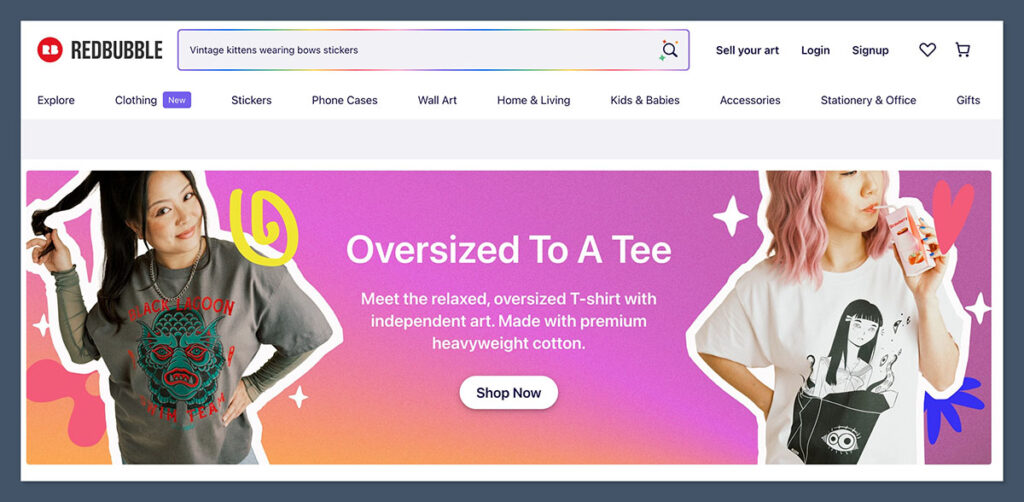
Redbubble is a marketplace for print on demand sellers. You sign up for an account, choose the products you want to sell, add your artwork, then list those items on your page for people to find. If anyone places an order, Redbubble handles the work of producing and shipping the item, and you get the profits minus the platform fee for the tier you’re on.
Fourthwall is a full brand-building platform that gives users a customizable site, a flexible domain, access to a print-on-demand catalog and fulfillment, plus all the tools you need to sell additional physical products, digital downloads, or memberships alongside. Fourthwall also acts as your Merchant of Record for taxes, and handles customer support for catalog orders.

| Factor | Fourthwall | Redbubble |
|---|---|---|
| What you get | A complete store and POD provider | A marketplace and POD provider |
| Traffic | You source your own audience through marketing | Redbubble helps connect you with potential buyers |
| POD catalog | Over 350 products (all premium, retail-grade) | Over 70 different product types |
| Storefront | Your own custom store | A page on Redbubble |
| Other products you can sell | Custom products, digital products, or memberships | Only POD |
| Integrations | Social media channels, marketplaces like Etsy, and email marketing tools | Limited creator tools |
| Cost | Free to start | Free to start |
| Support | Merchant of Record support, and customer support for catalog products | Tax handled in Redbubble’s model |
| Margins | You set your product costs | Redbubble set recommended markups and charges platform fees based on tier |
Fourthwall vs Redbubble Pricing and Potential Margins
You can get started for free with both of these platforms, so that’s a bit of relief, but there’s a big difference in what you get from each, and what each partner can help you earn.
Fourthwall is very easy to understand. The free plan gives you your storefront, full access to the print on demand catalog, and other tools for selling various types of products. You won’t pay a percentage fee for the products you sell, and for print-on-demand items, you just pay the base cost and set your own margins. Digital downloads and memberships do incur a 5% though.
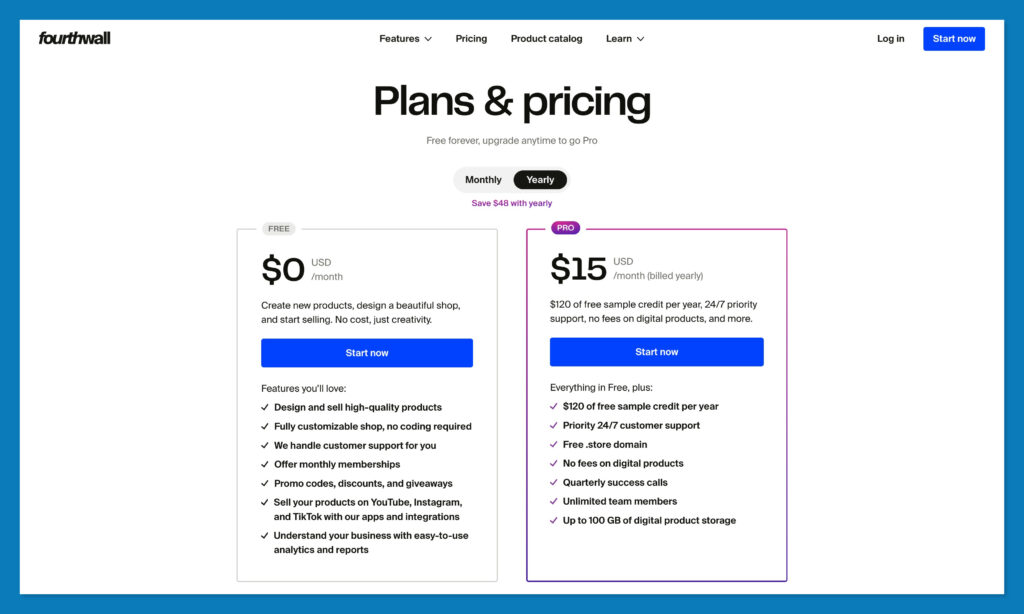
The Pro plan for $19 per month removes the 5% for digital downloads only, and gives you $10 in monthly sample credits, unlimited team members, better customer support, plus a free .store domain for a year.
Redbubble is a bit more complicated. It is free, and there’s no “premium” plan you can pay for, so you can get access to everything without paying a penny. What you earn, though, is complicated. First, although you can technically set your own prices, there’s an excess fee if you set a markup higher than 20%. So Redbubble claims 50% of anything earned over the 20% profit. There’s also a monthly cap fee of $150, though.
Then there are platform fees. The standard tier deducts about 50% of your monthly earnings, while the premium tier takes 20%, and the Pro tier doesn’t take anything. Redbubble gets to choose exactly who falls into each tier, based on account activity.
A fee structure like that might be reasonable if Redbubble is getting you access to sales you never would have found yourself; it can be more troubling for a beginner.
Fourthwall vs Redbubble: Where Do You Sell, and How Do Customers Find You?
As I mentioned before, with Redbubble you’re selling on a marketplace. That’s both a good thing and a bad thing depending on how you look at it. The marketplace means you’re instantly listing your products in a place visited by millions of people every day. Redbubble even runs ads across Google and Facebook, and features artists in its email, SMS, and other marketing strategies.
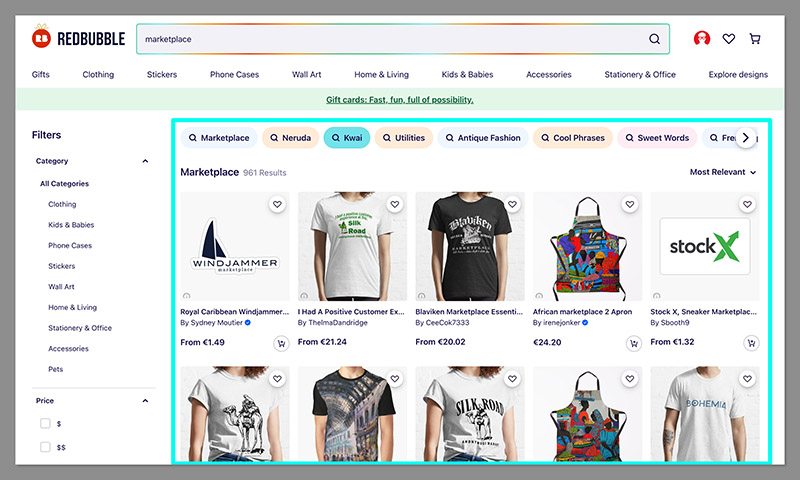
You’re still not guaranteed a huge number of sales though, since there are already over 650,000 artists on the platform competing for the same audience. You also don’t “own” your audience, all of their information stays with Redbubble.
Fourthwall doesn’t give you direct access to an audience, although it’s worth saying the Etsy integration can definitely help out. This is a platform that expects you to earn the attention yourself, then gives you something valuable to do with it.

You get your own branded storefront, and you can sell through both that, and platforms like YouTube Shopping, Facebook or Instagram Shopping, TikTok Shop, or Twitch. There are also integrations with tools like Kit that can sync customers and members with purchase information and tags to help you build more effective nurturing campaigns.
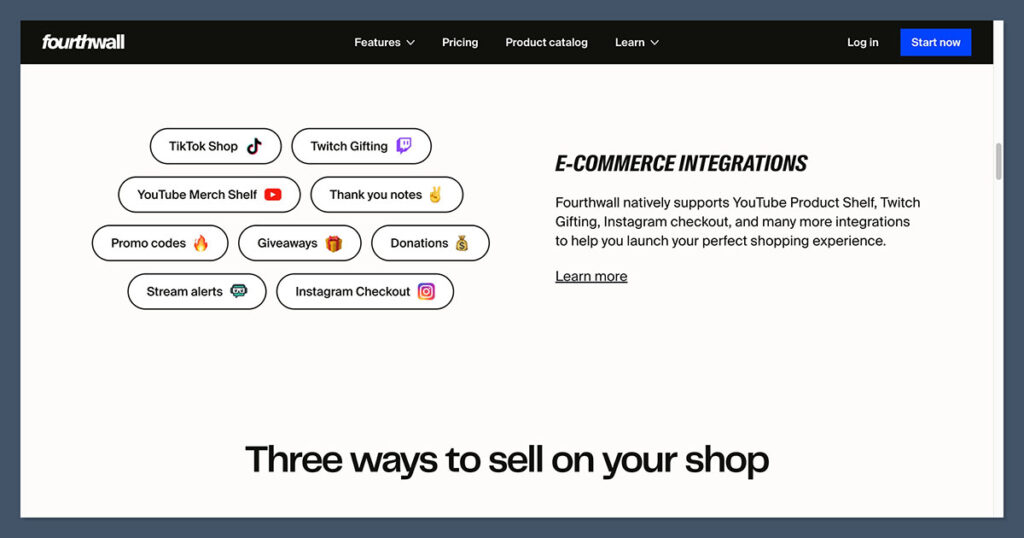
Fourthwall also allows companies to retain ownership over their customer data, which is really helpful if what you’re trying to do is turn a community of fans into a consistent source of income.
Fourthwall vs Redbubble: Product Options and Quality
Fourthwall is definitely the easy winner in terms of product variety and quality. Redbubble’s catalog is pretty varied, with about 80 different types of items to choose from. You can upload a single image and spread it across everything from t-shirts to phone cases or stickers.
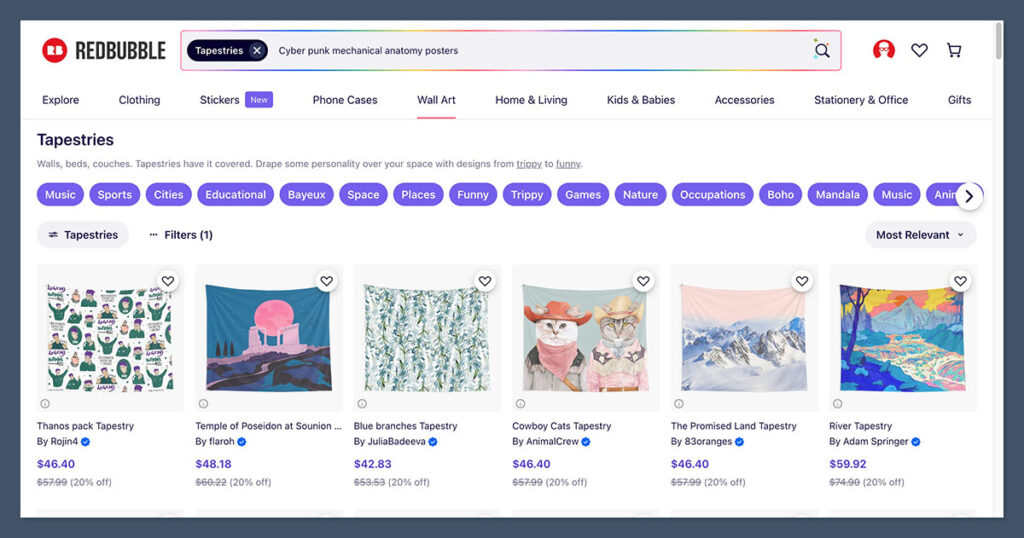
Different items have different production methods, and Redbubble does have quality standards in place, although the reviews I’ve seen about quality are pretty hit and miss. I do like Redbubble’s Fan Art program though, which means that approved artists can create officially licensed work for participating brands, and potentially earn some extra income.
Fourthwall’s product catalog is surprisingly varied, even though it’s hand-curated. There are around 350+ customizable products, including eco-friendly options and unique extras, and absolutely everything is retail-grade. The design tools are simple but fine for beginners, particularly with Adobe support, and there’s a marketplace for finding designers or artists to help you.
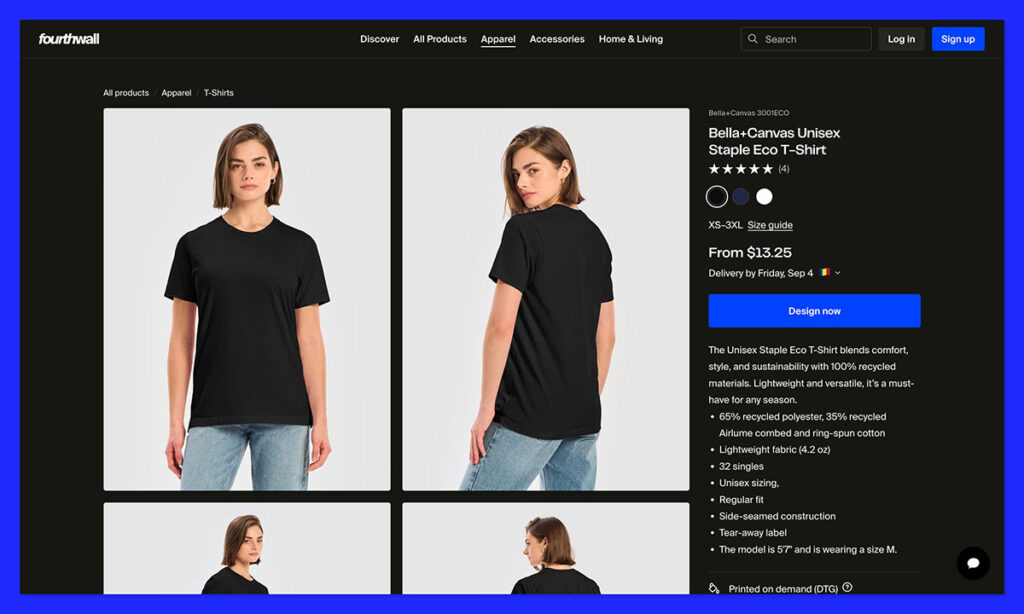
Beyond POD, Fourthwall also gives you plenty of ways to build out your catalog. You can sell memberships or digital downloads with your print-on-demand goods, source your own products and sell them on the same website, and accept donations.
Overall, Fourthwall gives you a more consistent premium route in POD, as well as more ways to find different sources of revenue.
Fourthwall vs Redbubble: Shipping and Fulfillment
Both companies are pretty variable here. Fourthwall has manufacturing partners in the US, EU, UK, Canada, Australia, Japan, and Mexico, and shipping prices depend on what you’re sending. The time it takes for a product to be delivered depends on a few things. Some products can take 5-8 days, others can take 7-10 days or longer.
On the plus side, Fourthwall does let you mix catalog products with merch you source yourself, and use self-fulfillment or 3PL options, too.
Redbubble also promises global shipping with printers in countries like the UK, US, Australia, Germany, France, Canada, Spain, Italy, the Czech Republic, and the Netherlands. It tries to match where the item is made to where the customer is located to keep fulfillment times short. Still, some products can end up crossing borders when local production isn’t an option, which might mean custom charges apply.
How long it takes for a Redbubble product to arrive is complicated too, some estimates suggest the average shipping time is 10-14 days, but I’ve seen people complaining of deliveries taking a lot longer. You also don’t have any option to set up your own fulfillment strategies here.
Fourthwall vs Redbubble: Support, Customer Service and Tax Handling
The good news is that Fourthwall and Redbubble both give you plenty of support. Redbubble keeps most of the hard work away from sellers deliberately. Buyer support is managed completely by the team, and it can even accept qualified returns or exchanges.
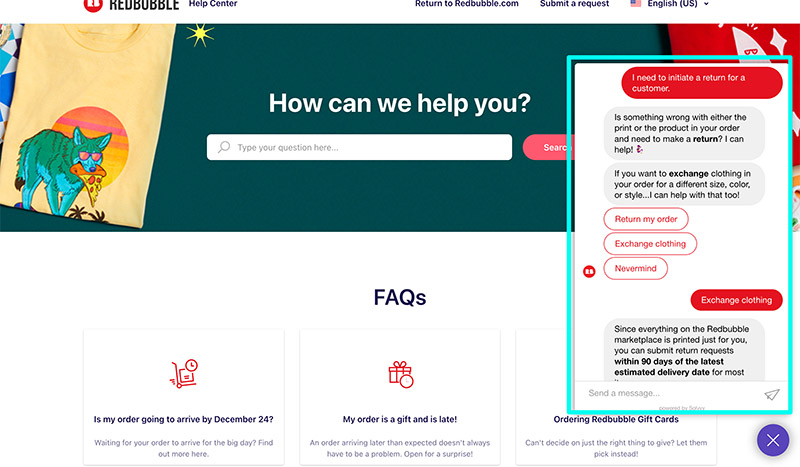
The company also deals with taxes on your behalf, and covers VAT or GST in applicable markets. You only need to deal with your own income tax and business tax obligations.
Fourthwall gives you similar relief, acting as your Merchant of Record for Nexus registration and sales tax work. For products from its own catalog, Fourthwall will deal with customer questions, address changes or order issues, and it aims to reply within twelve hours or less.
Where Fourthwall gives you extra help is with things like the marketplace for sourcing design partners, there’s also the Eli AI assistant that can answer questions about your store, help you update things, or create campaigns for you.
Fourthwall vs Redbubble: Extra Features I Like
Compared to Fourthwall, Redbubble doesn’t really go that far with “extras”. Fourthwall has the AI assistant I already mentioned, plus a ChatGPT connection that can help you turn ideas into products you can sell. There are also now things like custom gift cards, stricter team roles, self-fulfillment reminders for the products you’re shipping yourself, and enhanced analytics.
I also like the Throne collaboration that came this year which allows community members to support you through wishlists and crowdfunding campaigns. Fourthwall keeps adding to its catalog too, with things like Heavyweight organic t-shirts and water-repellant bags.
Redbubble has made its platform a little more appealing to sellers by reducing the minimum payout threshold from $20 to $10, although the platform fee tiers are still problematic, with the 50% fee on a standard account. Still, it’s worth saying that if you’re lucky enough to be upgraded to a higher tier, there are some perks, like a dedicated account manager on Pro.
Plus, there are some useful discovery and tagging upgrades, with new features in the marketplace that help customers find related products they might like.
Should You Choose Fourthwall or Redbubble?
I’m not against Redbubble in the slightest. It’s a good option for illustrators or creators who have designs they want to get in front of potential customers as quickly as possible, without taking on the extra work of setting up an entire ecommerce ecosystem. I also like the Fan Art Partner program, since it really could introduce some new ways to make money.
Still, I think I’d recommend Fourthwall to more people first. The fees aren’t nearly as aggressive, even on the paid plans, and you’ve got a lot more room to control your own profits. You keep ownership over your audience and can actually take advantage of tools to build deeper relationships with them. Plus, not only are the print on demand products excellent in quality, but there are plenty of other things you can sell too, including digital downloads and memberships.
Redbubble is still a great launching pad for creators, but Fourthwall is the one you pick when you want to build a brand that can genuinely grow.


Comments 0 Responses