

Zazzle has become the go-to option for people with creative ideas and those looking to sell custom products.
It's got a massive product catalog, a pretty powerful design editor, and access to a global marketplace. But as many people have discovered, Zazzle isn't always the best long-term solution – especially for those who want to build a real, scalable e-commerce business.
If you've found that Zazzle's limitations are getting in the way of your business growth then you're not alone.
From being restricted in how you can brand your products to those lower than average profit margins, sellers are moving on to platforms that give them more control, flexibility and earning potential.
I've personally looked into the best Zazzle alternatives when it comes to print quality, how fast they can get products to customers, price transparency, integrations and the overall seller experience.
Whether you're building your own personal brand or looking for a more hands-off way to make some extra cash, this list should help you find the right fit for your business goals.
The 7 Best Zazzle Alternatives You Should Know
Here's a quick rundown of how each platform compares and what they're best suited for:
| Platform | Best For | Starting Cost | Integrations | Marketplace Traffic |
| Printful | Brand control & product quality | Free to start | Shopify, Etsy, more | No |
| Printify | Lower costs & supplier flexibility | Free to start | Shopify, Etsy, more | No |
| Redbubble | Passive sales on a built-in marketplace | Free to start | None | Yes |
| Spring | Selling merch via social media | Free to start | YouTube, TikTok | Yes (from platforms) |
| Gelato | Fast global shipping & automation | Free to start | Shopify, WooCommerce | No |
| Gooten | Scalable backend automation | Free to start | Shopify, Etsy | No |
| TeePublic | Easy passive income from creative designs | Free to start | None | Yes |
1. Printful – For Full Branding and Product Control
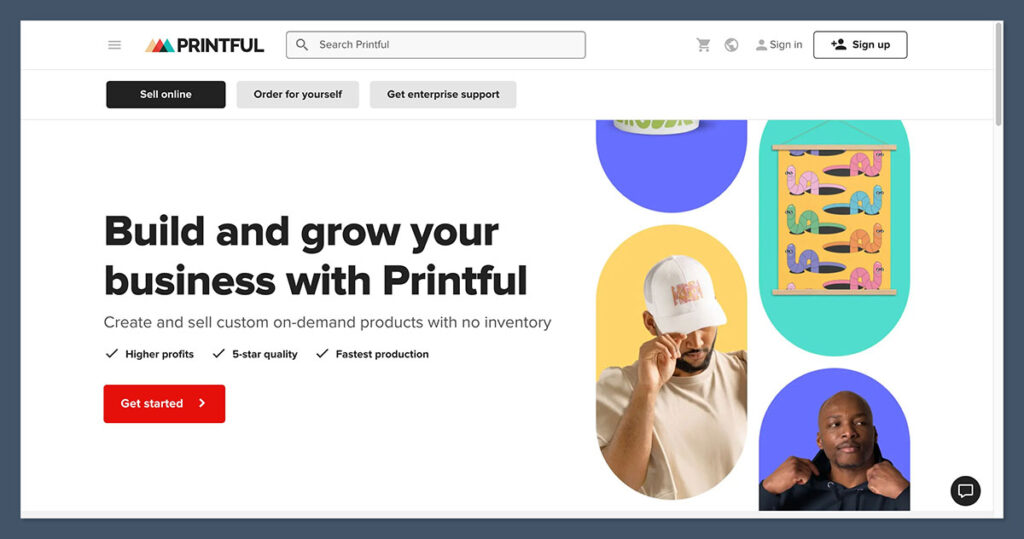
Printful is still the top choice for any e-commerce seller that wants to give their customers a high-quality, fully branded experience.
It may not have the lowest starting prices in the industry, but its focus on quality, custom branding and logistics makes it a favorite among serious online store owners.
With Printful you can add your own logo to the packaging, use your own custom inserts, store inventory in their warehouses for faster delivery and this all goes beyond what you can do on Zazzle.
It integrates seamlessly with a load of major e-commerce platforms including Shopify, Etsy, Amazon and WooCommerce so whether you are just starting out or you are a full-time entrepreneur it should suit your needs
Overall Rating: 4.6/5
Good for: Sellers who are trying to build a serious long-term brand with high quality products and branded packaging.
Pricing Tiers
- Free Plan: Gives you full access to the product catalog, integrations and a mockup generator. You only pay when you make a sale.
- Printful Growth (Paid): $24.99/month. Offers 20% discounts on select products, branding options, carrier discounts etc.
- Warehousing & Fulfillment: Custom pricing depending on how much stock you have stored and the number of SKUs.
Sample Pricing
| Item | Price (USD) |
| Gildan 64000 T-shirt | $12.95 + shipping |
| Embroidered Hat | $15.95 + shipping |
| Hoodie | $24.00 + shipping |
| US Shipping (standard) | From $3.99 |
Printful's prices can vary depending on where you're shipping from and what your local currency is. Some items may have discounts or extra branding costs.
Pros
- Offers white label fulfillment with branding options such as custom inserts and labels
- High print quality and a great range of products from apparel to home goods
- Integrates with over 20 e-commerce platforms including Amazon and eBay
- Order dashboard and UI is pretty easy to use
Cons
- Products tend to be more expensive than similar platforms like Printify
- Limited bulk pricing unless you're on a paid plan
For sellers who want to create a professional experience for their customers and control the branding of their products then Printful is the way to go.
2. Printify: For Maximizing Margins and Supplier Choice
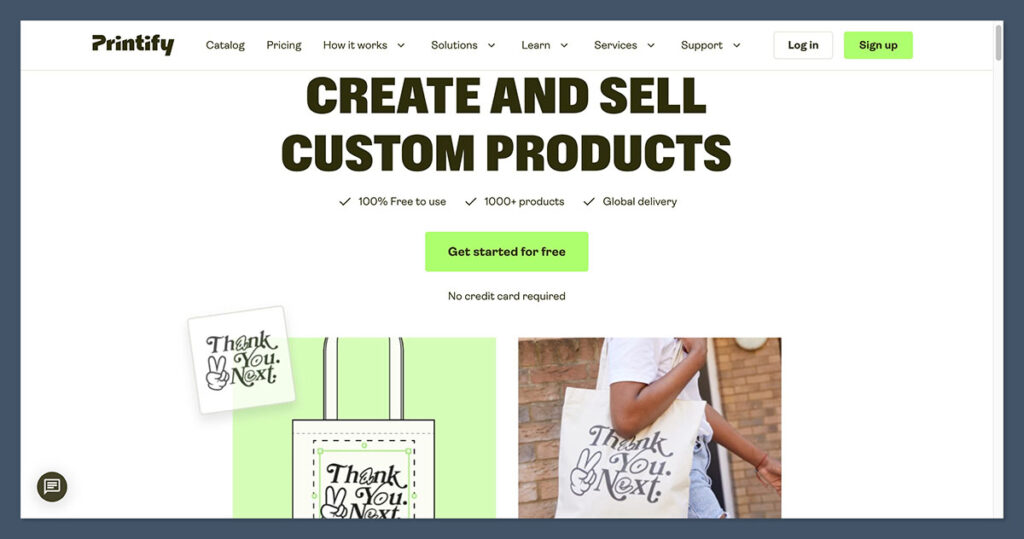
Printify stands out as one of the most flexible and cost-effective alternatives to Zazzle.
Unlike platforms that rely on their own production network, Printify connects you with a global list of third-party print providers, allowing you to choose the best option based on cost, location, or turnaround time.
This supplier marketplace approach gives you more pricing control than Zazzle or even Printful. With Printify, you can compare multiple providers for the same product, helping you find the ideal balance between cost and quality.
Overall Rating: 4.5/5
Best for: Ecommerce sellers focused on maximizing profits with more control over production costs.
Pricing Tiers
- Free Plan: gives you full access to your product catalog and all the integrations you need – you only pay per item that actually sells
- Printify Premium: $29/month. this gets you a 20% discount on the whole product line, which is great if you're moving a lot of stock
- Enterprise Plan: custom prices for businesses with a huge turnover, dedicated support and even a bespoke API to boot
Some Examples of Prices
| Product | Provider | Base Price | Shipping (US) |
| Gildan 5000 T-shirt | Monster Digital | $8.45 | $4.00 |
| Ceramic Mug (11 oz) | SPOKE Custom | $4.29 | $6.49 |
| Hoodie (Unisex) | MyLocker | $19.09 | $8.00 |
The thing with pricing is that it can vary wildly depending on the supplier – and that's just one of the things Printify have got right with their model.
The Good Stuff
- You can choose from a load of different suppliers for each product, so you can compare prices and quality
- The supplier ratings and turnaround times are all super transparent
- Supports all the major ecommerce integrations – so Shopify, Etsy, WooCommerce etc. are all good to go
- Switching suppliers is a total breeze – so you don't have to worry about redesigning your product
The Not So Good Stuff
- The quality of the print and the delivery times can vary a lot depending on the supplier
- Compared to Printful, there's not a lot of choice when it comes to branding
- Since production is third-party, customer service isn't as centralized as it would be if you were doing it all in-house
If you want to keep your production costs as low as possible and have a bit of flexibility in your business model then Printify is probably a good option – and one that's more compelling than Zazzle's fixed pricing model
3. Redbubble: A Built-In Marketplace for Artists
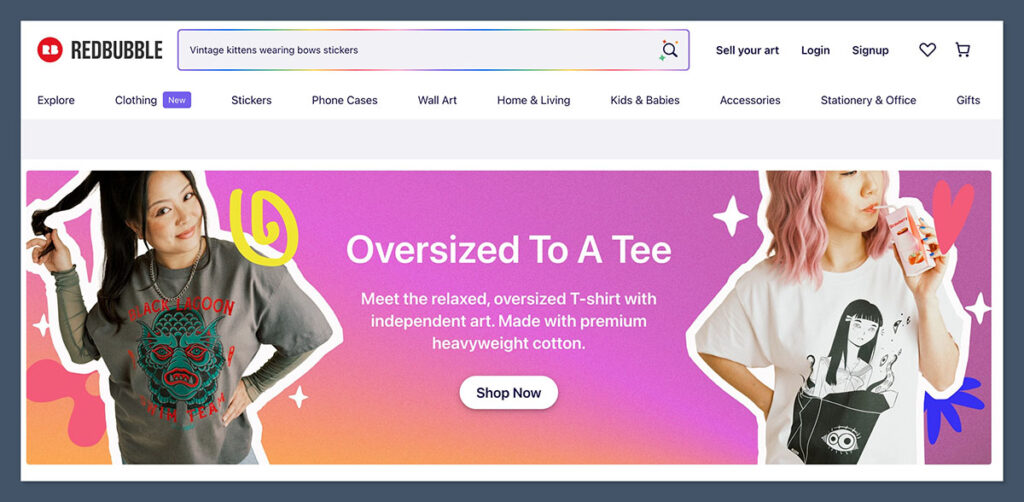
Redbubble is a bit like Zazzle in that they handle all the printing, shipping and customer service while giving you access to a marketplace with a huge number of visitors every month.
But what's more interesting is that they have a real focus on art, design and pop culture, which is quite different to Zazzle.
If you just want to upload your designs and let Redbubble take care of the rest then they're a good option – but you won't have any access to customer data, you won't be able to control the branding and the ecommerce integrations are non-existent. They really are a passive sales model
Overall Rating: 4.2/5
Best for: artists and designers who want a bit of passive income without having to manage a store
Pricing and Royalties
Redbubble set the base price for each product – and then you can add a markup (usually around 10-30%) on top of that – which you can then tweak to taste
| Product | Retail Price | Artist Margin (Typical) |
| T-shirt | $25 | $5 (20%) |
| Art Print | $30 | $6 (20%) |
| Sticker | $3 | $0.50 (15–20%) |
The Upside
- They take care of all the fulfillment, shipping and returns for you
- You get access to a huge built-in audience and marketplace traffic
- It's great for one-off or niche designs
- Gets you up and running really quickly and easily
The Downside
- You don't get any access to customer data or their email lists
- You don't have any control over branding or packaging
- The earnings per product are lower compared to the DTC models
Redbubble is a good option if you just want to monetise your designs without having to build a fully-fledged ecommerce business – but if you're looking for long-term growth then it's better to have more flexibility and control over your business, which is where platforms like Printful and Printify are a better bet.
4. Spring (formerly TeeSpring): Monetising Your Social Media Following
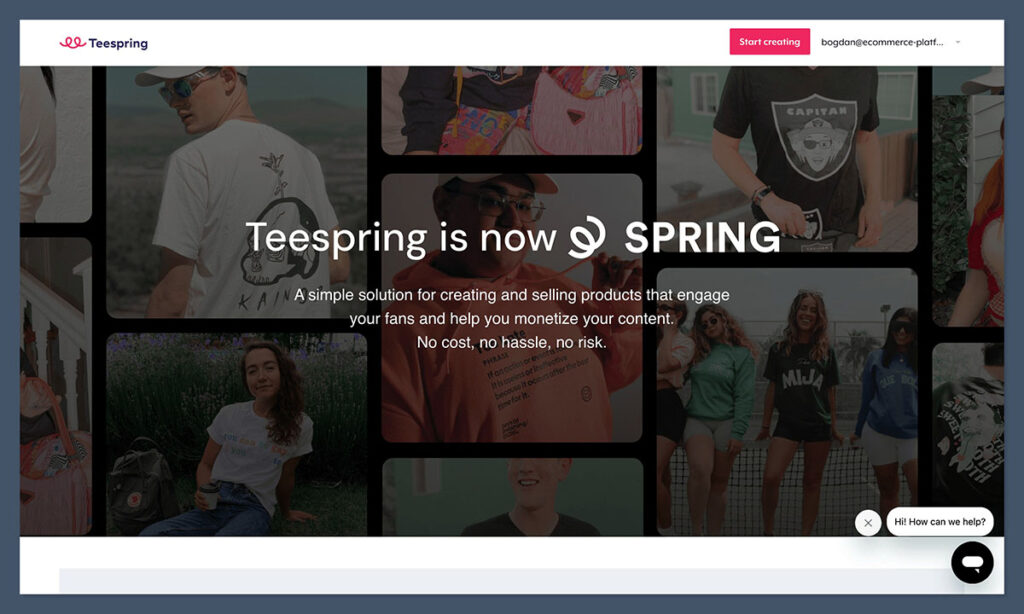
Spring is built with content creators in mind. They're optimised for people who already have a following on YouTube, TikTok and Instagram.

If your traffic is coming from your content then Spring makes it a doddle to design and sell merch without having to set up a whole ecommerce store from scratch.
You don't need to be a tech whiz or have your own website – Spring connects directly with your social accounts and integrates your storefront into your creator profiles
Overall Rating: 4.1/5
Best for: YouTubers, influencers and creators who want to monetise with minimal effort
Pricing and Fees
Spring is free to use. You choose your product, set your retail price and keep the profit margin – it's as simple as that.
| Product | Base Cost | Example Retail Price | Profit |
| T-shirt | $11.00 | $24.99 | $13.99 |
| Hoodie | $20.00 | $39.99 | $19.99 |
| Tote Bag | $10.50 | $21.99 | $11.49 |
You can tweak the pricing and margins manually, but Spring also gives you suggested prices to help you stay competitive
The Good Stuff
- It's a total breeze to integrate with social platforms
- It's free to get started and use
- They take care of all the production and shipping for you
- It's got a mobile-first focus and gets your designs up online really quickly
The Not So Good Stuff
- The storefront customization options are a bit limited
- They don't offer a load of different product types
- You don't have as much control over design presentation and the user experience as you would if you were doing it all in-house
If you're focused on engagement and conversions from social media followers then Spring is one of the best ways to quickly monetise without having to build a store from scratch.
5. Gelato – Speedy International Shipping
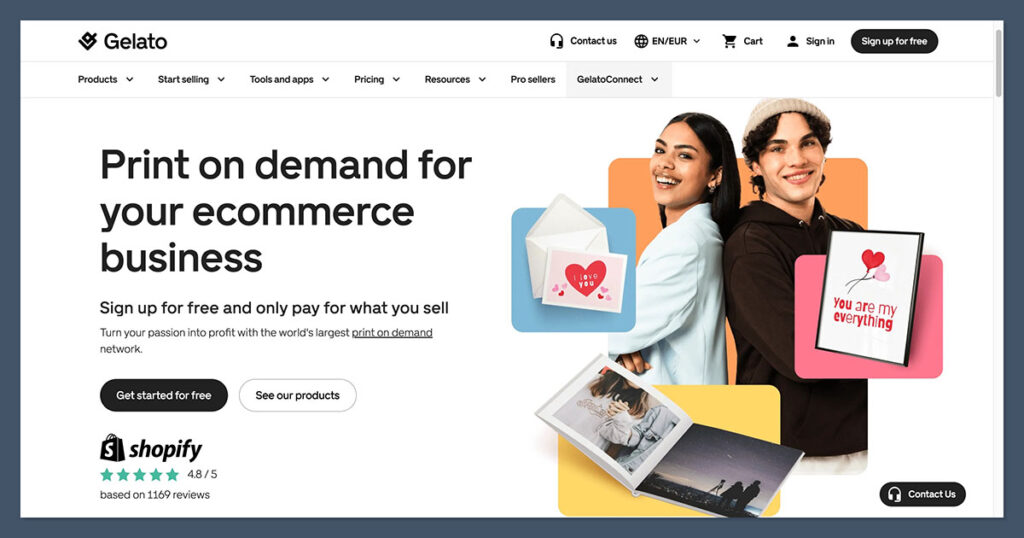
Gelato stands out by putting the focus on swift global shipping. Rather than printing from just one warehouse, Gelato teams up with local print shops in over 34 countries.
This setup lets them print and ship orders closer to the customer, slashing delivery times and costs – a major leap ahead of Zazzle's fulfillment network.
It's especially helpful if your customer base is spread out across various continents.
Overall Rating: 4.3/5
Best For: International ecommerce businesses that want faster and more localised shipping.
Pricing Tiers
- Free Plan: Gets you access to their global network and Shopify integration – no strings.
- Gelato+ (Pro): $14.99/month. Adds on premium mockups, branded packing slips, discounts on shipping, and automation tools.
- Gelato+ Gold: $139/month. Tosses in deeper integration options and higher discounts for growing businesses.
Sample Shipping Times
| Region | Avg. Delivery Time | Fulfillment Type |
| US | 2–4 business days | Local print partner |
| UK | 2–3 business days | Local print partner |
| Australia | 3–5 business days | Regional partner |
Pros
- Local production means shorter shipping times and lower costs
- Perfect for white-label dropshipping with custom packaging
- Strong on international shipping capability
- Easy Shopify and WooCommerce integrations
Cons
- Smaller product range compared to Printify or Printful
- Advanced branding options are pretty limited on the Pro plans
Gelato is the perfect choice for sellers with customers all over the globe who want to give 'em super quick and reliable delivery without having to set up an entire international operation.
6. Gooten – Automation and Scalability for the Win
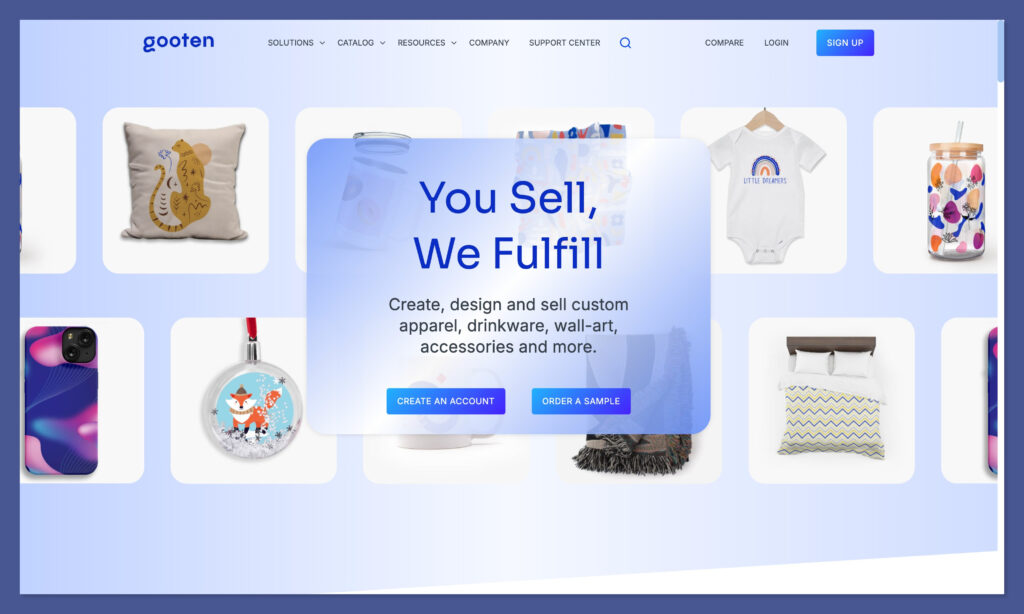
Gooten is basically known for its backend tools. While it might not have all the design features Printful's got or the exposure that Redbubble has, it really shines when it comes to automation.
Sellers who run lots of stores or want to manage orders across all their channels will love its clever routing and bulk processing tools.
Overall Rating: 4.0/5
Best For: Sellers who care about logistics, order volume, and automation.
Pricing Model
Gooten uses a pay-as-you-sell model. No monthly fee and their pricing is pretty competitive – especially for sellers who ship in big volumes.
| Product | Base Price | Shipping (US) |
| T-shirt (Bella+Canvas 3001) | $9.80 | $4.50 |
| Canvas Print | $18.95 | $9.99 |
| Hoodie | $22.00 | $8.00 |
Bulk orders might qualify for discounts through your account rep.
Pros
- Powerful tools for routing, batching and analytics
- Big product range with prices that are pretty competitive
- White-label fulfillment and scalable infrastructure
- Easy to integrate with Shopify or API
Cons
- Can be a bit of a learning curve for beginners
- No in-house design editor
- Branding options are a bit limited
If your ecommerce business is growing fast and you want to focus on logistics, Gooten gives you the backend oomph that Zazzle's missing.
7. TeePublic – Passive Income for Creative Minds
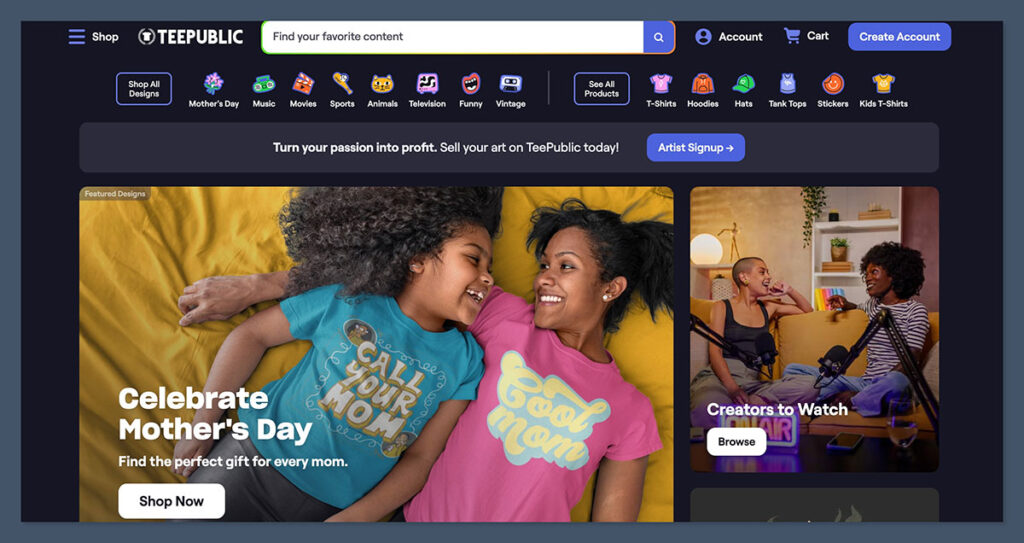
TeePublic is a marketplace, kinda like Redbubble, made for creatives who want to upload their artwork and earn money without doing much of anything else. It's especially geared towards t-shirts, stickers and quirky designs – often trending in pop culture.
It's actually owned by Redbubble, so the two share the same backbone but have their own separate marketplaces.
Overall Rating: 4.0/5
Best For: Illustrators or designers looking for some passive income on the side.
Royalties and Pricing
| Product | Sale Price | Payout (Non-Sale) | Payout (Sale Event) |
| T-shirt | $22 | $4.00 | $2.00 |
| Hoodie | $38 | $6.00 | $3.00 |
| Mug | $15 | $2.00 | $1.00 |
TeePublic often runs sales which lower your payout but increase volume.
Pros
- No setup or maintenance required
- Get access to an existing marketplace
- Quick publishing process
Cons
- Little control over design
- No access to customer info or analytics
- Sales margins dip during promotions
This is perfect for designers who want a portfolio of designs generating income in the background while they focus on other channels.
The Final Lowdown
Here's a last look at the key differences between these Zazzle alternatives:
| Platform | Best For | Branding | Product Control | Passive Income | Shipping Speed |
| Printful | Branding & quality | Yes | High | No | Fast |
| Printify | Margin optimization | Limited | High | No | Moderate |
| Redbubble | Passive marketplace sales | No | Low | Yes | Moderate |
| Spring | Social media monetization | No | Low | Yes | Moderate |
| Gelato | International fulfillment | Yes | Moderate | No | Very Fast |
| Gooten | Bulk order automation | Limited | High | No | Fast |
| TeePublic | Creative passive income | No | Low | Yes | Moderate |
Choosing the Right Zazzle Alternative – A Few Key Questions to Help You Decide
If you're ditching Zazzle, the following questions should help you narrow it down a bit.
- Are you looking to build a brand from scratch or just focus on making passive income?
If you want to build a brand, Printful or Printify are probably your best bet. But if you just want to design, drop and forget about it, then Redbubble or TeePublic might be the way to go. - Where are all your customers coming from?
If you're selling to customers all over the world, then Gelato's local fulfillment model is pretty hard to beat. - Do you sell products through social channels like Instagram or TikTok?
Spring is built for creators who sell through social media, so if that's you, take a good look. - Do you want to scale up your business but still have control over the backend?
Gooten has some great tools for automating orders and selling through multiple channels.
The Bottom Line
If Zazzle is just not delivering on the profits, flexibility, or delivery experience you need, then there are loads of other great options out there.
If you want to build your own store and make your own brand, Printful or Printify are probably the way to go.
But if you just want to focus on design and let the platform do the hard work, then Redbubble and TeePublic are definitely worth a look.
Ultimately, switching to a new platform can unlock some pretty sweet deals – better margins, faster delivery, and loads more creative freedom.


Comments 0 Responses