

In over a decade of working in ecommerce — advising brands, testing platforms, and reviewing supply chain tools — I’ve seen a lot of dropshipping platforms come and go.
But two names that consistently stand out are Spocket and Zendrop.
Both platforms are designed to streamline the supplier side of ecommerce.
Whether you’re building your first Shopify store or scaling up to hundreds of orders a day, these tools promise faster shipping, higher quality products, and automation features that save time.
But after extensive testing and research, I can tell you: they’re built for different types of businesses.
Here’s how they compare.
Spocket vs Zendrop: Quick Verdict
Zendrop – Best overall for automation, branding, and scaling
Spocket – Best for small stores with fast US and EU delivery needs
This in-depth comparison explores how both platforms stack up across pricing, supplier quality, shipping speeds, branding tools, automation, and support.
If you’re evaluating a dropshipping solution for your ecommerce store, this breakdown will help you make a well-informed decision.
Both platforms perform well in their own right, but they’re tailored for different levels of operational complexity. That’s what makes choosing the right one less about features and more about business fit.
Quick Comparison: Spocket vs Zendrop
Here’s a quick side-by-side overview:
| Feature | Spocket | Zendrop |
|---|---|---|
| Best for | Beginners & fast US shipping | Automation, branding, scaling |
| Supplier Location | US & EU | China & US warehouse |
| Shipping Speed (US) | 2–5 business days | 3–8 business days |
| Automation Tools | Basic | Advanced (rules, auto-fulfill, etc.) |
| Branding Options | Branded invoicing | Private labeling, bundling |
| Product Sourcing | Curated catalog | Wide global product library |
| Price Range | $0 – $99.99/month | $0 – Custom (Select plan) |
| Free Plan Available | Yes | Yes |
| Platform Integrations | Shopify, WooCommerce, BigCommerce | Shopify, WooCommerce, more |
This comparison table sets the stage, but the real differences lie in how these platforms support your operational goals and customer experience standards.
Best for Supplier Location and Product Quality: Spocket
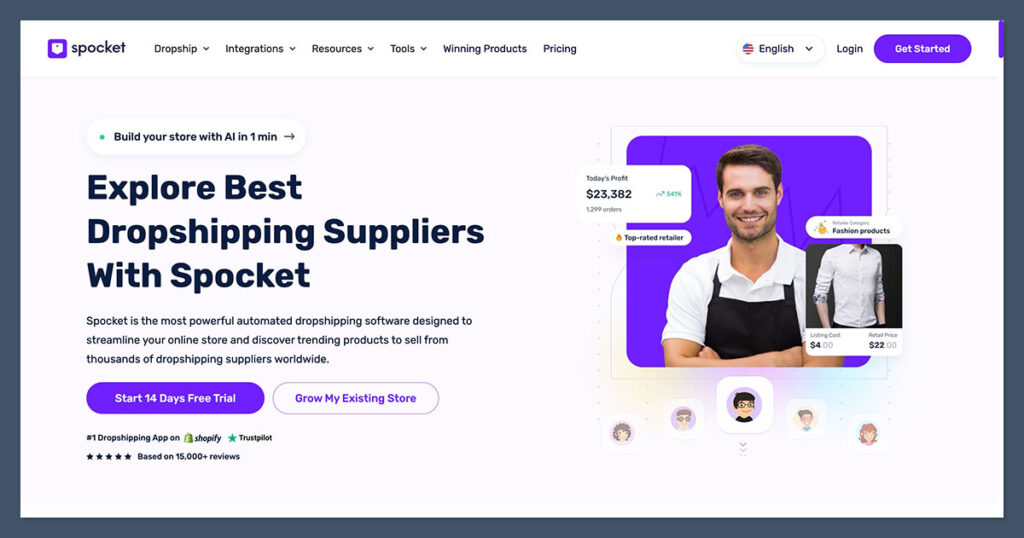
Spocket has carved out a clear niche in the dropshipping ecosystem: giving sellers access to US and EU-based suppliers who can deliver faster and often offer better quality control.
This setup is particularly helpful for ecommerce businesses serving customers in North America or Western Europe, where shipping expectations are high.
Spocket’s catalog includes products across categories like apparel, home goods, and personal care, with suppliers that have been vetted by the platform.
Filtering by supplier region helps reduce reliance on Chinese suppliers and minimize delivery-related complaints.
Zendrop, in contrast, casts a wider net.
While many of its products are still shipped from China, Zendrop has added US warehouse options to support better fulfillment times for high-volume SKUs.
For sellers who prioritize variety or want to test a large number of products, Zendrop provides the flexibility to scale.
From an industry perspective, sourcing locally with Spocket does tend to reduce chargebacks, improve customer satisfaction, and simplify returns.
But for aggressive testing or margin optimization, Zendrop offers a level of flexibility that Spocket doesn’t aim to match.
Best for Pricing and Value: Zendrop
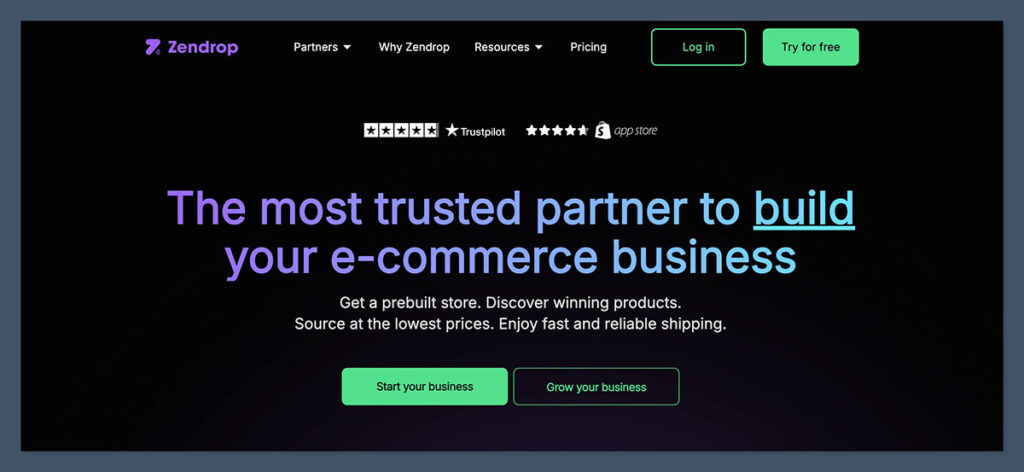
Pricing structure is always a key factor when evaluating ecommerce tools.
Both platforms offer free plans, but in reality, meaningful functionality sits behind their paid tiers.
Spocket Pricing
| Plan | Price (USD/month) | Key Features |
|---|---|---|
| Free | $0 | Limited access, no branding |
| Starter | $39.99 | Up to 25 products, basic support |
| Pro | $59.99 | Branded invoicing, premium products |
| Empire | $99.99 | Unlimited products, priority support |
Zendrop Pricing
| Plan | Price (USD/month) | Key Features |
|---|---|---|
| Free | $0 | Basic catalog, AliExpress importing |
| Pro | $49 | Auto-fulfillment, fast shipping, branding |
| Plus | $79 | Bundling, private labeling, premium support |
| Select | Custom | Dedicated manager, bulk shipping, white-labeling |
While Spocket’s pricing is straightforward, Zendrop’s Pro plan offers more automation and branding features for slightly less than Spocket’s Pro.
Zendrop also scales more affordably into private labeling, which is where most successful dropshipping stores eventually head.
For teams focused on long-term brand building and automation, Zendrop provides better leverage at each tier. On the other hand, Spocket’s simpler pricing may appeal to early-stage merchants who want fewer moving parts.
The key takeaway from a cost-benefit standpoint: Zendrop’s pricing scales more logically with store growth, while Spocket is priced more around quality assurance and regional sourcing.
Best for Shipping Speed and Fulfillment: Spocket
Shipping is one of the most visible aspects of the customer experience. While many ecommerce owners focus on pricing or product selection, inconsistent or delayed fulfillment can undo a lot of that progress.
Spocket’s core strength lies in its fast domestic delivery.
Because it partners with suppliers in the US and EU, shipping often mirrors what customers expect from larger retailers — typically 2–5 business days in the US.
Zendrop, while built on a broader international supply chain, has improved shipping through its US warehouse network.
Express options are available, but only for select products and in higher-tier plans. Most Zendrop products from China will take 10–15 business days for global delivery.
Here’s a breakdown:
| Platform | US Shipping | EU Shipping | Global Shipping |
|---|---|---|---|
| Spocket | 2–5 business days | 4–7 business days | 7–15 business days |
| Zendrop | 3–8 business days | 5–10 business days | 10–15 business days |
For ecommerce brands prioritizing Prime-like shipping performance, Spocket provides more predictability.
For brands willing to offset delivery times with better margins or bundling, Zendrop can still be viable — especially with bulk US inventory.
For customer retention in mature markets, faster fulfillment often outperforms slight price advantages. This is one of the reasons why brands targeting the US or EU often lean toward Spocket.
Best for Branding and Customization: Zendrop
Branding is where Zendrop really pulls ahead. The platform was designed with scale in mind, and its feature set reflects that.
It supports private labeling, bundling, branded packaging, and the ability to warehouse inventory under your own brand identity.
Spocket offers branded invoicing, which is a nice value-add for sellers who are just getting started. However, it doesn’t provide tools for packaging customization, inserts, or bundled fulfillment.
Zendrop’s full branding suite is available at the Plus tier and above. Sellers can design and ship fully custom-branded products, which helps build brand equity and customer trust.
From a market perspective, private labeling has become a critical differentiator in an increasingly competitive ecommerce space.
Platforms like Zendrop that enable this shift — even with entry-level tools — tend to serve longer-term growth more effectively.
Brands looking to eventually transition from dropshipping into white-label or hybrid fulfillment often find Zendrop a more strategic partner than Spocket in that process.
Best for Automation and Ease of Use: Zendrop
Both platforms are user-friendly and integrate easily with platforms like Shopify and WooCommerce, but their automation depth varies significantly.
Spocket automates core tasks like order syncing, inventory updates, and one-click fulfillment. For many stores, this will be enough to keep operations flowing smoothly.
Zendrop adds a deeper automation layer — including custom order rules, upsell workflows, and support for platforms like TikTok Shop and Facebook Marketplace.
These workflows reduce manual tasks, especially for stores handling 50+ orders daily.
Here’s a quick overview:
| Feature | Spocket | Zendrop |
|---|---|---|
| Auto-fulfillment | Yes | Yes |
| Auto-tracking | Yes | Yes |
| Bundling | No | Yes (Plus plan) |
| Private labeling | No | Yes (Plus/Select plans) |
| Custom rules/workflows | No | Yes (Pro+ plans) |
Automation is where Zendrop scales far beyond most beginner platforms. It’s designed to reduce friction as store complexity increases — a key benefit if you’re preparing for Q4 surges or influencer-led traffic spikes.
As ecommerce continues trending toward multi-channel, multi-product setups, deeper automation becomes less optional and more essential.
Best for Support and Community: Tie
Good support helps you solve urgent problems, but great support helps you prevent them in the first place. Both Spocket and Zendrop offer 24/7 chat, email support, and access to documentation libraries.
Spocket’s support is fast and knowledgeable, especially on the Pro and Empire plans. Zendrop also provides strong support, with the added benefit of dedicated account managers for Select-tier users.
Community-wise, both have active Facebook groups, Shopify forum threads, and Reddit mentions. These peer discussions can surface common bugs, supplier reviews, and integration tips quickly.
Here’s a quick breakdown:
| Support Feature | Spocket | Zendrop |
|---|---|---|
| Live Chat Support | Yes | Yes |
| Priority Support | Pro+ Plans | Plus+ Plans |
| Account Manager | No | Select Plan only |
| Help Center / Docs | Yes | Yes |
From an operational resilience standpoint, Zendrop provides more structured support as you scale. But for smaller stores or those just getting started, Spocket’s simplicity and responsiveness are more than sufficient.
Reliable support reduces downtime, but more importantly, it helps teams execute confidently during key retail periods — especially holiday cycles.
Final Verdict: Which Should You Choose?
After evaluating both platforms closely, I’d recommend the following:
Choose Spocket if:
- You want to prioritize shipping speed to the US and EU
- Your focus is on higher quality suppliers and curated products
- You’re running a small-to-mid-size store and don’t need advanced branding
- You value simplicity over deep feature customization
Choose Zendrop if:
- You’re preparing to scale and need automation
- You want branding tools like private labeling and bundling
- You’re sourcing from both China and the US
- You need flexible workflows or plan to operate across multiple platforms
For small teams focused on quality and fulfillment speed, Spocket is often the faster on-ramp. For larger operations or sellers preparing to scale, Zendrop provides more infrastructure and long-term flexibility.
Ultimately, these aren’t just tools — they’re partners in your supply chain.
Choosing the one that aligns with your growth stage and product strategy will make every part of your ecommerce operation smoother and more profitable.


Comments 0 Responses