


Kajabi and ClickFunnels are two leading all-in-one platforms designed to help you sell online. But they serve very different purposes.
After testing both tools and spending over 200 hours evaluating ecommerce platforms, ClickFunnels comes out on top if you’re focused on selling through funnels.
But if you’re building a brand around digital products like online courses or memberships, Kajabi is the better choice.
In this review, I’ll compare Kajabi and ClickFunnels side-by-side — looking at their pricing, ecommerce features, email tools, funnel capabilities, and more — to help you choose the right platform for your online business.
Quick Verdict: Kajabi vs ClickFunnels
ClickFunnels – Best for high-converting sales funnels and one-product ecommerce stores
Kajabi – Best for digital products, memberships, and long-term brand building
| Feature | Best Platform |
|---|---|
| Ecommerce Sales Funnels | ClickFunnels |
| Digital Products | Kajabi |
| Blogging & SEO | Kajabi |
| Affiliate Marketing | ClickFunnels |
| Physical Product Sales | Neither (use Shopify or WooCommerce) |
| Price-to-Feature Ratio | Kajabi |
Quick Comparison Table
Get a high-level overview of both platforms below:
| Platform | Best For | Starting Price | Free Trial | Core Strengths |
|---|---|---|---|---|
| Kajabi | Courses, digital products, memberships | $149/month | 14 days | SEO tools, email automation, clean website builder |
| ClickFunnels | Funnels, upsells, affiliate marketing | $127/month | 14 days | Sales conversion, funnel templates, checkout flexibility |
Best for Pricing: Kajabi
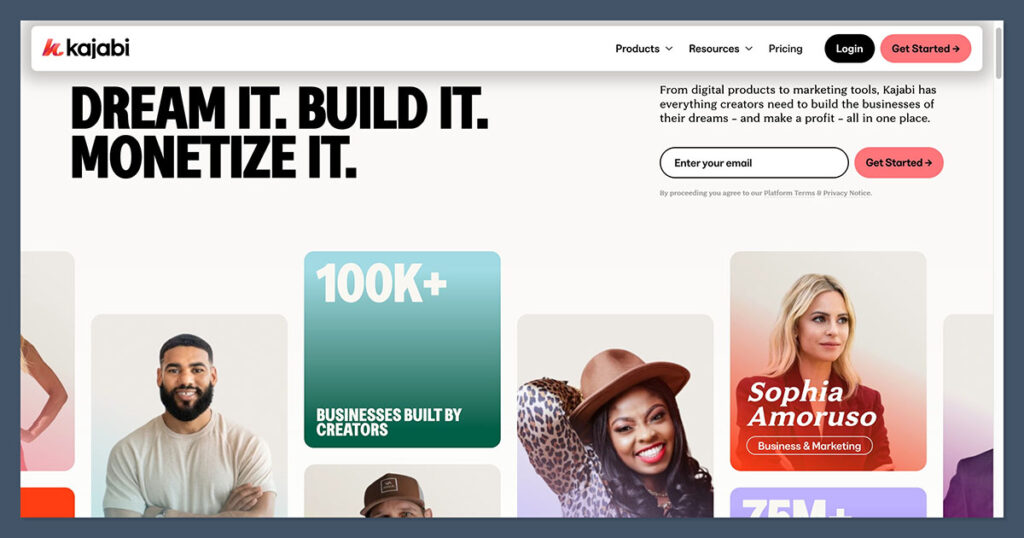
Both platforms are at the higher end of the market, but Kajabi offers more built-in features for the price, especially for digital product sellers.
Kajabi Pricing
- Basic – $149/month
- Growth – $199/month
- Pro – $399/month
You’ll get built-in email marketing, CRM, website builder, course hosting, and funnels with every plan.
What makes Kajabi appealing is that there are no hidden costs.
Unlike ClickFunnels, you won’t need to pay extra for email automation tools, hosting for your digital products, or CRM integration — it’s all included.
That means fewer moving parts, fewer third-party integrations, and fewer chances for things to break.
ClickFunnels Pricing
- Basic – $127/month
- Pro – $157/month
- Funnel Hacker – $208/month
ClickFunnels requires paid add-ons or third-party tools for email automation and course hosting if you’re not on the higher-tier plans.
Even though ClickFunnels starts at a lower monthly cost, it can become more expensive over time if you rely on external tools to fill in the gaps — especially for email, video hosting, or membership delivery.
The platform is great for funnels, but not as all-in-one as it might seem at first glance.
The Winner: Kajabi
You get more for your money with Kajabi, especially if you’re building a long-term digital product business.
Best for Selling Products: ClickFunnels

If you’re selling a small number of products and want to maximize conversions, ClickFunnels is hard to beat.
ClickFunnels Ecommerce Tools
- Pre-built funnel templates designed for one-product stores
- High-converting landing pages
- Custom checkouts with upsells, order bumps, and downsells
- One-click checkout experience optimized for paid traffic
- Built-in affiliate system (Backpack)
ClickFunnels doesn’t offer a traditional shopping cart experience, but it’s designed to turn cold traffic into customers quickly, which is ideal for paid campaigns.
ClickFunnels is especially useful if you’re launching a product, running webinars, or building evergreen funnels with upsells.
Its layout encourages high-ticket offers and fast decision-making from users, which suits ecommerce brands focused on customer acquisition through ads.
Kajabi Ecommerce Tools
- Clean product pages and sales pipelines
- Ideal for digital products, coaching, and memberships
- No real cart or inventory management
- Lacks SKU tracking, product variants, and shipping integrations
If you’re selling info products or digital content, Kajabi works great. But if you want to move physical products, it’s not the right fit.
Kajabi’s ecommerce features are limited by design — it’s built more for coaching programs, downloadable files, and video courses.
While you can technically use it to sell physical products, you’ll quickly run into roadblocks if you need product variations, fulfillment tools, or dynamic cart logic.
The Winner: ClickFunnels
Its checkout and upsell tools are optimized for one-product ecommerce funnels, which can outperform traditional carts in conversion rate.
Sales Funnel Capabilities: ClickFunnels

Both platforms offer funnel-building tools, but ClickFunnels is designed around funnels from the ground up.
| Feature | Kajabi | ClickFunnels |
|---|---|---|
| Funnel Templates | Basic | Advanced |
| Order Bumps | Limited | Yes |
| One-Click Upsells | No | Yes |
| Checkout Customization | Minimal | Full |
| Drag-and-Drop Editor | Yes | Yes |
With ClickFunnels, it’s easy to split test pages, change headlines, and launch new offers without coding or outside help.
Its entire framework is built around lead capture, nurturing, and conversion — not just product listings.
You can create webinar funnels, lead magnets, and event promotions just as easily as you can create product sales pages, all without needing to bring in extra tech or plugins.
The Winner: ClickFunnels
Its sales funnels are its core feature, and everything is built to support rapid testing and conversion optimization.
Best for Digital Products: Kajabi
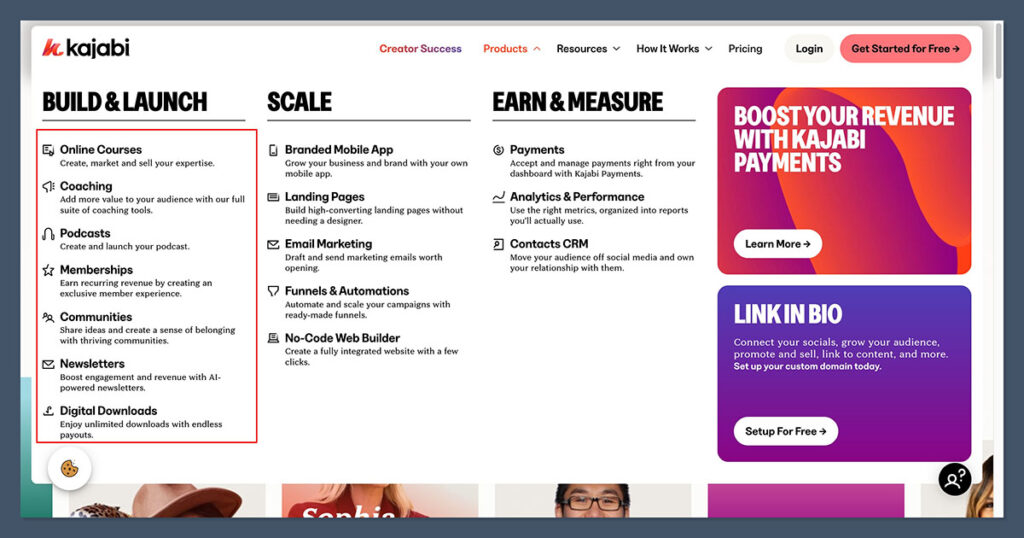
Kajabi is tailor-made for people selling online courses, digital downloads, coaching, and memberships.
Kajabi Key Features
- Built-in course hosting and drip content
- Automated email sequences
- Quizzes, assessments, and certificates
- Easy digital product delivery
- Recurring payment and subscription tools
ClickFunnels doesn’t offer native course hosting or membership site tools that compete with Kajabi.
Kajabi also gives you full control over your content structure and member experience, from gated lesson releases to engagement tracking.
It feels more like an education platform wrapped inside a marketing tool, which makes it ideal for knowledge entrepreneurs.
The Winner: Kajabi
If your business revolves around selling knowledge or content, Kajabi handles everything in one place.
Best for Affiliate Marketing: ClickFunnels
ClickFunnels includes an affiliate system out of the box — Kajabi does not.
ClickFunnels Affiliate Tools
- Set custom commission levels
- Track referrals, clicks, and payouts
- Manage affiliates from one dashboard
- Ideal for product launches and evergreen campaigns
If you’re building a sales team or relying on referrals, ClickFunnels gives you full control.
It’s especially powerful for evergreen webinars, lead magnets, and one-product stores where each affiliate campaign can live inside its own funnel.
That level of flexibility makes it easier to scale with partners — all without needing extra software or third-party tracking platforms.
The Winner: ClickFunnels
Its built-in affiliate tools make it easier to scale through partnerships.
Best for Blogging and SEO: Kajabi
SEO isn’t the focus of either platform, but Kajabi’s blogging tools are far more capable.
Kajabi’s SEO Tools
- Built-in blog editor with custom meta data
- Clean URLs and mobile optimization
- Image alt text and structured content support
- Good internal linking and on-page optimization options
ClickFunnels has a basic blogging tool, but it’s not built for ranking content.
Kajabi also allows for more flexible content creation strategies, letting you post long-form articles, link to products or funnels, and build organic traffic over time.
If you’re using inbound content to drive traffic, it’s the better long-term play.
The Winner: Kajabi
If organic search traffic is part of your strategy, Kajabi gives you the tools to grow over time.
Best for Email Marketing and Automation: Kajabi
Both platforms include email tools, but Kajabi’s email automation is more polished and powerful for long-term engagement.
Kajabi Email Tools
- Email broadcasts and automations
- Visual workflow builder
- Event triggers based on user behavior
- Built-in CRM with segmentation
ClickFunnels Email Tools (Follow-Up Funnels)
- Basic autoresponders
- Event-triggered messages
- Requires Pro plan for full features
- Not as refined as Kajabi’s system
Kajabi makes it easier to manage full customer journeys — from first opt-in to ongoing nurture and upsell campaigns.
It’s built for creators who want more than just broadcasts; you can guide your leads through complex sequences automatically.
The Winner: Kajabi
Its email automation is stronger, and the visual builder makes it easy to set up customer journeys.
Design & Templates: ClickFunnels
If you want to launch fast and test quickly, ClickFunnels templates are a big help.
ClickFunnels Templates
- Dozens of funnel templates by industry
- Pre-built order forms, upsell pages, and webinar funnels
- Focused on conversions, not aesthetics
Kajabi Templates
- More polished, professional website templates
- Ideal for branding and content marketing
- Less flexible for ecommerce-style landing pages
ClickFunnels templates prioritize function over form, which helps you launch faster and make changes based on results, not just appearance.
It’s ideal for entrepreneurs focused on growth over design.
The Winner: ClickFunnels
While Kajabi looks better, ClickFunnels performs better where it counts — conversion.
Support and Help Center: It’s a Tie
Both platforms offer 24/7 support with live chat and extensive documentation.
| Support Feature | Kajabi | ClickFunnels |
|---|---|---|
| Live Chat | Yes | Yes |
| Email Support | Yes | Yes |
| Video Tutorials | Yes | Yes |
| Facebook Community | Yes | Yes |
| Phone Support | No | Only for top plans |
Both companies also offer active user communities and knowledge bases that are constantly updated.
Whether you’re troubleshooting an issue or learning how to use a new feature, you’ll find resources quickly on both platforms.
The Verdict: Tie
Both companies provide solid documentation and support channels, though you’ll need a higher-tier plan for phone support with ClickFunnels.
Final Verdict: Kajabi vs ClickFunnels
| Use Case | Best Platform |
|---|---|
| Selling Courses or Digital Products | Kajabi |
| Building Sales Funnels for Physical or Digital Offers | ClickFunnels |
| Blogging and SEO | Kajabi |
| Running Ads to a Product Funnel | ClickFunnels |
| Managing Subscriptions and Memberships | Kajabi |
| Building an Affiliate Program | ClickFunnels |
ClickFunnels is the winner if you’re focused on funnels, conversions, and launching offers fast.
Kajabi is the better fit if you’re selling content-based products and want strong email and SEO tools.
Ultimately, these platforms serve different types of ecommerce strategies.
ClickFunnels is best for short sales cycles, aggressive acquisition, and high-conversion campaigns — especially if you’re running ads or working with affiliates.
Kajabi shines when your business relies on content, customer relationships, and long-term retention.
If you’re clear on your business model, the right choice becomes obvious. Otherwise, take advantage of the free trials and get a feel for which one fits your workflow best.



Comments 0 Responses