

Dropshipping, just like print on demand, has easily become one of the most popular business models for ambitious sellers who want to launch a company online, without a lot of upfront cost. Still, while dropshipping remove a lot of costs upfront for things like manufacturing and inventory storage, it doesn’t automatically let you run your entire business for free.
Most dropshipping companies even advertise the opportunity to start with “almost nothing” in financial resources. Really, though, you can still end up paying for an ecommerce platform (and domain name) product samples, marketing, as well as the dropshipping catalog you want access to.
So here’s how you can actually start a dropshipping business without paying anything, at least until you make your first sale.
How to Start Dropshipping With a $0 Budget
First, I want to make it clear that although you can start dropshipping for free, you can’t avoid expenses forever. Eventually you’re going to need to deal with payment processing fees, and you might want to invest in a better website, or a more varied range of marketing campaigns.
Hopefully, though, if you’ve got the initial steps right, you’ll be earning at least a little income by that point, so you’ll have revenue to push back into your business.
Step 1: Choose a Niche You Can Validate for Free
Generally, it’s always a better idea to go narrow with your dropshipping niche than it is to try and create a business that caters to everyone. There’s a lot of competition in dropshipping, and the broader your catalog is, the more work (and money) you’re going to need to put into standing out.
Start with an overall idea of what you want to sell, based on the audience you’re trying to attract, then look for ways to narrow it. For instance, if you decide on “Home and Garden” as a category, companies like dropXL give you more than 13,000 products to choose from, within that category though, you can go deeper into things like kitchen products or outdoor furniture.
Maybe you’ll end up with niche like “compact furniture for apartment renters.” Don’t worry if that seems like a very small idea to tie yourself to at first, you can always expand later.
Once you’ve got your idea, find free ways to validate it. You can look up market reports from companies like Grand View Research that show you if a niche is growing. For instance, the outdoor furniture market is growing at a rate of about 6.4%.
You can also look for what people have been searching for in your region with Google Trends, check out popular marketplace listings (on channels like Amazon), review Reddit discussions, or, if you already have an audience, run a poll on social media.
Check for competition at this stage too, particularly from local sellers. That’ll help you to figure out whether you should be competing on the basis of more unique products, faster delivery, or something else entirely.
Step 2: Find Products That Can Actually Make Money
Now you start converting your niche idea into your very first product collection. Keep this small, because you’re using it mostly to see what people are willing to pay for. Most dropshipping platforms will have a “winning products” or “best seller” list you can use for inspiration, but don’t rely on that too much. Sometimes those lists just show you what’s currently grabbing attention, and cause you to forget about all the other things that make a collection profitable in the long-term.
You need to know if the product is trending temporarily, or it’ll genuinely continue to attract customers for at least the next few months. You also need to know how much you can reasonably expect to earn from it after you pay for the base costs, and other fees for things like tax and payment processing. dropXL actually gives you some useful data to work with.
There’s a feed packed with details about prices, stock, descriptions, images, plus the expected number of packages for each item, and it gets updated daily. Search through it for about five to ten products you’d be interested in selling, then score every product based on demand, competition, delivery risk, and how much money you’d expect to have left over after the sale.
It’s worth aiming for a range that can attract people with different budgets. For instance, if you’re selling furniture, not everyone’s going to be shopping for a new sofa straight away. You might want to offer storage boxes, accessories (like bedding), shelving, or office furniture, too.
It might also be worth making a list of the products you’re interested in now, but not totally sure about, so you can check back on them later.
Step 3: Choose an Ecommerce or Marketplace Platform
Now you find a home base for your business, and this is probably one of the trickiest parts if you’ve got nothing in your bank account. A marketplace might actually be a good bet for a $0 budget, because you can start on something like Etsy, Ebay, or Amazon without paying anything. You’ll just need to make sure the products you choose align with their rules, and the dropshipping supplier you’re going to work with can integrate with the platform.
If you’re determined to build your own website, Big Cartel has a Gold plan that’s completely free, and gives you space for five listings, as well as card and PayPal payments. Shopify technically only has a free trial for three days, but you can pay $1 per month for the first three months currently, if you can scrape together a little bit of cash. It’s also one of the best ecommerce platforms around for scale, and integrates with most dropshipping and POD platforms.
Then there are a handful of other genuinely free beginner options, like Ecwid, Square Online, or WordPress with WooCommerce. The WooCommerce option may actually be ideal since it supports a free dropXL plugin, which can import products, apply margin rules, send orders for dispatch, and update prices and stock levels every thirty minutes.
We’ve got a handy article covering some of the best free ecommerce options here, but the best advice is to find something that’s cheap and easy to set up now, but still gives you plenty of room to grow in the future, Shopify is often the best for that, if you can handle the $3 cost in your first three months.
Step 4: Find a Dropshipping Supplier
There’s a good chance you already started comparing suppliers when you were searching for products, so this step is going to be more about narrowing things down than starting from scratch. First, check they actually source the products you want to sell, and see whether the suppliers are close to your customers, and reliable with delivery.
Don’t focus too heavily on who has the smallest wholesale price here, you won’t pay anything until a customer places an order anyway, and you’ll end up losing more money in the long-term if deliveries never turn up, or the products don’t match the description.
dropXL is very well suited to the home and furniture angle I’ve been mentioning so far, since it give you access to more than 90,000 vidaXL products across 32 countries, and the distributor network includes more than 4,000 businesses.
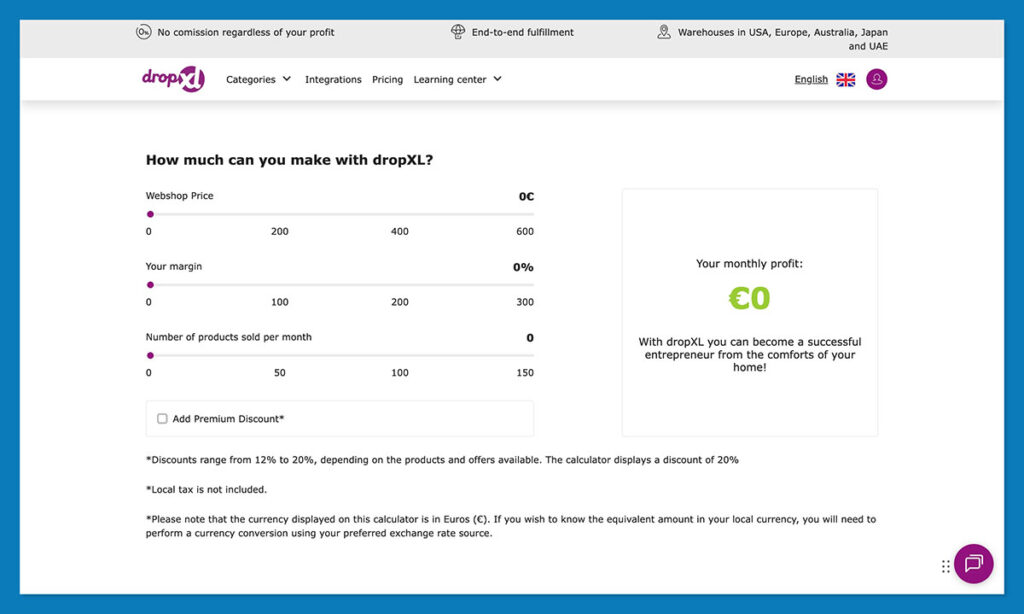
You can register for a dropshipping account with dropXL for free, too, but to start selling products there’s a €30 per month fee, so I’d make absolutely sure that you can get the kind of products your customers want here before you decide to go all-in.
On the plus side, dropXL doesn’t take any commission fees, and the monthly fee gives you complete access to products, feeds, APIs, academy resources (so you can learn more about growing your business), and even a little extra help with returns.
Step 5: Promote Your Business Without Paying for Ads
Once you’ve chosen your products and dropshipping supplier, and connected the system to your store, you need to start promoting. There are quite a few ways you can earn attention for free before you start paying for ads on search engines or social channels.
Start with a content strategy that spans your website, and social media. Optimize your website with product pictures and descriptions that answer all the questions your customers might have about what they’re buying, including how long delivery takes, how you handle returns, and even how many packages they can expect to receive.
You can also create some content here, too, like articles showing customers how to pick the right product for their home, or comparison pieces for similar products.
Then go over to social media and start showing customers what you’ve got. If you can afford to order samples, create videos on TikTok, Facebook, Instagram, or YouTube so people can see them in person. If you can’t, try to be more direct about answering potential customer questions, you could have a whole video about the materials a product’s made with, or one teaching people how to measure a space in their bedroom for a new cabinet.
Get yourself on Reddit where people are already searching for products and join the conversation, and make sure, if you have your own website, you’ve got a way to capture email addresses. Offering an initial discount to new customers in exchange for an email is a great way to start building an audience you can hopefully keep attracting back to your store.
Step 6: Use Evidence and Insights to Direct Growth
When people do start buying, be cautious with your next steps, you don’t necessarily need to buy a new theme and start spending a fortune on ads. The first job should be to figure out what’s working, and double-down on that as much as possible.
Check which products are getting the most views and orders, and how much they’re giving you in revenue after fees. Look into reasons for returns and complaints, and determine whether you need to change certain products, or just give people more information before they buy. Also, check where your customers are coming from, so you can start updating your targeting strategy.
Once you have a good idea of what’s working well, then you can start adding things. You might begin by adding a couple of more products to your catalog, based on what people are already buying, or you might spend a little more money promoting your store, taking advantage of the positive reviews and feedback you’ve gotten from customers.
Wait until you’re bringing in a consistent income before you decide to go all-out with expensive marketing campaigns and a higher Shopify tier, though.
Mistakes to Avoid When You’re Dropshipping for Free
There are quite a few ways things can start going wrong if you’re not careful, so I’d watch out for common mistakes like these:
Making $0 your permanent budget: Eventually you have to spend something, whether you’re just paying suppliers and dealing with payment processing costs, or investing in a better website and marketing strategy.
Creating a huge catalog straight away: A massive catalog will immediately disqualify you from using certain free ecommerce platforms like Big Cartel. It also gives you way too much background admin to manage when you should be validating ideas.
Ignoring delivery details: Just because the supplier is responsible for delivering the order doesn’t mean you shouldn’t be checking in. Ensure you can track deliveries, make customers aware of delays, and deal with any problems.
Copying supplier copy: The descriptions you get from a site like dropXL are a good starting point, but it’s up to you to think about what customers really need to know when they’re buying from you.
Overlooking customer service: The support you offer your customers is going to be a bigger differentiator than your product collection. Ensure you have a way to answer customer questions, and address any issues they might have.
Forgetting marketing: Even if your website is great and your product selection is truly special, you still need to help people find your website. Create a content calendar and stick to it, even when you start getting sales.
Getting Started with Dropshipping on a $0 Budget
There’s still no way to run a dropshipping business forever without paying any fees whatsoever. Eventually, you’re going to need a budget. Still, you can get started for free, and use the money you earn from your products to invest in your future growth.
The best thing you can do is start with a specific niche, and a selection of products from a supplier you can trust. I like dropXL because the range is genuinely unique (especially if you’re interested in the growing furniture market), the delivery is fast, and you even get help managing returns.
Take advantage of that, promote yourself as much as you can without paying for ads, then, when the moment calls for it, ask yourself where it makes the most sense to start spending a little extra money.


Comments 0 Responses