

Whether you're a full-time artist or just looking to monetize your work on the side, finding the right print on demand platform is one of the most important decisions you’ll make. The good news is there are plenty of options. The challenge is knowing which one suits your style, your goals, and your audience.
I've spent hours researching, comparing, and testing the top print on demand platforms for artists. From budget-friendly sites to premium providers that give you full control over your store, this list will help you find a setup that fits.
To make this easier, I’ve grouped the platforms into two key categories:
- Marketplaces, where you can upload your work and benefit from built-in traffic, but give up some control over branding and pricing
- Storefront tools, where you run your own ecommerce shop and use POD for fulfilment, keeping more of the profit and branding experience
Each has its strengths, and the best choice will come down to how involved you want to be in managing your business and growing your brand.
Quick Comparison
Here’s a quick overview of what each platform offers, how they charge, and what you can expect to earn:
| Platform | Best For | Upfront Cost | How You Earn | Standout Features | Tradeoff |
|---|---|---|---|---|---|
| Printful | Running your own ecommerce shop | Free, or $24.99/month for Growth Plan | Set your retail price, pay for fulfilment | Branding options, ecommerce integrations | You bring the traffic |
| Printify | Low-cost product sourcing | Free, $39/month for Premium | Set retail price, pay provider cost | Wide supplier network, product variety | Quality varies by provider |
| Redbubble | Passive selling with built-in traffic | Free | Earnings vary by seller tier | Large audience, easy setup | Platform fees reduce profit |
| Society6 | Home decor and interior art | Free | Set markup, typically 5–10% per sale | Design-focused catalog, curated audience | Limited control, frequent sitewide promotions |
| Threadless | Selling apparel and prints | Free | Set price, pay base cost + 5% fee | Storefront plus marketplace | Lower margins during promos |
| INPRNT | Selling fine art prints | Free | Earn 50% on prints, ~30% on other products | Quality-focused, curated artist base | Approval required, smaller marketplace |
| Fine Art America | Prints and photography | Free, $30/year for Premium | Set your markup, keep the difference | Niche art audience, large product selection | Outdated interface, variable marketing results |
| TeePublic | Selling t-shirts and stickers | Free | Fixed payout (e.g. $4 for tees, $0.75 for stickers) | Simple setup, fast uploads | Discounts reduce profits, limited brand control |
| Zazzle | Personalised and event-based products | Free | Royalties plus platform fees | Massive catalog, customization options | Complex fee structure |
| Art of Where | Niche boutique-style POD | Free | Set price, pay production cost and shipping | Fashion, accessories, premium feel | No built-in traffic, higher unit costs |
The Top Print on Demand Sites for Artists in 2026
With so many platforms out there, it’s easy to get overwhelmed. This section breaks down each option in detail to help you decide where to start, depending on what kind of art you make, how much control you want, and whether you have an audience already.
1. Printful: Best for Artists Building a Brand
💰 Starting price: Free, or $24.99 per month for Growth Plan
📦 Marketplace access: No, must connect to your own store
🔗 Integrations: Shopify, Etsy, WooCommerce, Wix, Squarespace, BigCommerce
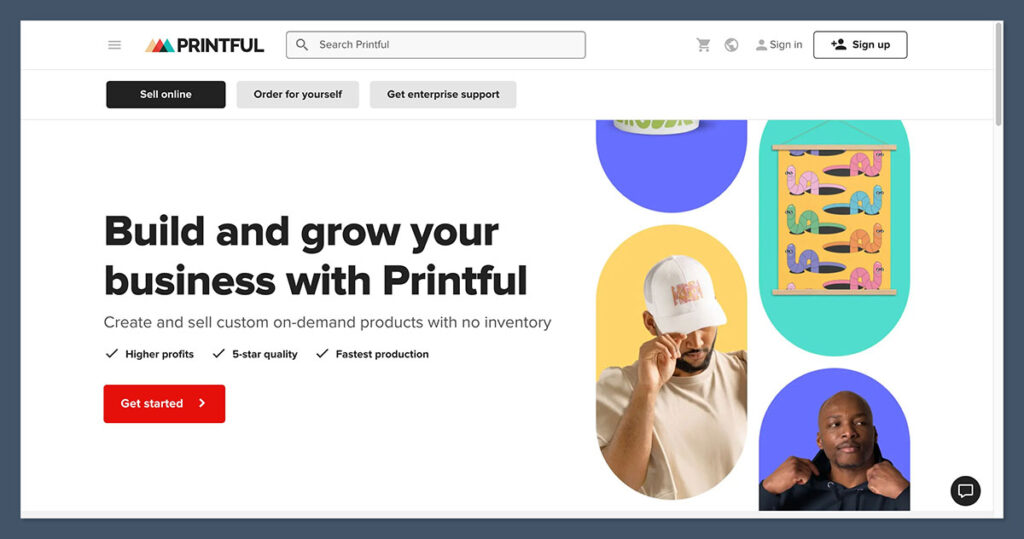
Printful is the best print on demand platform I’ve used when it comes to building a professional, brand-first business as an artist. It stands out for offering the most complete blend of fulfilment services, ecommerce integrations, and branding features — all without charging any upfront fees unless you choose to unlock extras.
You won’t find a built-in audience on Printful like you would on Redbubble or Society6, but that’s exactly what makes it the right choice if you’re taking your art seriously and want control over how it’s sold.
Printful is particularly useful if you already have a following, or if you’re setting up a store through Shopify or Etsy and just need a fulfilment partner who can deliver consistent quality. You can upload your art, apply it to products, and Printful will handle production, packing, and shipping behind the scenes. And with options for custom packing slips, inside labels, and branding inserts, you can shape a real brand experience from day one.
✔️ Pros
- No upfront cost to get started
- Easy integrations with major ecommerce platforms
- Branding options like custom labels and packaging
- Consistently high product quality
- Fulfilment centers in the US, Europe, and beyond
❌ Cons
- You must provide your own traffic
- Margins depend heavily on how you price products
- Fewer novelty or trend-based products than marketplaces
Printful has also introduced several new updates to help sellers scale in 2026. The Growth Plan now includes priority order processing and exclusive discounts, plus it becomes free once you hit $12,000 in annual sales. The platform has also expanded its eco-friendly product range and now supports custom embroidery on more apparel categories. In addition, Printful has improved its mobile app experience for managing orders and syncing product updates on the go.
I Used Printful to Run My Art Store — Here’s How It Went
Setting up Printful took less than 30 minutes once I had my store on Shopify. I was able to upload my digital art, create mockups across different products, and instantly publish them to my storefront. Every time a customer places an order, Printful automatically processes it and ships it out with my branding on the packaging.
I appreciated how easy it was to stay on top of fulfilment without needing to touch inventory. The dashboard showed order status in real time, and I could view reports on profit margins and best-selling designs. I did notice shipping times vary slightly depending on where customers are based, but Printful offers fulfilment in both the US and EU to help with that.
If you want a clean, professional shopping experience for your buyers — and you're willing to take on traffic and marketing — Printful gives you the foundation you need to scale.
How Much Does Printful Cost?
- Free plan includes full product catalog and integrations
- Growth Plan is $24.99 per month or free after $12,000 in sales per year
- You only pay Printful when you get an order, based on product base cost plus shipping
- You set your own prices, and the difference is your profit
To give you an idea, a typical t-shirt might cost you $13.95 plus shipping. If you sell it for $25, your margin after shipping and fees is usually around $6 to $8 depending on where it's going. Apparel, posters, mugs, phone cases, hats, and even embroidered options are available — with no need to hold inventory.
Why Use Printful in 2026?
If you're looking to build a brand and want a dependable partner for fulfilment, Printful is the platform to use. It gives you complete control over how your products are priced, presented, and shipped, while keeping production quality high and customer satisfaction strong. It’s also scalable — meaning as you grow, Printful can grow with you.
This makes it a smart fit for independent artists who want to move away from passive marketplaces and actually own their customer experience. Whether you're launching a full store or just dipping your toe into ecommerce, Printful gives you everything you need to sell like a pro.
Printful is suitable for:
- Artists building a brand or business, not just selling on the side
- Sellers who already have an audience or use platforms like Etsy
- Ecommerce stores that want to offer high-quality, on-demand art products
Printful isn't suitable for:
- Artists who want marketplace exposure or instant traffic
- Creators looking to test ideas quickly with minimal effort
- Sellers focused on novelty items or fast-moving trends
2. Printify: Best for Low-Cost Fulfilment
💰 Starting price: Free, or $39 per month for Premium Plan
🌍 Marketplace access: No, must connect to your store
🔗 Integrations: Shopify, Etsy, WooCommerce, Wix, Squarespace, BigCommerce
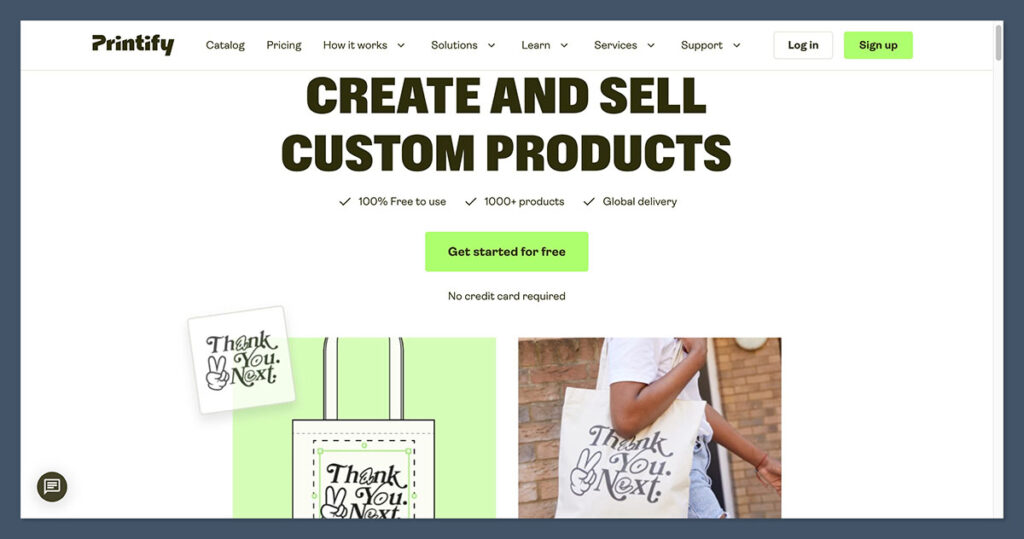
Printify is the best choice for artists who want more flexibility with pricing and product selection. Rather than fulfilling orders themselves, Printify partners with a network of independent print providers, allowing you to compare costs, print quality, and shipping times to find what suits your brand best.
It’s especially helpful if you’re testing different types of products, trying to reach customers in specific regions, or looking to increase your margins by selecting the lowest-cost providers available. While it doesn't include a marketplace, Printify gives you a backend system that’s easy to use and highly customizable.
What stands out most is the ability to shop by provider. You can browse print partners based on location, price, and reviews — giving you much more control over the production process.
✔️ Pros
- Low base product costs
- Provider comparison tools
- Access to hundreds of product types
- Premium plan unlocks up to 20% off fulfilment costs
- Good for testing pricing models
❌ Cons
- Quality and shipping times vary by provider
- You manage customer experience yourself
- No built-in audience or marketplace
In 2026, Printify has rolled out a number of upgrades including improvements to its mockup generator and expanded support for eco-conscious products. They've also introduced faster shipping with select US and EU providers and will increase their Premium Plan pricing to $39/month starting February 17, 2026, which includes expanded support and discount tiers.
I Used Printify to Test Product Margins
When I wanted to experiment with different art formats, from mugs to hoodies to canvas prints, I turned to Printify. The provider network made it easy to try out multiple variations without committing to a single fulfilment center. I could order samples, test quality, and find the best mix of cost and customer satisfaction.
There’s more backend work involved compared to a platform like Printful, but I liked the savings I could unlock with their Premium plan. For artists trying to scale or price competitively, those discounts can add up fast.
How Much Does Printify Cost?
- Free plan includes full access to the product catalog
- Premium Plan is $39/month or $299/year, includes up to 20% discounts
- You pay the provider’s base cost and shipping per order
- You set your own prices and keep the profit margin
A standard t-shirt might cost $9 to $11, depending on provider and location. Premium hoodies, framed art, and accessories vary widely, but margins are competitive if you do the work to select the right suppliers.
Why Use Printify in 2026?
Printify is ideal for budget-conscious artists who are comfortable managing fulfilment logistics. It gives you more control over profit margins than many other POD platforms and supports a wide range of products.
If you're running your own shop and want to maximise what you take home per sale, it’s a strong pick — especially with the Premium plan in place.
Printify is suitable for:
- Artists comparing fulfilment costs to maximise profit
- Sellers looking for the widest selection of products
- Entrepreneurs testing new markets or niches
Printify isn't suitable for:
- Creators who want to set and forget
- Beginners unsure about managing providers
- Artists who want consistent quality without testing
3. Gelato: Best for Global Shipping
💰 Starting price: Free, or $23.99 per month for Gelato+
🌍 Marketplace access: No, connect to your own storefront
🔗 Integrations: Shopify, Etsy, WooCommerce, Wix, Squarespace, BigCommerce
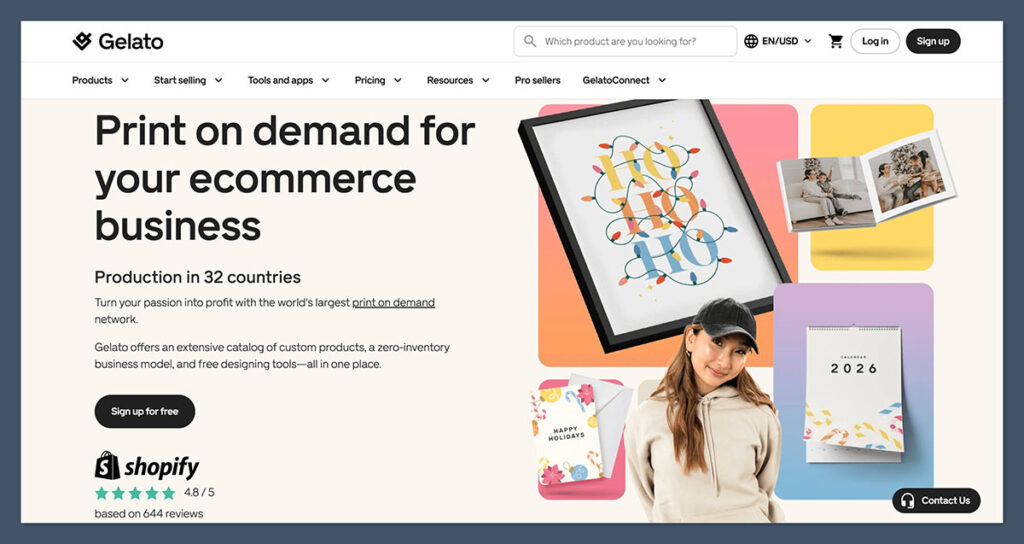
Gelato is the best print on demand platform for artists with a global audience. Unlike most POD services, Gelato operates a local fulfilment network in over 30 countries, which helps reduce shipping times and costs, especially for international buyers.
This makes it a great option if you're already attracting fans from different parts of the world, or if you plan to scale internationally. Local printing also means fewer customs issues and faster delivery — both of which can improve customer satisfaction and reduce returns.
The platform is designed with ecommerce businesses in mind and integrates smoothly with most major store builders.
✔️ Pros
- Local production in over 30 countries
- Fast international shipping
- Great for global customers
- Wide product range, especially for prints and paper goods
- Offers eco-friendly product options
❌ Cons
- No marketplace, so traffic is your responsibility
- Margins may be lower on small orders
- Subscription needed for full features and discounts
Gelato has expanded its integrations in 2026, adding more automation features and a growing catalog of packaging and sustainability options. They also added regional pricing adjustments to improve profitability in international sales.
How I Used Gelato for My Global Store
As my audience started growing on social media, I noticed a lot of my traffic came from outside the US. That’s when Gelato made the most sense. Orders to the UK, Germany, and Australia were fulfilled locally, which made shipping cheaper and much faster. Customers loved the faster turnaround, and I didn’t have to worry about cross-border delays.
The platform’s interface was smooth and simple, and while it didn’t offer branding features on the same level as Printful, I was able to maintain a consistent shopping experience for my buyers.
How Much Does Gelato Cost?
- Free plan includes most basic features
- Gelato+ is $23.99 per month, or $19.99/month billed annually
- You pay the product cost and shipping per order
- Local fulfilment reduces delivery time and international costs
Margins depend on product type and shipping zone, but for posters, art prints, and calendars, Gelato offers strong value in global markets.
Why Use Gelato in 2026?
If you sell to customers across multiple countries, Gelato solves the international shipping problem with local fulfilment. That means happier customers and fewer surprises at checkout.
Gelato is especially effective for artists focused on paper products, prints, and wall art. If your audience is global, this is one of the most practical POD platforms you can use.
Gelato is suitable for:
- Artists with an international audience
- Sellers looking to reduce global shipping delays
- Creators selling prints, posters, or stationary
Gelato isn't suitable for:
- Artists only targeting the US market
- Sellers needing detailed branding customization
- Creators focused on apparel-heavy catalogs
3. Threadless: Best Hybrid Platform for Artists
💰 Starting price: Free
🌍 Marketplace access: Yes, plus optional branded store
🔗 Integrations: Native storefront and Threadless marketplace
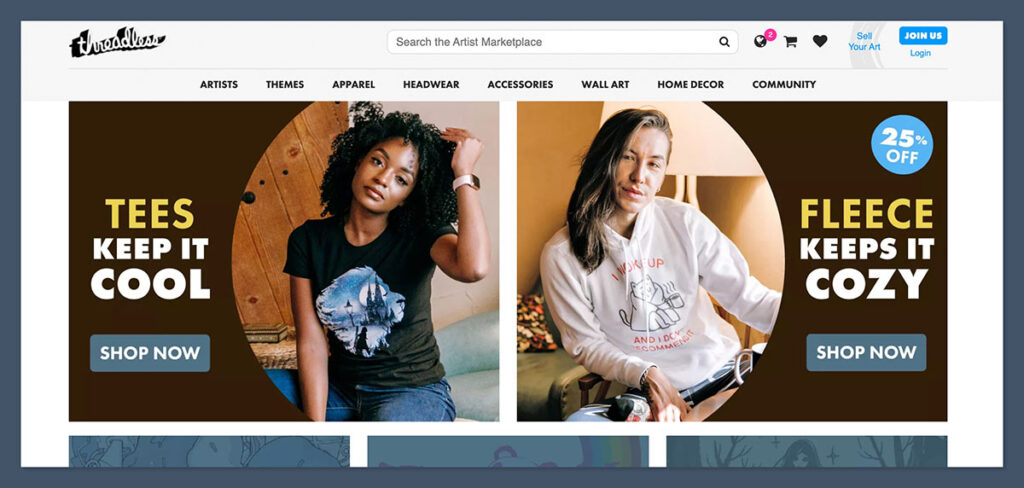
Threadless gives you the best of both worlds: a fully customizable Artist Shop plus access to its built-in marketplace. This hybrid model is a smart starting point for artists who want to test ideas but also grow a more branded experience over time.
You can control your product line, set your prices, and customise your storefront — while still benefiting from Threadless promotions and featured collections.
It’s particularly popular with illustrators, graphic artists, and painters who want their art represented in both apparel and wall art.
✔️ Pros
- Free to join and sell
- Keep full control of pricing in your shop
- Marketplace exposure for added reach
- Simple onboarding and artist tools
- Regular sitewide promotions
❌ Cons
- Promotions may lower your earnings
- Niche audience compared to mainstream sites
- Marketplace visibility is limited without strong design appeal
In 2026, Threadless rolled out a new dashboard for artists with improved earnings tracking, better mockup generation, and expanded product variants for artists focused on home goods and accessories.
My Threadless Storefront Experience
When I started with Threadless, I loved that I didn’t have to choose between being on a marketplace or having my own store. I created a clean, simple storefront under my artist name and began uploading designs for tees, posters, and accessories.

I also got exposure from Threadless’ curated marketplace. A few designs were featured in seasonal campaigns, which helped me reach buyers I wouldn't have attracted on my own. While sitewide discounts cut into some of the profits, I was still able to earn consistently — and it was all hands-off.
How Much Does Threadless Cost?
- Artist Shops are free to use
- You set your retail price, minus base cost and 5% processing fee
- You keep the difference as profit
- Marketplace visibility included at no additional cost
Margins are clear and easy to understand, and the platform doesn’t charge subscription fees, making it easy to experiment with pricing.
Why Use Threadless in 2026?
Threadless makes it easy to create a store and sell through a marketplace without compromise. If you want more flexibility than Redbubble or Society6, but aren’t ready to launch a full Shopify store, this is a great bridge.
Threadless is suitable for:
- Artists who want a storefront with added visibility
- Sellers focused on apparel and print art
- Beginners looking for a low-risk starting point
Threadless isn't suitable for:
- Creators who need full brand control
- Sellers focused only on high-end or fine art prints
- Artists looking for premium pricing tiers
3. INPRNT: Best for Fine Art Prints
💰 Starting price: Free (application required)
🖼️ Marketplace access: Yes, curated and invite-only
🔗 Integrations: None, runs on INPRNT's platform
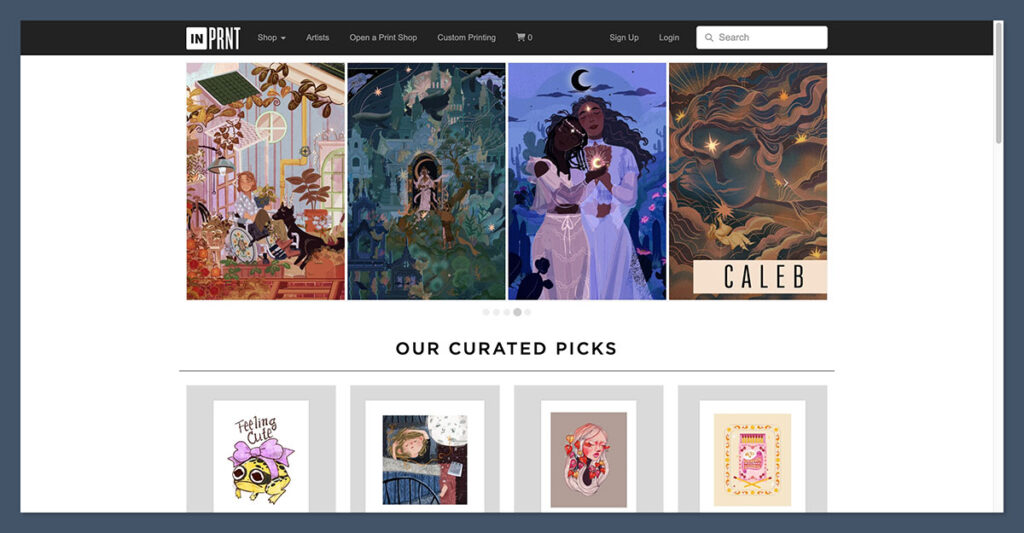
INPRNT is the best print on demand platform for artists who want to sell gallery-quality art prints without compromising their work. It's a curated space, and that selectiveness is exactly what makes it appealing. Every artist must apply or be invited, so the catalog is filled with professional-grade illustrations, digital paintings, and fine art that resonates with collectors and buyers who care about quality.
This platform focuses exclusively on art. Unlike other POD services that lean heavily into novelty items and apparel, INPRNT offers a clean, minimalist environment where your work is presented like it belongs on a wall — not a coffee mug.
✔️ Pros
- High-quality archival prints
- 50% commission on fine art prints
- Curated artist base
- Strong presentation and buyer experience
- Collectors and print buyers trust the platform
❌ Cons
- Requires approval to join
- No custom branding options
- No ecommerce integrations
- Smaller audience than mass marketplaces
INPRNT has also made improvements to its artist dashboard in 2026, with better analytics and clearer royalty breakdowns. They've expanded their framed print options and added subtle variations like canvas wraps and acrylic prints, all focused on preserving the artist's original style.
What It’s Like to Sell on INPRNT
I joined INPRNT after being invited by another artist, and the onboarding was seamless. Within a few days, my work was live, beautifully displayed, and ready for collectors to buy. The print quality was noticeably better than other platforms I’d tried — colors were true to the original, and packaging was professional.
Although INPRNT doesn’t offer as many product types or promotional features as other POD sites, that’s exactly what made it feel premium. It’s tailored to artists who care more about quality than quantity.
How Much Does INPRNT Pay?
- Fine art prints: 50% of the retail price
- Other products (e.g. phone cases, small accessories): ~30%
- No setup fees or subscriptions
- INPRNT handles printing, framing, and fulfilment
INPRNT sets the retail price, so there’s no pricing customization. However, your cut is clearly defined, and the payouts are consistent.
Why Use INPRNT in 2026?
If your focus is print sales, especially limited-run or collector-quality work, INPRNT is one of the few POD platforms that truly understands how to present and sell art. It’s not for everyone — but that’s part of its appeal.
INPRNT is suitable for:
- Professional artists selling wall art
- Illustrators, painters, and digital artists focused on quality
- Creators with an existing portfolio or collector base
INPRNT isn't suitable for:
- Designers looking to sell on apparel or accessories
- Artists who want control over pricing or branding
- Sellers needing fast exposure or high-volume sales
4. Fine Art America: Best for Traditional Artists
💰 Starting price: Free, or $30 per year for Premium Plan
🖼️ Marketplace access: Yes, includes Pixels.com
🔗 Integrations: Standalone marketplace platform
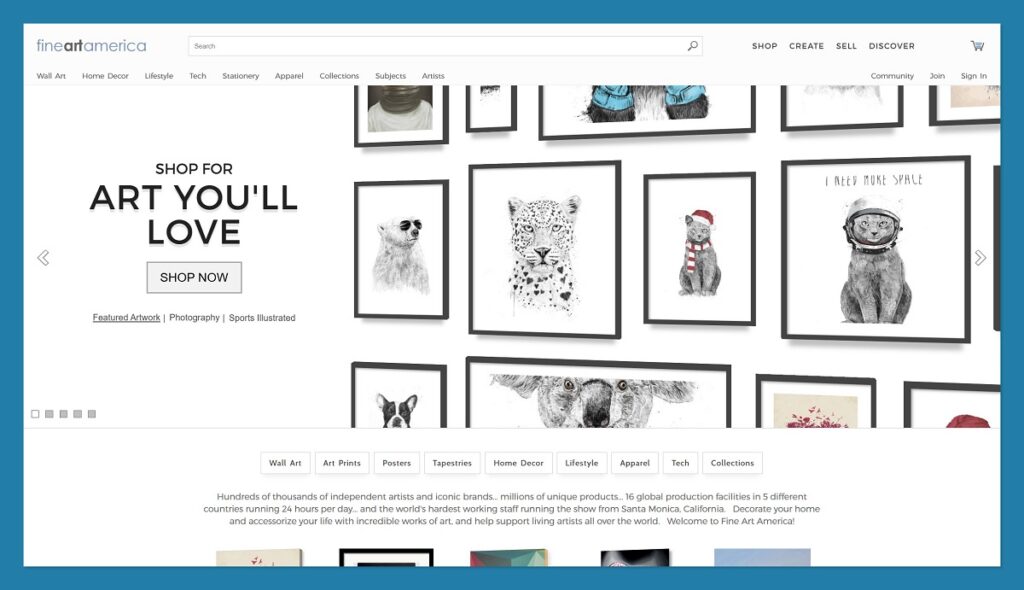
Fine Art America is one of the most established names in the print on demand space for traditional artists. It has a dedicated audience of collectors, photographers, and painters, and provides tools to sell framed prints, canvas pieces, metal prints, and other wall-based formats — all without needing your own storefront.
With a Premium membership, you get access to expanded marketing tools, branded pages, and inclusion on FAA’s sister site, Pixels.com, which caters to a more commercial art-buying audience.
✔️ Pros
- Tailored to visual artists and photographers
- You set your markup
- Large catalog of wall art formats
- Optional Premium tools and storefront features
- Active buyer community
❌ Cons
- Outdated user interface
- Discovery depends on platform promotions
- Some artists report inconsistent visibility
- No integrations with ecommerce platforms
In 2026, Fine Art America introduced digital licensing options for select artists, enabling creators to license their work for web use, presentations, or business content. They've also improved their mobile app, making it easier to manage your portfolio and orders on the go.
My Experience on Fine Art America
I used FAA to test the waters with framed prints and canvas formats. Uploading was easy, and I could control the markup on each item, which helped me experiment with different price points.
The quality of the final prints was excellent, and I appreciated being able to offer my art on larger scale formats without managing production. While the site design felt a bit clunky, it still drove traffic and got my work in front of the right audience — especially those looking to decorate their homes.
How Fine Art America Pricing Works
- You choose your markup
- FAA sets the base price per product
- You earn the full markup amount on every sale
- Premium Plan ($30/year) includes access to marketing tools and more upload slots
This pricing structure gives you control, especially on higher-end pieces where small differences in markup can result in much larger profits.
Why Use Fine Art America in 2026?
For painters, photographers, and illustrators looking to showcase their work in a gallery-like environment, Fine Art America offers a proven POD platform with a built-in audience. It’s not trendy or flashy — but it works.
Fine Art America is suitable for:
- Traditional artists selling print-based work
- Creators looking to reach decor buyers and collectors
- Photographers and painters who value wide-format products
Fine Art America isn't suitable for:
- Designers focused on novelty or apparel
- Artists looking for a modern, intuitive UI
- Sellers who want to customize branding or packaging
5. TeePublic: Best for Simple Apparel Sales
💰 Starting price: Free
👕 Marketplace access: Yes, marketplace only
🔗 Integrations: None, standalone platform
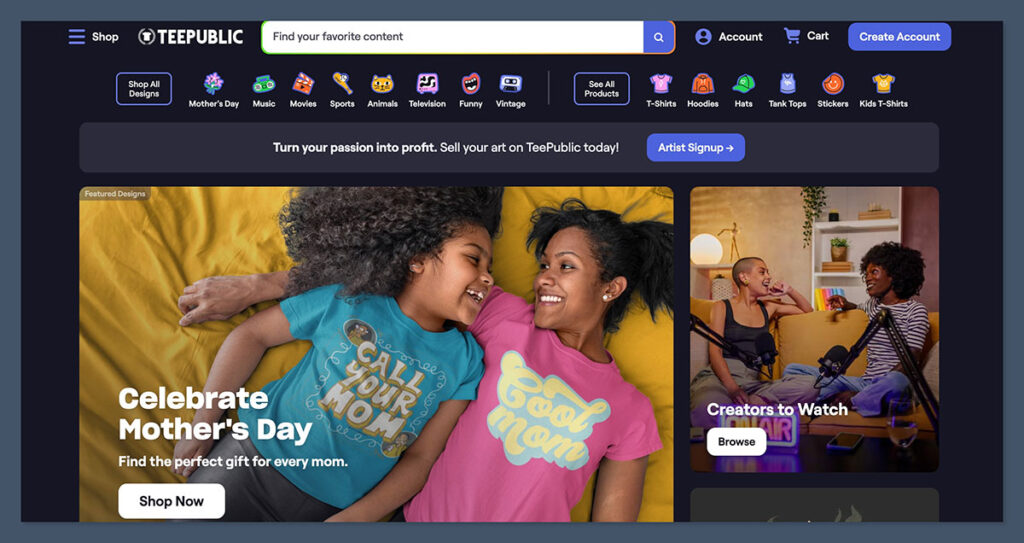
TeePublic is one of the easiest POD platforms to use, especially if your art is a good fit for apparel and stickers. It's fully marketplace-based, so you don’t need to build a store or drive traffic — you just upload your designs and TeePublic handles the rest.
Payouts are fixed and straightforward, which makes pricing predictable. However, frequent discounts across the site mean that your average earning per sale is often lower than you’d expect.
✔️ Pros
- Simple to set up and manage
- Fixed payout structure, no guesswork
- Quick upload-to-sale process
- Marketplace exposure from day one
- Frequent design campaigns
❌ Cons
- Discounts reduce profits
- No storefront customization
- Limited branding or customer ownership
- No control over promotions
In 2026, TeePublic streamlined its artist dashboard with new tools for tracking performance across product types. They’ve also expanded their sticker catalog and introduced organic cotton apparel for select SKUs.
What It’s Like Selling on TeePublic
TeePublic was one of the first places I tried when testing if my art would sell. I liked that I could upload a design and have it available on shirts, stickers, and hoodies in minutes. My first few sales came in with no extra effort, and I didn’t have to think about fulfilment, packaging, or pricing strategies.
Over time, though, I saw my earnings vary depending on whether products were on sale — which they often were. While it’s great for exposure, it’s harder to scale a business here.
How Much Does TeePublic Pay?
- Fixed earnings: around $4 per shirt
- Discounted sales drop earnings to $2
- Stickers: $0.75 per sale, or $0.50 on promotion
- No subscriptions or upfront fees
Because pricing is handled entirely by TeePublic, there’s no need to calculate margins or set markups. What you see is what you get.
Why Use TeePublic in 2026?
If you're looking to dip your toe into selling designs online without managing a shop, TeePublic is a hassle-free way to start. It’s especially useful for testing pop culture themes or humorous artwork.
TeePublic is suitable for:
- Designers testing low-effort concepts
- Artists who want passive income from designs
- Sellers focused on shirts, hoodies, and stickers
TeePublic isn't suitable for:
- Artists wanting brand control
- Sellers focused on premium pricing
- Creators looking to build a long-term ecommerce presence
6. Zazzle: Best for Personalized Products
💰 Starting price: Free
🎁 Marketplace access: Yes, highly customizable product catalog
🔗 Integrations: Standalone platform
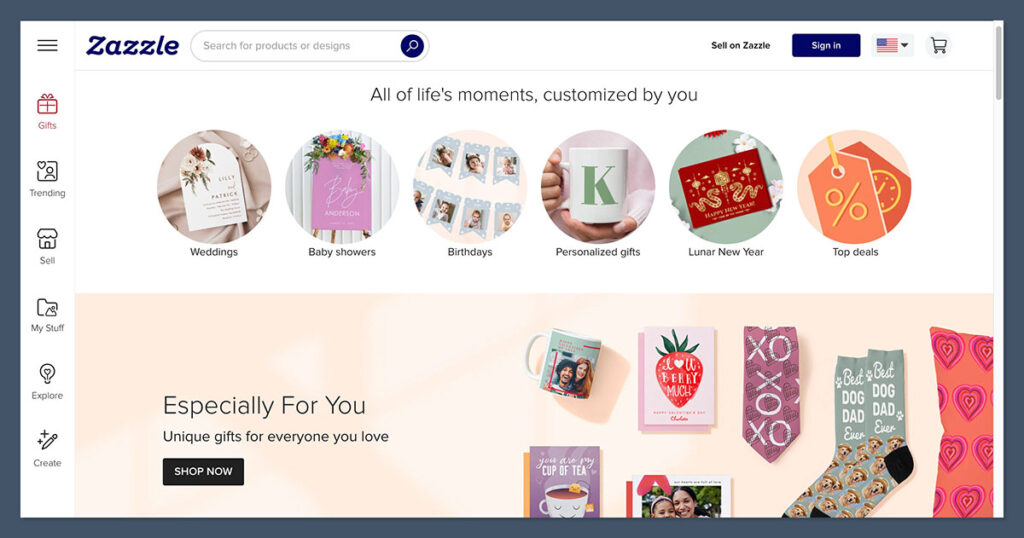
Zazzle offers one of the most diverse catalogs in the POD world. From invitations and stationery to custom clothing and tech accessories, Zazzle is built for creators whose work fits into lifestyle moments like weddings, gifts, and events.
It also includes advanced customization tools that let buyers personalize your designs with their own text or images, opening up opportunities for event-based sales.
✔️ Pros
- Massive product catalog
- Personalization tools for customers
- Popular for events, gifts, and stationery
- No upfront cost to list designs
❌ Cons
- Royalty structure is complex
- Excess royalty fees may apply
- Customization makes some products hard to control
- Design tools can be clunky
In 2026, Zazzle updated its royalty system, giving sellers more visibility into how marketing and excess fees affect their payouts. They've also launched a mobile-friendly design editor, making uploads easier for creators working from tablets and phones.
I Listed Stationery Designs on Zazzle
Zazzle was the right fit for my wedding-themed artwork and stationery patterns. I was able to upload editable templates for things like RSVP cards and thank-you notes, and buyers could personalize them directly from the product page. It was hands-off on my side, but still gave me visibility into what people were buying and modifying.
It took a little while to understand the royalty structure, but once I figured it out, I could price more confidently.
How Zazzle Royalties Work
- Base royalty rate is 10%
- You can increase it, but may trigger excess fees
- Marketing royalty fees of 35–50% may apply
- You keep the net royalty after fees
Zazzle is best used when you’re familiar with how royalties are calculated, or if you’re focusing on giftable, personalized products.
Why Use Zazzle in 2026?
Zazzle remains a strong choice for artists who design for life’s milestones. If you work in stationery, cards, or branded gifts, the platform gives you the tools to make your designs adaptable and accessible.
Zazzle is suitable for:
- Stationery and event-based designers
- Sellers offering personalized gifts
- Artists focused on lifestyle products
Zazzle isn't suitable for:
- Artists needing simple pricing structures
- Sellers focused on fine art prints or apparel
- Beginners unfamiliar with royalty models
7. Art of Where: Best for Boutique Artists
💰 Starting price: Free
🧵 Marketplace access: No, fulfilment-only
🔗 Integrations: Shopify, Etsy, WooCommerce
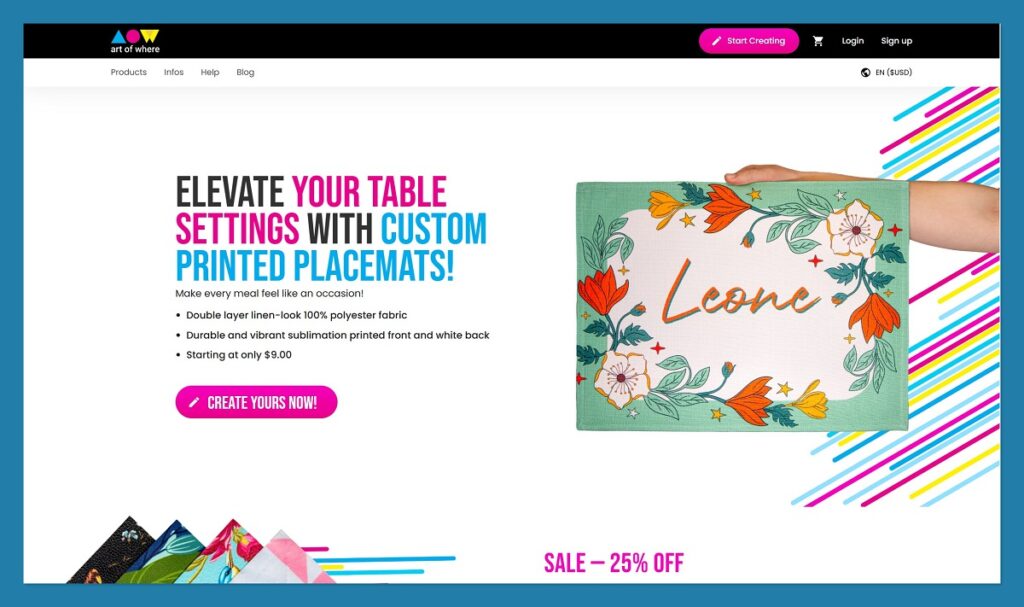
Art of Where is a boutique print on demand provider with a focus on handmade feel, fashion-forward products, and creative control. Unlike mass POD platforms, Art of Where offers a curated catalog of fabric-based goods — including leggings, scarves, kimonos, and notebooks — that feel closer to designer merchandise than mass-market apparel.
It’s a great fit for artists with detailed patterns, textile work, or fashion-minded designs.
✔️ Pros
- Unique product catalog (fabric goods, accessories)
- Handmade studio feel
- Good Shopify and Etsy integrations
- Branding options available
❌ Cons
- No marketplace or built-in traffic
- Higher base costs
- Limited to niche products
- Slower fulfilment than mass providers
Art of Where continues to expand its catalog in 2026, adding more apparel options with organic fabrics and recycled materials. Their mockup system has also been improved to reflect more accurate garment visuals.
Using Art of Where for Pattern Design
As someone who designs intricate patterns and abstract illustrations, Art of Where let me place my work on high-quality fabrics without having to manage stock. The leggings and kimonos I sampled were impressive — better than what I’d seen from bigger POD networks — and customers were often surprised by how premium the end product felt.
I connected my Etsy store and let Art of Where handle the backend. While the margins weren’t as high as with Printify, the product quality more than made up for it.
How Art of Where Pricing Works
- You set your retail price
- Art of Where charges base product cost + shipping
- You keep the difference
- No subscription or platform fees
Because there’s no marketplace, your success depends entirely on your ability to drive traffic and build a following.
Why Use Art of Where in 2026?
If you're focused on unique fashion items or want your art to feel like part of a boutique collection, Art of Where gives you a reliable, quality-focused platform.
Art of Where is suitable for:
- Artists selling apparel, accessories, and fabric goods
- Designers focused on boutique or handmade aesthetics
- Creators with a visual brand already built
Art of Where isn't suitable for:
- Beginners who need built-in traffic
- Sellers on a tight margin
- Artists focused on mass-market products
Final Thoughts
Choosing the best print on demand site as an artist depends on what you’re trying to build. If you're creating a brand and want full control, Printful and Printify are your best bets. If you're experimenting with designs or want to earn passively, Redbubble, Society6, or TeePublic make getting started easy.
There’s no one-size-fits-all platform, but the good news is you can test more than one. Many artists start with marketplaces to learn what sells, then expand to their own stores with higher-end platforms once they have traction.
Just make sure you sample your products, track your margins carefully, and prioritize platforms that align with your art style and long-term goals.



Comments 0 Responses