

After a decade reviewing ecommerce stacks at Ecommerce-Platforms.com, here is my quick verdict: Xero is the best overall pick for Shopify sellers who want payout-first reconciliation and unlimited users on every plan. QuickBooks Online is still the default for US sellers with a CPA, Finaloop is the best AI-native option for DTC brands between $250K and $10M, and Synder is the most flexible connector for sellers running 4+ channels including TikTok Shop. Above $15M with multi-entity or multi-location operations, NetSuite is the only real answer.
In this guide, I’ll walk you through the key features, pricing, and trade-offs of the ten best accounting software options for ecommerce, including the real connector math (A2X $29 to $229/mo, LMB $17 to $99/mo, Synder $65 to $599/mo) that most lists hide.
The timing matters. In mid-January 2026, Intuit’s forced QuickBooks Connector migration broke Shopify syncing for thousands of stores. The rebuilt connector dumps every order into the Banking Feed for manual acceptance. Add the QuickBooks Desktop sunset on May 31, 2026, and this is the year a lot of sellers find out their accounting stack is already broken. Unlike A2X- or LMB-sponsored roundups, this list has no sponsor.
What to Look for in an Ecommerce Accounting Tool
- Native or connector-based sync with your channels (Shopify, Amazon, TikTok, Etsy)
- Payout-level reconciliation so refunds, fees, and facilitator tax line up
- SKU-level COGS with FIFO at a minimum
- Multi-currency if you sell across borders
- Clean handoff to a sales tax tool (TaxJar, Avalara, Numeral)
- An accountant network in your country that uses the software
| Tool | Best For | Starting Price | Native Shopify? | Sales Tax Built-in? | Multi-channel? |
|---|---|---|---|---|---|
| Xero | Best overall for Shopify sellers | $25/mo | Yes, native app | Basic sales tax, 1099, W-9 | Yes via A2X, LMB, Synder |
| QuickBooks Online | US sellers with a CPA | $35/mo (+ A2X $29/mo) | Broken Jan 2026, use A2X | Add-on (TaxJar, Avalara) | Yes via A2X |
| Finaloop | AI-native DTC $250K to $10M | $245/mo | Native | Built-in add-on | Yes (Shopify, Amazon, TikTok) |
| Synder | Multi-channel with TikTok | $65/mo | Via QBO | Add-on | Yes (30+ platforms) |
| Wave | Solo under $100K | Free | No native | No | No |
| Zoho Books | Solo/SMB free under $50K | Free / $20/mo | Via Zoho Flow | Yes (US/CA/AU) | Limited |
| Sage Business Cloud | UK/EU small sellers | $10/mo | Add-on | UK VAT native | Limited |
| Sage Intacct | Mid-market finance-only | $15K to $50K/yr | No (third-party) | Add-on | Via add-on |
| NetSuite | $15M+ true ERP | $1K to $2K/mo base | Via SuiteCommerce | Yes (SuiteTax) | Yes (native) |
| Avalara/TaxJar/Numeral | Sales tax companion | From $19/mo | N/A | Core function | N/A |
Starting with my top overall pick.
1. Xero: Best Overall for Shopify Sellers
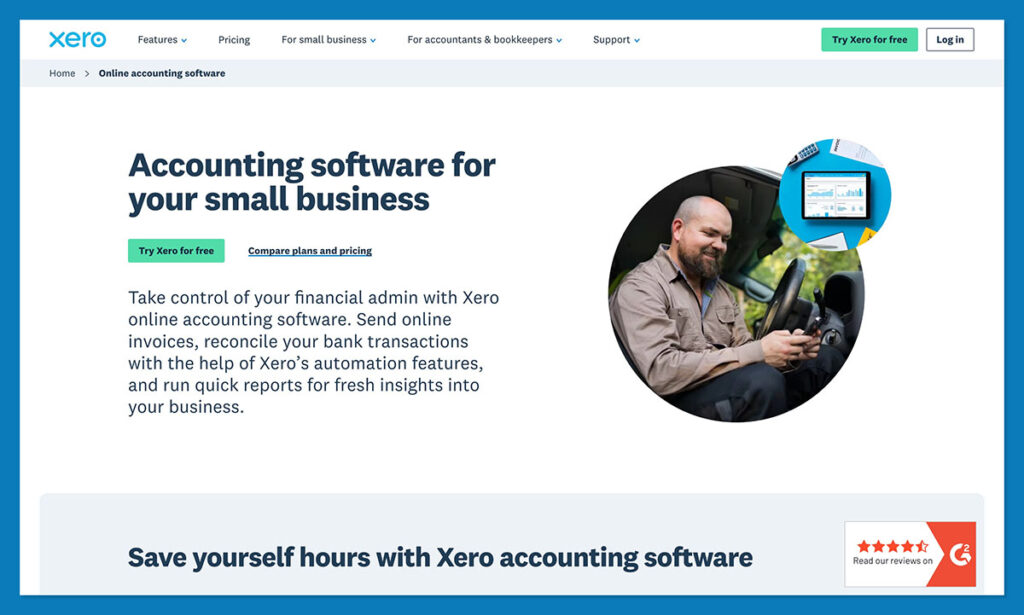
Xero is the accounting tool I recommend most often to companies who want a pain-free way to handle the financial side of ecommerce.
The native Shopify integration can send sales straight into Xero as individual sales reports or daily summaries, then match Shopify Payments and gateway payouts to bank transactions, with taxes, refunds, plus fees all handled for you. Xero also integrates with 1,000+ other business apps, so you can combine more of the stack you’re using to keep ecommerce running.
Who it’s for: Shopify sellers who want exceptional accounting tools, reconciliation, unlimited users on every plan, plus a system that works well for the owner of the business as well as their accountant.
Key features
- Native, easy to use Shopify integration
- Insights into Shopify Payments and PayPal fees
- Unlimited users on every account
- Smart document capture for receipts and bills
- Sales tax, 1099, and W-9 management
- 30, 60, or 180 day cashflow forecasting (depending on your plan)
- Custom dashboards and financial health scores
- JAX AI document capture, bank reconciliation, and invoice chasing
- XeroForce for custom AI agents
Pricing
- Xero Early: $25/mo
- Xero Growing: $55/mo
- Xero Established: $99/mo
Pros
- ✔️ Direct Shopify integration: with a choice of summaries and individual reports.
- ✔️ Affordable pricing starting at $25 per month with unlimited users.
- ✔️ Useful AI: helpful automation tools like smart document capture.
Cons
- ❌ Limitations on the cheapest plan: only 25 invoices included.
- ❌ Not the best for inventory: more focused on integrating with inventory tools than providing in-depth tracking natively.
- ❌ Tax zone complexity: setting up tax zones can be tough at first.
Quick recommendation: I like Xero for Shopify sellers who need accounting software that focuses on payouts first, and keeps apps aligned. It’s still not the best option for inventory management, but the chances are you’ll already have tools to help with that.
2. QuickBooks Online: Best for US Sellers with a CPA
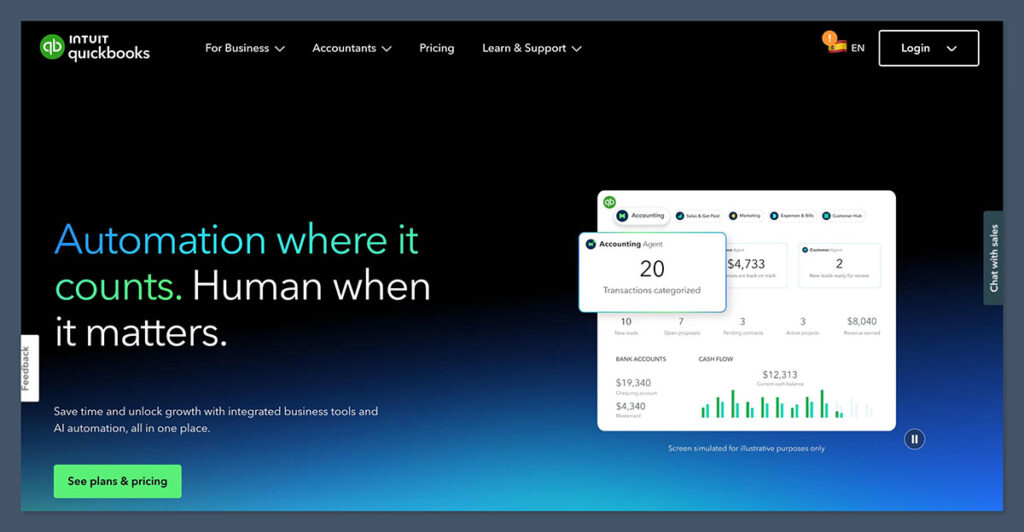
QBO holds 85%+ of the global small-business accounting market, but its native Shopify connector broke for thousands of stores in January 2026. Volume sellers route through A2X.
Who it’s for: US sellers $100K to $15M with an ecommerce CPA. Skip if under $100K, non-US, or wanting real-time books.
Key features
- Largest US app marketplace; every ecommerce connector supports QBO
- Four plan tiers ($35 to $235/mo)
- Intuit Assist AI for bank feed reconciliation and anomaly flagging
- A2X handles Shopify, Amazon, Walmart, eBay, Etsy payouts with facilitator tax broken out
- Tight TaxJar and Avalara integration for US sales tax
Pricing
- QBO Simple Start: $35/mo (1 user)
- QBO Essentials: $65/mo (3 users)
- QBO Plus: $99/mo (5 users, inventory)
- QBO Advanced: $235/mo (25 users)
- A2X add-on: $29/mo (Mini, 200 orders) to $229/mo (Premium, 10,000+ orders) per channel
Pros
- ✔️ Broadest accountant network. Every US ProAdvisor knows QBO.
- ✔️ A2X is the gold standard for FBA, per Social Commerce Accountants.
- ✔️ Mature ecosystem with 1,000+ apps including every sales tax and inventory tool.
Cons
- ❌ Native Shopify connector broke in the January 2026 migration.
- ❌ Per-channel A2X pricing stacks fast ($229/mo vs LMB $99/mo at 10K orders).
- ❌ Books lag 15+ days without a dedicated bookkeeper.
Best for / Skip if: US sellers with an accountant or expecting $1M+. Skip if under $100K (Wave/Zoho), or wanting hands-off real-time books (Finaloop).
3. Finaloop: Best AI-Native Accounting Built for DTC Brands
At $500K revenue, Finaloop replaces QBO, your bookkeeper, and A2X for less than running them separately. It scores 4.8/5 on the Shopify App Store with 99% five-star reviews.
Who it’s for: DTC brands $250K to $10M on Shopify, Amazon, TikTok Shop. Backlinko calls it “best for DTC brands past $250K serious about scaling.” Skip below $250K and above $10M.
Key features
- Replaces accounting software, bookkeeper, and connector in one service
- Real-time P&L, cash flow, and balance sheet (no 15-day lag)
- Automated three-way order-payout-bank reconciliation
- SKU-level COGS with FIFO via InventoryIQ add-on
- Native TikTok Shop alongside Shopify, Amazon, Etsy, PayPal, Stripe
- 100% accuracy guarantee with human bookkeeper review
Pricing
- Core: $245/mo (up to $1.5M revenue)
- Plus: $415/mo ($1.5M to $3M)
- Premium: $745/mo ($3M to $6M)
- Enterprise: $995/mo ($6M to $10M)
- Custom: above $10M
- Implementation: $850 one-time
- Tax services add-on: from $100/mo
- InventoryIQ add-on: $200 to $350/mo
- 14-day free trial, no credit card
Pros
- ✔️ Real-time books eliminate the 15-day QuickBooks lag.
- ✔️ Native TikTok Shop plus Shopify, Amazon, Etsy, PayPal, Stripe.
- ✔️ One service replaces three tools plus an outsourced bookkeeper.
Cons
- ❌ Not worth it under $250K revenue. Premium over DIY QBO is hard to justify.
- ❌ Limited customization. No new journal accounts or modified bookkeeping logic.
- ❌ One Shopify review reports $4,000 charged with promised human support never delivered. An outlier worth knowing.
Direct recommendation: Shopify or Amazon brand $250K to $10M tired of two-week-lagged numbers? Start the 14-day trial. Below $250K, stay on QBO plus A2X. Above $10M, NetSuite at #8.
4. Synder: Best Multi-Channel Connector with Native TikTok Shop
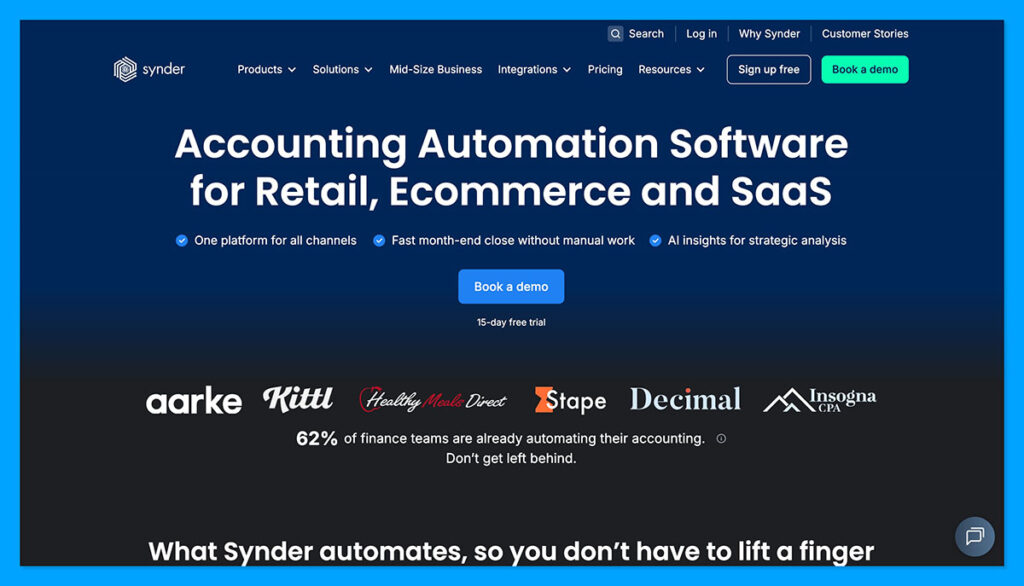
One Synder client cut daily reconciliation from 3-4 hours to under one. That’s 70+ hours saved monthly, roughly $60,000 in headcount avoided.
Who it’s for: Sellers across 30+ channels needing TikTok Shop or Walmart syncing to QBO, Sage Intacct, or NetSuite. Best when you’ve outgrown a single-channel connector but aren’t ready for an ERP.
Key features
- Connects 30+ platforms to QBO, Sage Intacct, and NetSuite
- Per-transaction or daily summary sync modes
- GAAP-compliant revenue recognition (ASC 606)
- SOC 2 Type 2 certified
- TikTok Shop and Walmart on the Pro tier ($275/mo)
- COGS tracking on the Essential plan
Pricing
- Basic: $65/mo or $52/mo annual (500 transactions, 2 integrations)
- Essential: $115/mo or $92/mo annual (1K-3K transactions, unlimited integrations, COGS)
- Pro: $275/mo or $220/mo annual (10K-20K transactions, TikTok and Walmart)
- Pro Max: $599/mo or $480/mo annual (20K-40K transactions)
- Premium: custom (50K+ transactions)
Pros
- ✔️ Widest channel support including TikTok, Walmart, and dozens of payment processors.
- ✔️ Sync mode flexibility. Per-transaction for audit detail or daily summary for speed.
- ✔️ Routes to ERPs. Only connector here that feeds NetSuite and Sage Intacct.
Cons
- ❌ TikTok and Walmart locked behind $275/mo Pro tier.
- ❌ Not standalone. Needs QBO, Sage Intacct, or NetSuite underneath.
- ❌ Pricier than A2X or LMB at equivalent volume for single-channel sellers.
Quick comparison: Single channel? LMB. High-volume FBA? A2X. 30+ channels with TikTok? Synder Pro.
5. Wave: Best Free Option for Solo Sellers Under $100K
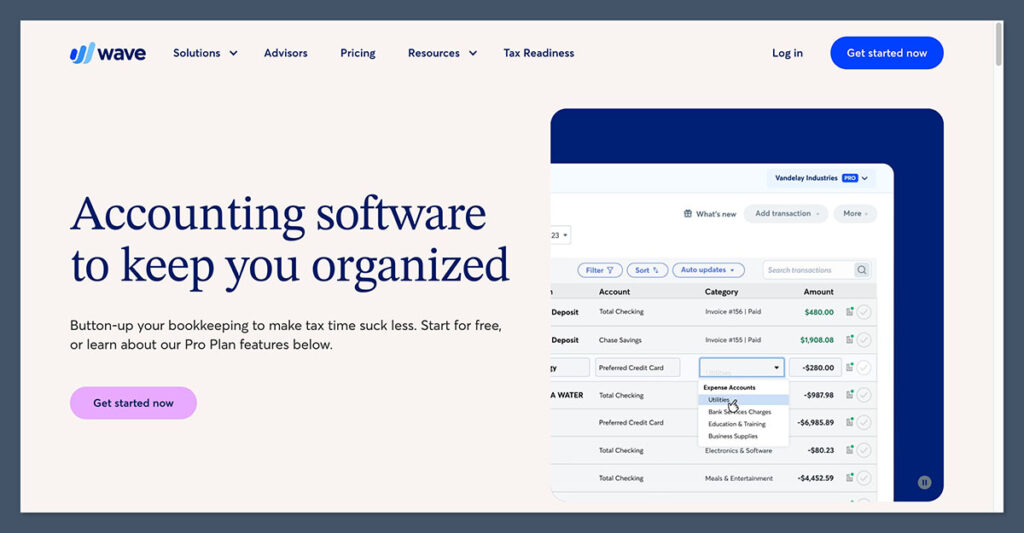
Wave is genuinely free with no trial expiry. It has zero native ecommerce integrations. For a side hustle that’s fine; for a real Shopify store, it’s a trap.
Who it’s for: Pre-launch sellers, freelancers, and solo Shopify or Etsy operators under ~$100K needing only invoicing and basic expense tracking. Switch when manual reconciliation passes 8 hours/month.
Key features
- Genuinely free Starter plan, not a trial
- Unlimited invoicing and expense tracking
- Bank connections included
- Pro plan adds auto-import of bank transactions
- Built-in receipt scanning
Pricing
- Starter: Free forever (manual transaction entry)
- Pro: $16/mo (auto bank import, receipt capture)
- Revenue model: payment processing fees (~2.9% + 60 cents) and payroll add-ons
Pros
- ✔️ Zero cost for income/expense basics, unbeatable for pre-launch.
- ✔️ Clean UI non-accountants can actually use.
- ✔️ Unlimited invoicing even on the free tier.
Cons
- ❌ No native Shopify, Amazon, Etsy, or WooCommerce integration. Every payout reconciled by hand.
- ❌ No inventory management. COGS lives in a Google Sheet.
- ❌ No multi-currency. Disqualifying for international sellers.
Best for / Skip if: Pre-launch and sub-$100K side hustles. Skip if you sell on Shopify or Amazon at volume. Graduate to Zoho Books at #5 or QBO plus a connector at #1.

6. Zoho Books: Best Budget Pick for Sellers Under $50K
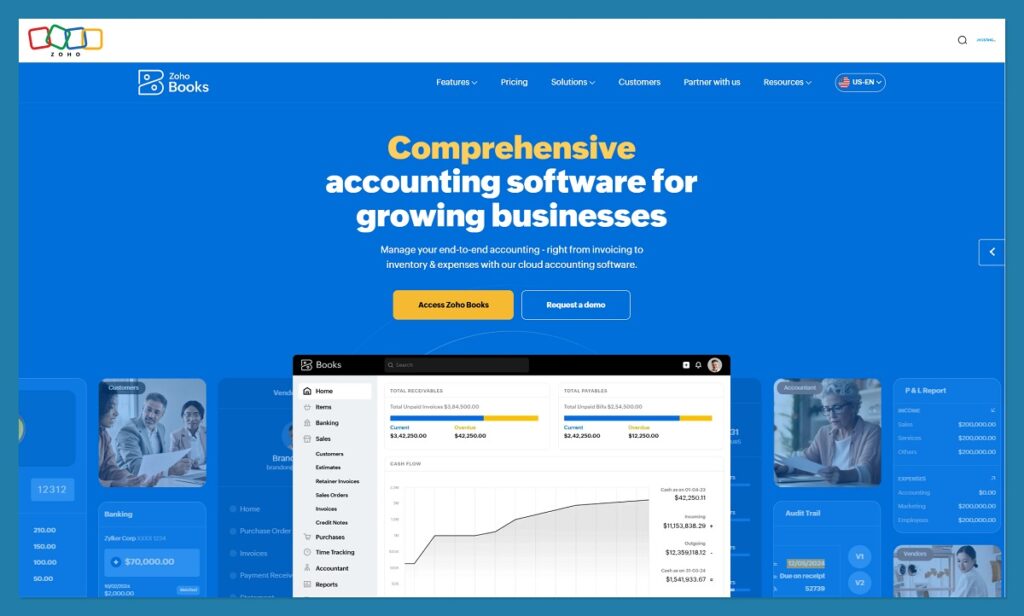
Free up to $50K revenue with a real Shopify connector via Zoho Flow. The tier between Wave and QBO that almost no list covers.
Who it’s for: Solo and early SMB sellers under $50K wanting automation Wave doesn’t offer. Especially strong if you use Zoho One. Supported in the US, Canada, Australia, India.
Key features
- Free plan up to $50K revenue (true free, not a trial)
- Connects to Shopify, Amazon, Etsy via Zoho Flow
- Zoho Inventory integrates natively
- Multi-currency on paid tiers
- US, Canadian, and Australian sales tax modules included
Pricing
- Free: $0 (under $50K revenue, 1 user)
- Standard: $20/mo (5,000 invoices, 3 users)
- Professional: $50/mo (10 users, project billing)
- Premium: $70/mo (custom reports, vendor portal)
- Elite: $150/mo (advanced multi-currency)
- Ultimate: $275/mo (advanced analytics)
Pros
- ✔️ Free under $50K revenue with a real ecommerce integration path.
- ✔️ Zoho ecosystem advantage if you use their CRM or Inventory.
- ✔️ Built-in sales tax for the US, Canada, and Australia.
Cons
- ❌ Shopify via Zoho Flow isn’t as clean as native QBO.
- ❌ Smaller accountant network than QBO in North America.
- ❌ Less ecommerce-specific tooling than LMB or A2X integrations.
The verdict: The most overlooked free option in ecommerce accounting. Under $50K and using another Zoho product? Default here.
7. Sage Business Cloud Accounting: Best for UK and EU Small Sellers
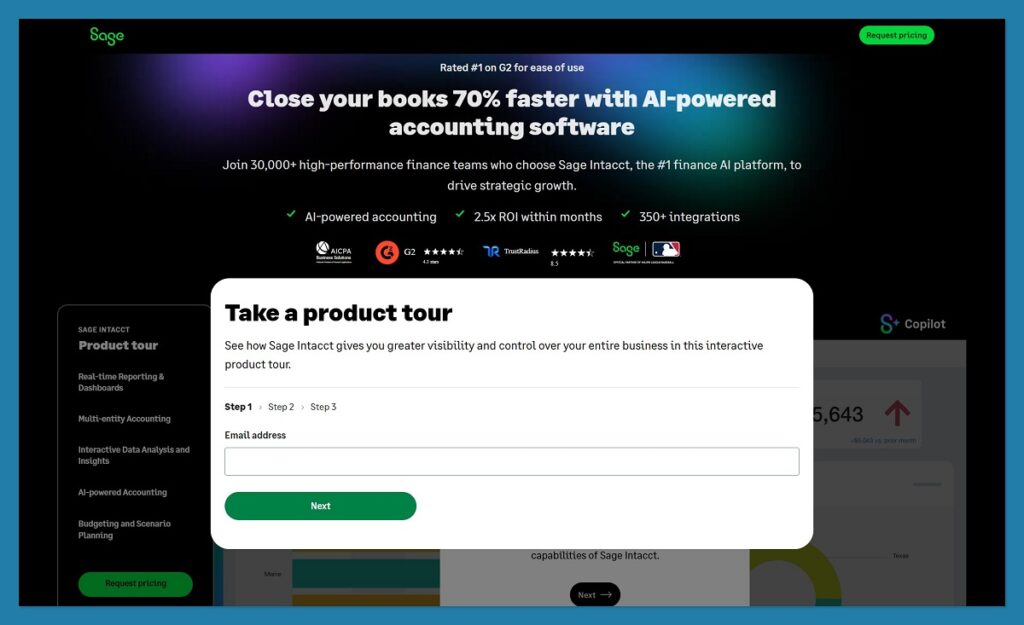
UK MTD VAT deadlines don’t move and HMRC grants no grace periods. Sage was built for UK VAT from day one.
Who it’s for: UK and EU small sellers under ~£500K wanting built-in MTD VAT submission. Strong if your accountant is a Sage partner; weaker across 5+ marketplaces.
Key features
- HMRC-recognised MTD VAT submission built in
- Bank feeds for UK and EU banks
- VAT automation including reverse charge and EU OSS
- Multi-currency on the Standard tier
- Cash flow forecasting
- Sage Copilot AI rolling out across 2026
Pricing
- Accounting Start: ~$10/mo (sole traders, single user)
- Accounting Standard: ~$25/mo (unlimited users, quotes and estimates)
- Accounting Plus: ~$35/mo (multi-currency, inventory, advanced reporting)
Pros
- ✔️ UK VAT and MTD built in. No plug-ins required.
- ✔️ Strong UK accountant network familiar with Sage.
- ✔️ Affordable entry tier at ~$10/mo for sole traders.
Cons
- ❌ No native ecommerce platform integrations. Needs A2X or LMB.
- ❌ Weaker app ecosystem than QBO outside the UK.
- ❌ Less popular with US ecommerce accountants.
Best for / Skip if: UK sole traders whose accountant uses Sage. Skip if you sell on 4+ marketplaces (a multi-channel connector to QBO wins), or you’re US-based.
8. Sage Intacct: Best Mid-Market Finance for Non-Inventory Ecommerce
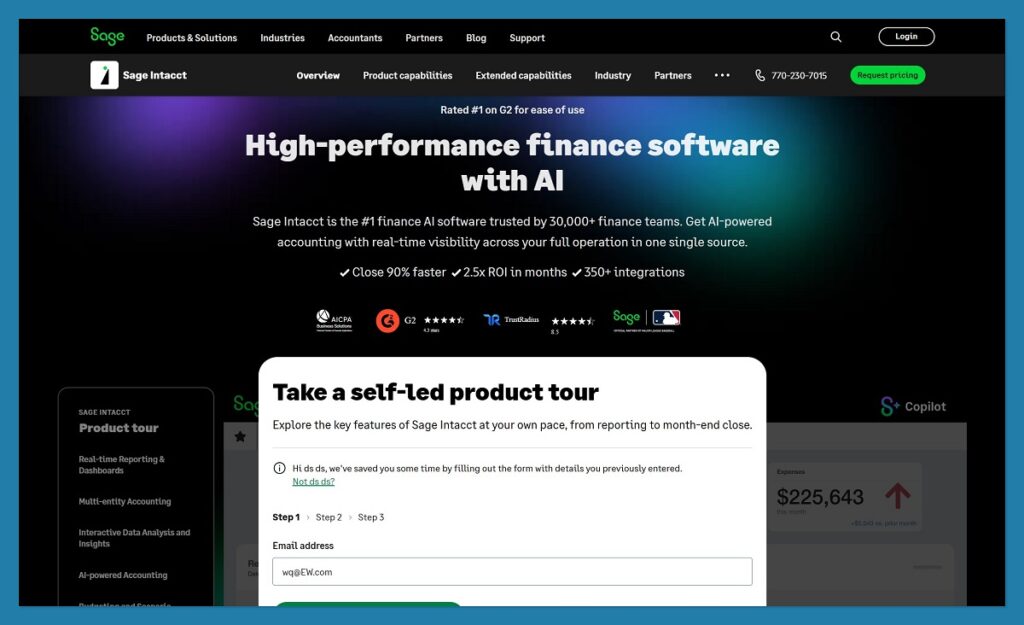
Sage Intacct has zero native ecommerce capability and no native inventory module. Straight from Softype’s 2026 ERP comparison, and it changes who should buy it.
Who it’s for: Mid-market brands $5M to $50M where finance is the bottleneck (multi-entity, ASC 606, project accounting) but ops run on Cin7, Brightpearl, or Shopify Plus. Skip if you need unified inventory and finance.
Key features
- Multi-dimensional general ledger by entity, department, location, SKU
- Strong consolidation for 4+ legal entities
- ASC 606 revenue recognition automation
- Project accounting and budgeting built in
- Sage Copilot AI for journal anomaly detection
- Connects to 30+ ecommerce and ops platforms (no native ecommerce)
Pricing
- Annual license: $15,000 to $50,000/yr, quote-based
- First-year investment: $35,000 to $75,000 including implementation
- Implementation timeline: 6 to 12 weeks
- 1.5x to 2.5x cheaper than NetSuite
Pros
- ✔️ Best-in-class multi-dimensional reporting. Beats NetSuite for finance depth, per Softype.
- ✔️ Faster implementation. 6 to 12 weeks vs NetSuite’s 3 to 9 months.
- ✔️ 1.5x to 2.5x cheaper than NetSuite all-in.
Cons
- ❌ No native ecommerce or inventory. Must integrate Cin7, Brightpearl, or Shopify Plus.
- ❌ Wrong fit for inventory-heavy DTC, per Softype.
- ❌ Requires a separate ops stack adding cost and integration risk.
Direct recommendation: Sage Intacct fits only when best-of-breed inventory and ecommerce tooling already exist and finance needs to catch up. For most product-led brands at this tier, NetSuite at #8 wins long-term.
9. NetSuite: Best ERP for Ecommerce Brands Past $15M
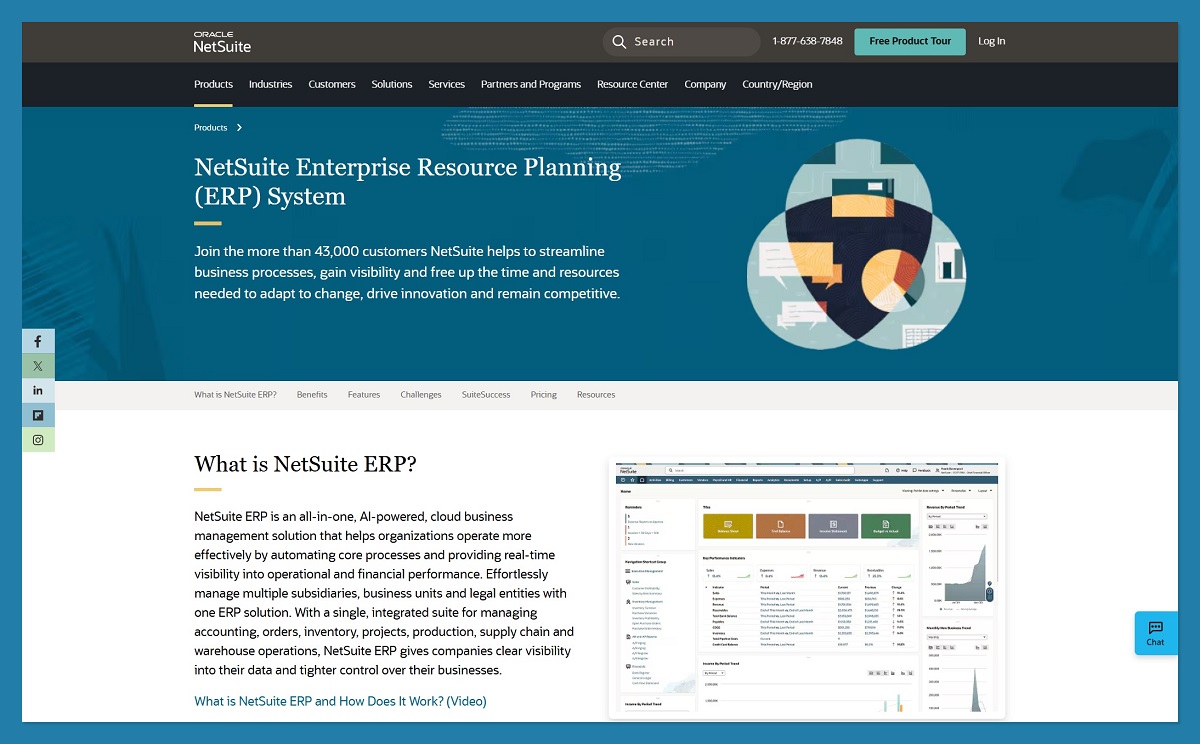
NetSuite’s true 5-year cost lands between $400,000 and $600,000. License fees are only 30% to 40% of that. Many $40M businesses run fine on QuickBooks Desktop, which is why CFO Pro Analytics warns against revenue-based triggers.
Who it’s for: Brands at $15M+ with at least one of: 4+ legal entities, multi-location inventory, ASC 606, international subsidiaries, or 25+ users. Skip if you only have one entity.
Key features
- Unified ERP: financials, CRM, inventory, WMS, ecommerce (SuiteCommerce) in one platform
- Native storefront shares real-time inventory and pricing with the ERP
- Multi-entity consolidation across currencies and tax jurisdictions
- SuiteTax handles multi-state and international sales tax natively
- Customizable reporting via SuiteAnalytics
Pricing
- Base license: $1,000 to $2,000/mo
- Per user: $99 to $199/mo
- First-year investment: $90,000 to $200,000
- 5-year true TCO: $400,000 to $600,000 (licenses, implementation, integrations, productivity loss, data migration)
- Implementation: 3 to 9 months
Pros
- ✔️ Native ecommerce via SuiteCommerce. Only mid-market ERP with this, per Softype.
- ✔️ Multi-entity consolidation in one platform without bolt-ons.
- ✔️ Scales to $500M+ without re-platforming.
Cons
- ❌ 5-year TCO routinely underestimated by vendor pitches.
- ❌ 3 to 9 month implementation with $31K to $93K productivity loss.
- ❌ Overkill for most sub-$15M businesses.
Direct recommendation: If a NetSuite rep is pitching and you don’t have 4+ entities, multi-location inventory, or 25+ users, push back. Upgrade only when friction costs exceed the upgrade. Many $20M brands sit happily on QBO Advanced plus a Finaloop-style service indefinitely.
10. Sales Tax Tools: Avalara vs TaxJar vs Numeral
Post-Wayfair economic nexus means any seller hitting $100K or 200 transactions in a single state owes filings there. Your accounting software doesn’t handle this. The big competitor articles skip this category.
Who they’re for: US multi-state sellers above $100K with nexus in 2+ states. International sellers (VAT MOSS, UK MTD) should look at Quaderno or Avalara EU. Bolt one onto QBO or Finaloop.
The three picks
- TaxJar (Stripe): Easiest setup, $19/mo Starter, $99/mo Pro. Best for Shopify-first SMB. Caveat: development stalled post-Stripe acquisition with no new features in ~5 years.
- Avalara AvaTax: Widest jurisdiction coverage. $349/location registration, quote-based. Best for enterprise with complex multi-state or international compliance. Over-engineered for SMB.
- Numeral: Modern UI, Shopify-native, $75/state filing plus $150/state registration. Caveat: not SST-certified, costing you in 24 SST member states where competitors file free.
Pricing comparison
- Numeral: $75/state filing, $150/state registration (no SST cert)
- Avalara: $349/location registration, quote-based overall
- TaxJar Starter: $19/mo, TaxJar Professional: $99/mo and up
- Zamp: $999/mo (covers 21 states, fully managed)
- TaxCloud Starter: $199/year (SST-certified, free filing in member states)
Pros and cons summary
- ✔️ TaxJar: Easiest for Shopify SMB; development frozen
- ✔️ Avalara: Most comprehensive; expensive for SMB
- ✔️ Numeral: Modern, Shopify-friendly; not SST-certified
- ❌ All three require accurate nexus data. They automate filing, not discovery.
Quick comparison: Under $1M Shopify-first? TaxJar. $5M+ multi-state with international? Avalara. Modern UI, no SST states? Numeral. Fully managed? Zamp.
Frequently Asked Questions
Do I need a connector like A2X or Link My Books, or can I use Shopify natively with QuickBooks?
Any store doing 100+ orders/month needs a connector. The native Shopify-QuickBooks connector broke in January 2026 and now dumps every order into the Banking Feed for manual acceptance, which is unworkable at volume. Use LMB for SMB, A2X for high-volume FBA.
When should I switch from QuickBooks to NetSuite?
Revenue alone is misleading. Real triggers are operational: 4+ legal entities, multi-location inventory, 25+ users, international subsidiaries, or ASC 606. The 5-year TCO of $400K to $600K must beat the friction it solves. Plenty of $40M businesses run fine on QuickBooks Desktop.
Is Finaloop worth it vs QuickBooks + a bookkeeper at $500K revenue?
Finaloop Core costs $245 to $415/mo ($2,940 to $4,980/year). QBO plus a part-time ecommerce bookkeeper runs $555 to $1,555/mo ($6,660 to $18,660/year). Finaloop usually wins on price and delivers real-time books. Below $250K, the premium isn’t justified.
What accounting software supports TikTok Shop in 2026?
Link My Books, ConnectBooks, Synder Pro ($275/mo), Webgility, and Finaloop support TikTok Shop natively. QBO and Sage don’t without a connector. TikTok’s fee stack (6% referral, 3.78% payment processing, 5% to 20% creator commission) must be broken out for margin analysis.
What’s the difference between A2X and Link My Books?
A2X is the accountant-trusted choice for enterprise-scale, multi-currency Amazon FBA and complex Walmart or eBay. LMB wins for 90% of SMB ecommerce: 50%+ cheaper for multi-channel, better UI, native TikTok Shop, no per-channel fees, strong UK VAT handling.
How should I account for Amazon FBA inventory and COGS?
The most common error is recognizing COGS when inventory ships to an FBA warehouse rather than when it sells. Use a clearing account: record orders as invoices, fees as expenses against it, and settlements as entries that zero it out. Automate with A2X or Synder. Include freight and duties in landed per-unit COGS.
Should I choose NetSuite or Sage Intacct for mid-market ecommerce?
For product-led ecommerce, NetSuite wins despite costing 1.5x to 2.5x more. SuiteCommerce includes native ecommerce, inventory, WMS, and CRM. Sage Intacct is finance-only, so you’d need a separate ops stack. Pick Intacct only if that stack already exists.
What happens to my QuickBooks Desktop on May 31, 2026?
Payroll, bank feeds, payments, and security patches all cease that day. Migrate to QBO or NetSuite first. Use QuickBooks SDK or QBXML for export, not CSV; CSV destroys the relational links between invoices, payments, and credit memos. Cut over after month-end close.



Comments 0 Responses