

Whether you're a course creator, designer, coach, or TikToker, turning your audience into a business all boils down to one thing: how easy it is for people to actually buy from you.
The best ecommerce platforms for creators are the ones that eliminate all the hassle and give you the tools to start selling from out of the box – without having to write a single line of code or cobble together a bunch of random tools.
After testing out dozens of different tools, I've cleaned down the list to the seven best ecommerce platforms designed to help creators monetize their skills and get paid faster in 2026.
Here's what they offer, what they cost, and who each one is best suited for.
Quick Comparison Table
| Platform | Best For | Free Plan | Starting Price |
|---|---|---|---|
| Shopify | Scalable creator stores | No | $29/month |
| Fourthwall | Branded merch storefronts | Yes | Free / $19/mo |
| Stan Store | Link-in-bio selling | No | $29/month |
| Gumroad | Beginners selling digital | Yes | Free |
| Podia | Course creators and coaches | Yes | Free / $39/mo |
| Sellfy | Selling merch + digital goods | No | $29/month |
| Kajabi | Premium course brands | No | $149/month |
| Payhip | Budget-friendly stores | Yes | Free / $29/mo |
1. Shopify — Best for Scalable Creator Stores

Free trial: 3 days plus a cheeky $1/month for 3 months
Starting price: $29/month
Shopify is still the industry leader when it comes to ecommerce infrastructure – and it's a particularly good choice for creators looking to scale up big time.
You can sell digital and physical products, add in apps for upsells, memberships, and courses, and grow into a multi-product store without ever having to leave the platform.
Shopify Pricing Breakdown:
- Basic ($29/month): Unlimted products, 2 staff accounts, basic reports, the whole works
- Shopify ($79/month): 5 staff accounts, professional reports, all the bells & whistles
- Advanced ($299/month): 15 staff accounts, advanced reporting, custom pricing by market (if that's your thing)
- Transaction Fees: 2.9% + 30¢ unless you're using Shopify Payments (which is easier on your wallet)
Now, if you need to add any features for digital downloads or online courses, you'll need to install some apps like SendOwl, Courses Plus, or Sky Pilot – which can each come with their own monthly fee.
The Good Stuff About Shopify:
- Professional-grade store builder that can handle it all
- Massive app ecosystem to help you get everything you need
- Scales with your business, no problem
- Supports both digital and physical products, so you can sell it all
Where Shopify Falls Down:
- Monthly costs go up as you add more plugins
- Not exactly designed with creators in mind, so you might have to do a bit of tweaking
- No built-in course or membership tools, sadly
Who Shopify Is Good For:
Shopify is a good fit if you're a creator who's planning to build a long-term ecommerce business. It's perfect for digital entrepreneurs who want to sell physical products, digital goods, and maybe even subscriptions – all from one place, with full control over your storefront.
2. Fourthwall – Best for Creators Who Want a Store, Not a Side Job
Free plan: Yes
Starting price: Free, Fourthwall Pro is $19/month or $180/year
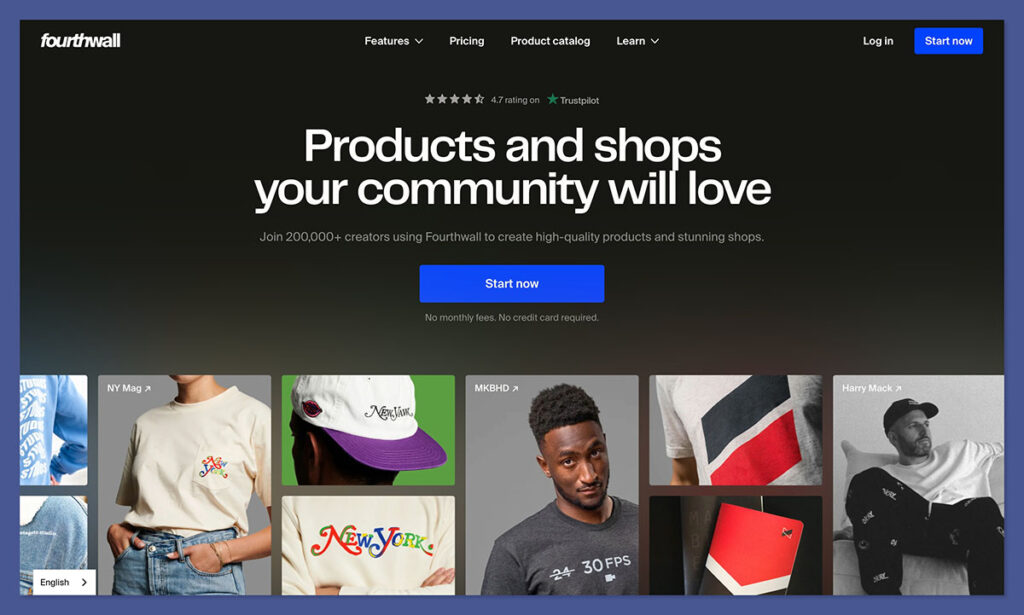
Fourthwall is the kind of platform that works perfectly for creators who have moved past the “link in bio” stage of their business, but don’t want their whole life to revolve around running a store.
It gives you a simple, branded storefront where you can sell premium merch, downloads, memberships, and custom products side by side, which is ideal if you don’t like the idea of combining something like Shopify with a bunch of separate apps.
Fourthwall also cuts out some of the other work that a lot of beginners would rather avoid. It acts as your Merchant of Record to deal with tax headaches, and even covers customer support for products sourced from its print on demand catalog.
Fourthwall Pricing Breakdown:
- Free: $0/month, pay per order, up to 50 product listings on newer accounts, 5% transaction ee on digital products.
- Pro ($19/month or $180/year): 500 product listings, unlimited team members, priority support, sample credits, and no digital product platform fee
- Physical products: You set the retail price, Fourthwall deducts the base cost
The Things You’ll Love About Fourthwall:
- Merch, memberships, donations and downloads in a single storefront
- True premium POD catalog with retail-grade blanks
- Useful integrations to things like Mailchimp, YouTube, and TikTok
- Merchant of Record tax support
- Customer support handled for catalog orders
Where Fourthwall Struggles:
- There’s no marketplace to help you find an audience
- The catalog is curated (so smaller than some other POD platforms)
- You won’t be able to customize as much as you can with Shopify
Who Fourthwall Is Good For:
I’d recommend Fourthwall to creators who have already earned some attention from their target audience, and want to capitalize on that fact. It’s great for selling a wide range of digital and physical products on a storefront you actually own, without taking on the admin work you’d get with something like Shopify.
3. Stan Store — Best for Social Media Monetization
Free trial: 14 days
Starting price: $29/month
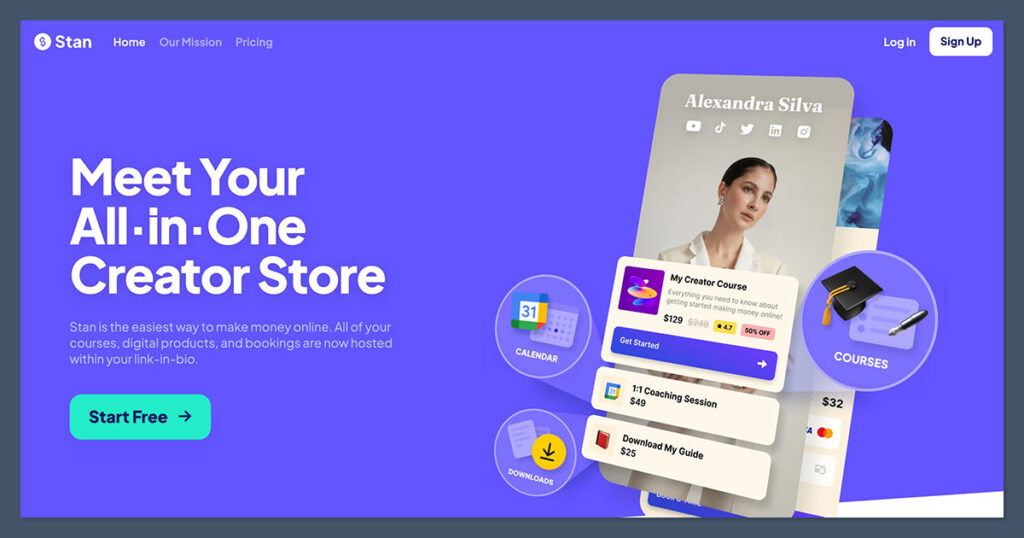
Stan Store is made for creators who earn most of their cash through social media. It's not a traditional ecommerce platform – more like a supercharged bio link with built-in ecommerce capabilities.
It supports digital products, coaching sessions, courses, and email opt-ins, all from one mobile-first storefront that's ridiculously easy to use.
Stan Store Pricing Breakdown:
- Creator Plan ($29/month): Sell unlimited digital products and coaching calls, basic email capture
- Creator Pro ($99/month): Includes upsells, affiliate marketing, full email automations, A/B testing
No transaction fees, and all payments go straight through Stripe. It's a breeze to set up, and doesn't require any technical know-how.
Why Stan Store Rocks:
- Made specifically for creators selling from Instagram/TikTok
- Coaching calls, lead magnets, and courses all in one place
- Mobile-first design that's super easy to use
- Built-in calendar + payment integration, because why not?
Where Stan Store Stumbles:
- No physical product support
- Limited customization and branding options
- Not optimized for SEO, sadly
Who Stan Store Is Good For:
If your entire business is running through social platforms, Stan Store is the quickest way to turn followers into buyers. It's perfect for creators who sell eBooks, host calls, offer coaching, or run paid newsletters – especially if you want to monetize straight from your Instagram or TikTok bio.
4. Gumroad — Best for Selling Digital Products for Free
Free plan: Yes, that's right, free
Starting price: Free (because you've already paid the cost of setting up a Gumroad store)
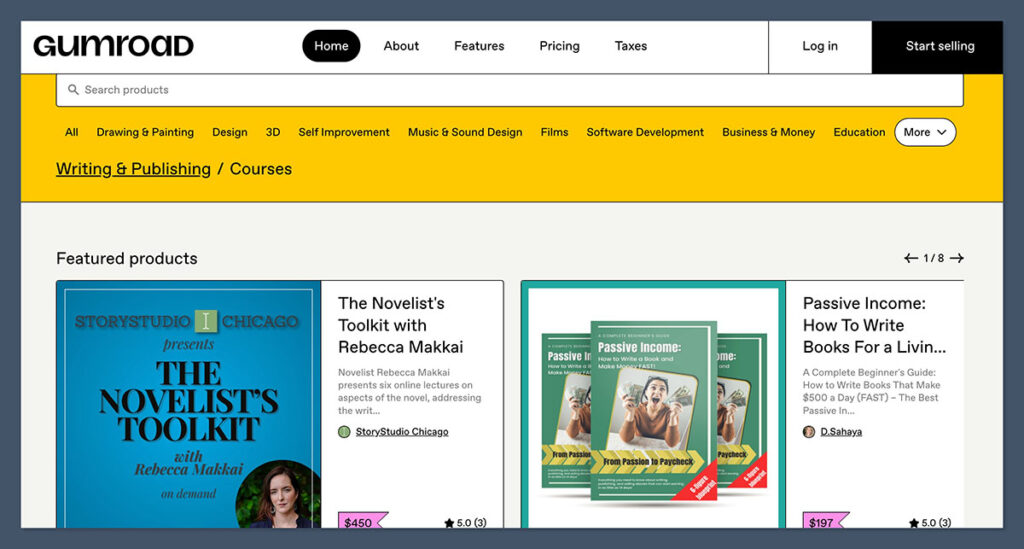
Gumroad is one of the fastest ways for a creator to start earning some cash. It's designed for digital products like PDFs, templates, music, and software, and doesn't require a full storefront or monthly payment.
It's basically a “if you build it, they will come” kind of situation – just set up your Gumroad store, share the link with your audience, and start selling. Easy peasy. Clients used it to flog low-cost promotions and freebies & it has been working without a hitch every single time so far
Pricing Breakdown:
- Free Plan – no monthly outlay, you still have to pay a 10% cut on every transaction though
- Custom domain support is free
- Payouts are handled either through PayPal or bank transfer
- Unlike a lot of other services Gumroad used to offer paid upgrades but now everything is available on the free tier as standard
Pros
- You can start using it completely free of charge
- It's a doddle to use – no tech expertise needed at all
- Supports subscriptions & memberships
- Offers ‘pay what you want' pricing options
Cons
- A 10% transaction fee can really add up, though
- No storefront customization options to speak of
- Limited analytics and marketing tools at your disposal
Who Gumroad Is Best For:
Gumroad is best for new creators just starting out or testing out product ideas. If you want a hassle-free way to sell templates, guides or software with zero monthly fee, this is a great place to start – just know that as you scale, you might want something that's more than just a simple shop.

5. Podia — Best for Course Creators and Coaches
Free plan: Yes
Starting price: $39/month
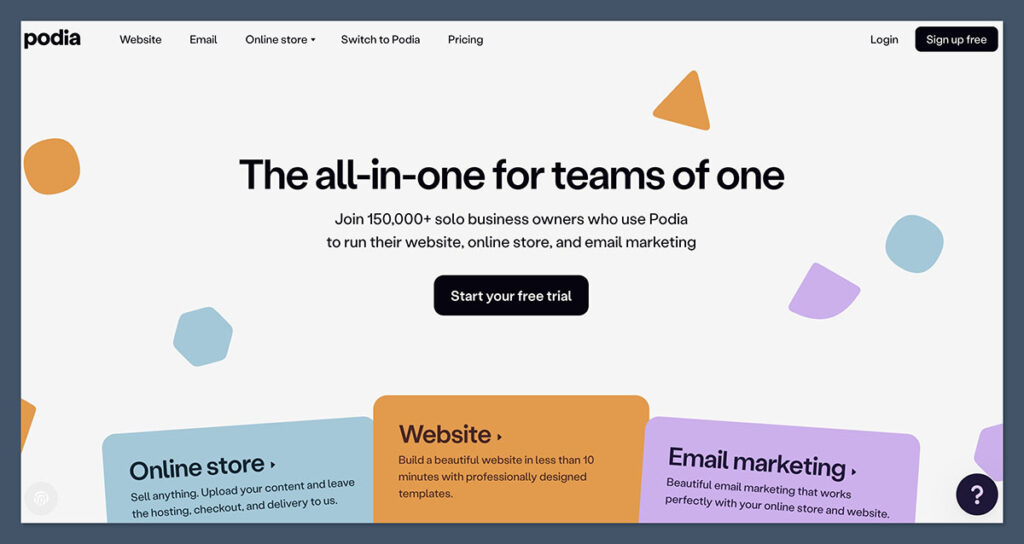
Podia really stands out for its focus on content-driven creators – coaches, educators and anyone selling courses or memberships. It wraps product hosting, email marketing and sales funnels into one system, which means you'll be dealing with fewer subscriptions to manage.
Pricing Breakdown:
- Free Plan: Sell digital products, coaching and courses with a 10% fee, no fuss
- Mover ($39/month): No transaction fees, you can sell as many products as you like
- Shaker ($89/month): Adds affiliate marketing, embeddable checkouts and a blog
- Earthquaker ($199/month): You get 5 team seats and priority support to boot
Podia doesn't have any hidden fees and offers unlimited hosting on all of its paid plans.
Pros
- It's got a built-in course and email platform
- You won't need to fiddle with external plugins
- Affiliate and upsell features are included
- It also offers a free community space
Cons
- It's a bit limited when it comes to design templates
- Unfortunately it's not built for selling physical products
- Its funnels aren't as advanced as Kajabi's
Who Podia Is Best For:
If your business is built around teaching, coaching or community building, Podia is a solid all-in-one option. It's best for creators selling video courses, digital downloads and memberships – especially if you want to keep all your tools under one roof and don't want to deal with multiple subscriptions.
6. Sellfy — Best for Creators Selling Merch + Digital Goods
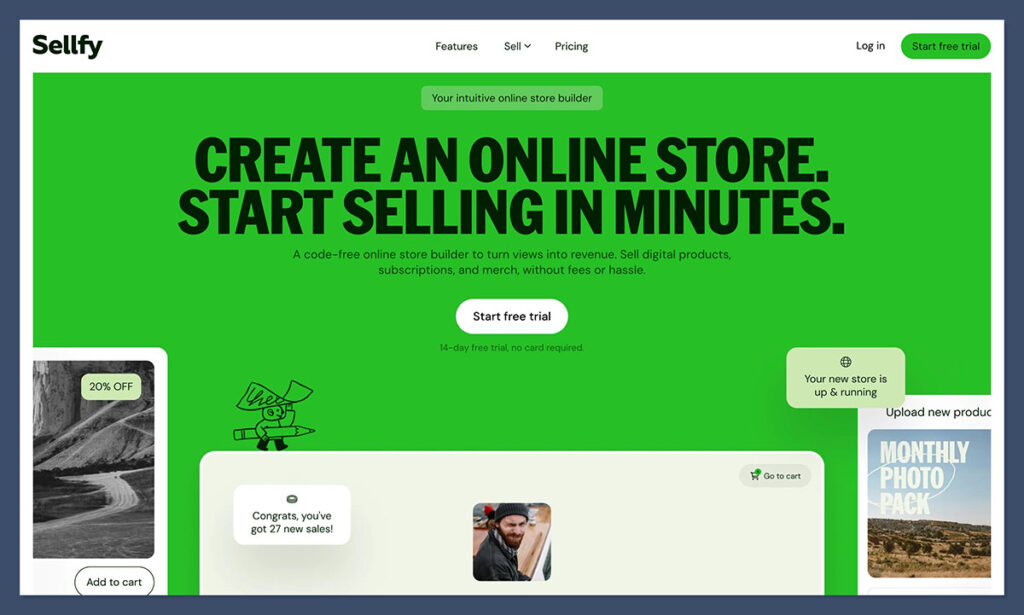
Free trial: 14 days
Starting price: $29/month
Sellfy is a great hybrid platform if you're selling a mix of digital and physical products. You can host your own designs, use their print-on-demand service or offer bundled downloads – all with a modern, clean checkout experience.
Pricing Breakdown:
- Starter ($29/month): You get to sell up to $10k a year in sales and there's no limit on the number of products you can sell
- Business ($79/month): On this tier you get up-sells, cart abandonment emails and Sellfy branding removed
- Premium ($159/month): Here you get $200k a year in sales, priority support and advanced store design options
Sellfy charges no transaction fees and integrates directly with Stripe and PayPal for payments.
Pros
- It supports print-on-demand merch
- You can sell both digital and physical products
- There are built-in marketing tools
- And no extra fees per sale
Cons
- The lower tiers have sales limits
- Limited visual customization options
- The integration ecosystem isn't as big as some of the other options
Who Sellfy Is Best For:
Sellfy is perfect for creators who want to sell merch, printables or digital bundles without building a whole new storefront from scratch. If you want a clean-looking shop with built-in print-on-demand and simple marketing tools, this is a great choice.
7. Kajabi — Best for High-Ticket Creators and Brands
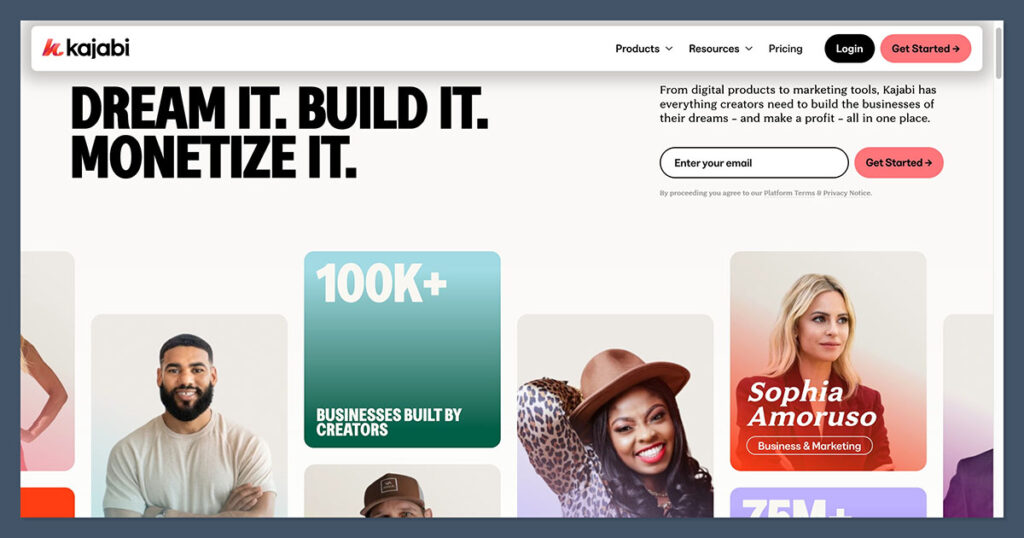
Free trial: 14 days
Starting price: $149/month
Kajabi is the most advanced platform on this list – and it comes with a price tag to match. But for creators running premium offers like coaching programs, multi-module courses or memberships with automation, it's a complete solution that lets you ditch the need for 4 or 5 separate tools.
Pricing Breakdown:
- Basic ($149/month): On this tier you get 3 products, 3 funnels and 10,000 contacts
- Growth ($199/month): On this tier you get 15 products/funnels, affiliate features and 25,000 contacts
- Pro ($399/month): On this tier you get 100 products/funnels, 100,000 contacts and custom roles
Kajabi includes a CRM, email marketing, analytics, podcast hosting and a course builder on all of its plans. There are no transaction fees.
Pros
- It's an all-in-one marketing and product platform
- The email automation and segmentation are pretty advanced
- The course hosting is clean and mobile-friendly
- And on the higher tiers you get priority support
Cons
- It's a pretty high starting price
- Not built for selling physical products
- Can feel overwhelming at first for some users
Who Kajabi Is Best For:
Kajabi is ideal for digital entrepreneurs who are already generating revenue and want to build a premium, professional brand. It's especially powerful for coaches and course creators offering high-ticket programs or needing complex automations without using third-party tools.
8. Payhip — Best for Simple Selling on a Budget
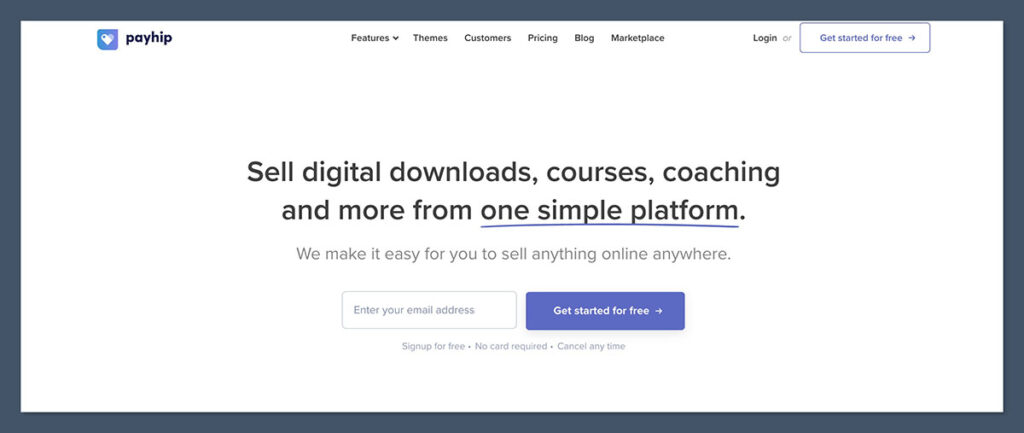
Free plan: yes
Starting price: Free / $29/month
Payhip is remarkably straightforward for something that's basically free to start with. It lets you sell downloads, courses, coaching & memberships all from the same dashboard and I mean it really is simple. Its not the prettiest thing out there but it just gets the job done.
Pricing Breakdown:
- Free Plan: The free plan will cost you a 5% cut of each sale
- Plus ($29/month): At this level you don't have to pay a cut of your sales
- Pro ($99/month): On this level, you get more bandwidth and you get priority support
You can either embed Payhip's checkout on your own site or use its default store. It also handles EU VAT, Stripe & PayPal.
Pros
- The free plan doesn't leave you short on features
- Sell digital stuff, courses, memberships – Payhip's got you covered
- You can stick the checkout on any old webpage
- Its pretty beginner-friendly
Cons
- Basic analytics are about all you get
- There's not a lot of visual flair to the design
- You can't do any built-in upselling
Who Payhip Is Best For:
Payhip is what I'd recommend to anyone just starting out – or testing a new idea and you don't want to break the bank. If you're looking to sell stuff online without spending a penny and not getting bogged down in complexity, Payhip's a solid – and free – alternative to Gumroad, with more advanced options available if you need them.
Final Take: Which Ecommerce Platform Should You Use?
Here’s how I'd say it goes:
| Goal | Best Platform |
|---|---|
| Selling merch + digital | Sellfy or Shopify |
| Owning a branded storefront without app juggling | Fourthwall |
| Coaching or premium courses | Kajabi or Podia |
| Monetizing through social media | Stan Store |
| Starting with no budget | Gumroad or Payhip |
| All-in-one education business | Kajabi or Podia |
| Scalable storefront with apps | Shopify |
A few patterns are worth pulling out of that table.
If you're just dipping a toe in and don't want to spend a penny up front, Gumroad and Payhip are the obvious starting points. Both let you list products and start selling on a free tier, and both take a cut per sale rather than charging monthly, so you only really pay once you're actually making money.
If your business already has an audience and you want to sell across merch, downloads, and memberships from one place, Fourthwall and Sellfy are the sweet spot. Fourthwall leans into premium print-on-demand with Merchant of Record tax handling and customer support baked in, which takes a chunk of admin off your plate. Sellfy is the cleaner pick if you want a straightforward hybrid shop without the extra creator-economy features.
If you're building a teaching or coaching business, Podia and Kajabi are built for exactly that, with courses, email, and funnels under one roof. Podia is the gentler, cheaper entry point, while Kajabi is the heavyweight for high-ticket offers and complex automations (with a price tag to match).
And if you want maximum control and room to scale into a proper multi-product operation, Shopify is still the one to beat, as long as you're comfortable bolting on a few apps to cover digital products and memberships.
The good news is that almost every platform here offers a free trial or free plan, so you're never locked in blind. Pick the one that matches your goal, set it up, and start selling. Most creators don't nail it on the first attempt, but choosing a tool that fits your actual workflow means you can stop fiddling and get on with the part that matters: making money from what you're good at.


Comments 0 Responses