

Revolut and Monzo are two of the most popular digital banking platforms in the UK.
While both offer solid features for personal use, ecommerce businesses have different needs—like handling multiple currencies, managing team expenses, paying international suppliers, and integrating with platforms like Shopify and Stripe.
I’ve tested both Revolut and Monzo from the perspective of an ecommerce operator managing global payments, ad spend, freelancers, and inventory.
If you’re running an online store, here’s everything you need to know to choose the right one for your business.
Revolut vs Monzo: Quick Verdict
Revolut – Best overall for ecommerce businesses, especially those with international customers and suppliers
Monzo – Best for UK-based solo sellers or startups with limited banking needs
In this review, I’ll break down the key differences across business features, currency tools, payment options, automation, and pricing.
Quick Comparison: Revolut vs Monzo
Use the table below to see how Revolut and Monzo compare on the most important ecommerce banking features:
| Feature | Revolut Business | Monzo Business |
|---|---|---|
| Multi-currency accounts | Yes (30+ currencies) | No |
| International transfers | Built-in, low fees | Through Wise, higher fees |
| Virtual cards | Yes | No |
| Team access & permissions | Yes | No |
| Accounting integrations | Xero, QuickBooks, FreeAgent | Xero, FreeAgent |
| API automation | Yes | No |
| Ecommerce integrations | Shopify, Stripe, Zapier | None |
| Monthly price (starting) | Free – $149.99/month | Free – $13/month |
| Best for | Scaling ecommerce | UK-based solopreneurs |
Best for Managing Multiple Currencies: Revolut
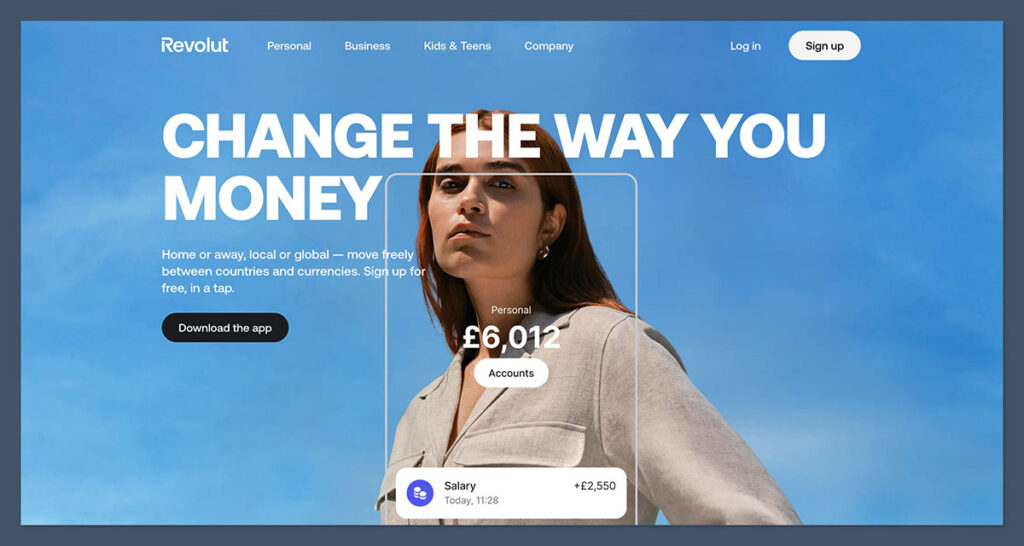
If your ecommerce business sells internationally—or pays suppliers and freelancers overseas—then having access to multi-currency accounts isn’t just convenient, it’s essential.
Revolut’s Strength
Revolut offers multi-currency business accounts that let you:
- Hold and exchange over 30 currencies at real exchange rates
- Automatically convert funds when rates hit a target
- Receive payments in USD, EUR, GBP, and more with local bank details
- Avoid conversion fees for up to $1,000/month on the free plan
This makes Revolut ideal for dropshippers, Amazon sellers, and DTC brands working with overseas teams or customers.
Monzo’s Limitation
Monzo, by contrast, is GBP-first. It doesn’t offer multi-currency support for business accounts, and all international payments are routed through Wise.
That adds extra steps—and extra fees—every time you want to send or receive foreign payments.
Verdict: Revolut is a clear winner for multi-currency support.
Best for Ecommerce Tools and Integrations: Revolut
Running a growing online store means managing everything from ads to shipping. Your bank should support those operations, not create extra work.
Revolut Business Features
Revolut’s business accounts include:
- Virtual cards for separating ad spend (e.g., Google Ads, Meta)
- Team management tools with spending controls
- Zapier integrations to automate expense logging
- Accounting tools with Xero, QuickBooks, FreeAgent
- Ecommerce integrations with Shopify, Stripe, WooCommerce
Revolut also offers API access on paid plans, so you can automate payments to VAs, contractors, or affiliates.
These tools help streamline back-office work and reduce bookkeeping errors.
Monzo Business Features
Monzo’s business plans are more limited. You’ll get:
- Pots for saving
- Simple invoice generation
- Xero and FreeAgent integrations
- Scheduled payments and direct debits
There are no virtual cards, APIs, or ecommerce platform integrations.
Verdict: Revolut is far more ecommerce-ready than Monzo.
Best for International Payments and FX Fees: Revolut
Handling international transactions is a key concern for ecommerce founders. That means fast, low-fee payments in multiple currencies.
Revolut Payment Features
- International transfers to 100+ countries
- Real exchange rates with transparent fees (0.4%–1%)
- No monthly FX fee on the first $1,000 (free plan)
- Borderless accounts with local details in multiple currencies
This setup saves money and removes friction when paying freelancers or overseas vendors.
Plus, Revolut lets you schedule recurring international payments, which is useful for paying remote teams or regular supplier invoices without logging in every time.
Monzo Payments
- All international transfers go through Wise
- You’ll typically pay around 1% in FX fees per transfer
- No ability to hold foreign currencies
- Slower processing times on some transfers
In addition, Monzo doesn’t offer detailed FX analytics or reports, so tracking your currency costs across a year requires manual effort.
This might not matter to a solo freelancer, but for ecommerce businesses scaling up and managing five-figure monthly payouts, the lack of transparency adds unnecessary complexity.
Verdict: Revolut offers faster, cheaper, and more flexible payments.
Best for Pricing: It Depends on Your Needs
Let’s take a closer look at pricing for both platforms.

Revolut Business Pricing
| Plan | Monthly Price (USD) | Key Features |
|---|---|---|
| Free | $0 | Up to 5 local payments, 1 user |
| Grow | $39.99 | 10 team members, FX allowance, API |
| Scale | $149.99 | Unlimited users, priority support |
| Enterprise | Custom pricing | Custom workflows, advanced API |
Virtual cards and API access start from the Grow plan.
Revolut’s paid plans are tiered based on transaction volume, user seats, and currency needs—so you’re not paying for features you don’t use.
That said, if you operate a small team but do high volume FX, upgrading early might still save you money through lower conversion costs.
Monzo Business Pricing
| Plan | Monthly Price (USD) | Key Features |
|---|---|---|
| Lite | $0 | Pots, UK payments |
| Pro | $13 | Invoicing, Tax Pots, accounting integrations |
No virtual cards, no FX savings, no API access—even on the paid plan.
Monzo’s pricing is much simpler, but also much less flexible. There are no intermediate plans for growing teams, and if your needs outgrow the Pro tier, you’re likely looking at switching banks entirely rather than upgrading.
Verdict on Value: If you need global payments and ecommerce tools, Revolut’s paid plans are worth the investment.
If you’re UK-only and just starting out, Monzo’s Pro plan may be enough.
Best for App Integrations: Revolut
Your ecommerce bank should connect easily to the tools you already use—like accounting software, payment processors, and store platforms.
Revolut
Revolut supports:
- Shopify
- Stripe
- WooCommerce
- Zapier
- Xero
- QuickBooks
This means smoother workflows, fewer manual tasks, and faster scaling.
With Zapier alone, you can automate tasks like logging sales into Google Sheets, sending alerts to Slack, or triggering payouts when invoices are marked paid—saving hours every week.
Monzo
Monzo integrates only with:
- Xero
- FreeAgent
There are no ecommerce-specific integrations.
Monzo’s limited integration options mean that any automation or ecommerce connection will likely need to be handled manually or through a third-party payment platform.
For sellers with growing inventories or marketplaces, this becomes a major bottleneck.
Verdict: Revolut offers far broader connectivity.
Best for Ease of Use: Monzo
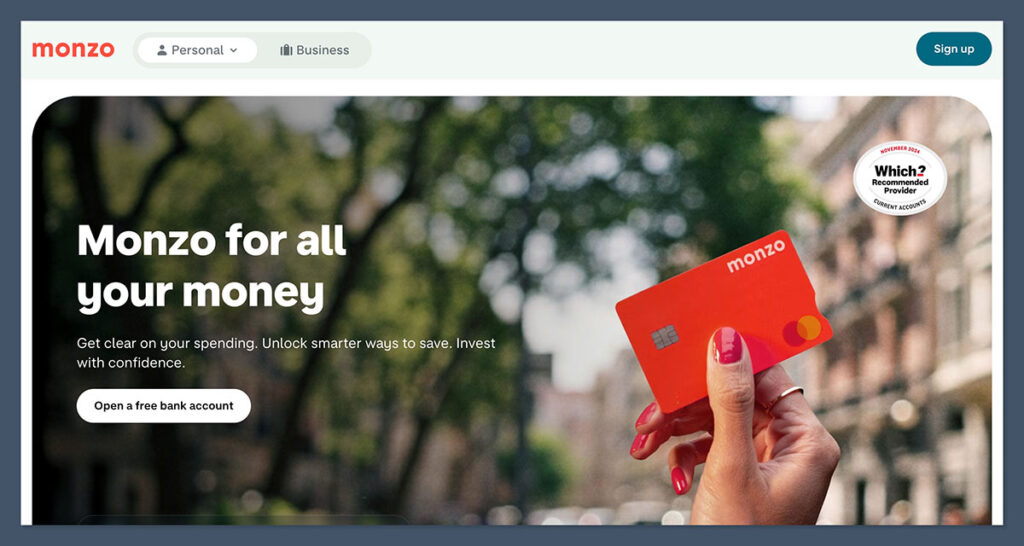
While Revolut is feature-packed, Monzo wins for simplicity and user experience.
Monzo’s Strength
- Clean, easy-to-use interface
- Instant UK bank transfers
- Clear account setup and navigation
- No complex menus or setup
Monzo feels like a consumer bank adapted for small businesses. It works well if you just need to send invoices and receive payments in the UK.
It’s especially suited for sole traders who want a bank that works like a mobile app—no friction, no fuss.
Monzo’s onboarding process is also straightforward, often taking just a few minutes. For founders looking to move fast, it’s helpful to get up and running without reviewing tutorials or asking for support.
Revolut’s Experience
- More advanced features means more complexity
- Multiple menus, permissions, and dashboards
- Better suited to users familiar with financial tools
While Revolut’s interface is sleek, it does take more time to master. If you’re managing a team or operating across multiple markets, the complexity pays off, but for those just getting started, it might feel overwhelming without prior banking experience.
Verdict: Monzo is easier for beginners. Revolut has a steeper learning curve but more control.
Best for Business Support: Tie
Both Revolut and Monzo offer decent business support, but not at the level of traditional banks.
Revolut Support
- Live chat
- Priority support on paid plans
- Email support for account issues
On higher-tier plans, Revolut prioritizes support response times and offers a dedicated account manager.
For mission-critical ecommerce operations, this can be the difference between a resolved payment issue in hours versus days.
Monzo Support
- 24/7 in-app chat
- Email responses within 24 hours
- No phone support
Monzo’s support is solid for standard issues, but lacks priority escalation or hands-on help for more complex business problems.
You’ll get timely responses for basic questions, but larger requests may take longer to resolve.
Verdict: It’s a tie. Both platforms provide responsive chat support, but neither offers full-service business banking help unless you’re on premium plans.
Final Verdict: Revolut vs Monzo
If you’re running a global ecommerce business, Revolut is the clear winner.
It supports multi-currency accounts, automates global payments, offers ecommerce integrations, and helps you scale your business with tools designed for growth.
Choose Revolut if you:
- Sell internationally
- Pay overseas suppliers or freelancers
- Want virtual cards for ads and expenses
- Use Shopify, Stripe, or Zapier
- Need more control over your financial operations
Choose Monzo if you:
- Sell only in the UK
- Are just starting out and don’t need advanced tools
- Want a simpler, more consumer-style interface
While both platforms serve their purpose, they’re aimed at different types of business owners.
Revolut is designed for operators who want control, flexibility, and growth-ready infrastructure.
Monzo feels more like a stepping stone — great for testing the waters, but limited when it comes time to scale.
If your business plan includes cross-border sales, growing your team, or expanding your payment stack, starting with Revolut is a smarter long-term play.



Comments 0 Responses