

I've spent more than 200 hours getting my hands dirty with the biggest and best composable commerce platforms out there, and let me tell you – the options are staggering.
From platforms that offer a ton of power through their APIs, to ones that make it super easy to get up and running with their plug-and-play flexibility, these are the tools that let serious ecommerce brands build the exact online store they need, without being tied down by inflexible software.
Whether you're looking to scale fast, managing online shops across multiple regions, or just need a whole lot more control over your tech stack, these platforms have got you covered.
Quick Comparison
| Platform | Best For | Pricing (USD) | Frontend or Backend | Free Trial |
|---|---|---|---|---|
| commercetools | Enterprise scalability | Custom (from $100K/year) | Backend | No |
| Elastic Path | Complex product catalogs | From $50K/year | Backend | Yes |
| Commerce Layer | Multi-region and multi-currency | From $2,000/month | Backend | Yes |
| Fabric | Mid-market brands scaling | From $5,000/month | Backend | Yes |
| Spryker | B2B and marketplaces | Custom | Backend + Frontend | No |
| BigCommerce Headless | SaaS + headless hybrid | From $500/month (typical) | Backend | Yes |
| Shopify Hydrogen | Custom Shopify storefronts | From $39/month + dev costs | Frontend | Yes |
| Saleor | Developer-first builds | Free or $495/month | Backend | Yes |
| Swell | Fast DTC launches | Free or $299/month | Backend | Yes |
Our Top Composable Commerce Platforms
- commercetools – Best all-round platform for large-scale growth
- Elastic Path – Best for complicated product configurations
- Commerce Layer – Best for international ecommerce
- Fabric – Best for mid-sized brands that need to scale fast
- Spryker – Best for B2B and marketplace setups
- BigCommerce Headless – Best hybrid SaaS + headless
- Shopify Hydrogen – Best for custom storefronts on Shopify
- Saleor – Best for developers and startups
- Swell – Best for fast DTC brand launches
1. Commercetools: Best Overall Composable Platform
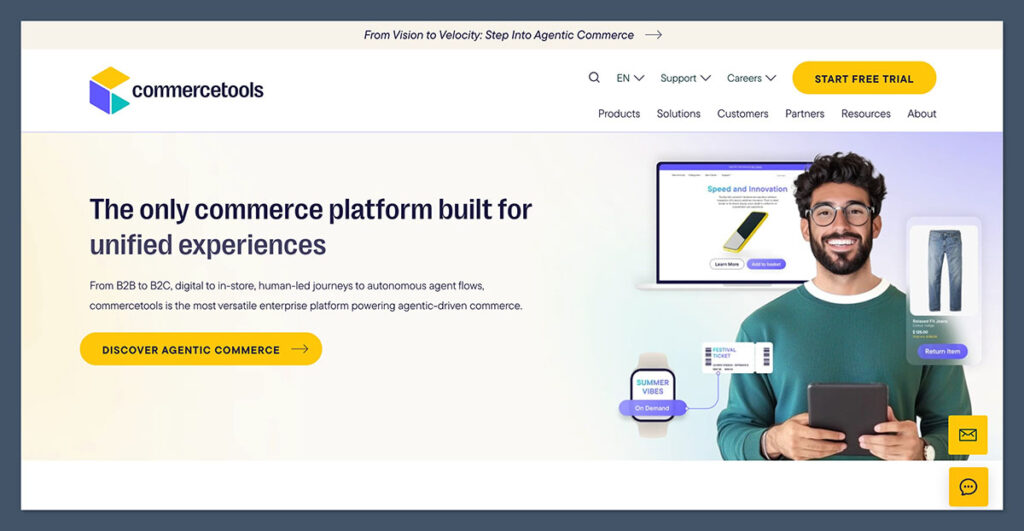
Commercetools comes out on top for its sheer scaleability and depth.
It's built from the ground up using MACH architecture and is the platform that underpins some of the world's biggest brands – think Audi and Ulta Beauty.
- Pricing: That's right, enterprise only, and usually starts at $100,000/year
- Free trial: Nope, not on this one
- MACH Alliance Member: Yes, it is one
Why I think it's so good
Commercetools offers APIs for everything – carts, promotions, catalogs, search, and even B2B pricing. It's perfect for companies with development teams that are ready to craft bespoke customer experiences.
Pros
- 300+ APIs to play with
- Top-notch documentation
- Proven track record of working with big brands
- Multi-region and omnichannel support
Cons
- Not for the faint of heart – you'll need some serious dev skills
- It's pricey
- Integration can take a little while
Commercetools is my top pick for companies that are ready to go fully composable and need flexibility across their tech stack. It's built for scale, so if you're looking to grow fast, this platform can handle the pressure.
2. Elastic Path: Best for Complex Product Configurations
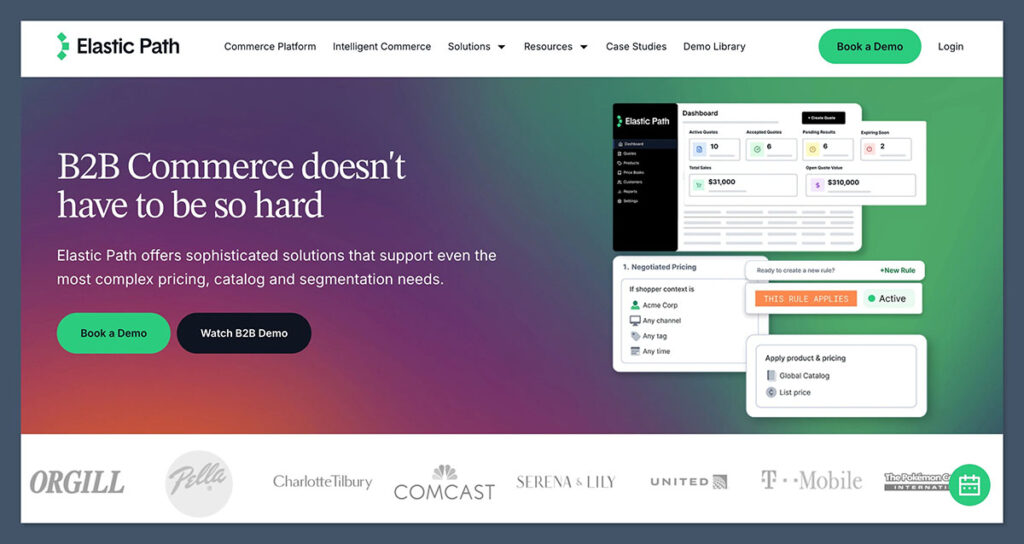
Elastic Path is a great choice for companies with deep catalogs, complicated pricing rules or unique business models like subscriptions and bundles.
- Pricing: That'll be from $50,000/year
- Free trial: Yes, you can try it out
- MACH Alliance Member: Yes, it's a member
Why I think it's so good
Elastic Path strikes a great balance between flexibility and structure. Their pre-composed solutions cut down on time to launch and still give you full API access and microservices.
Pros
- Already pre-integrated with loads of services
- Supports subscriptions and bundles
- Easy to get started with
- Works with just about any frontend out there
Cons
- Less frontend tooling compared to other options
- There's a bit of a learning curve with their PXM (Product Experience Manager)
Elastic Path is a solid choice if your products need heavy customization or if your catalog is changing all the time. It brings order to complexity while still giving you control.
3. Commerce Layer: For International Ecommerce

Commerce Layer is a headless infrastructure that's all about making it easy to sell across borders. They've got clean GraphQL APIs, localisation by region, and the flexibility to display, price and deliver products anywhere in the world.
- How Much Does It Cost? It starts at $2,000 a month
- Do They Do a Free Trial? Yes they do
- Do They Have Any Open-source SDKs? Yes they do
Why I Think It's Worth It
It's super strong on multi-currency tools, region-specific catalgouges and pricing, and it's JAMstack friendly
The Good
- You can have strong multi-currency tools
- Region-specific catalgouges and pricing
- It's JAMstack friendly
- It's a developer first product
The Not So Good
- It's not for beginners – you need some serious development skills to get the most out of it\
- Their ecosystem is still pretty small compared to some of the other players in this space
If you're building for multiple markets and you need tight control over localisation then Commerce Layer is a good bet. It's ideal for developers who want clean, structured APIs to work with.
4. Fabric: For Mid-Sized Brands That are Scaling Fast
Fabric is a flexible stack built for mid-sized brands that have outgrown Shopify or WooCommerce. It's got all the benefits of headless with less overhead than traditional enterprise solutions.
- How Much Does It Cost? It starts at $5,000 a month
- Do They Do a Free Trial? Yes they do
- Is It Modular? Yes it is
Why I Think It's Worth It
Fabric is modular – you can pick and choose the features you need – like PIM, cart, or checkout. It's a nice middle ground between monolith and full composable
The Good
- It's easy to get started
- They've got a strong UI for business users
- API-first and MACH compliant
- Good docs and support
The Not So Good
- The pricing isn't super transparent\
- Some of the modules feel a bit new or underdeveloped
Fabric is great for brands that are looking to transition into composable ecommerce without going all in too quickly. It's flexible, scalable and still easy to use.
5. Spryker: For B2B and Marketplaces

Spryker is a massively scalable ecommerce platform that's used by the likes of Toyota and Metro. It's built for enterprise B2B, IoT commerce and multi-vendor setups

- How Much Does It Cost? It's enterprise only and typically costs over $100,000 a year
- Do They Do a Free Trial? No
- Do They Have Any Open-source Modules? No
Why I Think It's Worth It
Spryker is one of the most customisable platforms on this list. It's ideal for brands that are operating in multiple regions with different business models
The Good
- It's multi-language and multi-site
- They've got built-in marketplace modules
- Deep B2B tools
- Flexible workflows
The Not So Good
- It's ridiculously complicated to implement
- Limited frontend support
Spryker is for businesses with complicated needs and global footprints. If you're anything but a simple ecommerce business, then this platform is built for you.
6. BigCommerce Headless: For Hybrid SaaS + Headless
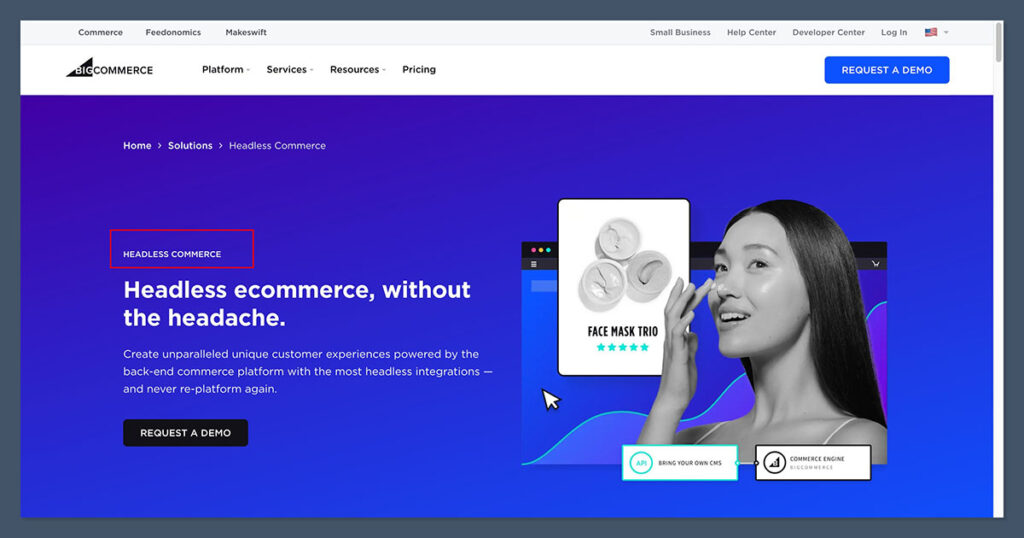
BigCommerce is a hybrid SaaS and headless ecommerce platform that lets you keep your backend simple while building powerful storefronts using any frontend you want
- How Much Does It Cost? It starts at $29 a month, but headless use cases typically start around $500 a month
- Do They Do a Free Trial? Yes
- Do They Have Any Integrations? Yes they do – Next.js, Gatsby, Contentful and more
Why I Think It's Worth It
BigCommerce lets you keep your backend simple while building powerful storefronts using any frontend you want
The Good
- Headless-ready API
- Multichannel support
- Affordable entry point
- Easy to pair with CMSs
The Not So Good
- The checkout isn't fully decoupled
- Limited B2B features without add-ons
BigCommerce is a solid choice if you're after headless freedom but don't want to give up the simplicity of SaaS. It's flexible without being too technical.
7. Shopify Hydrogen: For Custom Storefronts on Shopify
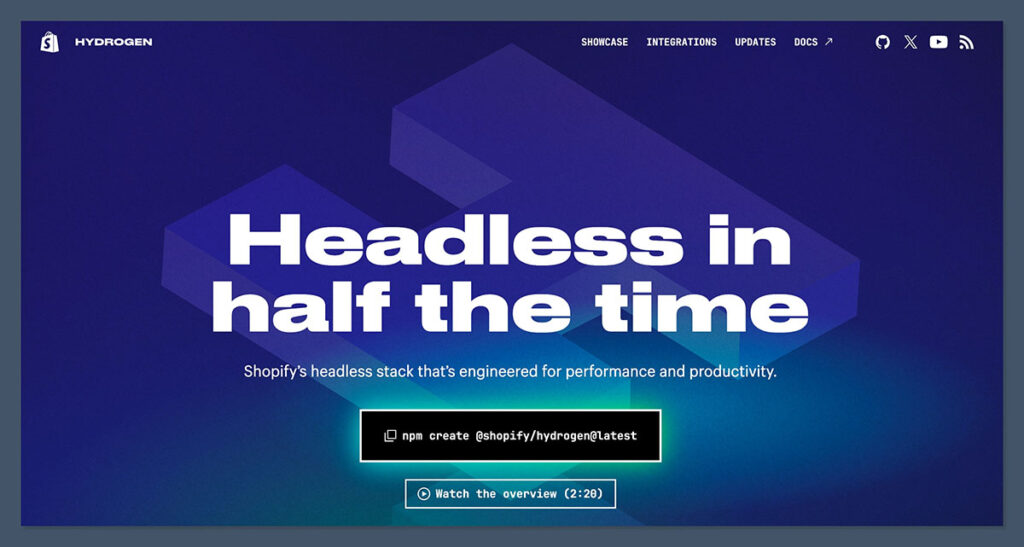
Shopify's Hydrogen framework lets developers build fast, headless storefronts on top of Shopify's robust backend and ecosystem.
- How Much Does It Cost? Shopify starts at $39 a month, but Hydrogen requires development resources
- Do They Do a Free Trial? Yes
- Is It Powered By Shopify? Yes it is
Why I Think It's Worth It
If you love Shopfify's backend but are looking for even more control over the frontend UX and performance, Hydrogen will give you that. Its ideal for brands already locked into Shopify.
The Good Stuff
- Built by Shopify so you can trust the tech
- Seamless checkout and payment experience for your customers
- Built using React, which you know and love
- Now even supports meta objects
The Not-So-Good Stuff
- You will need to have some React knowledge
- No prebuilt themes out of the box – but some brands like that
- Can be a performance challenge if you don't put in some dev work
Hydrogen is basically the perfect choice for Shopify users who are looking to supercharge their storefront design with speed and flexibility.
8. Saleor: Best for Developer-Led Startups
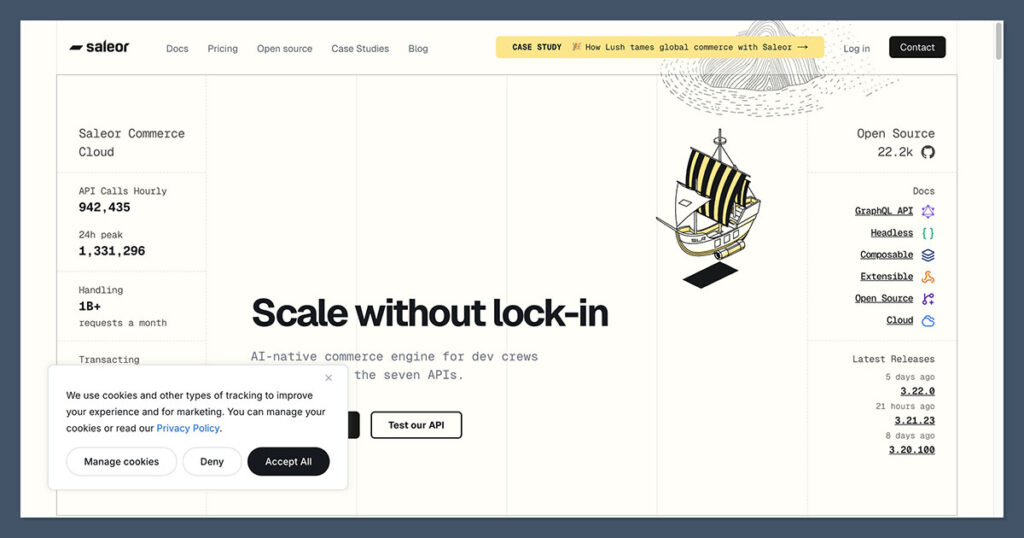
Saleor is a GraphQL-first headless commerce engine built with Python and Django – and it's used by some of the most tech-savvy teams out there.
- How Much Does It Cost? Saleor is free to use if you host it yourself, or you can pay $495/month if you go for the cloud option.
- Do You Get A Trial? Yep, you do
- Is It Open Source? Yes, Saleor is completely open source
Why I'd Recommend It
Saleor gives your developers total control and is super fast thanks to its GraphQL core. Its perfect for businesses with the tech resources to back it up.
The Bright Side
- Customizable APIs so you can build exactly what you need
- Lightning fast performance that will make your customers smile
- Great if you need to support multiple languages and currencies
- And its all open source, so you have complete freedom
The Dark Side
- You'll need to build your own frontend – which isn't a bad thing for some brands
- It needs a dev team to get going and make the most of it
Saleor is a real favourite among developers who want to build something custom from the ground up. It's lean, powerful and highly flexible.
9. Swell: Best for Fast DTC Brand Launches
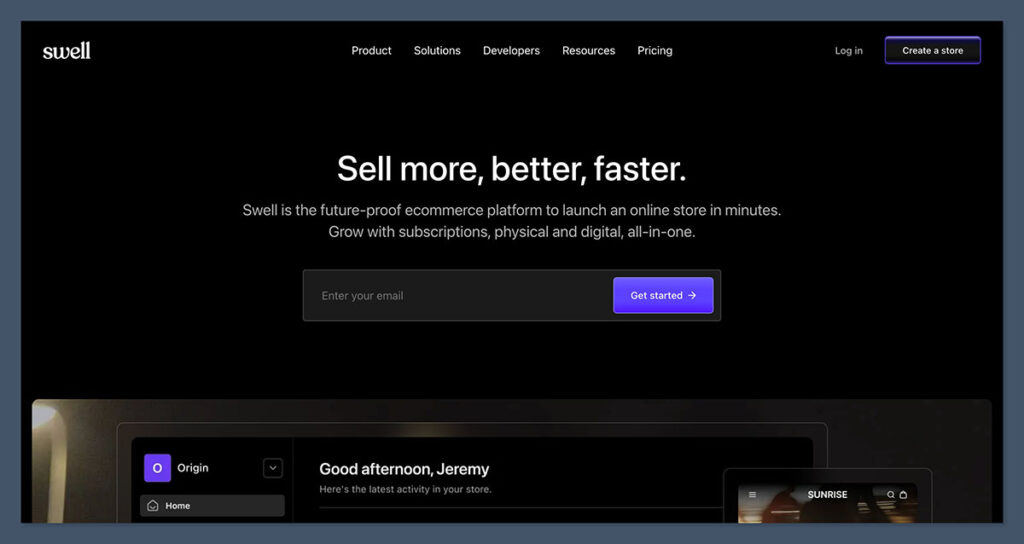
Swell is actually a pretty cool platform that combines modular ecommerce backend tools with a built-in CMS, subscription support and APIs all wrapped up in one neat package.
Its aimed at DTC brands who want to get to market fast but are also planning to scale.
- How Much Does It Cost? Swell is free to use if you're doing under $2K a month in sales, or its $299/month for the paid option.
- Do You Get A Trial? Yes, you do
- Is It Developer Friendly? Absolutely, Swell is built with devs in mind
Why I'd Recommend It
Swell is the perfect choice for newer brands who want control without having to build out a ton of infrastructure.
The Positive Points
- Fast onboarding so you can get up and running in no time\
- Clean admin UI that makes managing your store a breeze\
- Supports subscriptions and B2B sales\
- And its headless ready so you can build any frontend you like
The Not-So-Good Stuff
- Its not as big and gaudy as some of the other platforms out there, so you might not get as many integrations\
- Some areas of the platform could do with a bit more documentation
Swell is a great starting point for DTC brands who need to get to market quickly. It's balanced ease of use with serious backend flexibility.
How to Choose the Right Composable Commerce Platform
So, how do you choose the right composable commerce platform?
It comes down to what you need now – and where you're headed next.
Here's what to consider:
- Are you building custom storefronts?
- Use Hydrogen or Saleor
- Need strong B2B or multi-brand setups?
- Spryker and Elastic Path are the way to go
- Going global?
- Commerce Layer is pretty good at handling multi-region pricing and fulfillment
- Scaling from Shopify/WooCommerce?
- Fabric and BigCommerce Headless are solid upgrades
- Launching fast but want flexibility later?
- Start with Swell or Saleor
Final Verdict: Which Platform Should You Use?
Choosing a composable commerce platform isn't about finding the one with the most features – it's about choosing the one that fits your tech, team and growth plans.
- If you're a large brand with global scale in mind, commercetools and Elastic Path are pretty much built for the long haul.
- If you're a fast-moving DTC brand, Swell, BigCommerce Headless or Fabric can get you up and running fast – without sacrificing flexibility.
- If you're deep into React or want control over every pixel, Hydrogen is a great frontend solution.
- And if you're a developer-led start-up that wants total control from day one, Saleor gives you fast performance and a lean stack.
There's no one-size-fits-all answer here.
But with the right setup, composable commerce can unlock faster performance, deeper control and fewer limits on your ecommerce growth.


Comments 0 Responses