

Quick answer: Salehoo is legit—but it’s not magic. If you’re brand new to ecommerce, it gives you vetted suppliers, solid training, and a support system that saves time.
But if you’re expecting it to drop products into your store and make you rich overnight, you’ll be disappointed.
After 10+ years running online stores and testing sourcing platforms, here’s what I found when I put Salehoo to the test.
What Is Salehoo?
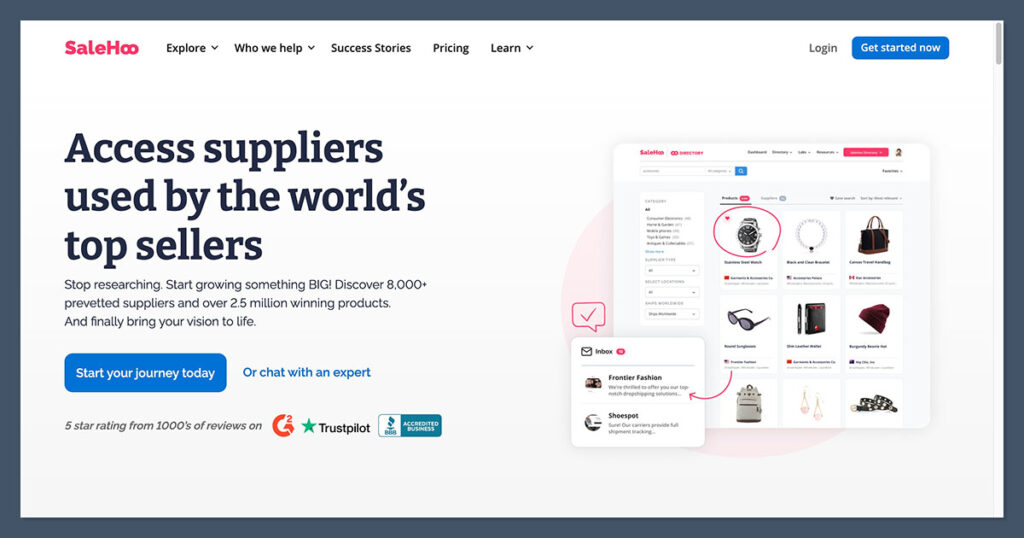
Salehoo is a directory of 8,000+ vetted suppliers and wholesalers, mostly used by dropshippers, Amazon FBA sellers, and small ecommerce businesses looking for low-risk inventory sources.
It’s not a marketplace like AliExpress or Alibaba. Instead, Salehoo acts as a middleman that connects you with verified suppliers. You pay a fee to access this curated list along with beginner-friendly training, community support, and a basic market research tool called the Market Research Lab.
The main selling point? These aren’t mystery vendors with cartoon avatars and 60-day shipping times. Most suppliers in Salehoo’s database have real addresses, direct contact emails, and pre-vetted logistics.
That means faster shipping, more transparency, and less risk of chargebacks or refund headaches.
Key Features:
- Access to 8,000+ vetted suppliers
- Market Research Lab with data on trending and profitable products
- Community forum and responsive email support
- Step-by-step ecommerce training for new sellers
- Dropshipping automation for Shopify with Salehoo Dropship upgrade
What Types of Suppliers Are Inside Salehoo?
Here’s a quick breakdown of what’s inside the supplier database:
| Supplier Type | Region Focused | MOQ (Minimum Order) | Shipping Time | Private Label Options |
|---|---|---|---|---|
| Dropshippers | US, UK, AU, China | Often none | 3–14 days average | Limited |
| Wholesalers | US, EU, Asia | Varies by product | 5–20 days | Some available |
| Manufacturers | China, India | Usually yes | 14–30+ days | Yes (in select cases) |
You can filter by country, product category, MOQ, and more when searching. The quality and contact transparency of suppliers are a notch above open directories.
Who Salehoo Works Best For:
- Brand new dropshippers looking for verified, beginner-safe suppliers
- Amazon FBA sellers who need real manufacturers or wholesalers
- Shopify store owners who want US/UK suppliers with faster shipping
- Part-time ecommerce side hustlers who want a curated start
If you’re deep into private label or want super niche products, you might outgrow the platform quickly—but for launching and testing ideas, Salehoo makes sourcing less overwhelming.
Pros & Cons
Pros 👍
- Vetted suppliers with real contact info and shipping details
- Filters for US, UK, and local suppliers to reduce delivery time
- Beginner-friendly training materials and templates for supplier outreach
- One-time annual fee option ($67/year) instead of monthly billing
- Dropshipping automation available for Shopify through Salehoo Dropship
- Helpful support team and active community forum
- Market Research Lab offers basic product validation data
- Great for testing product ideas without high upfront investment
Cons 👎
- Interface feels outdated and not very intuitive
- Some “dropship” suppliers still have minimum order requirements
- Market Research Lab lacks deep data for advanced product research
- No built-in automation unless you upgrade to the Dropship plan
- Limited product variety if you’re targeting very specific niches
- Doesn’t support full Amazon FBA workflows or integrations
- Manual outreach still required for many suppliers in the standard plan
- No built-in branding or private label tools
My Experience Using Salehoo
I signed up for the Salehoo Directory + Dropship combo so I could test both the traditional supplier research features and the dropshipping automation built for Shopify users.
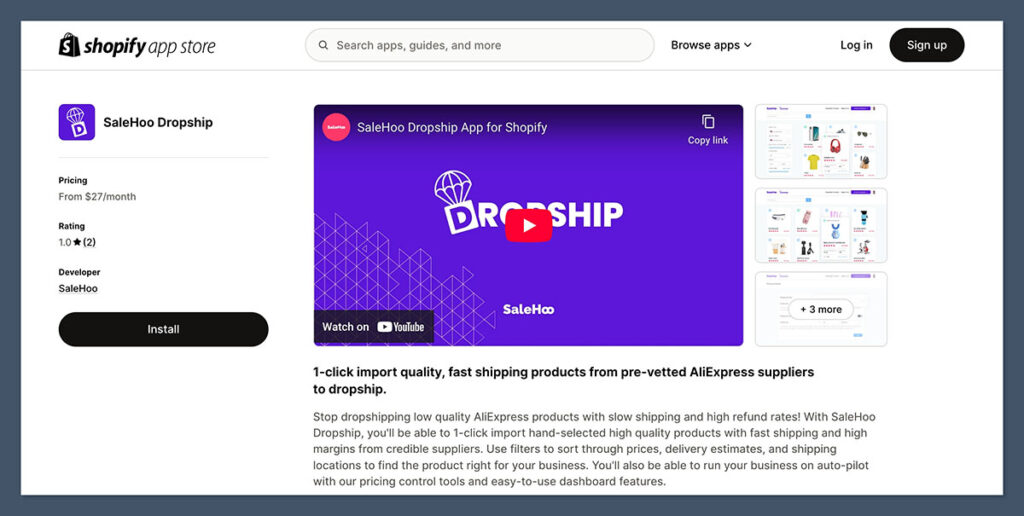
I wanted to see if it could streamline the tedious parts of sourcing and help shortcut some of the usual pain points—like getting ghosted by suppliers or waiting weeks for replies.
Right after logging in, I started browsing the supplier directory. The search filters were easy to use, and I could quickly narrow down by location (US, UK, China), category, and shipping time.
The Dropship app integrated with Shopify in about 5 minutes. It gave me a clean list of products, profit margins, and the option to push items straight into my store. No Zapier hacks or messy CSV uploads.
What I Liked
These were the standout wins from my test:
- Supplier profiles felt real, with direct contact emails, phone numbers, shipping details, and sometimes even product photos or warehouse locations
- Filtering for US/UK-based suppliers was simple and effective, making it easy to avoid long delivery times from China
- Emailing suppliers actually worked—most responded within 24–48 hours, and a few even followed up proactively
- Tutorials were clear, beginner-friendly, and practical—the kind of stuff I wish I had 10 years ago when I was winging it on Alibaba
There’s definitely a lower learning curve here than other platforms I’ve used.
What Bugged Me
That said, there were a few things that slowed me down:
- The interface feels like it hasn’t been updated since 2012—it works, but it’s clunky and not exactly intuitive
- Some suppliers had minimum order quantities, even though they were listed under “dropship” categories—this wasn’t always obvious until after reaching out
- Market Research Lab is underwhelming—it gives you basic demand signals, but don’t expect the depth you’d get from a tool like Helium 10 or Jungle Scout
Here’s how I’d rank the usability across different Salehoo tools:
| Feature | Ease of Use | Notes |
|---|---|---|
| Supplier Directory | ★★★★☆ | Great filters and contact info, clunky UI |
| Market Research Lab | ★★☆☆☆ | Very basic—only useful for quick demand checks |
| Dropship Automation App | ★★★★☆ | Works smoothly with Shopify, but lacks niche product depth |
| Training Resources | ★★★★★ | Clear, actionable, and well-organized |
Overall, I found Salehoo easy to navigate once I got over the interface. It’s not flashy, but it gets the job done—especially if you’re tired of guessing on shady AliExpress listings.
How Salehoo Compares to Alternatives
I’ve used just about every sourcing tool under the sun—Spocket, Zendrop, AliExpress, Doba, you name it. Some shine with automation, others win on pricing or UI. Salehoo stands out by giving you a more trust-based sourcing experience—but it’s not the most advanced tool on the market.
If you’re deciding between platforms, here’s how Salehoo stacks up against a few popular alternatives:
| Feature | Salehoo | Spocket | Zendrop | AliExpress |
|---|---|---|---|---|
| Vetted Suppliers | Yes – pre-screened | Yes – curated | Yes – curated | No – open marketplace |
| US/EU Shipping | Yes – filterable | Yes – strong US inventory | Yes – fast shipping tiers | Mostly China |
| Automation | Only with Salehoo Dropship | Yes – full Shopify sync | Yes – automated ordering | Manual |
| Training Included | Yes – solid starter content | No | No | No |
| Market Research Tool | Basic insights | None | None | None |
| One-Time Fee Option | Yes – $67/year option | No – monthly plans only | No – monthly only | Free |
Key Takeaways
- Spocket and Zendrop are better for sellers who want full Shopify automation and don’t need training.
- AliExpress wins on raw product variety and price, but comes with longer shipping, hit-or-miss quality, and no support.
- Salehoo is more of a hybrid—it gives you a vetted directory, support, and some automation (if you upgrade), but it’s not as seamless as full-on dropship apps.
So Which One’s Best?
That depends on where you’re at:
- Use Salehoo if you’re new to ecommerce, want safer suppliers, and don’t mind starting slow.
- Use Spocket or Zendrop if you’re focused on speed, design, and dropship automation inside Shopify.
- Use AliExpress if you’re testing fast and cheap, and can handle the risk.
Salehoo isn’t trying to be everything. It’s trying to simplify the early-stage sourcing mess. If that’s what you need, it delivers.
Who Salehoo Is Good For (And Who It’s Not)
Salehoo isn’t a one-size-fits-all platform. It works best if you’re in the early phases of building your ecommerce business and need a shortcut to finding reliable suppliers without the usual sourcing chaos.
Here’s who I’d recommend it for—and who should probably look elsewhere.
Best For
If you check any of these boxes, Salehoo could be a smart move:
- Beginners looking for real suppliers, not just marketplaces
You’re not stuck sorting through sketchy listings on AliExpress. Salehoo offers verified suppliers with contact info, basic shipping estimates, and clear business details. - Sellers who want a directory plus training
If you’re not just looking for products—but also need help with strategy, emails, supplier outreach, and product selection—Salehoo’s built-in training gives you a big head start. - Shopify users who want basic dropship automation
The Salehoo Dropship tool plugs into Shopify, lets you import products, and gives you control over margins and descriptions without the need for another third-party app.
Not Great For
That said, if you’re more advanced or have specific needs, Salehoo might not cut it:
- Amazon FBA sellers who need deep analytics
There’s no competitive research, estimated revenue, or keyword tracking like you’d get with tools like Helium 10 or Jungle Scout. - Anyone who wants full automation (unless you buy Salehoo Dropship)
The standard Salehoo Directory is a manual process. You’ll be emailing suppliers, managing stock manually, and handling fulfillment without plug-and-play automation. - Store owners with niche or custom product needs
Most suppliers in Salehoo sell generic, mass-produced items. If you’re trying to source highly specific or branded products, you’ll likely find the catalog too limited.
Is Salehoo Worth It in 2025?
Yes—If You’re Early in the Game
If you’re just getting started in ecommerce and you’re overwhelmed by supplier research, Salehoo gives you a faster path. Instead of guessing your way through Alibaba or praying a random AliExpress vendor ships on time, you get a list of real suppliers with real contact details.
You’re also backed by educational content that walks you through outreach, negotiation, and product selection.
I’ve personally wasted weeks waiting on replies from suppliers that ghosted me—or worse, shipped defective products. Salehoo eliminates a lot of that trial and error.
It’s not perfect, but it removes guesswork, which is valuable when every dollar counts.
Just remember: Salehoo won’t run your business. You still need to drive traffic, market your store, write product descriptions, handle customer service, and deal with returns.
No—If You’re Already Deep into Ecommerce
If you’ve been selling online for a while and already know how to vet suppliers, Salehoo will probably feel limiting.
The directory becomes less useful once you’ve built direct sourcing relationships or developed private-label products.
The Market Research Lab doesn’t go deep, and the automation features only apply to Shopify if you’re on the higher-tier Dropship plan.
If you’re scaling aggressively or managing multiple product lines, you’ll need stronger analytics and automation tools to keep up.



I am looking for a supplier from the USA
Of Mexican product
food product
me interesa aprender a vender en SALEHOO