

AutoDS and Shopify are two major players in ecommerce — but they serve very different purposes.
So which one is right for you, and when should you use them together?
After spending over 150 hours researching, testing, and working with both platforms, I’ve found they’re not direct competitors.
Instead, they’re designed to complement each other — especially if you’re building a dropshipping business.
Still, it’s important to understand what each platform does best.
AutoDS vs Shopify: Quick Verdict
Shopify – Best for building and managing your ecommerce store
AutoDS – Best for automating your dropshipping operations
In this detailed comparison, I’ll walk through pricing, features, automation, integrations, ease of use, and more — based on hands-on experience and up-to-date research.
Quick Comparison: AutoDS vs Shopify
Here’s a snapshot of the key differences between AutoDS and Shopify:
| Feature | Shopify | AutoDS |
|---|---|---|
| Type of Tool | Ecommerce platform | Automation software |
| Best For | Building and managing an online store | Automating dropshipping tasks |
| Works Without the Other? | Yes | Yes (on eBay/Facebook Shops) |
| Monthly Pricing | From $39/month | From $19.90/month |
| Storefront Builder | Yes | No |
| Dropshipping Automation | No (requires app) | Yes |
| Sales Channels | Web, IG, FB, TikTok, Amazon | eBay, Shopify, Facebook Shops |
| App Store | 8,000+ apps | Limited to built-in features |
Best For Pricing: Shopify and AutoDS Offer Different Value
AutoDS and Shopify aren’t directly comparable in pricing because they serve different functions.
One builds your store, the other automates it.
Let’s break them down individually.
Shopify Pricing (2025)
| Plan Name | Monthly Price | Transaction Fees (Using Shopify Payments) |
|---|---|---|
| Basic | $39 | 2.9% + $0.30 |
| Shopify | $105 | 2.6% + $0.30 |
| Advanced | $399 | 2.4% + $0.30 |
Shopify also offers:
- 3-day free trial
- First 3 months at $1/month on select plans
AutoDS Pricing (2025)
| Plan Name | Monthly Price | Product Limit | Includes Order Automation |
|---|---|---|---|
| Starter | $19.90 | 400 | No |
| Advanced | $47.90 | 1,000 | Yes |
| Pro | $97.90+ | 3,000+ | Yes |
Additional charges apply for:
- Fulfilled order credits
- Tracking updates
- AI product rewriting
Verdict
- Use Shopify if you’re setting up a full ecommerce store
- Use AutoDS if you want to automate your dropshipping process
- Use both together if you’re running a Shopify-based dropshipping store
If you’re running a tight budget, expect to spend around $60–$120/month combining both.
Best for Store Setup: Shopify

If your goal is to create a branded online store, Shopify is clearly the better option.
It offers everything needed to build, design, and launch a full ecommerce website — without needing a developer.
What You Can Do With Shopify
- Choose from over 190 templates
- Customize your storefront using a section-based editor
- Add product pages, collections, and filters
- Configure payments, taxes, and shipping
- Access SEO and marketing tools
- Launch your store with a custom domain
Shopify is made for beginners but powerful enough for growing brands. It offers complete control over the customer experience — from homepage to checkout.
What AutoDS Lacks Here
AutoDS does not let you build a storefront.
It can connect to Shopify, but you’ll still need a platform like Shopify or Wix to serve as your online storefront.
Verdict: Shopify is the clear winner for building your store.
Best for Dropshipping Automation: AutoDS
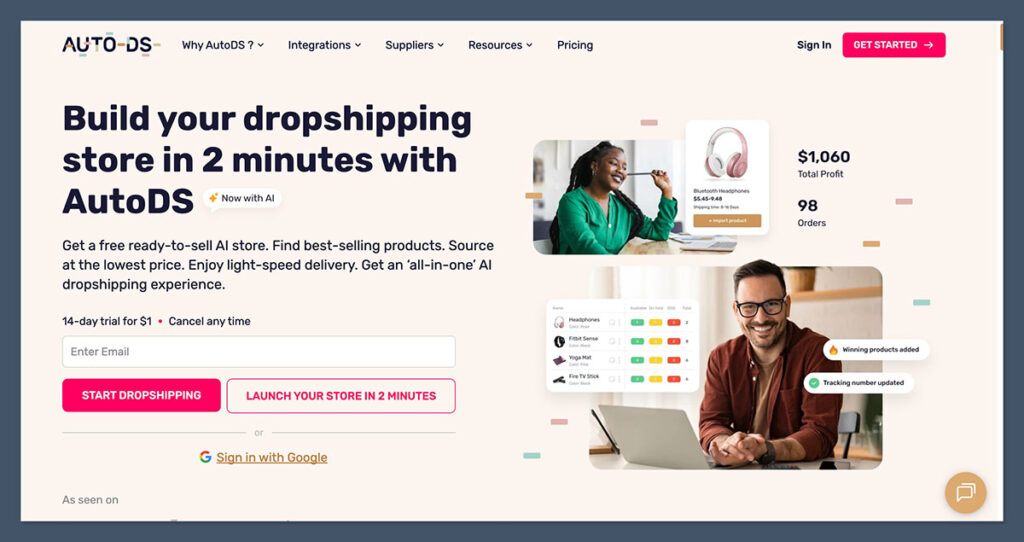
This is where AutoDS really shines. It was built for dropshipping automation — and it does it better than most tools on the market.
Once your store is connected, AutoDS takes over your backend operations:
Key AutoDS Features
- Product importer: Pull products from 25+ suppliers (AliExpress, Amazon, CJ Dropshipping, etc.)
- Auto-fulfillment: Automatically places orders with your supplier when a customer buys
- Tracking updates: Auto-updates customer with tracking details
- Price/stock monitoring: Syncs with supplier data and adjusts pricing
- AI product description tools: Rewrites titles, bullet points, and descriptions
- Bundling and variant mapping: Manage product options and variations easily
It’s especially useful when you’re scaling — saving hours per week and avoiding stock issues.
Shopify Alone Can’t Do This
Shopify doesn’t have any built-in automation. You’ll either have to:
- Fulfill orders manually
- Or install apps like AutoDS, DSers, or Zendrop
Verdict: AutoDS is essential for automation if you’re dropshipping.
Best for Ease of Use: Shopify
When I tested both platforms, Shopify was noticeably easier to use — especially during onboarding and store setup.
Shopify User Experience
- Clear step-by-step checklist after signup
- Intuitive dashboard with logical layout
- Easy to navigate sections (Orders, Products, Themes, etc.)
- Built-in tips and tooltips
- Seamless theme editing process
Shopify also tailors onboarding based on whether you’re just starting or already selling, which makes a difference in how relevant your setup tasks are.
AutoDS Learning Curve
AutoDS is more complex and backend-focused. The dashboard is feature-rich but can feel overwhelming at first.
You’ll need to:
- Set up pricing rules
- Choose suppliers
- Configure automation settings
- Learn how the fulfillment credits system works
Once set up, it runs smoothly — but the setup isn’t beginner-friendly.
Verdict: Shopify is easier to get started with, especially for beginners.
Best for Sales Features: Shopify
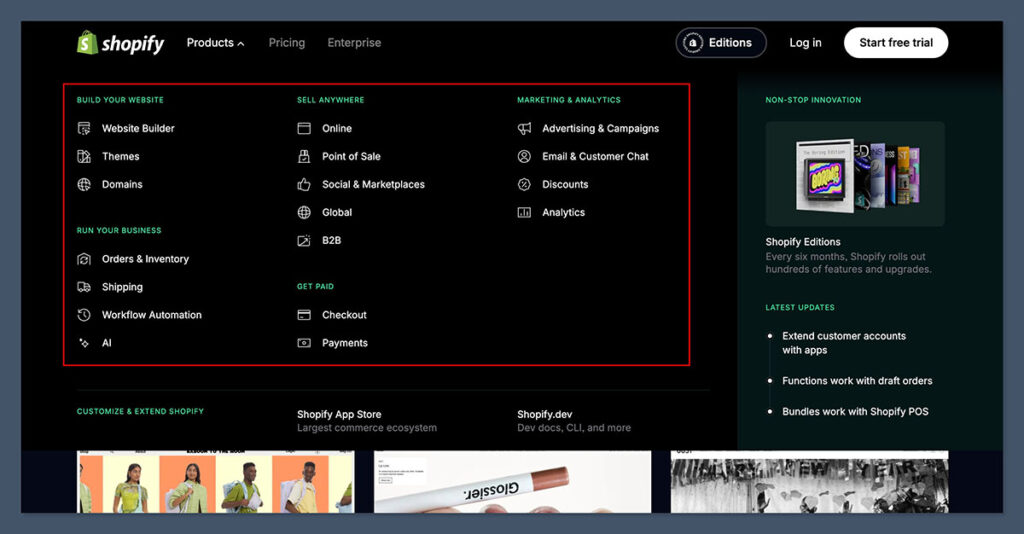
Shopify includes robust ecommerce functionality out of the box, with tons of apps to extend capabilities.
Standout Shopify Sales Features
- Abandoned cart recovery
- Multi-channel selling (Amazon, Instagram, TikTok, Facebook)
- Discount codes and coupons
- Built-in email marketing with Shopify Email
- POS integrations for in-person sales
You also get access to powerful reporting, inventory management, and shipping configuration tools.
AutoDS’s Role in Sales
AutoDS doesn’t offer any customer-facing sales tools. Instead, it automates what happens after the sale is made.
Think of it like this:
- Shopify drives the sale
- AutoDS fulfills it behind the scenes
That said, AutoDS indirectly improves your sales workflow by reducing human error and fulfillment delays.
Faster processing times and real-time tracking updates can help improve your customer satisfaction and reduce refund requests — which ultimately contributes to higher repeat purchases.
Verdict: Shopify wins on sales and customer experience.
Best for Supplier Management: AutoDS
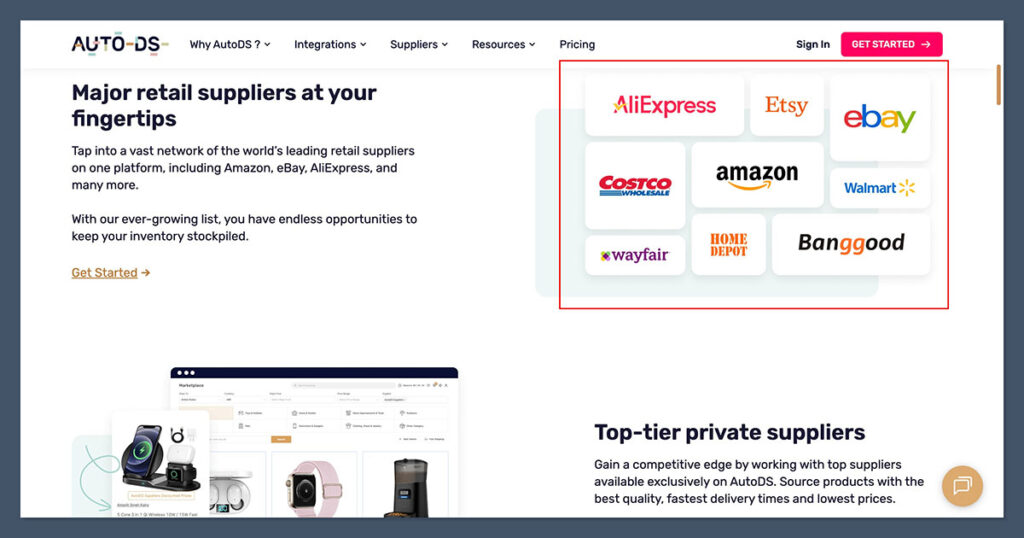
AutoDS supports over 25 dropshipping suppliers and gives you tools to easily manage them.
Supported Suppliers Include:
- AliExpress
- Amazon
- Walmart
- CJ Dropshipping
- Home Depot
- Wayfair
- eBay
- Banggood
You can filter products by shipping time, price, ratings, and more. Once imported, the platform handles all communication with the supplier automatically.
Shopify has no native supplier management unless you integrate an app like AutoDS.
What sets AutoDS apart here is how hands-off the process becomes once it’s configured.
You can build custom automation rules — for example, mark up AliExpress products by 35%, auto-replace out-of-stock items, or route orders based on shipping location — which makes it highly scalable without adding complexity.
Verdict: AutoDS offers the most complete supplier automation system.
Best App Store: Shopify

Shopify’s app store is massive — over 8,000 apps — and and includes tools for everything from upsells to SEO to custom checkout pages.
Apps are grouped by purpose:
- SEO & speed optimization
- Email marketing
- Reviews and UGC
- Conversion boosters
- Subscription products
AutoDS doesn’t have an app store — it includes features built-in, but for extended capabilities (like custom bundles or pricing logic), you’ll be limited to their native options.
The variety of tools available gives Shopify a long-term edge for growth. You can start small with free apps, then upgrade to premium tools as your revenue grows — without migrating to a new platform or reworking your tech stack.
That kind of flexibility is invaluable for growing stores.
Verdict: Shopify wins for customizability via third-party apps.
Best Support: Shopify
Shopify offers 24/7 live chat support and an extensive Help Center with guides, forums, and video tutorials. Shopify Plus users also get dedicated support.
AutoDS has email and ticket-based support, along with a knowledge base and Facebook group — but support response times are slower, especially on lower-tier plans.
Shopify also benefits from a large, active community.
Whether you’re troubleshooting an issue or looking for a specific app, chances are someone has already answered it in the forums or created a tutorial on YouTube.
This makes problem-solving much faster — even when official support isn’t immediately available.
Verdict: Shopify offers better, faster support options overall.
Final Verdict: Use Shopify and AutoDS Together
So which one should you choose?
The truth is: if you’re building a serious dropshipping business, you should be using both.
Use Shopify if you want:
- A professional online store
- Control over branding and customer experience
- Seamless multi-channel sales and payments
Use AutoDS if you want:
- Fully automated dropshipping
- One-click product imports
- Real-time order fulfillment and inventory syncing
The combination gives you full-stack control of your ecommerce business. With Shopify managing the storefront and AutoDS handling the backend, you can focus more on strategy — like marketing, product testing, and customer retention — instead of spending hours on admin.
Who Shouldn’t Use AutoDS or Shopify?
If you’re testing dropshipping with no store (e.g., only on Facebook Shops or eBay), you can use AutoDS without Shopify.
But for any long-term brand-building — you’ll need Shopify too.
Conclusion: AutoDS vs Shopify
While AutoDS and Shopify are often mentioned together, they’re built for different parts of the ecommerce process.
Here’s the bottom line:
| Use Case | Tool to Use |
|---|---|
| Building your store | Shopify |
| Dropshipping automation | AutoDS |
| Branding and customization | Shopify |
| Backend supplier management | AutoDS |
| Customer experience & sales | Shopify |
| Scaling fulfillment | AutoDS |
If you’re running a dropshipping business in 2025, AutoDS + Shopify is one of the most efficient tech stacks available.
Want more automation? You might consider using AutoDS’s AI tools to rewrite your product pages and scale faster with hands-free fulfillment.
Want more control over your brand? Shopify gives you the design tools and marketing power to stand out.
Use both wisely — and you’ll spend less time doing admin and more time growing your business.


Comments 0 Responses