

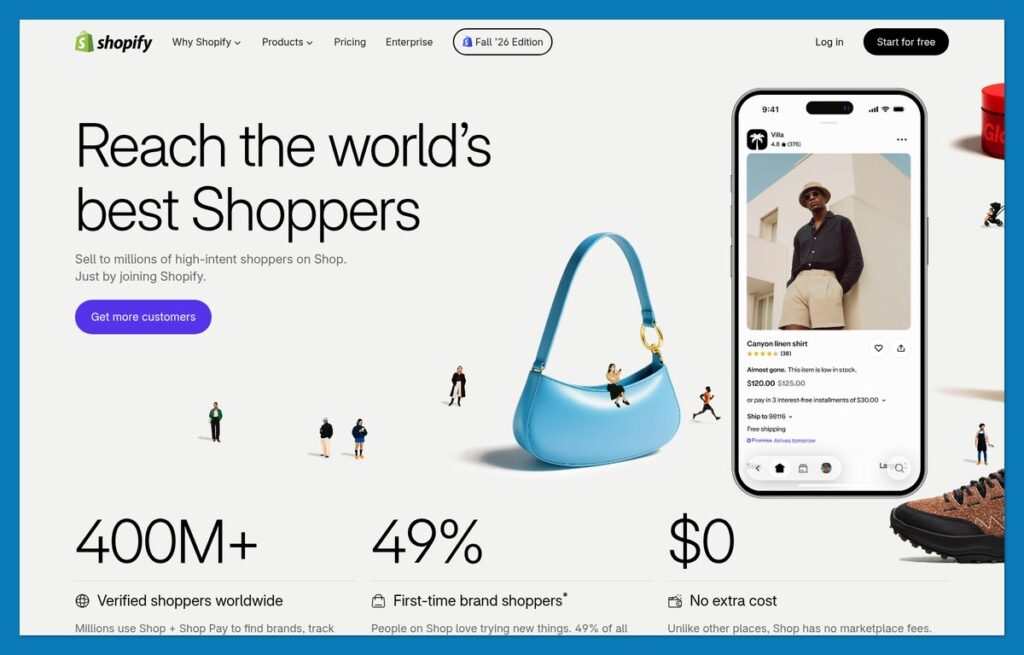
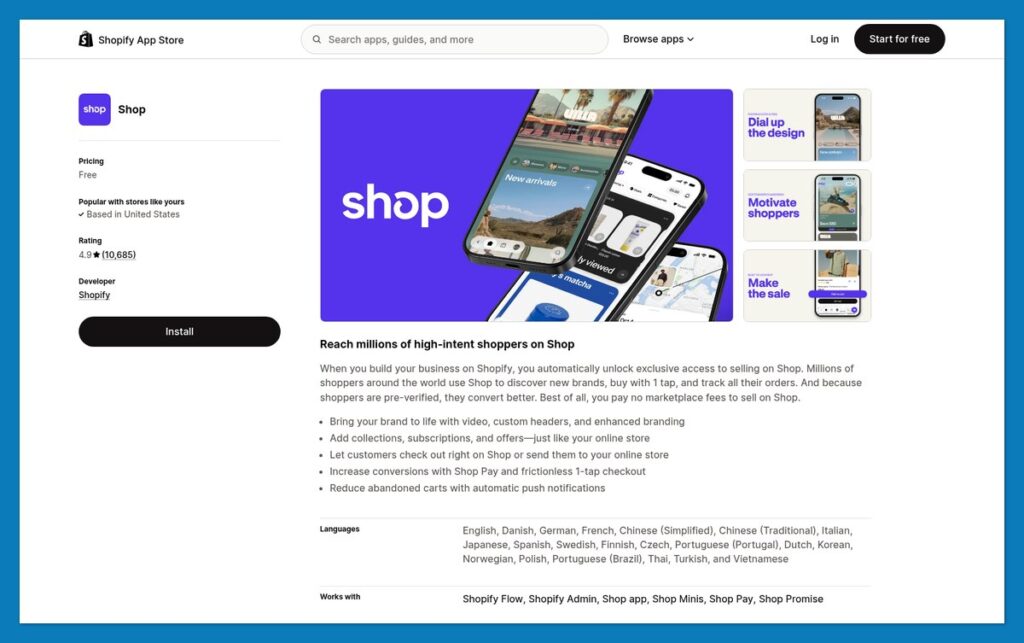
The Shop app is Shopify’s free shopping and package-tracking app, and I recommend it as an extra sales channel. Eligible Shopify sellers are listed automatically, so you can reach customers without building a second store.
I’ll cover what Shop costs sellers, which settings you control, and whether Shop Campaigns deserves your advertising budget. For shoppers, I’ll explain the features and safety risks before you buy.
Updated November 27, 2026
I updated this review with current ratings, the move to shop.com, Shop Campaigns pricing, and US marketplace sales tax rules. It also covers Fall ’26 changes, including AI search, the agent in Shop, and the controls now available to sellers.
Key Takeaways
- Shop is free for shoppers, and sellers pay $0 marketplace fees. Your Shopify subscription and normal card processing costs still apply.
- Eligible stores are listed automatically. Shopify’s 400M+ shoppers figure covers Shop and Shop Pay together, not just users of the app.
- You cannot remove eligible products from Shop search or Shop Minis, although you can disable direct checkout and some marketing features.
- Shop Campaigns acquisition charges are not refunded when an attributed order is canceled or refunded. A sale can still lose you money.
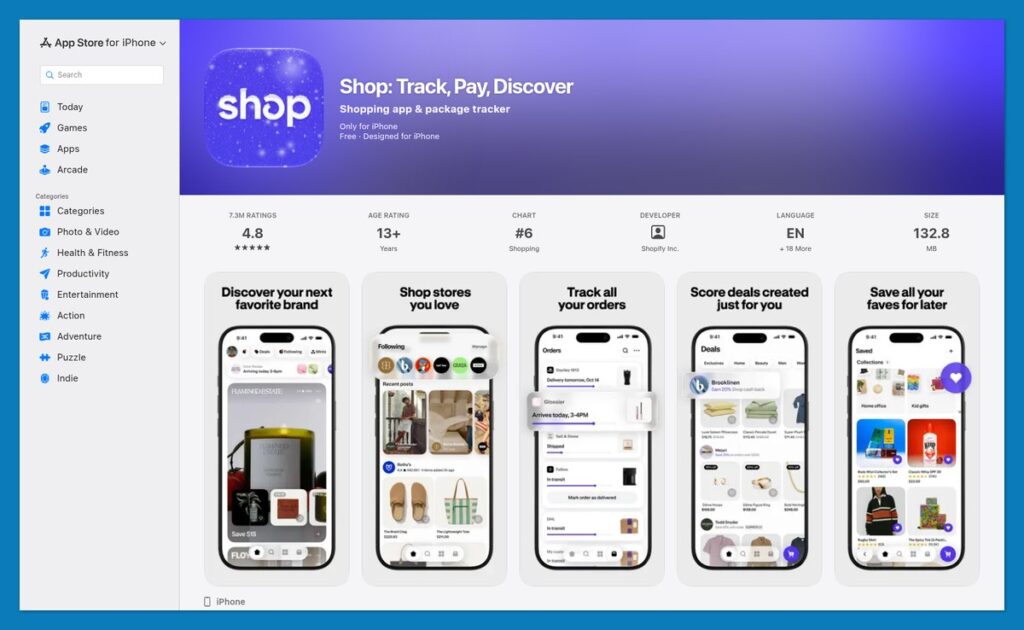
- Ratings differ sharply: 4.8 on Apple App Store, 4.4 on Google Play, 4.9 on Shopify App Store, and 1.1 on Trustpilot.
In this article:
- What Is the Shop App?
- Shop App Pros and Cons
- How Much Does the Shop App Cost?
- What Do Shoppers Get From the Shop App?
- What Do Sellers Get From the Shop Channel?
- Is Shop Campaigns Worth Paying For?
- Is the Shop App Legit and Safe?
- What Do Sellers Say About Shop?
- Is the Shop App Better Than Selling on a Marketplace?
- How I Reviewed the Shop App
- Final Verdict: Should You Use the Shop App?
- FAQ
What Is the Shop App?
I see the Shop app as a shopping destination and package tracker, not a replacement for your store. Shopify launched it in 2020 by relaunching its Arrive package tracker.
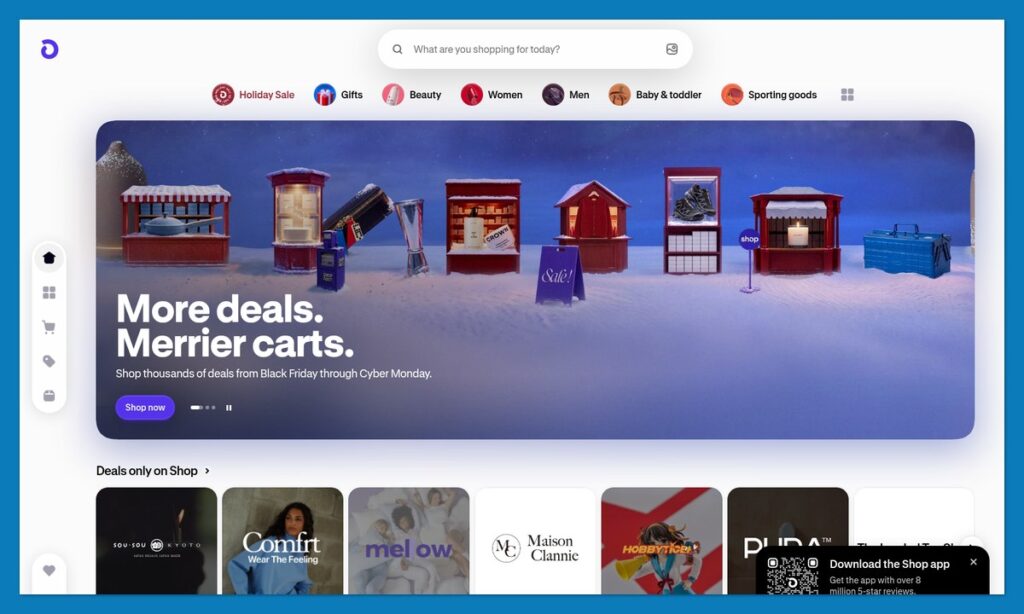
It runs on iOS and Android, with a web version at shop.com. The old shop.app address redirects there, and the Shop App for ChatGPT brings Shop into AI-assisted shopping. Shoppers can browse the website without signing in, but need an account to buy with Shop Pay or use Shop Cash.
You manage your store’s presence through the Shop channel in your Shopify admin; you do not need the consumer app. The Fall ’26 Edition added shopping and branding features, covered in our Shopify Editions guide.
Shop app at a glance
| Shop app | |
|---|---|
| Made by | Shopify |
| Price for shoppers | Free |
| Marketplace fee for sellers | $0 |
| Where it runs | iOS, Android, shop.com, Shop App for ChatGPT |
| Shoppers | 400M+ with Shop and Shop Pay accounts, per Shopify |
| Apple App Store | 4.8 out of 5 (7.3M ratings) |
| Google Play | 4.4 out of 5 (817K reviews, 50M+ downloads) |
| Shopify App Store (seller reviews) | 4.9 out of 5 (10,685 reviews) |
| Trustpilot | 1.1 out of 5 |
Shop App Pros and Cons
I recommend the free listing, but assess advertising costs and limits on seller control separately.
What I Like
- No marketplace fee: Shop charges $0 commission on orders, though you still pay normal processing costs.
- Automatic listing: Eligible products appear without you building another storefront or installing the Shop channel.
- Centralized tracking: Delivery notifications keep customers informed and can reduce “where is my order?” messages.
- Fast checkout: Shop Pay takes 2 taps, and carts sync between your website and the app.
- Pay-per-sale advertising: Shop Campaigns charges you when a customer converts, not when someone clicks.
- Useful switches: You can disable direct selling, remarketing, and inclusion in Shop marketing campaigns.
What I Don’t Like
- Incomplete opt-out: You cannot switch off Shop search, Shop Minis, or AI product summaries.
- Advertising charges stick: Acquisition costs survive refunds and cancellations, and purchases count within 7 days of a click.
- Tax settings differ: Shop’s US sales tax collection ignores your tax overrides and customer exemptions.
- Order disputes return to you: Shoppers on Trustpilot report orders the store never resolved, and Shop’s rating there is 1.1 out of 5.
- Search requirements are vague: Shopify does not give precise selling-history or order-volume standards.
How Much Does the Shop App Cost?
The Shop app is free for shoppers, and sellers pay no marketplace fee or commission. I consider it good value as an extra channel, but you still have selling costs.
You need an active Shopify plan: Basic costs $39 a month, or $29 a month billed yearly. Normal card processing applies to Shop Pay orders; our Shopify pricing guide explains the subscription choices.
| Cost | What you pay |
|---|---|
| Shop app for shoppers | Free |
| Shop sales channel | Free to install |
| Marketplace fee on Shop orders | $0 |
| Shopify plan | From $39/month (Basic), or $29/month billed yearly |
| Card processing | Your normal Shopify Payments rate |
| Shop Campaigns ads | The acquisition cost you set, charged per converted customer |
| US sales tax on Shop orders | Collected by Shop and deducted from your payout |
Since January 1, 2025, Shop collects, remits, and files sales tax on orders shipping to or within the US. This covers every state with statewide sales tax, plus DC and Alaska local sales tax, even where you are not registered.
It appears as “Marketplace sales tax” deducted from payouts. Tell your accountant: your tax overrides and customer exemptions do not apply to Shop orders.
Is the Shop App Good Value for Sellers?
- Existing Shopify sellers do not pay an extra subscription for the Shop channel.
- Organic orders carry no marketplace commission, so Shop takes no additional share of each sale.
- New businesses still need a paid Shopify subscription; Shop is not a standalone store builder.
- Paid promotion needs a separate profit calculation because acquisition charges reduce what you keep.
I’d keep the free listing and treat Shop Campaigns as a separate spending decision.
What Do Shoppers Get From the Shop App?
I recommend the Shop app primarily as a package tracker; its shopping features also give customers reasons to return between deliveries.
Order Tracking
Orders from Shopify stores sync through the verified email address on a Shop account, without inbox access. For other retailers, shoppers can optionally connect Gmail or Outlook, or enter tracking numbers manually.
Live maps and delivery notifications keep package updates together. For you as a seller, those updates can mean fewer order-status questions, although you remain responsible for delivery problems.
Discovery and Search
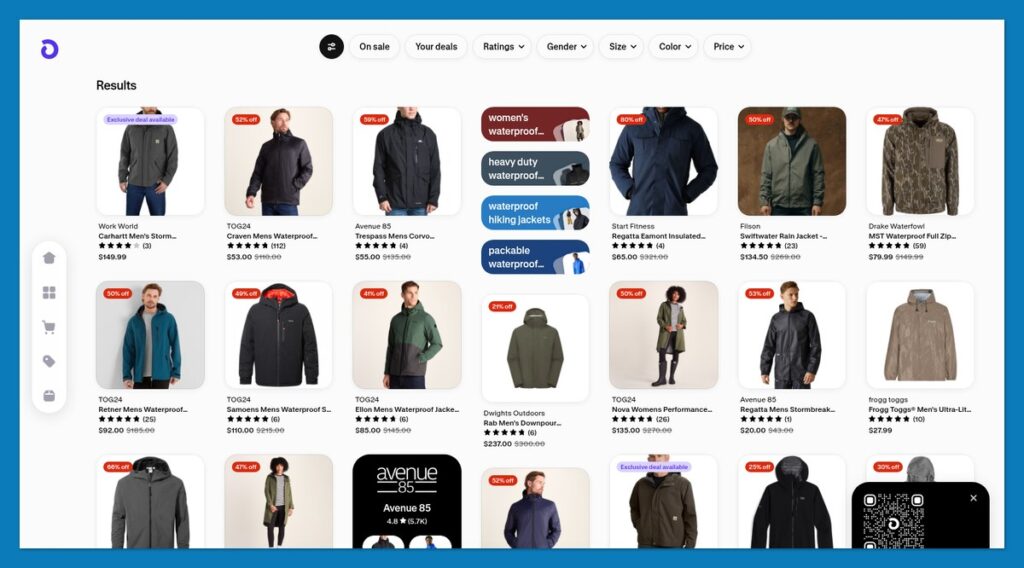
Shop’s personalized feed lets shoppers follow stores and save products, with price-drop and back-in-stock alerts. Search accepts plain sentences, including Shopify’s example: “a birthday gift for my friend who enjoys cooking.”
- Search filters narrow results by size, price, color, and brand.
- AI summaries condense product details on product pages.
- Shop Minis let shoppers use quizzes, shoppable videos, and virtual try-ons.
- The agent in Shop provides product recommendations, order help, and support.
Results only include stores shipping to the shopper’s location, and leaving a product review remains app-only.
Shop Pay Checkout
Everything bought through Shop uses Shop Pay, with 2-tap checkout and a Buy now button that skips the cart. Carts sync both ways between your website and the app for customers with Shop accounts.
Shoppers can also manage Shop Pay Installments payments in the app. Shopify says Shop Pay “converts up to 50% higher”; I would not treat that claim as a guaranteed increase for your store.
Shop Cash and Offers
Shop Cash is not a flat cashback program. Shoppers earn rewards through promotional offers on qualifying orders paid in the app or on shop.com, never directly on a store’s own website. Shoppers can also redeem rewards in a Shop Pay checkout reached by redirect from Shop.
- Most Shop Cash expires 180 days after the shopper earns it.
- A first Shop Pay order must total at least $10 before tax and shipping to redeem Shop Cash.
- Store offers provide limited-time special prices or extra Shop Cash through Shop, not your website.
What Do Sellers Get From the Shop Channel?
I like the Shop channel as a second storefront you do not have to build, but a listing does not guarantee search visibility.
Getting Listed
Eligible stores appear automatically, even without the Shop channel installed. Shopify’s rules distinguish being displayed from selling directly.
To be displayed:
- Have an active Shopify plan and comply with Shopify’s policies.
- Add your business details.
- Fulfill at least one order.
- Keep the Online Store live and outside private mode.
- Do not restrict your store to business-to-business (B2B) customers only.
- Avoid password-control or age-verification apps, except Locksmith.
To sell directly in Shop:
- Activate Shopify Payments.
- Keep your chargeback rate, the share of card payments buyers dispute, at less than 5% in the last 90 days.
- Offer at least one eligible product.
Status updates can take up to 48 hours after you fix requirements. Choose “Sell directly in Shop” or “Link to online store,” which sends buyers to your website.
Your Shop Store
Your Shop Store shows the same branding and products in the app and on shop.com.
- Store identity: Edit your profile, avatar, contact details, social links, and Shop URL.
- Layout: Change your home page header, collections, navigation, and filters.
- Products: Edit your product detail pages.
Fall ’26 introduced early-access branding and merchandising sync from your online store, plus Instagram content sync. You cannot offer different products in the app and on shop.com.
Reviews and Search Ranking
Buyers can leave 1 to 5 stars and up to 1,000 characters after delivery. Supported third-party review apps can also sync reviews.
Search requirements:
- Your store needs a custom domain and custom name.
- Build a long selling history with consistent orders.
- Maintain positive customer reviews.
Shopify says these standards are not precise, although exact-name searches show your store.
What You Can and Can’t Switch Off
| Feature | Can you turn it off? |
|---|---|
| Direct checkout in Shop | Yes, switch to Link to online store |
| Remarketing emails and push notifications | Yes |
| Being featured in Shop marketing campaigns | Yes, takes 5 to 7 days |
| Search engine indexing of your shop.com pages | Yes |
| Estimated delivery dates | Yes |
| Single products | Yes, hide them from Shop |
| Your products in Shop search | No |
| Your products in Shop Minis | No |
| AI product summaries | No |
Check Sales channels > Shop > Settings the day you launch, so nothing stays switched on that you did not choose.
Is Shop Campaigns Worth Paying For?
I’d test Shop Campaigns only when first-order profit exceeds the acquisition cost. That cost is what you pay to win a customer, not the value of their order.
Set an average acquisition cost and daily budget; you pay only when a customer converts, without funding the campaign upfront. Charges appear on your Shopify bill.
A $100 daily budget allows at most $700 per calendar week, not a strict daily cap. Your business address must be in one of 37 supported countries or regions.
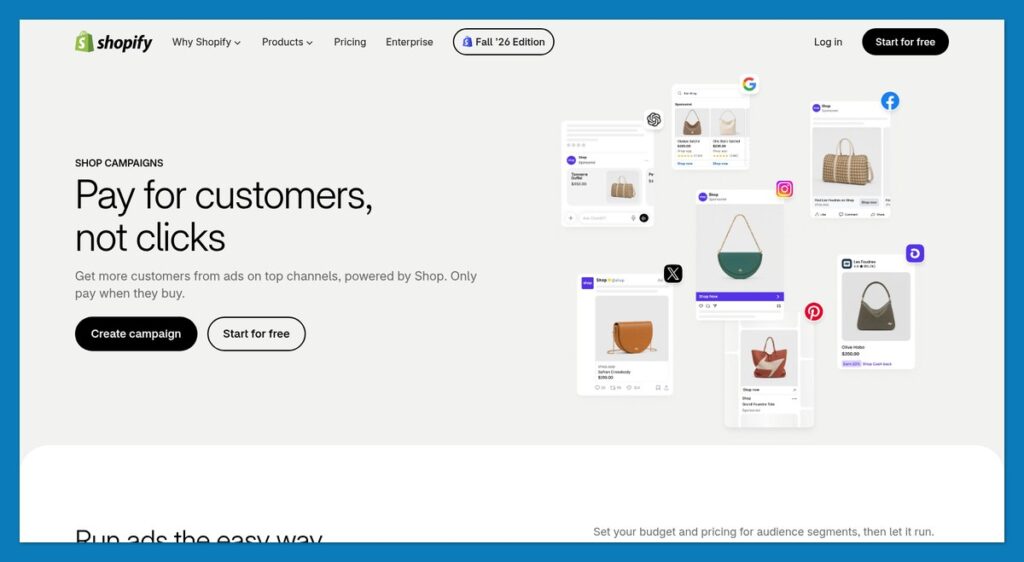
Every campaign runs on Shop and the Shopify Product Network, which places ads on other Shopify stores. Third-party placements are optional but all-or-nothing: you cannot choose individual platforms.
| Platform | Where ads can run |
|---|---|
| Australia, Canada, United Kingdom, United States | |
| Meta (Facebook and Instagram) | Australia, Canada, United Kingdom, United States |
| Bing | Australia, Canada, United Kingdom, United States |
| ChatGPT | United States |
| United States | |
| Snapchat | United States |
| X | United States |
| Microsoft Monetize | United States |
The catches
- 7-day attribution: Purchases within 7 days of a click count, so charges can arrive a week after you pause.
- Advertising charges are not refunded: Canceling or refunding an order does not return its acquisition charge.
- Your target is an average: Individual charges can exceed the acquisition cost you set.
- Delivery affects reach: A Critical grade limits exposure. Shopify uses 6 signals, including fulfillment within 96 hours and delivery within 10 days of fulfillment.
Shopify says Shop Campaigns has generated over 18 million sales. A July 27, 2026 one-star seller review says a $15 acquisition cost wiped out profit on 5 sales; a September 24, 2026 review estimated charges at one-third of retail value.
Top Tip
Calculate profit per first order after product costs, shipping, and processing before setting an acquisition cost. Use a segment override if you want to set a different acquisition cost for new customers.
Is the Shop App Legit and Safe?
Yes, the Shop app is legitimate, built and operated by Shopify. I’d check the individual store before buying rather than treat a Shop listing as a guarantee.
The store handles fulfillment, returns, and refunds. Shop and Shopify handle payment security, store eligibility, and reporting tools; Shopify says stores undergo ongoing trust and safety checks.
Trustpilot’s 1.1 rating and Apple App Store’s 4.8 reflect different feedback: App Store reviewers mostly praise tracking. October and November 2026 Trustpilot complaints describe problems with orders and accounts:
- Missing orders: Buyers say Shop redirected them to sellers or card disputes.
- Tracking problems: Shoppers report incorrect or stuck delivery updates.
- Account frustrations: Complaints include uncredited Shop Cash refunds and unwanted signup prompts.
An email connection is optional, needed only for automatic inbox-based tracking of non-Shopify orders. Stores receive shipping and billing details only after an order; shoppers can use passkeys and delete their accounts anytime.
Before you buy from a store you found on Shop:
- Check product reviews and star ratings, rather than treating a Shop listing as a guarantee.
- Read the policies on shipping, returns, and refunds before buying.
- Question unusually low prices, especially when an offer looks far cheaper than expected.
- Report suspicious stores through Shop’s reporting tools.
I recommend checking each seller; our guide to whether Shopify itself is legit explains the broader platform.
What Do Sellers Say About Shop?
Sellers rate Shop far higher than shoppers on Trustpilot: the Shopify App Store shows 4.9 from 10,685 reviews, with 90% five-star ratings. I take that as support for the channel, not a forecast for your sales.
Positive Shopify App Store reviews describe automatic product syncing and extra orders. A quilt shop’s November 3, 2026 review says 85% of its orders come from Shop, a result for that store rather than a typical benchmark.
- Unchosen listings: A UK store’s September 18, 2026 review objected to appearing despite its sales-channel choice.
- Delivery promises: An August 5, 2026 review criticized estimates the seller could not control. Current settings let you disable estimates.
- No extra sales: A jewelry boutique’s September 18, 2026 review reported no Shop sales after almost 3 years.
I’d judge results against your category and repeat-purchase potential, not assume another seller’s order share will transfer to your business.
Is the Shop App Better Than Selling on a Marketplace?
I would keep Shop alongside a marketplace, not replace a sales channel that already works. Shop adds free discovery to an existing Shopify store, but does not guarantee orders.
- Amazon: Keep it if it brings profitable orders. Compare that performance with Shop rather than switching on the strength of a free listing; our Shopify vs Amazon comparison covers the broader decision.
- Etsy: Keep it if your handmade products sell there. Assess Shop’s contribution separately instead of assuming its recommendations will attract the same customers.
- Your Shopify store: Make it your main destination. Use Shop as another route to purchase, and choose “Link to online store” if you want buyers to finish on your website.
How I Reviewed the Shop App
On November 27, 2026, I read Shopify’s Shop documentation for sellers and shoppers, its Shop and Shop Campaigns pages, and the Fall ’26 Edition. I focused on the differences between free discovery, paid promotion, and seller controls.
I compared ratings on the Apple App Store, Google Play, Shopify App Store, and Trustpilot, and read recent seller and shopper reviews. I also browsed and searched shop.com and took the screenshots included in this review.
Final Verdict: Should You Use the Shop App?
Yes, I recommend keeping the free listing if you sell on Shopify. Set up your Shop Store and check its settings: beyond your existing Shopify subscription and normal payment processing, you only pay extra if you choose paid promotion. Use the control table above to decide which features to leave enabled.
Treat Shop Campaigns as a profit decision, not an automatic upgrade. For shoppers, Shop offers package tracking and fast checkout, but checking the individual store matters more than recognizing the app’s name.
If you are not on Shopify yet, Shop is one more reason to look: Try Shopify, or read our Shopify review and Shopify free trial guide before choosing. You can see how stores look inside the Shop app.
FAQ
Is the Shop app free?
Yes, the Shop app is free for shoppers, and sellers pay $0 marketplace fees. The Shop channel is free to install, but sellers still need an active Shopify plan and pay normal card processing costs. Optional Shop Campaigns advertising adds acquisition charges.
Is the Shop app the same as Shop Pay?
No, the Shop app is for shopping and tracking, while Shop Pay is the checkout used to pay for purchases. Shop Pay also works on participating stores’ websites. Purchases in the app and on shop.com use Shop Pay, and shoppers can manage Shop Pay Installments payments in the app.
Can I remove my store from the Shop app?
You can stop direct selling by switching to “Link to online store” and hide individual products, but eligible products can still appear in Shop search. You cannot disable Shop Minis visibility either. Removing the Shop channel does not stop an eligible store from being listed.
Is it safe to buy through the Shop app?
The Shop app is legitimate and operated by Shopify, but the store remains responsible for your purchase. Shopify handles payment security and store eligibility; the seller handles delivery and refunds. Check reviews and return policies before buying, and contact the store through the order screen if problems arise.
Why does the Shop app have my orders?
Orders from Shopify stores sync using the verified email address on your Shop account, without requiring inbox access. For purchases from other retailers, you can optionally connect a supported email account such as Gmail or Outlook for automatic tracking, or enter a valid tracking number manually.



You mention in the article its for US customers – anyone know how many customers use the app in other countries, particularly UK and Australia? cheers
Hey Kirsty, we don’t have access to such stats at the moment.
Do the collect and share your personal information?
Hello, you can check the privacy policy here: https://www.shopify.com/legal/privacy/app-users
Can someone tell me if the Shop app is free or if there is a charge to have it?
Hello Erica, yes it’s free.
The shop app is great,i have problems with Amazon app that it don’t notify me with sound, but this works.
The only 1 thing i would like is the option to change the notification sound, as it’s just a beep.
Thanks
I don’t have a mobile phone. Why can’t messages be sent to my Email?
Hello Tom,
It is a security measure, since creating an email address is much easier than getting a phone number, you need no validation of subscriber ownership for an email address, and emails can be easily hacked. Usually for a phone number you might need to fill in some paperwork that will verify your identity.
I’m not completely convinced about the Shop App, though a few orders have now come through it. Downsides are I hadn’t realised it would automatically take payment from the card on there last purchase & I had wanted to use a different card. Plus it doesn’t seem to offer payment with PayPal, which I use a lot.
This is very good
Thanks!