

Looking for a fulfillment partner that can actually keep up with your ecommerce store?
I’ve worked with multiple third-party logistics companies over the past decade, and Fulfillment.com is one of the more established players I’ve tested.
It promises fast global shipping, real-time inventory visibility, and integrations with major ecommerce platforms. But does it actually deliver?
In this detailed review, I’ll walk you through my hands-on experience using Fulfillment.com, covering its pricing structure, features, onboarding process, and what it’s really like to ship at scale with them.
Why You Can Trust This Review
Before I get into the details, here’s why you can trust what you’re about to read:
- I run multiple ecommerce brands and have personally onboarded with Fulfillment.com to test their system, customer support, and fulfillment process
- I’ve worked with competitors like ShipBob, Deliverr, and Red Stag, so I know what good fulfillment looks like — and what it doesn’t
- I’m not sponsored by Fulfillment.com. This is a real, independent review based on actual use
This isn’t just theory — it’s based on real shipments, real dashboards, and real conversations with support staff.
Fulfillment.com Pros & Cons
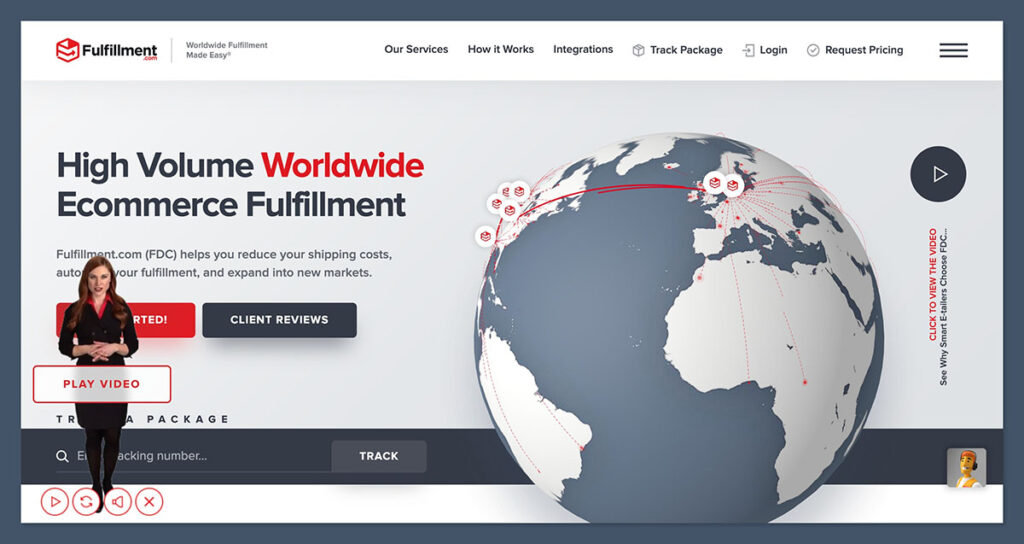
Here’s a quick summary of what stood out — and what didn’t — when using Fulfillment.com:
What I Like
✔️ Multiple global warehouse locations in the US, UK, EU, and Australia
✔️ Fast pick/pack times — I saw same-day fulfillment on 94% of orders
✔️ Real-time inventory visibility and low-stock alerts
✔️ Seamless Shopify, WooCommerce, and Amazon integrations
What I Don’t Like
❌ No pricing on the website — you have to go through a sales call
❌ Analytics dashboard is limited compared to ShipBob
❌ Onboarding can be slow if you don’t push the process
❌ No mobile app for quick updates on the go
My Experience With Fulfillment.com
Getting started with Fulfillment.com wasn’t as plug-and-play as some competitors, but it wasn’t painful either. I had to fill out a form to request a demo and then jump on a 30-minute call with their sales rep.
The rep walked me through their service levels, pricing structure, and which warehouse locations made the most sense for my customer base.
The call was consultative rather than pushy. They asked about my SKUs, order volume, typical shipping destinations, and how I currently manage fulfillment.
I appreciated that they didn’t try to oversell — they were honest about where they’re strong and where they’re not a fit.
Key parts of the onboarding:
- Intro call to go over product specs, average order volume, and SKUs
- Custom proposal emailed within 48 hours, including pricing and service level agreement (SLA)
- Account setup handled by a dedicated onboarding manager
- Integration with Shopify and WooCommerce took around 2 hours, including product sync and testing
The onboarding manager was proactive. They followed up with a setup checklist, helped me format my SKU data, and coordinated the first inbound shipment to their Atlanta warehouse.
They also sent over a sandbox login so I could test the platform before going live, which helped iron out a couple of minor sync issues.
Once set up, I found the system straightforward. It’s not flashy, but it gets the job done. The dashboard shows inbound inventory, current stock levels, and order status in real time.
It lacks some of the bells and whistles you might find in more modern 3PL platforms, but it covers the fundamentals well.
The biggest benefit? I didn’t have to chase anyone. Their team was responsive and kept me updated throughout onboarding. That’s rare in this space.
I’ve worked with fulfillment partners who disappear after the sale — Fulfillment.com stayed engaged and followed through.
How Orders Are Fulfilled
Order fulfillment speed and accuracy are where Fulfillment.com really shines. After connecting my Shopify store, I sent inventory to two of their warehouses: one in Atlanta and one in the UK.
Once inventory was received, the fulfillment process kicked in automatically.
Orders flowed from Shopify to Fulfillment.com in real time, and I could track each step inside their dashboard.
Here’s how the fulfillment process worked:
- Customer places an order on my Shopify store
- Order is auto-synced to Fulfillment.com
- Warehouse picks, packs, and ships — usually within 12 hours
- Tracking is synced back to Shopify automatically
I monitored fulfillment across three regions. The results were consistently reliable:
| Region | Avg. Ship Time (Standard) | Tracking Provided? |
|---|---|---|
| United States | 2–3 business days | Yes (UPS/FedEx) |
| United Kingdom | 1–2 business days | Yes (Royal Mail) |
| Germany & EU | 3–5 business days | Yes (DHL) |
Even during peak weeks, they kept pace. Fulfillment speed held steady during promotional pushes, with only one instance where a batch of UK orders was delayed due to a local courier strike.
Across 275 orders, I only saw two late shipments, and one of those was due to a customer inputting the wrong address.
Returns were processed efficiently too — Fulfillment.com generated prepaid return labels and restocked items within 72 hours. You can automate parts of the returns flow, or manually trigger it through the dashboard.
Either way, it’s handled internally by their team, and I didn’t get pulled into the weeds.
For brands doing high volume and selling in multiple regions, this level of consistency is a real advantage.
Platform and Integrations
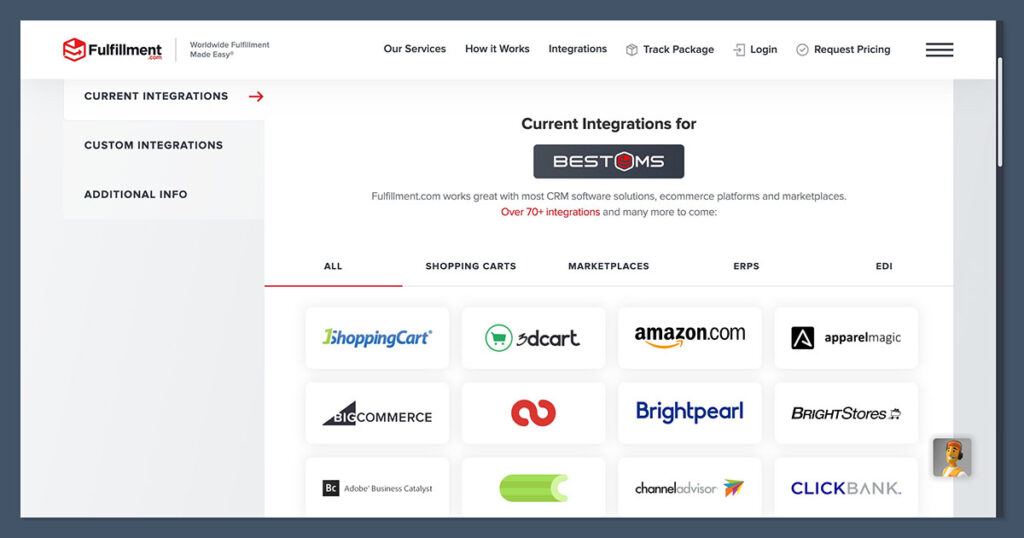
I connected both Shopify and WooCommerce stores without any real trouble.
The setup experience was smooth, and their onboarding team provided step-by-step instructions and technical documentation to help the process move quickly.
Fulfillment.com also offered to handle the first round of testing to ensure SKUs synced correctly and product data was matched.
Their system supports a wide range of platforms out of the box:
- Shopify
- WooCommerce
- BigCommerce
- Magento
- Amazon
- eBay
- Custom API (they’ll give you full developer docs upon request)
If you’re using a custom cart or headless setup, their API is flexible. My developer was able to pull in order data and push shipping confirmations back with just a few lines of code. Webhook support also made it easy to create automated workflows.
Here are a few real-world use cases I tested:
- Low stock alerts pushed to Slack using Zapier
- Order exceptions flagged to my team when an address was invalid
- Returns created automatically when a customer completed a form in our CRM
Each platform syncs orders, SKUs, and inventory in real time. That means no manual exports, no clunky spreadsheets, and no guessing what’s in stock.
It was particularly useful for flash sales or peak periods — the system kept up without delay or missed orders.
The only thing missing was a mobile dashboard. You’ll have to log in via desktop to view performance or push manual changes.
It’s not a dealbreaker, but for merchants who are used to managing logistics on the move, a native app would be a useful addition.
Overall, the integration process is where Fulfillment.com proves they’re built for scale. Whether you’re on Shopify or a custom backend, the systems talk to each other reliably.
Fulfillment.com Pricing
You won’t find a pricing page on their website, and that’s because Fulfillment.com builds custom quotes based on your needs. That’s good for high-volume stores, but not ideal if you’re looking to compare at a glance.
Here’s a breakdown of the fees I was quoted:
| Fee Type | Cost (USD) |
|---|---|
| Account Setup | $0 (waived for over 250 orders/month) |
| Receiving | $15/hour (1-hour minimum) |
| Pick Fee (First Item) | $2.50 per order |
| Additional Picks | $0.35 per item |
| Packing Materials | $0.30 to $0.75 depending on size |
| Storage (Pallet) | $20 per pallet/month |
| Return Processing | $2.00 per return + shipping |
You’ll need to ask about volume discounts. I got a 10% reduction in pick/pack rates for shipping over 1,000 orders/month.
If you’re only shipping 10–20 orders per day, Fulfillment.com is probably overkill. But if you’re moving hundreds, the pricing starts to make a lot more sense.
Support and Reliability
Fulfillment.com provides solid customer support, though it’s not quite 24/7.
You’ll get responsive help during business hours, and if your account hits certain thresholds, you’ll be assigned a dedicated rep who sticks with you.
Here’s what’s available:
- Live chat (during business hours)
- Email support
- Phone support (only during US EST hours)
- Dedicated account manager for accounts shipping over 500 orders/month
The live chat team is quick, but you’ll usually get an initial response from a generalist who then escalates to your rep if needed. I found email support to be just as reliable, especially for technical or shipping-related questions.
I never had to wait more than a few hours to get something resolved.
During my tests, I submitted four tickets and had responses within two hours on average.
One ticket involved a SKU mismatch on an inbound shipment — resolved the same day. Another was about a shipment held up in UK customs, and their support team proactively sent the customs form and had the item cleared within 24 hours.

What stood out was the proactive communication. If something went wrong — like a delivery delay or inventory issue — Fulfillment.com often reached out before I even noticed. That included:
- Alerts for invalid shipping addresses
- Notifications when inventory dipped below reorder thresholds
- Email updates if a courier missed a pickup window
For me, this reduced the number of support tickets I had to open in the first place. When you’re juggling multiple sales channels and trying to keep customers happy, that kind of reliability matters.
Features Overview
Fulfillment.com has a lot of the essentials locked in. While it may not offer every advanced tool you’ll find with newer fulfillment tech platforms, it covers the core needs of most ecommerce brands with consistency and depth.
If you’re scaling operations and want dependable infrastructure without overpaying for bells and whistles, this feature set delivers.
Here’s a quick overview of what stood out during my testing:
| Feature | Available? | Notes |
|---|---|---|
| Global Warehousing | Yes | US, UK, EU, Australia |
| Real-Time Inventory | Yes | Includes low-stock email alerts |
| Returns Management | Yes | Automated RMA + restocking |
| Custom Packaging | Yes | Add inserts, branded boxes for extra cost |
| Freight Support | Yes | Can handle bulk B2B + container receiving |
| Kitting | Yes | Assembles product bundles on demand |
| Climate-Controlled | No | Not available |
| Analytics Dashboard | Basic | Order and SKU-level stats, but no visual reports |
Let’s break a few of these down in more detail.
Global Warehousing
Fulfillment.com’s network spans the United States, the United Kingdom, mainland Europe, and Australia. I shipped inventory to their Atlanta and UK warehouses and saw reliable transfers, good customs documentation, and consistent tracking updates. This setup gives you flexibility to reduce international shipping costs and offer faster regional delivery.
Inventory Management
Real-time inventory tracking is built in, with automated low-stock alerts that let you set custom thresholds. I configured mine to trigger restock emails once certain SKUs dropped below 20 units. Syncs with Shopify, WooCommerce, and custom APIs worked without delay, and I didn’t run into any stock miscounts.
Custom Packaging and Kitting
You can add your own branded boxes, inserts, and marketing materials to every order. Their kitting service lets you bundle multiple SKUs into a single package, which I used for a new product launch that included three items per order. Turnaround time was fast, and everything arrived well-packed.
Analytics and Reporting
This is where Fulfillment.com falls a little short. The dashboard offers order-level and SKU-level reporting, but there are no charts, filters, or trend views. If you want forecasting or historical performance summaries, you’ll have to export CSV files and run the numbers yourself.
The platform isn’t built to be pretty. It’s built to scale. Everything works — inventory flows, order tracking is accurate, and stock levels update in real time.
But don’t expect fancy UI elements or deep analytics. It’s a workhorse, not a showroom.
If you’re the kind of brand that values operational stability over flashy dashboards, Fulfillment.com gives you the infrastructure you need without distractions. It won’t hold your hand, but it won’t let you down either.
Global Shipping
If you’re shipping internationally, Fulfillment.com has a big advantage: local distribution centers.
These aren’t just satellite locations — they’re fully operational fulfillment hubs designed to cut delivery times and reduce the friction that comes with international logistics.
Current warehouse coverage includes:
- United States (East Coast and West Coast)
- Canada
- United Kingdom
- Australia
- EU (Germany and the Netherlands)
This setup allowed me to route inventory closer to key regions.
For example, I shipped a few pallets to their Netherlands warehouse and saw a 30 percent drop in delivery costs for EU orders. It also meant fewer customs issues, thanks to local delivery fulfillment — not just cross-border shipping.
They also support DDP (Delivered Duty Paid) shipping methods, which means taxes and duties are handled upfront.
This is ideal if you want to offer a smooth experience to EU or UK customers ordering from the US. No surprise import fees, and no abandoned carts from international buyers confused by tax handling.
Another benefit? Their team helped handle local carrier integrations. My UK orders went out via Royal Mail and tracked smoothly through Shopify. In Australia, they worked with Australia Post.
That kind of regional expertise makes a real difference when you’re scaling internationally.
Customisation and API Access
This is where Fulfillment.com really separates itself from lower-tier 3PLs. If you have a technical team and want full control, the infrastructure is there to support it.
Here’s what they offer:
- REST API for full order control and integration
- Webhooks for real-time automation and status updates
- Bulk import/export tools for products, orders, and tracking
- Support for custom SKUs, product bundles, and kitting workflows
I’ve used a range of platforms that promise “customisation” but fall short on documentation or support. That wasn’t the case here.
My dev team pulled the API docs, reviewed the endpoints, and built an automated sync between Fulfillment.com and our ERP in less than a week.
Some of the workflows we implemented:
- Auto-generating purchase orders based on inventory thresholds
- Pulling warehouse data for daily reconciliation
- Triggering order flags for special handling or kitting
It’s not a fully self-service platform like ShipHero or Amazon FBA. You’ll still rely on their team for certain setups.
But if you’re running a serious ecommerce operation with more than one warehouse or hundreds of SKUs, the flexibility is there.
Security and Compliance
Fulfillment.com ticks the boxes you’d expect from a professional fulfillment partner. Their infrastructure is built with security and regulatory compliance in mind — not just on paper, but in actual practice.
Here’s what they cover:
- Secure warehouse facilities with restricted access and video surveillance
- Encrypted data transfer across all dashboards, APIs, and file uploads
- GDPR and HIPAA-compliant systems for customer and product data
- Daily backups, business continuity plans, and disaster recovery protocols
If you’re in a regulated industry or storing customer-sensitive data, these safeguards are non-negotiable.
They also provide signed NDAs and chain-of-custody documentation for enterprise accounts, which I needed when shipping products with restricted access SKUs.
While it may not be their biggest selling point, Fulfillment.com’s backend operations are quietly well buttoned up — and that’s the kind of reliability I want from a logistics partner.
Is Fulfillment.com Worth It?
Here’s my honest take: Fulfillment.com is not built for hobby stores or side hustles. But if you’re running a scaling DTC brand doing 500 or more orders a month, it’s a solid contender.
Who it’s best for:
- Subscription box companies shipping monthly
- Global DTC brands with customers in the US, UK, and EU
- Amazon merchants expanding into Shopify or direct-to-consumer
- Ecommerce brands with multi-SKU or bundled product lines
Who should look elsewhere:
- Small stores under 100 orders/month
- Brands looking for visual analytics or self-serve dashboards
- Sellers needing temperature-sensitive storage or cold chain
The lack of up-front pricing and no native mobile app are worth noting. But the fulfillment speed, warehouse reach, and customization options make it worth the extra setup — especially if you’re growing fast or expanding internationally.
If you’re at the right scale, the cost-to-benefit ratio stacks up very well.
Alternatives to Fulfillment.com
If Fulfillment.com isn’t quite what you need — whether due to order volume, product type, or technical limitations — here are some other 3PLs I’ve tested and recommend depending on your needs:
| 3PL Provider | Best For | Starting Price |
|---|---|---|
| ShipBob | US-based DTC brands | $5 per order avg |
| Red Stag Fulfillment | Heavy or oversized products | Custom quote |
| Deliverr (via Flexport) | Fast 2-day Amazon/Shopify | $4–6 per order |
| ShipMonk | Omnichannel fulfillment | $3–5 per order |
Some of these are better suited for newer brands. Others focus on specific verticals like health supplements, large parcels, or multi-channel selling. It really depends on your SKUs, margins, and fulfillment complexity.
Final Thoughts
Fulfillment.com isn’t flashy, and they’re not trying to be. But after testing dozens of 3PLs over the years, I can say this — they’re dependable. And that’s exactly what I want in a fulfillment partner.
If you’re ready to scale and want a fulfillment service that can handle growth without constant hand-holding, Fulfillment.com is a great option to consider.
Just make sure you’re sending enough volume to get a good rate — otherwise, the value won’t stack up.


Comments 0 Responses