

Shopify POS and Vend POS (now Lightspeed Retail) are two major players when it comes to retail point-of-sale systems. But which one is right for your store?
To help you decide, I’ve compared both platforms in detail — from pricing and sales features to hardware, inventory tools, and integrations.
If you’re already using Shopify to sell online, then Shopify POS might seem like the obvious choice.
But if you’re running a more traditional multi-location retail business, Vend POS could be a better fit.
Here’s what I found after digging into both platforms, and what I’d recommend depending on your setup.
Shopify POS vs Vend POS: Quick Verdict
Shopify POS – Best for ecommerce-first retailers adding physical stores
Vend POS (Lightspeed Retail) – Best for complex, multi-location retail businesses
Both systems have their strengths, but they suit very different kinds of sellers.
If you’re starting with an online store and moving into physical sales, Shopify POS offers a seamless transition. If your business is primarily in-person, and you need robust inventory and staff management, Vend POS is more powerful.
Quick Comparison: Shopify POS vs Vend POS
Use this table for a high-level view of how the two systems compare:
| Feature | Shopify POS | Vend POS (Lightspeed X-Series) |
|---|---|---|
| Best For | Shopify ecommerce users | Brick-and-mortar retail with multiple stores |
| Starting Price | $89/month/location (Pro) | $99/month/location |
| Ecommerce Integration | Native Shopify | Requires integration |
| Inventory Management | Basic to intermediate | Advanced |
| Hardware | Shopify gear required | Flexible hardware options |
| Offline Mode | Yes | Yes |
| Loyalty Program | App-based | Built-in |
| Support | 24/7 chat | Business hours, priority support on higher plans |
| Ease of Use | Extremely simple | More robust, slightly steeper learning curve |
Best for Pricing: Shopify POS
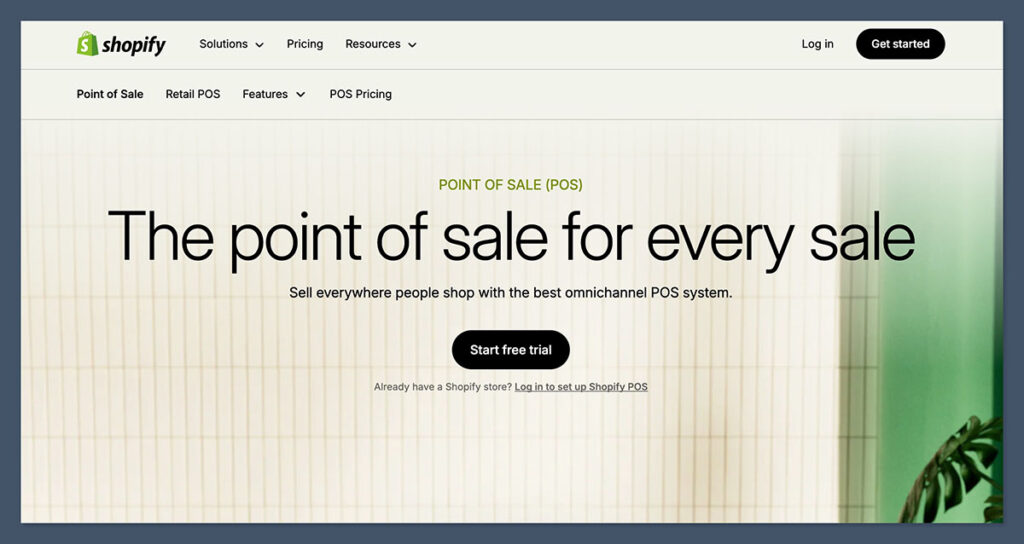
If you’re looking for a simpler and slightly more affordable setup, Shopify POS offers more value — especially if you’re already paying for a Shopify ecommerce plan.
Shopify POS Pricing:
- POS Lite: Included with all Shopify plans
- POS Pro: $89/month per location
- Shopify ecommerce plans: $39 (Basic), $105 (Shopify), $399 (Advanced)
That means if you’re already paying for Shopify, you just need to add the POS Pro fee if you want advanced retail features like staff permissions, custom printed receipts, and inventory adjustments.
Vend POS Pricing (now Lightspeed Retail):
- Core plan: $99/month per location
- Advanced plans: $149/month and up
- Ecommerce integration: Third-party Shopify sync costs extra
Vend doesn’t include ecommerce by default, which adds cost and complexity for hybrid sellers.
The Winner: Shopify POS
Shopify POS is a more affordable, all-in-one option for merchants already using Shopify.
Best for In-Store Sales Features: Vend POS
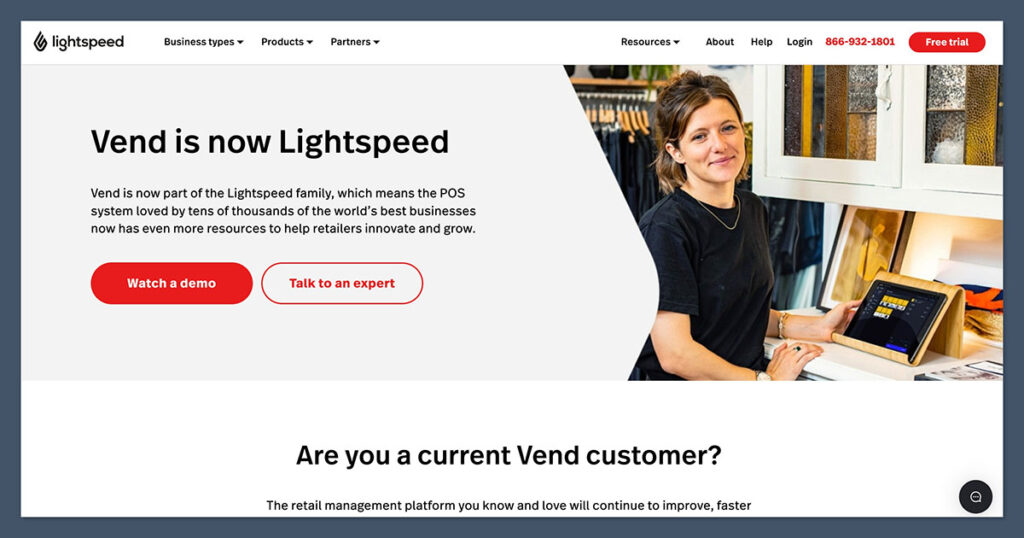
Both POS systems are built to handle retail transactions, but Vend POS is designed for scale and complexity, especially for stores managing high inventory volumes or multiple locations.
Shopify POS Pro Features:
- Mobile checkout
- Unified customer profiles
- In-store pickup and shipping
- Custom product tiles and smart grids
- Staff permissions and roles
- Local inventory sync with online store
Great for retail pop-ups, single-store operations, and brands expanding offline.
Vend POS Features:
- Centralized product catalog
- Multi-location stock control
- Granular user roles and permissions
- Custom receipts and workflows
- Built-in loyalty program
- Powerful sales and staff reporting
Vend gives you deep control over what happens at each location, which is critical for larger stores.
The Winner: Vend POS
Vend is better equipped for managing complex retail operations across several locations.
Best for Inventory Management: Vend POS
If you have a lot of products, vendors, or need more granular control over your stock levels, Vend (Lightspeed) offers a more complete inventory toolkit.
What Shopify POS Offers:
- Simple product tracking
- Inventory synced with your online store
- Stock adjustments from POS Pro
- Inventory reports via Shopify backend
- Low stock alerts
Shopify keeps things easy and integrates smoothly with ecommerce inventory, but lacks more detailed retail stock features.
What Vend POS Offers:
- Product variants, modifiers, and bundles
- Reorder points and stock ordering
- Vendor management and supplier orders
- Multi-store inventory transfers
- Stock movement logs
You can also generate detailed performance reports on how each SKU is selling, which is key if you manage hundreds or thousands of items.
The Winner: Vend POS
Vend gives retailers far more control over inventory management across multiple stores.
Best for Ecommerce Integration: Shopify POS
This one’s easy: Shopify POS is built into your online store. Everything just works. That’s the major selling point.
When I tested the system, my products, inventory, customer profiles, and orders were automatically synced between my online and retail sales channels. There was no setup needed.
Shopify Ecommerce Features:
- Unified analytics dashboard
- Shared customer profiles and marketing
- In-store pickup for online orders
- Online orders processed in-store
- Custom sales channels via Shopify apps
Vend POS Ecommerce Integration:
Vend doesn’t come with ecommerce out of the box.
To connect with Shopify, BigCommerce, or WooCommerce, you’ll need a third-party app — which often costs extra and requires manual syncing.
The Winner: Shopify POS
Shopify wins for businesses selling both online and in-store. Integration is seamless.

Best for Hardware Flexibility: Vend POS
Shopify POS only works with Shopify-approved hardware — which looks great, but costs more and limits what you can use.
Shopify POS Hardware:
- Tap & Chip Card Reader: $49
- Complete Kit: $219+
- Hardware bundles include iPad stand, printer, scanner, and cash drawer
- Hardware warranty and support through Shopify
You’ll need Shopify’s hardware to avoid compatibility issues, especially with receipt printers and scanners.
Vend POS Hardware:
- Compatible with a wide range of third-party gear
- Bring your own iPads, scanners, printers
- Works with hardware from Star, Epson, Socket Mobile, Heckler, and more
- Easier to integrate with existing setups
If you’re switching from another POS system and already own the hardware, Vend helps you save money and time.
The Winner: Vend POS
Vend offers better compatibility, flexibility, and potential savings on hardware costs.
Best for Reporting and Analytics: Vend POS
Shopify does a good job of summarizing sales and customer data, especially if you already sell online.
But Vend offers deeper analytics for in-store performance, staff tracking, and inventory turnover.
Shopify POS Reporting:
- Staff sales performance
- Product-level sales
- Sales by location
- Basic profit margins
- Online and offline combined
You’ll need Shopify POS Pro and a higher ecommerce plan to unlock detailed reports.
Vend POS Reporting:
- Custom reports builder
- Inventory turnover reports
- Profitability by product
- Customer segmentation
- Staff performance by hour or shift
If data is a big part of how you manage your store, Vend provides better tools for understanding what’s working — and what’s not.
The Winner: Vend POS
Vend offers more advanced reporting for retail businesses with growing teams and inventories.
Best for Ease of Use: Shopify POS
Shopify wins on simplicity. From sign-up to selling, the whole process is fast and beginner-friendly.
During testing, I was able to:
- Set up my Shopify store in under 15 minutes
- Add POS hardware and process a payment within an hour
- Sync inventory across channels with no extra apps
Vend has a clean interface too, but setup takes more time.
The dashboard includes more configuration options, more menus, and more room for user error — especially if you’re new to POS systems.
The Winner: Shopify POS
Shopify’s POS system is much easier for new users and small teams.
Best for Support and Training: Tie
Both platforms offer decent support, but access depends on your plan level.
Shopify Support:
- 24/7 chat support
- Help center with videos and tutorials
- Priority support on Plus plans
- Shopify Community forums
Shopify’s support is better suited for fast-growing businesses or users who want hands-on help at any time. The platform’s help center is well-organized and searchable, making it easy to find answers without needing to contact support directly.
Vend (Lightspeed) Support:
- Live chat during business hours
- Phone support for paid plans
- Onboarding and setup assistance
- Detailed guides for retail workflows
Vend’s support system is built more around structured onboarding. If you’re running a more complex retail operation with lots of staff or hardware, Vend’s guided setup process can be extremely helpful.
The Winner: Tie
Shopify is quicker to respond for most users. Vend provides stronger onboarding for complex setups.
Shopify POS vs Vend POS: Final Verdict
Use Shopify POS if:
- You already sell online with Shopify
- You want an all-in-one system for ecommerce and in-person sales
- You’re running a small retail team
- You prefer ease of use over advanced features
Shopify POS is designed with ecommerce-first businesses in mind. The whole system feels like an extension of your online store, rather than a separate tool.
That makes it ideal for brands that prioritize consistency across channels, or want to unify their operations under one login.
Shopify also rolls out frequent updates and new features, which means your tools improve over time without needing extra setup.
Use Vend POS (Lightspeed) if:
- You manage large inventories or multiple stores
- Your business is retail-first, not ecommerce-first
- You want detailed inventory and staff reporting
- You already own POS hardware or need flexibility
Vend POS is much more focused on advanced retail needs.
It’s ideal for growing chains, boutique retailers, or specialty shops that rely heavily on in-person operations and complex inventory workflows.
While it takes more time to configure, the customization options are worth it if you’re running a high-volume or multi-location business.
Conclusion
Shopify POS vs Vend POS comes down to one thing: what kind of business are you running?
If ecommerce is your main sales channel and you want a simple, integrated system for occasional in-store sales, Shopify POS is hands down the best choice.
But if your business revolves around physical retail — and you need serious tools for inventory, analytics, and staff management — then Vend POS (now Lightspeed Retail) is more powerful.
Either way, both platforms offer free trials. So the best way to know for sure? Try both and see what fits your workflow.



Comments 0 Responses