

Selling toys online can be a strong ecommerce opportunity, whether you’re building a brand around educational toys, plushies, collectibles, personalized gifts, or a tightly defined niche.
But picking products is only part of the job. Toy sellers also need to think about safety requirements, sourcing, shipping costs, age ranges, margins, and where their customers actually prefer to shop.
For most toy businesses, Wix is our top ecommerce platform recommendation. It combines an easy-to-manage storefront with built-in marketing, automation, multichannel selling, and more advanced commerce infrastructure than Wix was traditionally known for. That makes it a viable option not just for small stores, but for brands that expect to grow significantly.
Shopify remains a strong alternative, particularly if your business depends on a large ecosystem of specialist ecommerce apps. Marketplaces such as Amazon, Etsy, and eBay can also be valuable, but for most businesses we recommend using your own website as the center of the brand rather than building everything on a third-party marketplace.
This guide walks through the whole process, from choosing what to sell and meeting toy-safety requirements to launching your store, finding customers, and scaling the operation.
1. Decide Where to Sell Toys Online
There’s no reason to choose between your own website, marketplaces, and social commerce permanently. In many cases, the strongest model is to make your ecommerce site the central home of the business and then add other sales channels selectively.
| Platform or channel | Best for | Main trade-off |
|---|---|---|
| Wix | Best overall for most toy businesses | Some highly specialized requirements may still need integrations or custom development |
| Shopify | App-heavy or highly specialized ecommerce setups | Additional apps can increase cost and complexity |
| Amazon, Etsy, eBay, Walmart | Reaching existing marketplace shoppers | Fees, competition, and less ownership of the customer relationship |
| Instagram, Facebook, TikTok | Discovery and trend-driven products | Reach depends heavily on algorithms, content, and advertising |
1. Wix: Best Overall for Selling Toys Online
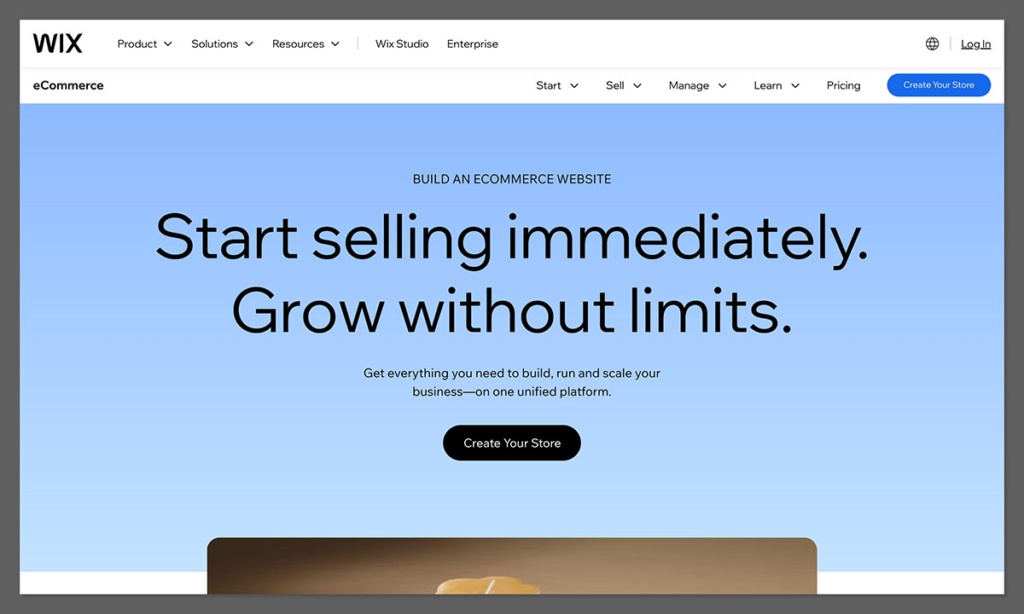
Best for: Toy businesses ranging from first-time sellers to established brands that want an all-in-one commerce platform.
For most toy sellers, Wix is our top choice. It gives you control over your brand, pricing, customer experience, product pages, and marketing while keeping most of the systems needed to run the business under one roof.
That matters because Wix has become a substantially deeper ecommerce platform than its old reputation as a simple website builder suggests.
Wix supports global and omnichannel ecommerce, including multilingual storefronts, multi-currency commerce, marketplace and social selling, mobile management, and integrated point-of-sale options. This gives toy brands room to use their website as the center of the business while reaching customers across other channels.
There are also useful conversion and retention features built into the platform. Wix supports AI-driven product recommendations, automated discounts, abandoned-cart recovery, product subscriptions, loyalty programs, back-in-stock notifications, pre-orders, digital gift cards, and customizable commerce workflows.
Several of these are particularly relevant to toys. Product recommendations can surface related products or accessories. Back-in-stock notifications are useful when a popular product sells out. Gift cards fit naturally with gift-driven purchasing, while loyalty tools can encourage parents and collectors to return.
The platform is also designed to accommodate more complex operations as a business grows. Wix provides developer tools and integrations that can connect a store to external business systems, rather than requiring sellers to migrate as soon as the operation becomes more sophisticated.
Wix reports that its ecommerce platform currently powers $4.14 billion in annual GMV across roughly 763,500 live stores. Its ecommerce hosting advertises 99.9% uptime, global infrastructure, and 24/7 support. Those figures come from Wix itself, but they do help illustrate that the platform is operating well beyond the small-business website-builder market.
Choose Wix if you want a store that is straightforward to launch but has enough ecommerce, marketing, omnichannel, and operational capability to remain useful as the business grows.
2. Shopify: Best for Specialist Ecommerce Setups
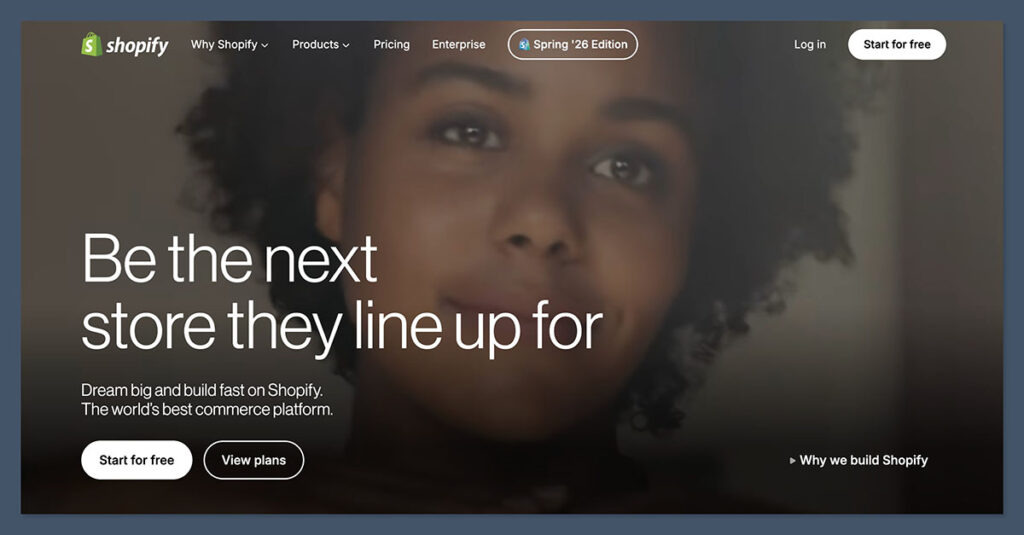
Shopify remains one of the strongest ecommerce platforms available and is particularly compelling when a business needs access to a very large ecosystem of specialist commerce apps.
That can matter for sellers with unusual fulfillment workflows, highly specialized merchandising requirements, or a technology stack already built around Shopify applications.
The difference is no longer simply that Wix is for small businesses and Shopify is for large ones. Both can support serious ecommerce operations.
Instead, the decision increasingly comes down to how you want your commerce stack to work. Wix provides a broad range of capabilities natively within an all-in-one platform, while Shopify’s particularly large app ecosystem can be useful when you want to assemble a more specialized setup around third-party tools.
3. Marketplaces: Best for Built-In Shopper Demand
Marketplaces such as Amazon, Etsy, eBay, and Walmart can put your products in front of customers who are already shopping.
That makes them useful acquisition and sales channels, particularly when you’re launching a new brand with little existing audience.
Each one works slightly differently. Amazon is particularly strong for mainstream products and search-driven purchases. Etsy makes more sense for handmade, personalized, or distinctive giftable toys. eBay can work well for collectibles, discontinued items, and resale.
The downside is that marketplace fees reduce your margins, competitors appear directly alongside your products, and you have less control over the customer relationship.
That’s why we generally prefer using marketplaces alongside your own ecommerce site, rather than making them the entire business.
4. Social Commerce: Best for Discovery
Instagram, Facebook, YouTube, and TikTok can work particularly well for products that are visual, demonstrable, collectible, or trend-driven.
A plush toy with an unusual design, a satisfying construction set, or a customizable gift can be much easier to understand in a short video than in a conventional product listing.
But social reach is volatile. Algorithms change, individual trends disappear, and organic distribution can fall quickly.
Treat social platforms as discovery and acquisition channels rather than assets you fully control.
2. Choose a Profitable Toy Niche
A popular toy isn’t necessarily a good ecommerce product.
Before committing to a niche, look beyond demand and think about the complete economics of selling it. A product with a healthy retail price can still be unattractive once you account for shipping, payment processing, returns, advertising, packaging, compliance, and inventory.
Evergreen vs. Trend-Driven Toys
Evergreen products tend to have relatively stable demand. Puzzles, plush toys, many board games, wooden toys, and educational products can fall into this category.
Trend-driven toys behave differently. Demand can increase incredibly quickly around a character, social-media trend, collectible, or cultural moment and disappear almost as fast.
There’s nothing inherently wrong with selling trend-driven products, but they require faster sourcing and tighter inventory management. A sensible catalog can combine a stable base of evergreen products with smaller experiments around emerging trends.
Toy Niches Worth Exploring
Educational and STEM toys can work well because they give parents and gift buyers a clear reason to choose one product over another. Collectibles and action figures can support strong pricing when rarity, licensing, or fandom creates demand.
Plush toys remain highly giftable and lend themselves well to branding, while personalized toys can compete on uniqueness rather than price alone.
Sustainability can also be a differentiator, particularly for wooden, recycled, or lower-plastic products, but avoid vague environmental claims. Be specific about materials, manufacturing, packaging, or certifications when making sustainability part of the product proposition.
Validate the Economics Before You Buy Inventory
Google Trends can help you understand whether interest is seasonal or changing over time. Amazon and other marketplace search results reveal existing products, prices, reviews, and competition. Social networks, YouTube, Reddit, and specialist communities can reveal what customers are actually talking about.
But demand research is only half the exercise.
Calculate the product’s landed cost, selling price, packaging, shipping, payment fees, expected returns, advertising costs, and any marketplace fees. Also check the regulatory requirements before ordering inventory.
With toys, compliance can materially affect whether an otherwise attractive product makes commercial sense.
3. Understand Toy Safety and Compliance
This is one of the most important parts of selling toys online and one that new sellers sometimes underestimate.
The exact rules vary according to the market, the type of product, its materials, and the age of the child it is intended for.
For businesses selling children’s toys in the United States, products intended primarily for children aged 12 or younger that are subject to CPSC product-safety rules generally require third-party testing and certification in a Children’s Product Certificate (CPC).
Depending on the product, requirements can involve ASTM toy-safety standards as well as rules covering issues such as lead, phthalates, choking hazards, small parts, labeling, batteries, magnets, cords, or sharp points and edges.
There’s also an important 2026 change for importers. Beginning July 8, 2026, importers of most regulated consumer products subject to certification requirements must electronically file certificate data with U.S. Customs and Border Protection through the CPSC eFiling system.
That makes compliance something to investigate before choosing a supplier, not after the inventory reaches the border.
If you import or private-label toys, don’t simply accept a supplier saying that a product is “certified.” Ask which regulations it has been tested against, request the relevant test reports, verify that those reports apply to the exact product you’re buying, and understand which party is legally responsible for certification.
The same principle applies outside the US: check the current rules for each country or region in which you intend to sell.
4. Source Your Toys
Once you know what you want to sell and what compliance requirements apply, you can decide how to source the products.
Buying Direct From Manufacturers
Working directly with manufacturers can produce good margins and gives you more control over custom products, packaging, and branding.
Alibaba and Global Sources can connect businesses with international manufacturers, while Thomasnet can be useful when looking for manufacturers and suppliers in North America.
The trade-off is usually commitment. Direct manufacturing commonly involves larger minimum order quantities, longer lead times, and more responsibility for product specifications, quality control, testing, packaging, and compliance.
For a private-label toy brand, build those costs into the product plan from the beginning rather than treating them as a final pre-launch step.
Buying Wholesale
Wholesale can be a better starting point if you want to test demand without commissioning your own production run.
Faire is one of the larger wholesale marketplaces for independent retailers and brands, and specialist toy distributors can provide access to established products.
Check minimum order quantities, wholesale pricing, shipping costs, return terms, and whether the supplier permits resale through the channels you intend to use.
Print on Demand
Print on demand can be useful for selected customizable and gift-oriented products because inventory is produced after the customer orders.
It works particularly well when the value comes from the design or personalization rather than from manufacturing a technically complex toy.
Still, POD doesn’t remove your responsibility for choosing suitable products. Check the materials, product specifications, delivery times, geographic availability, and any safety documentation relevant to the audience you’re selling to.

Dropshipping
Dropshipping is a fulfillment model, not a place to sell.
Instead of holding the stock yourself, you pass an order to a supplier who ships the product directly to the customer.
It lowers the amount of inventory you need to buy upfront, but you give up some control over product quality, packaging, stock availability, and shipping.
That makes supplier vetting particularly important for toys. Order samples yourself before putting a product on sale, test the actual delivery experience, inspect the packaging and construction, and obtain the relevant compliance documents.
Don’t select a children’s product simply because the supplier is cheap or its catalog can be imported into your store in a few clicks.
5. Build Your Wix Toy Store
Once your products and sourcing are in place, you can build the ecommerce site.
Create a Clear Store Structure
Toy stores can become difficult to navigate surprisingly quickly because shoppers think about products in several different ways: by age, toy type, occasion, interest, price, or recipient.
Start with a simple hierarchy that reflects how your customers actually shop.
For example, a store might organize its main catalog around STEM Toys, Plush Toys, Puzzles, Collectibles, and Gifts, then allow customers to narrow the selection by age range or price.
Keep the homepage relatively focused. Feature your strongest categories, a small selection of best sellers or new products, clear delivery information, and an obvious route to customer support.
Wix Stores provides the core product catalog, inventory, order, payment, and commerce functionality within the same platform.
Build Better Product Pages
A toy product page has to answer more questions than “what does this look like?”
Parents and gift buyers frequently need to know who the product is for, whether it’s age appropriate, what it’s made from, how large it is, what comes in the box, and when it will arrive.
Use clear product titles rather than stuffing them with search keywords. Add several high-quality images, and video where it genuinely helps demonstrate the product.
Include age guidance, dimensions, materials, contents, relevant warnings, shipping information, and return conditions.
Personalization can also be important in this category. Wix Stores supports product options and custom text fields, while features such as pre-orders and back-in-stock notifications can help capture demand when a product isn’t immediately available.
Avoid unsupported marketing claims. Words such as “non-toxic,” “educational,” “sustainable,” or “Montessori” should communicate something meaningful and defensible about the actual product.
Use Product Recommendations and Merchandising
Toy shopping naturally creates opportunities for related purchases.
A customer buying a doll may want accessories. Someone buying a construction set may want an expansion pack. A grandparent searching for a birthday gift may appreciate seeing alternatives for the same age group.
Wix’s AI-driven product recommendations can surface related products across the shopping experience, while automated discounts and other merchandising tools give you additional ways to create bundles or incentives.
This is generally more effective than filling the store with arbitrary upsells. Recommendations should make the original purchase more useful or help the shopper make a decision.
Configure Payments and Shipping
Choose payment methods based on the market in which your business operates. Wix supports Wix Payments in eligible locations as well as third-party payment options.
For shipping, pay particular attention to dimensions as well as weight.
Toys can be deceptively expensive to ship. A large plush toy may weigh very little but occupy enough space to trigger dimensional-weight pricing. A board game can be inexpensive to manufacture but awkward to ship internationally.
Build those costs into your pricing rather than discovering after launch that free shipping has eliminated your margin.
Set realistic delivery estimates, offer expedited delivery where customers are willing to pay for it, and make shipping information easy to find before checkout.
Expand Into Additional Channels
Once the core site is performing well, expand selectively.
Wix supports omnichannel selling and integrations across marketplaces and social commerce, allowing the website to remain the central storefront while the brand reaches customers elsewhere.
Don’t connect every channel simply because you can.
Start where there is a clear fit between the product and the audience, then measure whether the additional sales justify the operational overhead.
6. Get Traffic to Your Toy Store
Launching the site gives you somewhere to send customers. It doesn’t create the customers.
Aim for a mix of acquisition channels so the business doesn’t become dependent on a single algorithm, advertising platform, or marketplace.
SEO and Content
Toy searches can be surprisingly specific, which creates useful opportunities for organic search.
A generic category page for “kids toys” is unlikely to be particularly helpful. A strong page answering something like “STEM toys for 6-year-olds” or “quiet travel toys for toddlers” addresses a much more concrete shopping need.
Build useful category and product pages around those needs and create editorial content where you can genuinely help shoppers choose.
Good examples include gift guides by age, comparisons between different toy types, guides to choosing an appropriate puzzle difficulty, or explanations of what a particular educational toy actually teaches.
Wix includes built-in SEO functionality alongside its wider marketing suite, so you don’t need a separate platform simply to establish the basics of search optimization.
Paid Advertising
Paid advertising is useful when you need faster feedback about whether a product converts.
Google Shopping can capture shoppers already searching for a product. Meta advertising works well for visually compelling products, gifting audiences, and retargeting. TikTok and other short-form platforms can be effective when a product naturally creates entertaining demonstrations.
Measure these campaigns against margin, not just revenue.
If you sell a $50 toy and spend $25 acquiring the customer, the fact that the campaign generated sales tells you very little until you account for the product cost, fulfillment, payment fees, and returns.
Start with a small selection of products and creative concepts, learn which combinations work, and increase spend only when the economics support it.
Email and Customer Retention
Email is valuable because it gives you a way to reach customers again without paying an advertising platform for every visit.
Wix supports abandoned-cart recovery alongside loyalty programs, subscriptions, gift cards, pre-orders, and back-in-stock communication.
For toy brands, seasonal campaigns are particularly useful. Birthdays, holidays, school breaks, new product launches, and restocks can all create natural reasons to contact customers.
Retention doesn’t necessarily mean persuading someone to buy the same toy again. It can mean becoming the store they think of the next time they need a birthday present, a product for an older child, or something related to a previous purchase.
7. Handle Fulfillment and Customer Service
As sales increase, fulfillment becomes part of the customer experience.
A brilliant marketing campaign can’t compensate for stock errors, damaged toys, or a birthday present arriving a week late.
Fulfill Orders Yourself
In-house fulfillment gives you the most control and works well when order volume is manageable.
Standardize your packing process, track inventory carefully, and understand how much each parcel actually costs to ship.
Don’t wait until a product goes viral to discover that you only have enough packaging materials for 20 orders.
Use a 3PL
A third-party logistics provider stores your inventory and fulfills orders on your behalf.
Services such as ShipBob can become useful when self-fulfillment starts consuming too much time, when you need inventory positioned closer to customers, or when order volume makes a dedicated warehouse operation more efficient.
Use Shipping Software Where Appropriate
Shipping software and a 3PL are not the same thing.
A platform such as ShipStation helps businesses manage orders, shipping labels, carrier workflows, tracking, and fulfillment operations. It does not automatically function as a warehouse that stores all your products and fulfills them for you.
Choose the tool based on the actual bottleneck in your operation.
Make Returns and Support Easy
Clear policies reduce uncertainty for customers and workload for you.
Explain delivery times, returns, age ranges, batteries, materials, dimensions, and other common questions before someone has to contact support.
When a problem does occur, make it easy to reach a real person.
That matters especially with gifts. A customer who needs a replacement before a birthday cares much more about how quickly you solve the problem than which helpdesk application you use.
8. Avoid the Most Common Toy-Selling Mistakes
One of the biggest mistakes is treating product compliance as something the supplier has handled automatically. For imported or private-label products, establish exactly which rules apply and what documentation you need before placing a meaningful inventory order.
Another is confusing revenue with profitability. A product can generate impressive sales figures while losing money after shipping, advertising, returns, discounts, and fulfillment.
Shipping deserves particular attention because toy dimensions vary enormously. Test actual packed shipments rather than estimating from product weight alone.
Avoid becoming overly dependent on one source of customers, too. A business built exclusively around Amazon, TikTok reach, or paid Meta advertising becomes vulnerable when fees, algorithms, or advertising costs change.
Finally, resist the temptation to expand the catalog too quickly. A smaller number of products with clear demand, reliable supply, good margins, and strong customer feedback usually teaches you more than hundreds of listings nobody is paying attention to.
9. Scale What Is Already Working
Once you find products that sell consistently, the goal isn’t simply to add more products or spend more on advertising.
Scale the parts of the business that have evidence behind them.
Wholesale can become a useful additional channel for the right toy brand. Schools, daycares, gift stores, museum shops, bookstores, and independent toy retailers may all be relevant depending on your product.
Wix supports omnichannel commerce, while wholesale marketplaces such as Faire can provide another route to independent retailers.
Product expansion should follow customer behavior. If customers buying your plushies repeatedly ask for smaller versions, accessories, or gift bundles, that’s much stronger evidence for a new product than simply finding another item in a supplier catalog.
The same logic applies operationally.
As sales grow, improve inventory forecasting, cash-flow planning, customer service, compliance systems, and fulfillment before creating another wave of demand.
A store is much easier to scale when the underlying operation becomes calmer as volume grows rather than increasingly chaotic.
Is Wix the Best Platform for Selling Toys Online?
For most new and growing toy businesses, Wix is our top ecommerce platform choice.
Its appeal isn’t simply that it’s easy to use. Wix now combines accessible store building with AI merchandising, marketing automation, loyalty and retention features, global and omnichannel commerce, POS capabilities, and infrastructure designed to support considerably larger ecommerce operations. Wix reports $4.14 billion in annual GMV across roughly 763,500 live stores, alongside 99.9% hosting uptime.
Shopify remains a strong alternative, particularly for businesses whose requirements are better served by its extensive specialist app ecosystem.
Marketplaces such as Amazon, Etsy, and eBay can help you find customers, while social platforms can create discovery. But for most sellers, we’d still make an ecommerce site you control the center of the business.
More importantly, don’t let the platform decision distract from the things that actually determine whether a toy business works.
Choose products with sustainable margins. Verify their safety and compliance. Test your suppliers and fulfillment process. Understand why customers would choose you. Then add traffic channels and inventory as the evidence gives you a reason to grow.
That gives you a much stronger foundation than chasing whichever toy, marketplace, or marketing channel happens to be trending this month.



good peace of content!
👍👍👍
Merci pour l’article.
Par contre vous n avez pas mentionné l’interet ou pas de lancera une boutique physique aprés le succées de la vente en ligne ?
It’s nice article. A lot of things helped me. Can you make an article on how to sell toys on our website even we don’t have any fulfillment center??
Hello Schubam, thanks for your suggestion!
I have read this article. As I am a beginner so this article is helping me to gain knowledge about Sell Toys Online.
We’re glad you liked it Mattew!