

Personally, I’ve been a big fan of Gelato as a print on demand vendor for a while now. They’ve always seemed like a company with their “finger on the pulse”, going eco-friendly before most of their competitors, building a worldwide network, and giving sellers tools other platforms can only dream of (like AI-powered pricing support). Lately though, this company is pulling out all the stops.
You may know Gelato upgraded its (already amazing) premium plan this year, with new extras like free personalization studio, discounts of up to 35%, and specialist tools like Instant Collections (launch entire catalogs instantly with AI), Magic Mockups, and the Velocity Switch migration tool.
What you might not know, though, is that they also added a new printing option: Direct to Film (DTF), and that’s honestly a bigger deal than you might think.
Now that the POD industry is booming, and there’s more opportunity (and competition) out there than ever before, Gelato’s DTF printing option could be the extra thing you’ve been looking for to make your ecommerce brand stand out. Here’s why.
What is Direct-to-Film Printing?
In case you’re uncertain, Direct-to-Film (DTF) printing is a garment decoration method where designs are printed onto a specialized PET film, coated with adhesive powder, heat-cured, and then transferred onto fabric. Unlike Direct-to-Garment (DTG) printing, DTF works on virtually any fabric type, including polyester, nylon, and blended materials—making it ideal for activewear, performance apparel, and streetwear. phthalate). Then that film is coated with an adhesive, cured with heat, and applied to a garment.
It feels a bit like the missing puzzle piece for POD. DTG is lovely, if you’re working with cotton-rich fabrics, but it’s not great with anything synthetic. You might have noticed that if you’ve been in POD for a while. That means a lot of sellers over the years have been missing out on revenue, because they couldn’t really create the kind of activewear and streetwear products people were looking for.
DTF is the solution. You probably won’t use it for everything, but if you need a printing style that works with any kind of fabric, and you want to jump into the activewear market (currently expected to reach $677 billion by 2030), DTF is exactly what you need.
How Gelato DTF Printing Works
Don’t worry, Gelato handles all the technical stuff here, and you don’t have to buy any machinery yourself. But if you’re curious about how it works, here’s the rundown:
- Step one: the artwork: You prep your design the same way you would for DTG, using Gelato’s amazing design tools (they’ll let you know if you’re trying to stretch an image too far or the resolution is too low).
- Step two: printing onto film: When your customer places an order, Gelato picks it up and produces the film first. A DTF printer lays down CMYK ink, then a white layer on top. The white’s important because it keeps the colours alive on dark or textured fabrics.
- Step three: the adhesive powder: While the ink’s still wet, the film gets coated in a fine powder. It clings to the printed areas, nowhere else. This is what gives the print its staying power, and makes DTF one of the most durable options around.
- Step four: curing: The powdered film is heated just enough to melt the adhesive. You end up with a ready-to-transfer sheet, people actually store stacks of these for batch jobs.
- Step five: heat press: Gelato’s team will press the film onto the garment, let it cool, peel it back, and the print’s locked in. Some folks do a second press to soften the finish, which helps on performance fabrics.
Then Gelato works with its global network (140+ production partners, 32 countries) to ship the items to your customers, just like they would with any other product.
Why Gelato Introduced DTF Printing
You might be wondering why Gelato introduced DTF printing when it already has such a great reputation for DTG. There’s a couple of reasons really. The first is that Gelato likes to give companies options, and help them stay ahead of trends. The second is that DTG has had limitations for a while now. It pretty much locks you into cotton.
Great prints, soft feel, no complaints there, until you try to build anything beyond the usual T-shirt and hoodie lineup. The moment you dabble in synthetics, especially polyester, DTG taps out. That’s a huge issue when activewear and streetwear are two of the strongest apparel markets right now.
With DTF, Gelato is supporting sellers who want to explore a wider range of categories. The company has already introduced some fantastic new options in:
- Activewear: Moisture-wicking performance tees, quarter-zips, long-sleeve shirts
- Headwear: Bucket and trucker caps
- Professional clothing: Premium polo shirts
- Streetwear: Heavyweight fleece and hoodies
The timing’s smart too. We head straight into the fitness rush at the start of the year, and this is exactly when sellers try to branch into training gear. Gelato opening that catalogue right before demand spikes isn’t an accident.
Benefits of DTF Printing for POD Sellers
I’m not going to tell you that it’s time to give up on your entire DTG collection. That would be insane. DTF doesn’t replace DTG. It complements it. It just gives you the flexibility to really choose the right print method for the product you want to make.
In the right business, DTF offers some real benefits:
Full Fabric Versatility
Every time someone launches a fitness brand, a festival line, or a streetwear capsule, they run into the same wall: cotton can only take you so far. DTF ignores that boundary. Cotton, polyester, cotton-poly blends, nylon, rayon, and Lyrca all become options. Sellers finally get access to categories that used to be off-limits unless they went fully custom with a local print shop.
Beautiful Vibrant Prints
DTF prints hold up. They don’t just look vibrant out of the bag; they stay vibrant even after dozens of washes. The white base layer keeps the colours from sinking into darker fabrics, so logos and bold illustrations actually look the way you intended. DTG still wins the softness contest, but DTF wins the “this shirt survived my gym bag” contest.
Built for Flexibility
Stretchy fabrics have always made DTG grumpy. DTF handles them without complaining. I’ve tugged at samples pretty aggressively, the kind of stretch that would make a DTG print ghost or crack, and the DTF design stayed put. If you’re selling leggings, training tops, or anything meant for actual movement, this stuff holds up.

Way fewer production hoops to jump through
You’re probably not worried about this if you’re already getting a POD brand to do the hard work for you, but the more hoops they have to jump through (with things like pre-treatment), the more you usually pay for base products. Plus, removing one step in production means fewer variables that can lead to inconsistencies in your design.
Less waste compared to traditional methods
Screen printing is great for what it does, but the waste is undeniable with leftover ink, cleaning chemicals, and half-used screens. DTF avoids nearly all of that. You print only what you need, and you’re not washing chemicals down a drain afterward. It’s not some saintly eco process, but it’s cleaner and leaner.
It opens real catalog range for small sellers
DTF lets a one-person Etsy shop suddenly offer the variety you’d normally expect from a mid-size apparel brand. Performance shirts, tougher hoodies, blended fleece, caps, all the stuff you’d usually need equipment for suddenly becomes accessible. If you’re tired of being stuck with shirts and hoodies, DTF is what you’ve been waiting for.
Plus, with the digital textile printing market projected to grow around 12% annually through 2030, this isn’t a tiny trend. It’s the direction the industry is leaning with more personalization, more fabric types, more niches opening up.
When to Choose DTF
Choose DTF when:
- Your product contains polyester, nylon, or synthetic blends
- You’re selling activewear, performance gear, or streetwear
- You need vibrant prints on dark fabrics
- Durability and stretch-resistance are priorities
Stick with DTG when:
- Your product is 100% cotton or cotton-rich
- You want the softest possible hand-feel
- You’re selling classic tees and hoodies in lighter colours
How to Start Selling DTF Products with Gelato
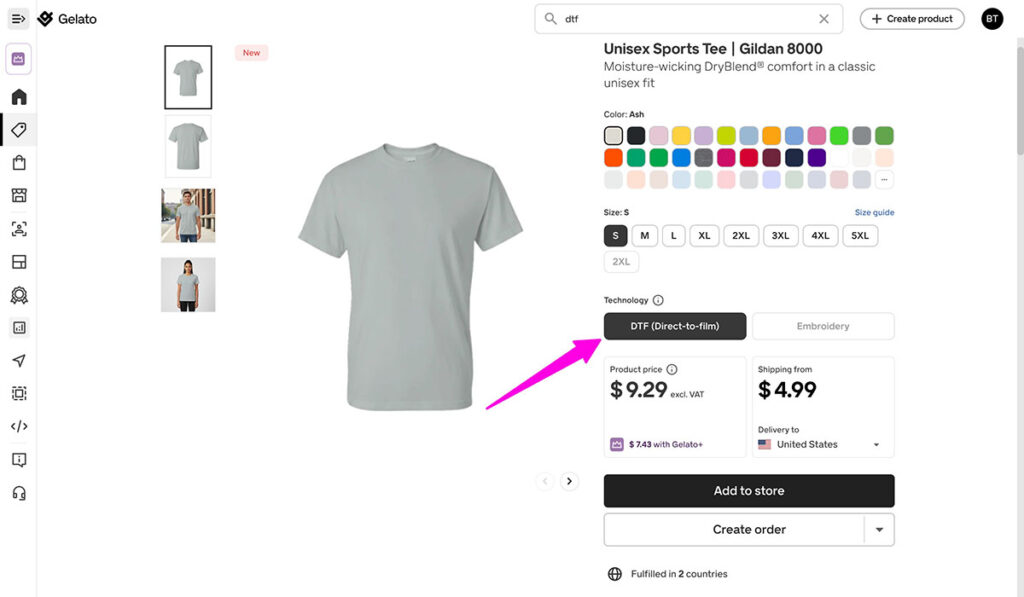
Gelato makes adding DTF to your lineup pretty simple, but if you’re brand new, it helps to have a few best practices lined up. After all, this is a brand-new world of printing opportunities:
- Start with artwork that can handle the extra punch: DTF brings out colour in a way DTG doesn’t, so designs with solid shapes, bold lines, and actual intention tend to look better. Super wispy details can work, but only if they’re clean. If you’ve got old designs sitting around that always looked a bit muted on DTG, try them here.
- Order samples early: Grab a polyester piece, a cotton-blend hoodie, maybe a hat. Seeing the same design hit different materials is weirdly helpful. You’ll immediately know what belongs where. Also, wash them, stretch them, and see how they hold up. You’ll be impressed.
- Build your first collection around higher-value items: Performance tees, quarter-zips, premium polos, and similar products have a higher average order value in general. If you’re designing these items, rework your pricing with Gelato’s Price Navigator.
- If you’re using Gelato+, lean into the tools: Magic Mockups, Instant Collections, and similar tools are really useful here. They can help you create catalogs that look fantastic, have perfect pricing, and grab attention fast.
- Give customers care instructions upfront: Not because the prints are fragile, but because people will absolutely wash a new hoodie on high heat with a load of towels if you don’t tell them otherwise. A simple “cold wash, inside out” note saves you emails later.
Also, don’t dump your whole catalog into DTF right away. Build one focused collection first. It’s easier to test demand that way, and you’ll learn what actually resonates.
Expand Your Store’s Collection with Gelato DTF
I know a new “printing method” might not sound like the most exciting thing Gelato’s introduced in the last few years at first, but trust me, this is going to be big. Few other companies offer this method yet, so now’s your chance to really stand out.
If you’re in a position to start expanding your catalog with new activewear, streetwear, and premium pieces, this is the perfect moment to do it.
Obviously, you still need good designs, decent pricing, and a little bit of creativity, but Gelato DTF could hand you the keys to a brand new revenue opportunity.
If you’re building a store for the long haul, I’d at least launch a small DTF collection, two performance pieces, a hoodie, maybe a hat. See how your audience reacts. In my experience, that little experiment tells you more about your brand’s potential than six months of selling the same old basics.
Frequently Asked Questions (FAQs)
What is DTF printing?
Direct-to-Film (DTF) printing is a method where designs are printed onto a special film, coated with adhesive powder, and heat-pressed onto fabric. It works on virtually any material—including polyester, nylon, and blends—unlike DTG, which is limited to cotton-rich fabrics.
Is DTF better than DTG?
Neither is universally better—they serve different purposes. DTF excels on synthetic and blended fabrics, produces vibrant colours on dark materials, and handles stretch without cracking. DTG produces a softer hand-feel and works best on 100% cotton. Many sellers use both methods depending on the product.
Does Gelato offer DTF printing?
Yes. Gelato now offers DTF printing across its global production network, with products including performance tees, quarter-zips, polo shirts, heavyweight hoodies, and caps. Orders are fulfilled through Gelato’s 140+ production partners in 32 countries.
What products work best with DTF printing?
DTF is ideal for activewear, streetwear, and performance apparel—any product made from synthetic or blended fabrics. Popular DTF products include moisture-wicking athletic shirts, polyester caps, quarter-zip pullovers, and heavyweight fleece hoodies.
How durable is DTF printing?
DTF prints are highly durable. The adhesive bond withstands repeated washing and stretching without cracking or fading, making it well-suited for gym wear and activewear that undergoes frequent use.


Comments 0 Responses