

If you’ve been thinking about getting into dropshipping lately, but you’re worried about the (pretty crowded) state of the market, I’m here to tell you something. Dropshipping can still be profitable. The space is still set to be worth over $1.2 trillion by 2030, and dropshipping still gives you one of the easiest ways to launch a store with a full catalog, without excessive effort.
Still, you do need to be a lot more cautious with your suppliers these days. The old model of grab a cheap product, add a margin, and hope for the best probably won’t work now. You need something customers can’t find anywhere else (not just a lower price), whether that’s fast shipping, excellent support, or just better products.
That’s why I wanted to compare dropXL and Zendrop. Both give dropshippers ways to differentiate themselves. dropXL is the more focused option with 130,000+ vidaXL products (like high-quality furniture), fast global shipping from local warehouses, and no commissions.
Zendrop is a bit busier, with 1 million+ products, a free plan, AI ads and stores, product discovery, sourcing, coaching, and print on demand.
Quick Verdict: Should You Choose dropXL or Zendrop?
If you’re building a store focused on home or garden products, dropXL is the better choice. The products are great, the returns support is useful, and the real-time product feed updates mean you’re never falling behind.
Zendrop probably makes more sense if you want help building and testing a brand-new business. There’s a free plan, over a million products, 24/7 support, and tools for creating AI-built stores, AI video ads, product discovery, sourcing, and print-on-demand. All useful if you’re still figuring out what your store should actually be.
| Feature | dropXL | Zendrop |
| Catalog size | 90,000+ vidaXL products | 1M+ products |
| Best product fit | Furniture, home, garden, outdoor, pet supplies, hardware, sporting goods, storage | Beauty, baby, pets, tech, clothing, jewelry, home décor, toys, POD |
| Example products | Garden furniture, storage cabinets, pet furniture, planters, sideboards, benches, bathroom units | Phone cases, beauty oils, cameras, kitchen tools, pet toys, speakers, apparel, POD hoodies |
| Pricing | €30/month | Free plan, Pro at $49/month, Plus at $79/month |
| Commission | No order commission | Subscription model, feature access depends on plan |
| Shipping model | dropXL ships direct to customers and handles returns | Fulfillment through Zendrop supplier network, with US 3PL options |
| Warehousing | USA, Europe, Australia, Japan, UAE | US warehousing/3PL, China network, supplier fulfillment |
| Product data | API, .csv/.xml feeds, stock, pricing, orders, tracking, invoices | Product imports, order syncing, fulfillment automation |
| Stock updates | Inventory updates hourly, pricing updates daily | Product and order workflows depend on Zendrop plan and supplier setup |
| AI tools | Not a major focus | AI-built stores, AI ads, Zendrop AI, MCP server |
| Custom sourcing | vidaXL catalog focus | Sellers can request products and custom quotes |
| Integrations | API, plugins, product feeds | Shopify, Wix, TikTok Shop, ClickFunnels |
| Support style | Supplier support, returns, product feeds, order questions | 24/7 support, coaching, Academy, workshops, seller help |
| Best seller profile | Seller with a clear home, garden, furniture, or outdoor niche | Seller testing products, building from scratch, or scaling with ads and sourcing |
dropXL vs Zendrop: Overview
Comparing dropshipping platforms is usually a pretty basic process. You look at pricing, product range, and integrations, and that’s about it. Comparing dropXL and Zendrop is a bit different.
What is dropXL?
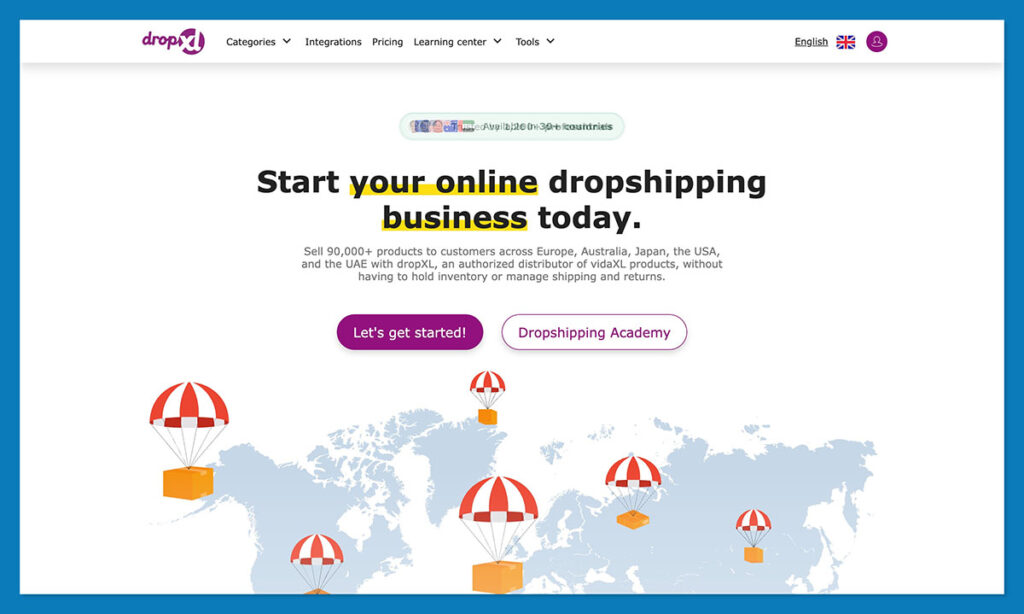
dropXL is a very focused dropshipping supplier built around the vidaXL catalog. Sellers get access to 90,000 products they can list through their store or marketplace storefront, while dropXL handles shipping, tracking, returns, and stock.
The catalog is definitely focused on home and outdoor products, with coffee tables, lounge sets, storage cabinets, and pet accessories (among others). Plus, you get global shipping, with local warehouses in key markets including Europe, USA, Australia, and more.
The backend is useful too, with product feeds, pricing and stock updates, API access, order management, and return handling.
Pros:
- Focused collection of high-margin products
- Good support for shipping and returning bulky goods
- Fast shipping for most products (some free shipping offers)
- Simple pricing with no order commissions
- Good stock discipline and regular updates
Cons:
- No free plan and you can’t see product prices until you sign up
- Every country you sell to needs its own account
- Not a lot of extra features
What Is Zendrop?
Zendrop is a much broader platform, more than just dropshipping alone. You create an account, connect your store, and choose from over a million products (there are a lot of categories here). Zendrop manages delivery after the orders come in, just like dropXL.
However, you get a lot more features to explore, like AI-built stores, product discovery, tools for creating ads, custom sourcing services, and print on demand. You can even access live weekly coaching and support if you’re new to the industry.
It feels like the kind of platform that you’d pick if you want a full, hand-held entry to the dropshipping landscape, whereas dropXL is more for you if you need a clean supplier lane with a more focused catalog.
Pros:
- Wider selection of products
- Plenty of extra tools for building your business
- Excellent AI features
- Free plan for beginners
- Useful sourcing options
Cons:
- The most useful features are on paid plans
- The catalog can be overwhelming
- Some features won’t be necessary for established dropshippers
dropXL vs Zendrop: Product Range and Quality
Zendrop has more products, but that doesn’t automatically make it better. With Zendrop, you get over a million products to choose from, sourcing services if you want something unique, and print on demand, too. That gives you a lot of options.
The dropshipping catalog includes categories like pet supplies, beauty and skincare products, home and kitchen, tech and electronics, fitness and wellness, clothing and apparel, and just about anything else you can think of. There are some pretty affordable items here too, with some options like a silicone phone case selling at around $2.67 (average $10.68 retail price).
All of that range is great for some dropshippers who are still trying to figure out their niche. It can be a bit overwhelming if you already know your market. Plus, it’s worth noting that the quality can vary depending on the supplier. All suppliers are vetted, but still.
dropXL offers over 130,000 products directly from the vidaXL catalog. You’ve got furniture, garden, outdoor, pet, storage, and other practical household categories first. That’s where you’ll find the bulk of the options. Still there are some clothing, accessories, and entertainment products to explore too.
Most of the items I’ve seen seem pretty high in quality, which is great for your profit margins. The fact that you’re dealing with one supplier takes a lot of the stress off checking for consistency. The downside is that you can’t see what they’re going to cost you up-front until you sign up for an account and download your chosen product feed.
Overall, I’d say dropXL is better for companies that already have a specific focus, Zendrop is better if you’re still testing out your angles.
dropXL vs Zendrop: Shipping and Fulfillment
With dropXL, the big draw is that the fulfillment sits very close to the supplier model. Products are sent straight to the end customer from the closest warehouse (they’re scattered across over 30 countries). You get tracking details, and dropXL can handle returns, too.
That’s important for dropXL’s catalog, big furniture products need more reliable logistics than a $5 accessory. dropXL makes handling bulky items a lot easier for new sellers.
Zendrop has a slightly wider fulfillment stack. For ordinary dropshipping, it handles things much in the same way as dropXL, although the company doesn’t handle returns in the same way. There’s no option for a customer to contact Zendrop directly with an issue, whereas dropXL allows that.
Still, Zendrop gives you a 3PL offer for US and Chinese sellers, with same-day or next-day fulfillment, USPS and UPS carrier use, and no storage fees. Plus, unlike dropXL, it has a print-on-demand option too.
Both companies can be speedy, and both cover a lot of ground in terms of global fulfillment, dropXL is more helpful with returns, whereas Zendrop is better with faster domestic shipping, and it’s 3PL and print-on-demand offerings.
Extra Features and Integrations
Obviously, Zendrop wins on feature count. It gives you print on demand, AI tools for creating an initial website and ads, product sourcing options, coaching and education, and even MCP server for AI assistants. dropXL doesn’t give you any of those.
All of those extras are genuinely useful for a certain type of seller. If you’re testing out a new business, an AI-built store loaded with bestsellers and a conversion-ready Shopify theme can get you started faster. The AI ad generator makes it easy to attract customers, and the discovery, expansion, and learning tools give you a head start on scale.
I particularly like the fact that print-on-demand is available too, so you can easily branch out from “everyday” items to something a bit more unique.
For integrations, you’ve got direct connections for Shopify, TikTok Shop, Wix, ClickFunnels, and others, with one-click product importing, order syncing, and automated fulfillment.
dropXL’s extras aren’t as exciting. You get API access, plugins, product feeds, regular pricing, stock, and product detail updates, and tracking numbers. There’s also the dropXL Academy, for education, and localized product content in over 27 languages.
In terms of integrations, dropXL is a bit less plug-and-play. You’ve got API access, plugins, and product feeds you can upload straight to your store. There are also a handful of integration partners you can use for a direct connection. You’ll still be able to connect to all the top platforms, from Shopify, to Amazon, it just takes a bit more work.
Still, none of the extra integration work or lacking features make dropXL less appealing. It gives you everything you need if you’ve already found your market, built a store, and created a business strategy. Zendrop just seems to cater more to absolute beginners.
Pricing: dropXL vs Zendrop
dropXL seems to have the simpler pricing story. There’s only one plan: €30 per month, which has to be paid through PayPal. There are no commission fee, and the monthly fee gives you access to all the products, feeds, APIs, academy resources, returns support, and so on. You only pay for each product after it sells, too. Of course, you won’t see the actual product price until you sign up.
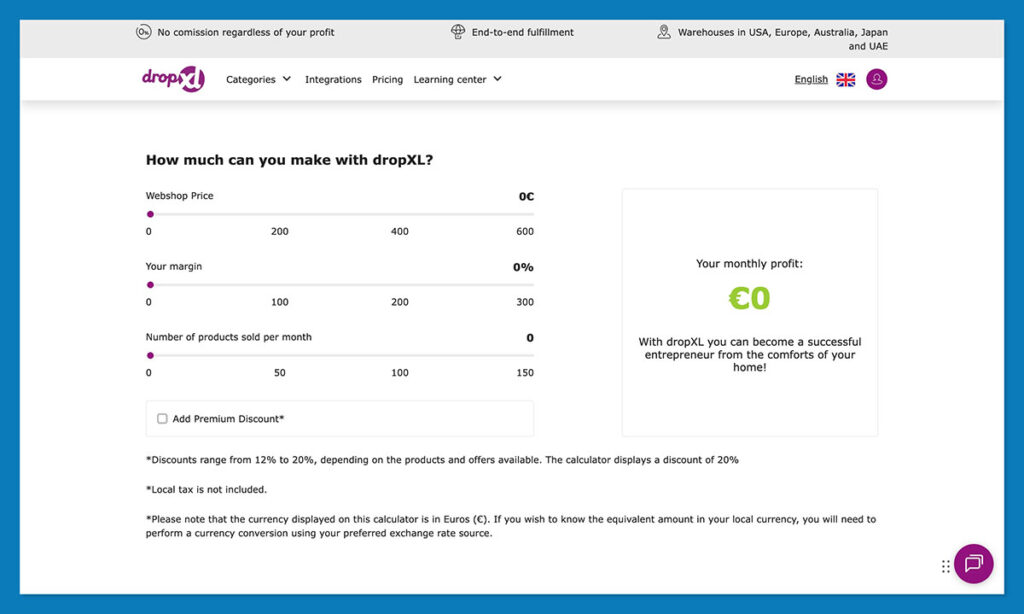
One slight downside is that you do need a separate account for each country you sell in, so you could end up with multiple subscriptions. On the other hand, if you sign up and don’t make a sale in 30 days, dropXL will refund you.
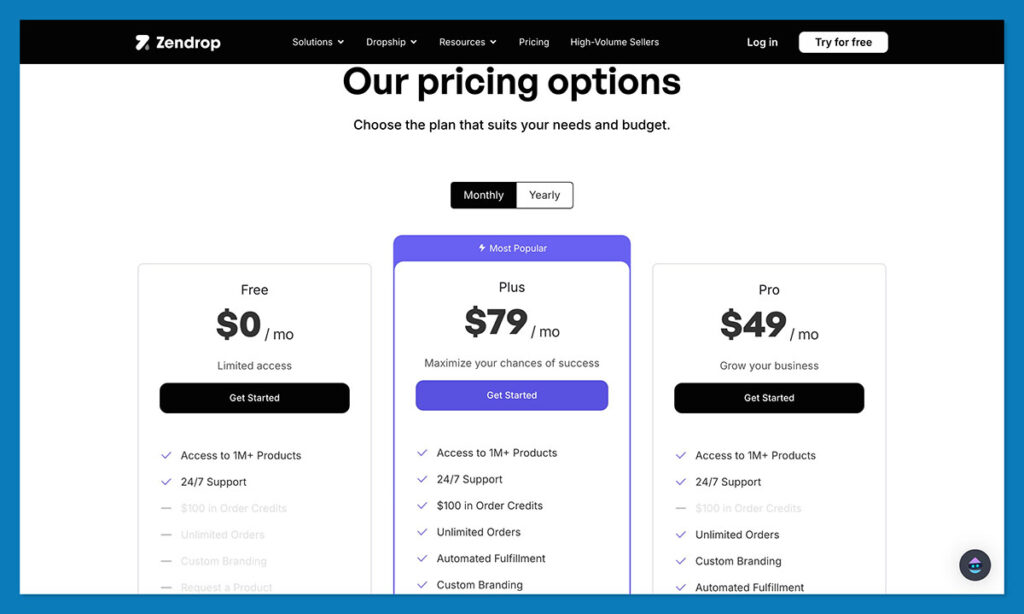
Zendrop gives you more tiers to choose from. The free plan gives you access to the 1 million+ products, and 24/7 support, but that’s it.
The Pro plan, for $49 per month, gives you unlimited orders, custom branding, automated fulfillment, product requests, and dedicated US products. Alternatively, the Plus plan for $79 gives you everything on Pro, plus top winning products, $100 in order credits, print-on-demand, Zendrop AI, chargeback management, private product listings, and live coaching calls.
Obviously, that makes the most expensive plan the most valuable, but I think beginners will do well with the free plan too, especially if they’re just looking for ideas. Plus, Zendrop gives you more public product price examples before you sign up. For instance, you can see a men’s slim-fit blazer listed at $18.71 with a suggested retail price.
dropXL is great if you want predictable platform costs and a supplier-first model, Zendrop is better if you want to start free, then pay for tools when you’re really using them.
dropXL vs Zendrop: Ease of Use and Customer Support
If you’re looking for something simple, Zendrop is better for dropshippers starting from scratch. You can create a free account, connect to your store, and start listing items before paying for anything. When you’re ready to upgrade, features like the AI store creator and ad builder do save a lot of time.
dropXL is still simple, but it can take a bit more work. You need separate accounts for each country you sell in, and the integrations aren’t as direct as they are with Zendrop. That being said, you do spend a lot less time browsing through products, and checking supplier quality. You also get more returns support, which is very helpful if you’re selling something like furniture.
Plus, since there are less features with dropXL, you’re less likely to fall into the trap of constantly experimenting.
Customer support is excellent with both platforms. Zendrop gives you 24/7 support even on the free plan, plus plenty of resources. Paid plans can include coaching calls, and chargeback management. Since dropXL only has one plan, you get the comprehensive support mix no matter what. That includes access to academy resources, help centers, and direct assistance.
Final Verdict: Which Would I Recommend?
Really, it depends on the store, and the seller.
I’d pick dropXL for a focused retailer selling garden or outdoor furniture or garden products. You get a supplier you can trust, direct shipping, tracking, and return support. You also don’t have to worry about extra commissions and hidden costs (unless you want to sell in more than one country, then there’s the extra subscription fee).
Zendrop is more suited to experimental sellers, who want to explore new product ideas, generate a website quickly, put together some ads, and check out different business models. The combination of dropshipping, print on demand, sourcing, and AI tools makes it pretty compelling if you’re still working out what’s going to make you the best profit.
Both are excellent in their own way. dropXL helps you build a reliable, trustworthy brand around a great catalog and fast shipping. Zendrop helps you find out what’s worth building, and launch your store as fast as possible.


Comments 0 Responses