

Storenvy is a free online store builder that lets indie brands, artists and small sellers get started without paying a cent upfront.
Sounds like a sweet deal, right? But is it really something you should bet on if you’re serious about selling online?
In this in-depth Storenvy review, I’ll be going over everything from pricing and features to design tools and customer support – so you can get a real sense of whether it’s a good fit for your ecommerce business.
Why You Can Trust This Review
I’ve had a look at loads of ecommerce platforms over the past few years – from massive players like Shopify and WooCommerce to the less well-known ones like Big Cartel and Ecwid.
And I’ve gone one step further and actually built and tested stores on each platform to see how they handle real-world tasks like getting products online, SEO, customer service and checkout design.
This Storenvy review is based on over 15 hours of hands-on testing, digging into recent customer feedback and comparing it to what other platforms are offering.
Storenvy at a Glance
| Feature | Score |
| Best for | Indie sellers and budget-conscious beginners |
| Pricing | Free plan available; Paid plans from $7.99 to $39.99/month |
| Marketplace Access | Yes – with 10% commission |
| SEO Control | Very limited |
| Customization | Basic on free plan |
| Payment Options | PayPal and Stripe |
| Overall Rating | 3.1 / 5 |
Storenvy Pros and Cons
Here’s a quick rundown of what I liked and didn’t like about Storenvy:
What I Liked:
- Great for new sellers – no upfront cost to get started
- A one-stop shop for a store and marketplace
- Easy to set up and add products
- PayPal and Stripe supported, no fuss
- Get set up in no time – easy peasy!
What I Didn’t Like:
- There’s a 10% marketplace fee – that adds up!
- Not many ways to customise your store, even on paid plans
- Not much control over SEO features – which means you might struggle to get found
- Storenvy’s customer support has a bit of a bad rep
- Not easy to grow or scale a brand long-term
My Experience Getting Started with Storenvy
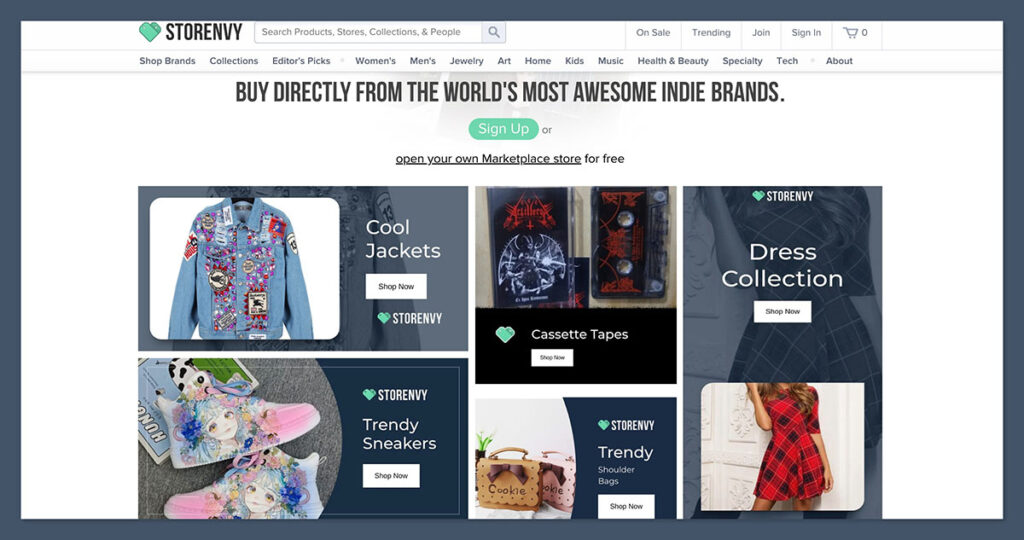
Signing up for Storenvy was a doddle. I didn’t need to put in my credit card details for the free plan, and I was adding products and publishing my store to the marketplace in no time.
The setup wizard is nice and short, and covers the basics:
- Pick a name for your store
- Get your first products online
- Set up your payment info using Stripe or PayPal
- Get your store live on the marketplace
What stood out to me was just how limited the customisation options are, even on the default setup.
You can change some basic colours and fonts, but that’s about it. Themes are pretty basic, and the editor feels a bit dated – especially if you’ve used one of the newer, more modern platforms like Shopify or Squarespace.
There’s no drag-and-drop editor, no preview to check out your design before you hit save – and no real way to change things around unless you pay up. And even then, options are limited.
Pricing: What Does Storenvy Cost?
One of Storenvy’s most attractive selling points is that free plan of theirs. No need to shell out a monthly subscription to get started – which is pretty rare in the ecommerce world. But of course, there are downsides.
| Plan Name | Price (Monthly) | Features |
| Free | $0 | Basic store, access to marketplace, 10% commission on marketplace sales |
| Plus | $7.99 | Custom domain, email marketing tools |
| Pro | $19.99 | Advanced inventory tools, premium store themes |
| Ultimate | $39.99 | More analytics, branding options, priority support |
Important Notes:
- On the free plan, you pay no commission on store-only sales – but 10% commission when you sell on the marketplace
- You’ll still pay Stripe or PayPal transaction fees on every sale (2.9% + 30¢)
- Most of the serious seller features are behind a paywall – which is a bummer
If you’re just getting started, the free plan is a great way to dip your toe in the water. But if you’re planning to scale up, you’ll need to upgrade – and the value you get at higher tiers just isn’t that great.
Customisation and Templates
Storenvy’s got a pretty limited selection of templates, to be honest. And customising your store’s look and feel is even harder – especially if you’re not paying.
Here’s what I found when I went poking around:
- No drag-and-drop editor – so make do with a settings menu
- Only a handful of free templates to choose from – and they’re not much more interesting than the free ones
- No access to HTML or CSS on free plans, so forget about making any real changes
- And no way to tinker with checkout pages or product URLs
This lack of flexibility is one of Storenvy’s biggest weaknesses – its inability to let your storefront stand out from the crowd makes it hard to build a strong brand, when everyones store looks so similar.
If design matters to your business, it’s a major red flag, because you’ll be up against it when it comes to getting any sort of unique look going.
Selling on the Storenvy Marketplace
The main reason people join up with Storenvy is the marketplace, which gives your products a crack at reaching Storenvy’s user base.
It works in a similar way to Etsy: buyers browse categories, come across stores they like, and then buy from the site. Storenvy takes a 10% commission on any sales made this way.
Marketplace pros:
- Get your products seen without having to do loads of legwork to drive your own traffic
- Browse users can come across your listings organically, which is a nice bonus
- Great for handmade, indie or niche products
Marketplace cons:
- The userbase is smaller than what you’d find on Etsy or Amazon
- No paid advertising or promotional tools to boost your sales
- New or unpopular items don’t stand much of a chance of being seen
- No real control over where your listings turn up in search results
I can see why the idea of a marketplace sounds appealing, but in reality it didn’t do much for me unless I put in some effort elsewhere to get my store noticed.

You can’t just rely on the marketplace to bring in sales.
Product Management and Inventory
Adding products to Storenvy is pretty straightforward – you can fill in the usual info:
- Title and description
- Price and how many you’ve got in stock
- Any product options that might be relevant (like size or colour)
- Uploading images, of course
- Assigning categories and tags
There isn’t any bulk upload option, unless you’re on a paid plan, and product organisation tools are pretty basic – no low stock alerts or auto re-stocking for example.
SEO and Marketing Tools
If your store needs to grow through search or content marketing, Storenvy is going to be a disappointment.
Here’s what’s lacking:
- No control over your meta titles or descriptions
- URLs are auto-generated, with no custom options available
- No blogging feature at all
- No SEO apps or tools to help improve your visibility
- No structured data or schema markup to tell search engines what your site is about
You can add alt tags and titles to your images, but that’s about it.
When it comes to marketing tools, it’s email, or nothing – and only on the paid plans. There are no integrations with the likes of Klaviyo, Mailchimp or Google Ads.
Payment and Shipping
Storenvy supports Stripe and PayPal, both of which are reliable and easy to set up.
But shipping is a manual affair, unless you hook up to a third-party tool – you’ll have to create your own shipping rates, based on whatever works best for you. No built-in integration with carriers like USPS, UPS or FedEx, which means no real-time rates or automated label printing.
That might be ok for a small store with just a few SKUs, but it’s not going to scale well.
Customer Support and Platform Reputation
Storenvy has email support, but response times are all over the place. There’s no live chat or phone support, even if you’re a paying customer.
And if you take a look at reviews on websites like SiteJabber and Trustpilot, you’ll see some pretty common complaints:
- Orders not being fulfilled
- Poor communication with support
- Buyers not getting refunds or responses
- Sellers getting booted without warning
It seems like Storenvy has some reliability issues and trust problems, which can reflect badly on your brand if things go wrong.
Comparing Storenvy to Competitors
If you’re trying to decide between Storenvy and some of the other ecommerce platforms out there, this comparison table should give you an idea:
| Platform | Best For | Starting Price | Marketplace Access | SEO Tools | Customization | Support |
| Storenvy | Beginners on a budget | Free | Yes | Weak | Very Limited | Email Only |
| Shopify | Scaling product sellers | $29/month | No | Strong | High | 24/7 Live Chat |
| Etsy | Handmade & vintage goods | $0 + fees | Yes | Weak | Limited | Ticket System |
| WooCommerce | Full control | Free + hosting | No | Strong | Advanced | Community |
| Big Cartel | Artists with small stores | Free | No | Limited | Basic | Email Only |
It’s pretty clear that Storenvy fills a very specific niche – it’s great for people who are just starting out and want to launch a store with no commitment.
But if you want a platform that’s got better SEO tools, more customisation, or longer-term support, you’d be better off with Shopify or WooCommerce.
Etsy has a much bigger marketplace audience, and Big Cartel offers a similar beginner-friendly experience but with a cleaner interface.
Storenvy might work as a stepping stone, but it’s unlikely to meet the needs of a growing or serious ecommerce business.
Is Storenvy Worth It?
Storenvy is a decent enough entry point for ecommerce newbies, especially those who don’t want to fork over monthly fees to test out product ideas.
The fact that it’s got a free plan, easy setup and some marketplace exposure makes it pretty attractive to new sellers looking to get started.
However, if you’re serious about building a business that actually grows and has some control over its own customer data – you’ll probably find Storenvy has its limitations sooner rather than later.
From where we stand, it’s just not designed to scale, and when you consider the weak design tools, limited SEO options and pretty poor support reputation, you’ll quickly start to outgrow the platform.
Storenvy Review Final Verdict:
| Criteria | Score (Out of 5) |
| Ease of Use | 3.5 |
| Pricing | 4.2 |
| Design Tools | 2.5 |
| SEO | 1.5 |
| Support | 2.0 |
| Value for Money | 3.2 |
| Final Score | 3.1 |
Recommended Alternatives
If you want a bit more control, a bit better SEO and some actual features that make sense – here are some platforms worth taking a look at :
- Shopify: if you’re building a serious brand and have a bunch of products to sell then Shopify is probably your best bet
- Wix: has all the design flexibility you could want and is drag-and-drop easy to boot
- Squarespace: perfect for creatives who want to sell more than just products but also have a bit of a content focus
- WooCommerce: if you’re using WordPress and have some technical skills under your belt then WooCommerce is a great option
Each of these platforms offers a lot more flexibility, some actually useful SEO tools and a lot more long-term value – making them a way better choice than Storenvy if you’re planning on building a real business.


Comments 0 Responses