

Trying to pick between ShipBob and Flexport?
I've spent hours digging into both platforms and comparing their services, pricing, tech features, and ideal use cases – and now I've got a clear answer.
ShipBob is the way to go for most ecommerce businesses.
If you're looking to ship products to customers fast and affordably, ShipBob has been built from the ground up for that.
But if you're dealing with super complicated international freight or container shipping from overseas, Flexport is probably a better bet.
Let's break it down and help you figure out what's best for your online store.
ShipBob vs Flexport: Quick Lowdown
ShipBob – Perfect for ecommerce brands that want fast, reliable fulfillment in the US and globally.
Flexport – Specialises in freight forwarding and international supply chain management
Here's what I'll be covering in this comparison:
- Fulfillment services
- Tech and integrations
- Pricing
- Global reach
- Support
- Real-life brand examples
- Pros and cons
Both ShipBob and Flexport serve a specific purpose in the ecommerce supply chain. The one that's right for you will depend on whether you're dealing with freight issues (upstream) or order fulfillment problems (downstream).
What Do ShipBob and Flexport Actually Do?
Before we dive in, let's get a better understanding of what each company does – and who they're designed for.
ShipBob:
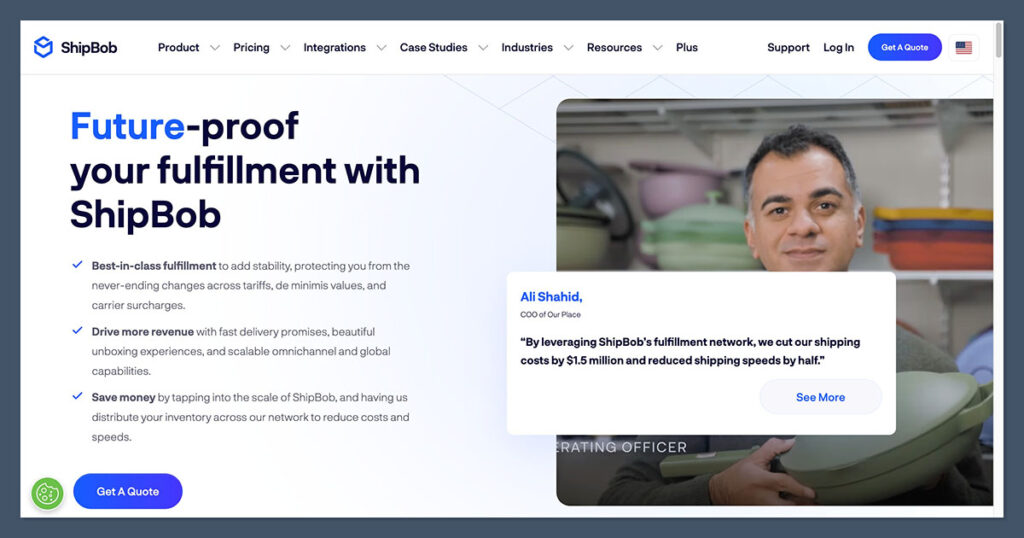
- A third-party logistics company that stores your stock, fulfills orders, and ships them directly to your customers.
- Focused on ecommerce brands selling on platforms like Shopify, Amazon, WooCommerce, or BigCommerce.
- Offers 2-day delivery across the US, plus international fulfillment in Canada, the UK, EU, and Australia.
Flexport:
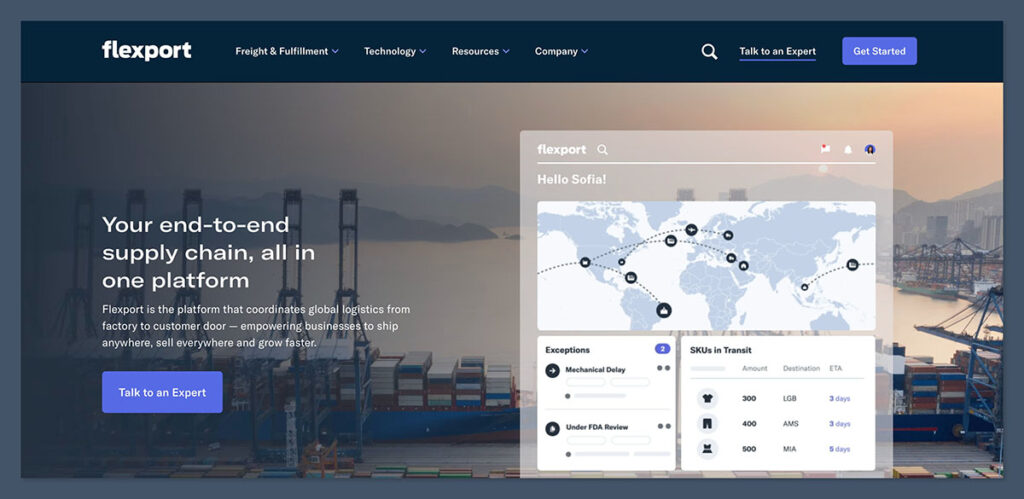
- A digital freight forwarder that helps brands move inventory internationally using air, ocean, and trucking.
- Provides software for tracking shipments, managing customs, and handling compliance.
- Works well for high-volume brands importing goods from Asia to North America or Europe.
If your business is still small and shipping only within the US, ShipBob is likely all you'll need.
But if you're moving pallets internationally or coordinating with suppliers overseas, Flexport becomes an essential part of your operations.
Fulfillment Services Compared
Here's where the differences between ShipBob and Flexport become crystal clear.
ShipBob Fulfillment Services
ShipBob gives ecommerce brands total control over their warehousing and order fulfillment:
- Inventory storage in over 50 global fulfillment centres
- Automated order routing so products ship from the closest warehouse
- Pick, pack, and ship within 1 business day
- Branded packaging options
- Returns management
- Kitting, bundling, and subscription fulfillment
- B2B retail distribution (if you sell wholesale too)
This is perfect for fast-moving ecommerce brands that want to deliver within 2-5 business days globally.
For ecommerce businesses that are all about customer experience, ShipBob provides the final-mile solution you need to stay ahead of the game. With short lead times and branding control, it helps turn first-time buyers into repeat customers.
Flexport Fulfillment Services
Flexport isn't a traditional fulfillment company:
- No pick/pack services
- No direct-to-consumer delivery
- Focuses entirely on upstream logistics (freight shipping)
- Can route containers from China to the US and help manage customs clearance
- Coordinates deliveries to your 3PL or warehouse (like ShipBob)
If you're importing pallets or containers of goods and need freight tracking, Flexport is the way to go.
It helps bridge the gap between your manufacturer and your fulfillment partner. You won't use Flexport to fulfill orders, but it plays a vital role in keeping your shelves stocked.
Tech and Integrations
When it comes to ecommerce integration, ShipBob is in a league of its own.
ShipBob’s Tech Features
- Real-time inventory visibility
- Smart order routing
- Easy-to-use dashboard
- Branded tracking pages
- Powerful integrations with Shopify, Amazon, WooCommerce and BigCommerce
- API access for custom workflows
- Supports multiple sales channels
You can connect your store in minutes and start syncing inventory right away.
Their dashboard makes it easy to spot any fulfillment issues before they blow out of control. For brands scaling fast, the ability to monitor performance across multiple channels is a big win.
Flexport’s Tech Platform
Flexport offers a logistics dashboard for freight teams:
- Track shipments across sea, air and ground
- Automate compliance paperwork
- Visual timelines for supply chain operations
- Analytics for shipment delays, costs and landed prices
- Supplier collaboration tools
It's powerful – but not ecommerce-focused.
If you're importing hundreds of SKUs from overseas suppliers, this kind of visibility helps prevent costly disruptions. But if you're just shipping daily ecommerce orders, it's overkill.
Pricing Comparison
Let's Talk Numbers
ShipBob Pricing
ShipBob's pricing is clear cut and easy to understand, which is a big plus.
| Service | Estimated Cost |
| Pick/pack (first 4 items) | Free |
| Additional pick fees | $0.25 per item |
| Storage (per bin/month) | $5 |
| Receiving (per hour) | $35 |
| Shipping (domestic) | ~$5–$8 per order |
| Custom packaging | Optional, extra cost |
They also offer discounts for volume, the more you ship the less you pay, which is a great incentive
Smaller brands can get started without any long-term commitments or minimum order volumes, which is one of ShipBob's biggest strengths for new DTC startups.
Flexport Pricing
Flexport is freight-based, so pricing depends on global routes and container space – which can get complicated.
| Service | Estimated Cost |
| Ocean freight (20ft container) | $2,000–$4,000 |
| Air freight | $5–$12/kg |
| Customs clearance | $100–$500 per shipment |
| Warehousing | Varies (through partners) |
| Insurance | Based on shipment value |
Flexport's pricing fluctuates with market rates, fuel, and global disruptions – so you never really know what you're getting.
It's ideal for large volumes, but might be too complex or expensive for newer stores, and brands often underestimate how many variables affect freight pricing.
Global Reach and Scalability
You want a logistics partner that can grow with you – here's how they compare:
ShipBob Global Logistics
- 50+ fulfillment centers in the US, UK, EU, Canada, and Australia
- Delivers to over 200 countries
- Offers DDP (Delivered Duties Paid) shipping to avoid customs surprises
- Local fulfillment reduces international shipping costs
- Expands easily as you grow
Great for DTC brands looking to grow across borders without having to build their own logistics teams.
What makes ShipBob strong globally is they've got the infrastructure in place to support multi-country DTC at scale – you just plug into their network and start shipping locally right away.

Flexport Global Freight
- Ships from China, Vietnam, India, Mexico, and more
- Handles ocean, air, rail, and trucking
- Experienced with customs, duties, and tariffs
- Connects suppliers, manufacturers, and warehouse teams
- Manages large scale supply chains
Essential for larger brands sourcing products from Asia or scaling to multiple warehouses.
While Flexport doesn't fulfill ecommerce orders, it can manage the complex international movement of inventory before it even hits your shelves – which is a huge deal if you're dealing with multi-country imports and exports.
Support, Onboarding, and Ease of Use
Customer support can make or break your logistics experience – especially Q4.
ShipBob Support
- Dedicated onboarding team to get you up and running
- Account manager for larger brands to keep things on track
- Live chat and email support when you need it
- Knowledge base with detailed guides to help you
- Support can get a bit slow during peak periods
Getting started is quick and easy, store integration takes just minutes, and inventory receiving can begin in under two weeks
What's really helpful is ShipBob's onboarding team will actually walk you through fulfillment setup – which can save you hours of guesswork if you're time-strapped.
Flexport Support
- Account managers for all users, which is good to know
- Slack-based communication for large customers, because who doesn't love Slack?
- Freight visibility dashboard to keep an eye on things
- Customs and documentation support, because customs can be a nightmare
- High-touch support model, but you may need an ops manager to handle the day-to-day
Support is great, but setup is more complex, you'll have to work with more parties (like carriers and customs brokers) which can be overwhelming if you're running solo.
Pros and Cons
ShipBob
Pros 👍
- Built specifically for ecommerce brands, which is great
- 2-day shipping available in major metros because who doesn't want 2-day shipping?
- Easy Shopify and Amazon integrations because those are the big platforms
- Flat-rate pricing so you know what you're getting
- Scalable as you grow, which is important
Cons 👎
- No freight coordination, which is a bummer
- Storage fees can add up, so keep an eye on that
- May not support niche products, like hazmat, so keep that in mind
For ecommerce brands with steady sales volume, ShipBob removes the headache of fulfillment and lets you focus on growth – it's not perfect but it's one of the few providers that can support multi-country DTC at scale.
Flexport
Pros 👍
- Ideal for global freight coordination, so if you're shipping all over the world this is a good choice
- Great shipment visibility, which is always a plus
- Customs, tariffs, and compliance handled, which is a huge weight off your shoulders
- Can reduce freight costs by 10-20% with optimization, which is a nice bonus
Cons 👎
- Not a fulfillment service, which is important to note
- May not be the best fit for small ecommerce sellers
- Freight timelines can vary a lot, depending on what's going on in the world
Flexport knocks it out of the park when you're dealing with super complicated global supply chains where speed, paperwork and compliance are everything.
If you're importing a whole container full of goods from Asia every month, they can help you steer clear of costly mistakes and delays.
Real Brands Using ShipBob and Flexport
Looking at the big brands that actually use these platforms helps give you a sense of where they come in handy in the real world.
Brands That Are Using ShipBob
- Touchland – they're a personal care brand that's blowing up fast
- TB12 – that's Tom Brady's direct to consumer wellness brand
- Spikeball – they're a big outdoor game company
- Muddy Bites – that snack company that went viral overnight
- Dossier – fragrance brand with super complex fulfillment needs
These brands have been able to build some serious momentum using ShipBob's lightning-fast shipping and automated workflows.
It's proof you don't need Amazon's massive network to offer delivery that's just as fast and reliable
Brands That Are Using Flexport
- Bombas – they use Flexport to handle their international freight
- Sonos – they're using Flexport to coordinate their super complicated shipping operations
- Blue Bottle Coffee – they get their beans in via Flexport
- Native – they import all sorts of natural ingredients using Flexport
- Molekule – that's a tech hardware brand with a super global supply chain
Flexport tends to attract more established or VC-backed brands that have teams or consultants handling logistics for them.
They rely on Flexport for speed, transparency and just plain old global scale.
ShipBob vs Flexport: The Verdict
Here's how they stack up in the end.
| Fulfillment | ShipBob |
| Freight & Import/Export | Flexport |
| Tech/Integrations | ShipBob |
| Pricing Transparency | ShipBob |
| Global Shipping | Tie |
| Customer Support | Flexport |
| Ecommerce Fit | ShipBob |
If you're an ecommerce brand churning out 100-10,000+ orders a month, ShipBob gives you a full-service solution for getting orders out the door.
If you're importing huge amounts of inventory from Asia or managing a super-complicated supply chain, Flexport is the way to go for upstream logistics.
And here's the thing: the two platforms can also work together.
If you're an ecommerce brand growing fast, teaming up Flexport's freight with ShipBob's fulfilment gives you total control from factory to front porch.
So, Who Should You Choose?
Choosing between ShipBob and Flexport depends entirely on where your logistics challenges start.
If you’re already sitting on inventory and want to ship quickly to customers in the US or internationally, ShipBob is the better option.
It’s purpose-built for DTC fulfillment, integrates easily with your store, and scales with your brand as you grow.
If your challenge is getting inventory from overseas—especially from manufacturers in Asia—then Flexport is the better fit. You’ll get full visibility into freight movements, help with customs and compliance, and the infrastructure to scale a global supply chain.
But here’s what’s even more valuable: you don’t have to pick just one. Many growing ecommerce brands use Flexport for freight and ShipBob for fulfillment.
The two together can give you full control of your backend logistics—from factory to front porch.
If you're building a high-growth brand and logistics is holding you back, this is the kind of decision that will pay dividends over time.


Comments 0 Responses