

Το Product Shelf του YouTube (που ονομάζεται επίσης merch shelf ή καρτέλα καταστήματος YouTube Shopping) επιτρέπει στους δημιουργούς που πληρούν τις προϋποθέσεις να προβάλλουν προϊόντα απευθείας κάτω από τα βίντεό τους, μέσα σε ζωντανές ροές και σε μια ειδική καρτέλα καταστήματος στη σελίδα του καναλιού τους.
Οι θεατές περιηγούνται και αγοράζουν χωρίς να εγκαταλείπουν ποτέ το YouTube. Το πρόβλημα είναι ότι πρέπει να συνδέσετε μια υποστηριζόμενη πλατφόρμα ηλεκτρονικού εμπορίου ή εμπορικών προϊόντων για να λειτουργήσει, και δεν πληρούν όλες οι πλατφόρμες που ισχυρίζονται ότι υποστηρίζουν το YouTube τις προϋποθέσεις.
Δοκιμάσαμε τη ροή εγκατάστασης, τη διαδικασία έγκρισης προϊόντων και την καθημερινή διαχείριση κάθε πλατφόρμας που υποστηρίζεται αυτήν τη στιγμή από τις Αγορές YouTube.
Αυτός ο οδηγός καλύπτει αυτές που συνδέονται εγγενώς μέσω του YouTube Studio, μαζί με δύο ευρύτερες επιλογές ηλεκτρονικού εμπορίου που λειτουργούν μέσω του ίδιου αγωγού του Google Merchant Center. Εάν μια πλατφόρμα δεν περιλαμβάνεται σε αυτήν τη λίστα, είτε έχει χάσει την επίσημη υποστήριξη, είτε απαιτεί λύσεις είτε είναι περιορισμένη σε μία μόνο αγορά.
Γρήγορη λίστα: Οι καλύτερες πλατφόρμες ραφιού προϊόντων YouTube
- Τέταρτο τείχος – Το καλύτερο κατάστημα all-in-one με εγγενή ενσωμάτωση YouTube
- Shopify – Ιδανικό για πλήρη έλεγχο ηλεκτρονικού εμπορίου πέρα από τα εμπορεύματα
- spreadshop – Το καλύτερο δωρεάν κατάστημα POD με άμεση υποστήριξη για τις Αγορές στο YouTube
- Κατάστημα – Ιδανικό για δημιουργούς Ασίας-Ειρηνικού/ΕΜΕΑ που επιθυμούν ενσωμάτωση με το YouTube Shopping.
- TeePublic – Το καλύτερο πρόσθετο αγοράς για παθητικό εισόδημα από εμπορεύματα
- Wix – Ιδανικό για δημιουργούς που έχουν ήδη ένα Wix ιστοσελίδα
- Άνοιξη (Teespring) – Ιδανικό για απλές κυκλοφορίες εμπορευμάτων με μηδενικό κόστος
Επισκόπηση κορυφαίων πλατφορμών
| Πλατφόρμα | Γιατί ξεχωρίζει για το YouTube Shelf | Ιδανικό για |
|---|---|---|
| Τέταρτο τείχος | Σχεδιασμένο για εγγενή ενσωμάτωση με το YouTube Product Shelf, χωρίς συνδρομή (rev-share), ενσωματωμένο κατάλογο POD, καθώς και άλλες ενσωματώσεις δημιουργών (TikTok, Twitch, email, ειδοποιήσεις). | Ένα ολοκληρωμένο κατάστημα με γρήγορη εγκατάσταση YouTube και χαμηλό κόστος. |
| Shopify | Επίσημος συνεργάτης Αγορών YouTube. Συγχρονίζει τον κατάλογο απευθείας με το YouTube, σας επιτρέπει να διαχειρίζεστε ετικέτες και αναλυτικά στοιχεία από το YouTube Studio. Στοίβα ηλεκτρονικού εμπορίου με μεγάλη δυνατότητα κλιμάκωσης. | Κανάλια που δημιουργούν μια επωνυμία/κατάστημα πέρα από τα εμπορεύματα και επιθυμούν μέγιστο έλεγχο, εφαρμογές και ηλεκτρονικό εμπόριο πολλαπλών καναλιών. |
| Άνοιξη | Συνεργάτης εμπορικών προϊόντων YouTube εδώ και καιρό, άμεση υποστήριξη για τις Αγορές YouTube, εύκολη εγκατάσταση POD χωρίς προκαταβολή, εργαλεία εμπορίου με προτεραιότητα στα μέσα κοινωνικής δικτύωσης. | Δημιουργοί που θέλουν μια απλή, δοκιμασμένη ροή εργασίας εμπορευμάτων με ελάχιστη τεχνολογική επιβάρυνση. |
| spreadshop | Υποστηριζόμενη πλατφόρμα YouTube Shopping, εύκολη εγκατάσταση POD, δωρεάν κατάστημα, χωρίς απόθεμα. Λειτουργεί παρόμοια με το Spring για απλές ροές εμπορευμάτων. | Δημιουργοί που θέλουν μια απλή, δωρεάν λύση POD merch με άμεση ενσωμάτωση στο YouTube Shopping. |
| Κατάστημα | Επίσημος παγκόσμιος συνεργάτης αγορών στο YouTube. Οι έμποροι μπορούν να συνδέσουν τα καταστήματα Shopline απευθείας στο backend του YouTube και να τα καταχωρίσουν στις υποστηριζόμενες πλατφόρμες αγορών. | Δημιουργοί στην περιοχή Ασίας-Ειρηνικού/ΕΜΕΑ που επιθυμούν μια σύγχρονη πλατφόρμα ηλεκτρονικού εμπορίου άρτια ενσωματωμένη με το YouTube Shopping. |
| TeePublic | Παρατίθεται ως υποστηριζόμενη πλατφόρμα Αγορών YouTube. Το μοντέλο αγοράς σημαίνει μηδενική διαχείριση καταστήματος. | Δημιουργοί που επιθυμούν παθητικό εισόδημα από εμπορικά προϊόντα χωρίς να έχουν ηλεκτρονικό κατάστημα. |
| Wix | Υποστηριζόμενη πλατφόρμα YouTube Shopping. Πλήρης δημιουργία ιστοσελίδων με ηλεκτρονικό εμπόριο, σύνδεση με το Google Merchant Center. | Δημιουργοί που χρησιμοποιούν ήδη Wix για τον ιστότοπό τους και θέλουν να προσθέσουν τις Αγορές YouTube. |
Βασικά Συμπεράσματα
- Μόνο οι πλατφόρμες που αναφέρονται επίσημα στην καρτέλα Αγορές του YouTube Studio μπορούν να συνδεθούν εγγενώς. Προς το παρόν, οι υποστηριζόμενες πλατφόρμες είναι: Fourthwall, Shopify, Άνοιξη, Spreadshop, Shopline, TeePublic και Wix (συν επιλογές με κλειδωμένη περιοχή όπως Cafe24, Suzuri, BASE και Marpple Shop).
- Το Fourthwall είναι η ταχύτερη διαδρομή από το μηδέν σε ένα ζωντανό ράφι προϊόντων αν είστε δημιουργός χωρίς υπάρχον κατάστημα. Χωρίς μηνιαίες χρεώσεις, ενσωματωμένο POD και η ενσωμάτωση αναπτύχθηκε σε συνεργασία με την Google.
- Shopify σας προσφέρει τη μεγαλύτερη ευελιξία μακροπρόθεσμα, αλλά συνοδεύεται από μηνιαία συνδρομή (39$+/μήνα στο Basic) και απαιτεί σύνδεση μέσω της εφαρμογής Google & YouTube στο Shopify διαχειριστής.
- Το Spring και το Spreadshop είναι και τα δύο δωρεάν πλατφόρμες με προτεραιότητα στο POD, αλλά σας δίνουν λιγότερο έλεγχο στην επωνυμία, τα δεδομένα πελατών και την προσαρμογή της βιτρίνας από ό,τι Shopify.
- Για την επιλεξιμότητα των Αγορών YouTube απαιτείται το Πρόγραμμα Συνεργατών YouTube, 1,000+ συνδρομητές (ή η κατάσταση Επίσημου Καναλιού Καλλιτέχνη), καμία ρύθμιση κοινού "Made for Kids" και καμία ενεργή προειδοποίηση για ρητορική μίσους.
- Τα προϊόντα υποβάλλονται σε διπλή διαδικασία ελέγχου: στις πολιτικές του ίδιου του YouTube και στις πολιτικές του Google Merchant Center. Οι απορρίψεις είναι συχνές και όχι πάντα προφανείς, επομένως επιλέξτε μια πλατφόρμα που παρουσιάζει με σαφήνεια τους λόγους απόρριψης.
Τι είναι το ράφι προϊόντων YouTube (και πώς λειτουργεί);
Το Ράφι Προϊόντων YouTube είναι το επίπεδο αγορών που είναι ενσωματωμένο απευθείας στο YouTube. Όταν συνδέετε μια υποστηριζόμενη πλατφόρμα στο κανάλι σας μέσω του YouTube Studio, τα προϊόντα σας μπορούν να εμφανίζονται σε πολλά σημεία: μια καρτέλα καταστήματος στη σελίδα του καναλιού σας, ένα ράφι προϊόντων κάτω από μεμονωμένα βίντεο, ετικέτες προϊόντων με δυνατότητα πατήματος μέσα στα Shorts και καρφιτσωμένες κάρτες προϊόντων κατά τη διάρκεια ζωντανών ροών.
Δεν ανεβάζετε προϊόντα στο YouTube χειροκίνητα. Αντίθετα, η συνδεδεμένη πλατφόρμα σας συγχρονίζει τον κατάλογο προϊόντων σας με το Google Merchant Center, το οποίο τον τροφοδοτεί στο YouTube.
Όταν ένας θεατής πατήσει ένα προϊόν, μεταφέρεται στο κατάστημά σας για να ολοκληρώσει την αγορά (ή, σε ορισμένες περιπτώσεις με Shopify στις ΗΠΑ, μπορούν να κάνουν check out χωρίς να φύγουν από το YouTube).
Το ράφι εμπορευμάτων εμφανίζει έως και 12 προϊόντα κάθε φορά. Από προεπιλογή, ο αλγόριθμος του YouTube καθορίζει τη σειρά εμφάνισης με βάση την προσφατότητα, τη δημοτικότητα και τη διαθεσιμότητα. Μπορείτε να παρακάμψετε αυτήν τη ρύθμιση στο YouTube Studio επιλέγοντας και ταξινομώντας χειροκίνητα έως και 12 προϊόντα για ολόκληρο το κανάλι σας ή για μεμονωμένα βίντεο.
Απαιτήσεις επιλεξιμότητας
Πριν επιλέξετε μια πλατφόρμα, επιβεβαιώστε ότι το κανάλι σας πληροί τις προϋποθέσεις. Οι Αγορές YouTube απαιτούν όλα τα ακόλουθα: το κανάλι σας πρέπει να συμμετέχει στο Πρόγραμμα Συνεργατών YouTube. χρειάζεται τουλάχιστον 1,000 συνδρομητές (εκτός αν έχετε Επίσημο Κανάλι Καλλιτέχνη). Το κοινό σας δεν μπορεί να οριστεί ως Ειδικό για Παιδιά. Το κανάλι σας δεν μπορεί να έχει σημαντικό αριθμό βίντεο που παραβιάζουν τις πολιτικές δημιουργίας εσόδων. Και το κανάλι σας δεν πρέπει να έχει οποιεσδήποτε ενεργές προειδοποιήσεις για παραβίαση των Οδηγιών Κοινότητας για ρητορική μίσους.
Η εκπλήρωση αυτών των απαιτήσεων δεν εγγυάται ότι τα προϊόντα σας θα εμφανίζονται. Κάθε στοιχείο υποβάλλεται σε έλεγχο ως προς τις πολιτικές περιεχομένου του YouTube και τα πρότυπα καταχώρισης προϊόντων του Google Merchant Center. Τα ψηφιακά προϊόντα, τα στοιχεία με πολύ μικρές εικόνες και οτιδήποτε έχει επισημανθεί ως περιορισμένη κατηγορία μπορούν να απορριφθούν ακόμη και αν το κανάλι σας είναι πλήρως επιλέξιμο.
1. Τέταρτο τείχος
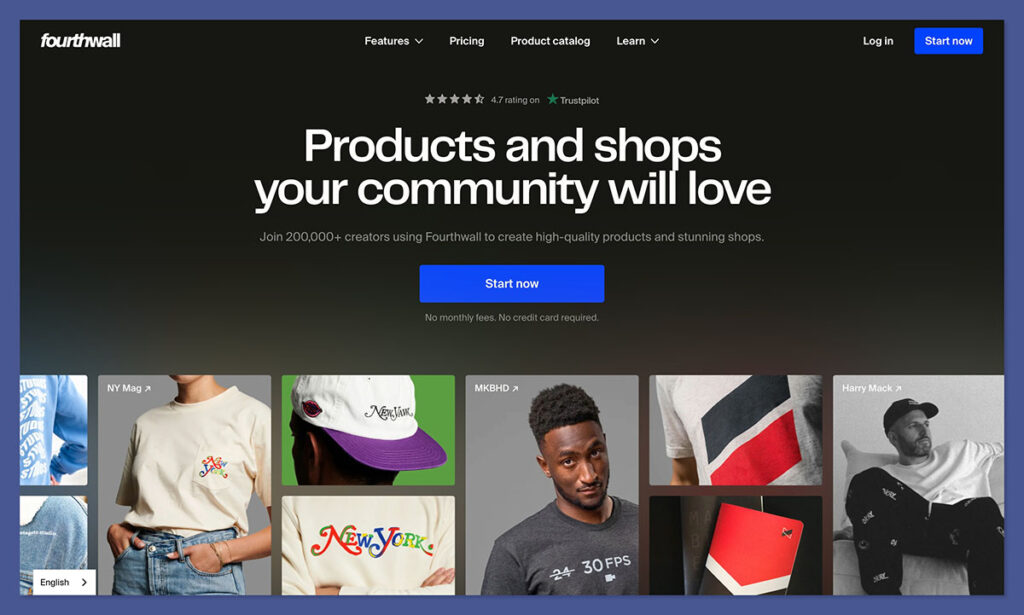
Τιμολόγηση: Δωρεάν πρόγραμμα για όλους, πρόγραμμα Pro για super users από 19$ το μήνα.
Τέταρτο τείχος είναι μία από τις λίγες πλατφόρμες που αντιμετωπίζει το YouTube, όπως και διάφορες άλλες πλατφόρμες κοινωνικής δικτύωσης, ως μέρος ενός πραγματικού συστήματος πωλήσεων και όχι απλώς ενός ακόμη καναλιού διανομής.
Μόλις το κατάστημά σας συνδεθεί μέσω των Αγορών YouTube, τα προϊόντα σας μπορούν να εμφανίζονται απευθείας κάτω από βίντεο, Shorts και ζωντανές ροές. Αυτό σημαίνει ότι οι πελάτες μπορούν να κάνουν κλικ και να αγοράσουν, ακριβώς τότε, ενώ εξακολουθούν να παρακολουθούν το περιεχόμενό σας.
Η πραγματική διαφορά με το Fourthwall, ωστόσο, είναι ότι δεν χρειάζεται να συνδέσετε τίποτα για να λειτουργήσει το σύστημα. Λαμβάνετε το πλήρες κιτ: μια βιτρίνα, έναν κατάλογο προϊόντων premium POD και εκπλήρωση παραγγελιών, όλα σε ένα μέρος.
Τι κάνει Τέταρτο τείχος τόσο ελκυστικό για τους χρήστες του YouTube είναι το πόσο κόπο σας απαλλάσσει από αυτό. Δημιουργείτε τα προϊόντα σας μέσα στο Fourthwall, είτε προσθέτοντας το δικό σαςή εκμεταλλευόμενοι τους προμηθευτές με τους οποίους η Fourthwall έχει ήδη συνεργαστεί για τη δημιουργία προσαρμοσμένων προϊόντων υψηλής ποιότητας. Στη συνέχεια, συνδέετε το κανάλι σας, και συγχρονίστε τα πάντα απευθείας με τις αγορές στο YouTube.
Η Fourthwall ενεργεί ως ο εγγεγραμμένος έμπορος σας, διαχειριζόμενη τον φόρο πωλήσεων και τον ΦΠΑ για εσάς. Για τα προϊόντα στον κατάλογό της, ασχολείται επίσης με την υποστήριξη πελατών.
Επιπλέον, όταν είστε έτοιμοι να προχωρήσετε πέρα από τα εμπορεύματα, το Fourthwall σάς επιτρέπει να πουλάτε συνδρομές, ψηφιακές λήψεις και άλλα προσαρμοσμένα είδη στο ίδιο κατάστημα, χωρίς επιπλέον εφαρμογές.
Υπάρχει λιγότερος έλεγχος από ό,τι με κάτι σαν ShopifyΔεν έχετε αμέτρητους προμηθευτές για να διαλέξετε για POD, και δεν προσαρμόζετε περίπλοκες πληρωμές. Αλλά για τους περισσότερους ανθρώπους που χρησιμοποιούν τις Αγορές YouTube, αυτό δεν έχει και τόση σημασία. Αυτό που έχει σημασία είναι πόσο χρόνο εξοικονομείτε.
Τι μας αρέσει στο Fourthwall
- Δεν υπάρχουν μηνιαίες χρεώσεις πλατφόρμας για όσο διάστημα θέλετε
- Περιλαμβάνεται premium εκτύπωση κατ' απαίτηση
- Υποστήριξη για την πώληση φυσικών προϊόντων, ψηφιακών προϊόντων και συνδρομών
- Άμεσες ενσωματώσεις με το YouTube Shopping και άλλα κανάλια κοινωνικής δικτύωσης
- Διαχειρίζονται τους φόρους και την υποστήριξη πελατών για προϊόντα από τον κατάλογό τους
- Εύκολο στη χρήση ακόμα κι αν είστε αρχάριος
Αυτό που δεν μας αρέσει στο Fourthwall
- Οι βασικές τιμές των POD μπορεί να είναι υψηλότερες (πληρώνετε για την ποιότητα)
- Λιγότερος έλεγχος στους προμηθευτές για POD και ροές ολοκλήρωσης αγοράς
Το Fourthwall έχει πραγματικά πολύ νόημα αν θέλετε να πουλάτε προϊόντα στο YouTube χωρίς να χρειάζεται να αντιμετωπίσετε το άγχος της διαχείρισης μιας ολόκληρης επιχείρησης ηλεκτρονικού εμπορίου μόνοι σας. Μπορείτε ακόμα να δημιουργήσετε μια επωνυμία και να εξερευνήσετε διαφορετικές επιλογές δημιουργίας εσόδων, απλώς υπάρχει λιγότερη δουλειά.
Καλύτερο για: Δημιουργοί, επωνυμίες και ομάδες που θέλουν να πουλήσουν μέσω του YouTube και άλλων καναλιών κοινωνικής δικτύωσης χωρίς να διαχειρίζονται μια περίπλοκη γκάμα εργαλείων ή ενοχλητική διοικητική εργασία.
2. Shopify
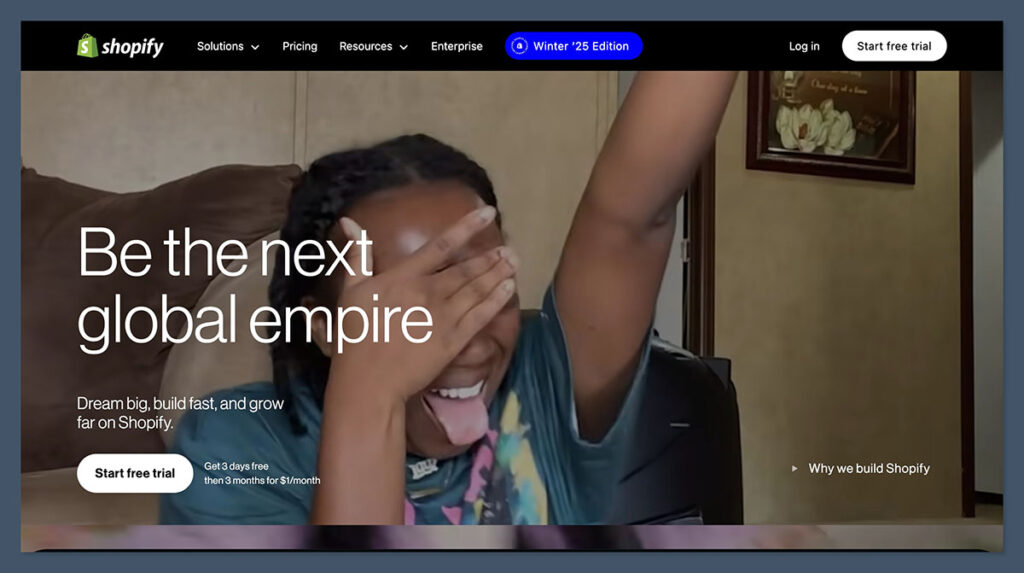
Βασικό: 39$/μήνα (29$/μήνα ετησίως)Αύξηση: 105$/μήνα (79$/μήνα ετησίως)YouTube Analytics: Ναι
Shopify είναι ο πιο σημαντικός συνεργάτης αγορών του YouTube και μία από τις λίγες πλατφόρμες όπου μπορείτε να δείτε δεδομένα πωλήσεων και παραγγελιών απευθείας μέσα στο YouTube Analytics.
Η σύνδεση λειτουργεί μέσω της εφαρμογής Google & YouTube στο Shopify διαχειριστής: εγκαθιστάτε την εφαρμογή, συνδέετε τον λογαριασμό σας στο Google Merchant Center, συνδέετε το κανάλι σας στο YouTube, και ο κατάλογος προϊόντων σας συγχρονίζεται αυτόματαΑπό εκεί, μπορείτε να προσθέσετε ετικέτες σε προϊόντα σε βίντεο, Shorts και ζωντανές ροές απευθείας από το YouTube Studio.
Το πραγματικό πλεονέκτημα του Shopify είναι αυτό που συμβαίνει εκτός YouTube. Αποκτάτε ένα πλήρως εξοπλισμένο ηλεκτρονικό κατάστημα με χιλιάδες εφαρμογές, προηγμένη διαχείριση αποθέματος, κωδικούς έκπτωσης, ανάκτηση εγκαταλελειμμένου καλαθιού αγορών, προφίλ πελατών και μάρκετινγκ μέσω email.
Αν σκοπεύετε να πουλήσετε πέρα από τα εμπορεύματα (τη δική σας σειρά προϊόντων, ψηφιακά προϊόντα, συνδρομές ή φυσικό απόθεμα), Shopify σας παρέχει υποδομή που οι πλατφόρμες μόνο για POD δεν μπορούν να ταιριάξουν.
Για τις ΗΠΑ Shopify για τους εμπόρους, το YouTube Shopping υποστηρίζει ενσωματωμένο checkout. Αυτό σημαίνει ότι οι θεατές μπορούν να ολοκληρώσουν αγορές χωρίς να φύγουν από το YouTube, κάτι που εξαλείφει ένα σημαντικό σημείο τριβής στη διαδικασία αγοράς. Αυτή η λειτουργία απαιτεί Shopify Payments και υποβάλλοντας στοιχεία επικοινωνίας υποστήριξης μέσω του λογαριασμού σας στο Google Merchant Center.
Το μειονέκτημα είναι το κόστος. Το βασικό πρόγραμμα ξεκινά από 39$/μήνα (ή 29$/μήνα εάν δεσμευτείτε για ετήσια χρέωση), και τα περισσότερα καταστήματα καταλήγουν να ξοδεύουν επιπλέον 50 έως 100 δολάρια/μήνα σε εφαρμογές για κριτικές, μάρκετινγκ μέσω email, upsells και άλλες λειτουργίες που δεν περιλαμβάνονται από προεπιλογή. Εάν δεν χρησιμοποιείτε Shopify Payments, Οι χρεώσεις συναλλαγών τρίτων ύψους 2% στο Basic προσθέτουν στο κόστος.
Αυτό που μας αρέσει Shopify
- Επίσημος συνεργάτης Αγορών YouTube με δεδομένα πωλήσεων ορατά στο YouTube Analytics
- Ενσωματωμένη ολοκλήρωση αγοράς στο YouTube για εμπόρους από τις ΗΠΑ (Shopify Payments απαιτείται)
- Πλήρης πλατφόρμα ηλεκτρονικού εμπορίου με εφαρμογές, θέματα, απόθεμα και πωλήσεις σε πολλαπλά κανάλια
- Ο συγχρονισμός αποθεμάτων σε πραγματικό χρόνο αποτρέπει την υπερπώληση
- Κλιμακώνεται από μεμονωμένο δημιουργό σε λειτουργία σε επίπεδο επιχείρησης
Τι δεν μας αρέσει Shopify
- Το μηνιαίο κόστος αυξάνεται γρήγορα, ειδικά με τις απαραίτητες εφαρμογές
- Απαιτείται σύνδεση μέσω της εφαρμογής Google & YouTube, η οποία προσθέτει βήματα εγκατάστασης
- Δεν υπάρχει ενσωματωμένο POD. Χρειάζεστε έναν τρίτο πάροχο όπως Printful or Printify
- Χρέωση συναλλαγής τρίτου μέρους 2% στο Basic εάν δεν το χρησιμοποιείτε Shopify Payments
- Πιο περίπλοκο από αυτό που πραγματικά χρειάζονται πολλοί δημιουργοί μόνο για εμπορικά προϊόντα
Shopify είναι η καλύτερη επιλογή αν το κανάλι σας στο YouTube αποτελεί μέρος μιας μεγαλύτερης επιχείρησης ηλεκτρονικού εμπορίου. Αλλά αν θέλετε να πουλάτε μόνο εμπορεύματα στους συνδρομητές σας και δεν χρειάζεστε όλο το πακέτο ηλεκτρονικού εμπορίου, πληρώνετε για υποδομή που δεν θα χρησιμοποιήσετε.
Καλύτερο για: Κανάλια που δημιουργούν μια αυτόνομη επωνυμία ή κατάστημα πέρα από τα βασικά εμπορεύματα. Ιδανικό για δημιουργούς που θέλουν μέγιστο έλεγχο στον κατάλογό τους, την τιμολόγηση, τα δεδομένα πελατών και τις πωλήσεις σε πολλαπλά κανάλια (Amazon, Instagram, TikTok και YouTube από έναν πίνακα ελέγχου).
Καλύτερο για: Δημιουργοί που θέλουν έναν αποδεδειγμένο, μηδενικού κόστους τρόπο για να προσελκύσουν εμπορεύματα στα βίντεό τους στο YouTube με ελάχιστη εγκατάσταση. Ιδανικό για να δοκιμάσετε τι πουλάει πριν επενδύσετε σε μια πιο ισχυρή πλατφόρμα.
2. Wix

Τιμολόγηση: Σχέδια ηλεκτρονικού εμπορίου από 17 $/μήναΜηνιαία χρέωση: Ναι
Wix αναφέρεται ως υποστηριζόμενη πλατφόρμα YouTube Shopping, πράγμα που σημαίνει ότι μπορείτε να συνδέσετε ένα Wix ηλεκτρονικό κατάστημα στο κανάλι σας στο YouTube μέσω του YouTube Studio. Η σύνδεση λειτουργεί μέσω του Google Merchant Center, συγχρονίζοντας το Wix κατάλογος προϊόντων στο YouTube.
Wix είναι ένα εργαλείο δημιουργίας ιστοσελίδων γενικής χρήσης με δυνατότητες ηλεκτρονικού εμπορίου, όχι μια πλατφόρμα εμπορευμάτων ειδικά για δημιουργούς. Εάν έχετε ήδη ένα Wix ιστότοπος για την επωνυμία, το ιστολόγιο ή το χαρτοφυλάκιό σας, Η προσθήκη των Αγορών YouTube σε αυτό είναι μια λογική επέκτασηΑποκτάτε το πλεονέκτημα της διαχείρισης ολόκληρης της διαδικτυακής σας παρουσίας (ιστότοπος, ιστολόγιο, ηλεκτρονικό κατάστημα, ενσωμάτωση YouTube) από έναν μόνο πίνακα ελέγχου.
Οι λειτουργίες ηλεκτρονικού εμπορίου είναι σταθερές αλλά όχι τόσο εκτεταμένες όσο Shopify's. Λαμβάνετε διαχείριση προϊόντων, παρακολούθηση παραγγελιών, κωδικούς έκπτωσης και βασικά αναλυτικά στοιχεία. Ο επεξεργαστής μεταφοράς και απόθεσης καθιστά προσβάσιμο τον σχεδιασμό της βιτρίναςκαι υπάρχουν πρότυπα σχεδιασμένα για ηλεκτρονικά καταστήματα. Ωστόσο, Wix δεν διαθέτει το βάθος του οικοσυστήματος εφαρμογών, την ισχύ πωλήσεων σε πολλαπλά κανάλια και τον προηγμένο αυτοματισμό που Shopify παρέχει.
Εάν δεν είστε ήδη ενεργοποιημένοι Wix, δεν υπάρχει λόγος να το επιλέξετε ειδικά για τις Αγορές YouTube. Shopify, ή ακόμα και η Άνοιξη θα φέρει τα προϊόντα σας στο ράφι πιο γρήγορα και με καλύτερα εργαλεία ειδικά για δημιουργούς.
Αυτό που μας αρέσει Wix
- Επίσημα υποστηρίζεται από το YouTube Shopping
- Πλήρης δημιουργία ιστοσελίδων με ενσωματωμένο ηλεκτρονικό εμπόριο
- Εύκολος σχεδιασμός καταστήματος με δυνατότητα μεταφοράς και απόθεσης
- Ενιαίος πίνακας ελέγχου για ιστότοπο + κατάστημα + YouTube
Τι δεν μας αρέσει Wix
- Δεν έχει σχεδιαστεί ειδικά για δημιουργούς ή εμπορεύματα
- Οι λειτουργίες ηλεκτρονικού εμπορίου είναι λιγότερο προηγμένες από Shopify
- Δεν υπάρχουν ενσωματωμένες δυνατότητες POD
- Μικρότερο οικοσύστημα εφαρμογών και λιγότερες ενσωματώσεις
Καλύτερο για: Δημιουργοί που έχουν ήδη ένα Wix ιστότοπο και θέλετε να προσθέσετε το YouTube Shopping χωρίς να κάνετε μετεγκατάσταση σε διαφορετική πλατφόρμα. Δεν είναι το καλύτερο σημείο εκκίνησης αν δημιουργείτε από την αρχή.
3. Spreadshop
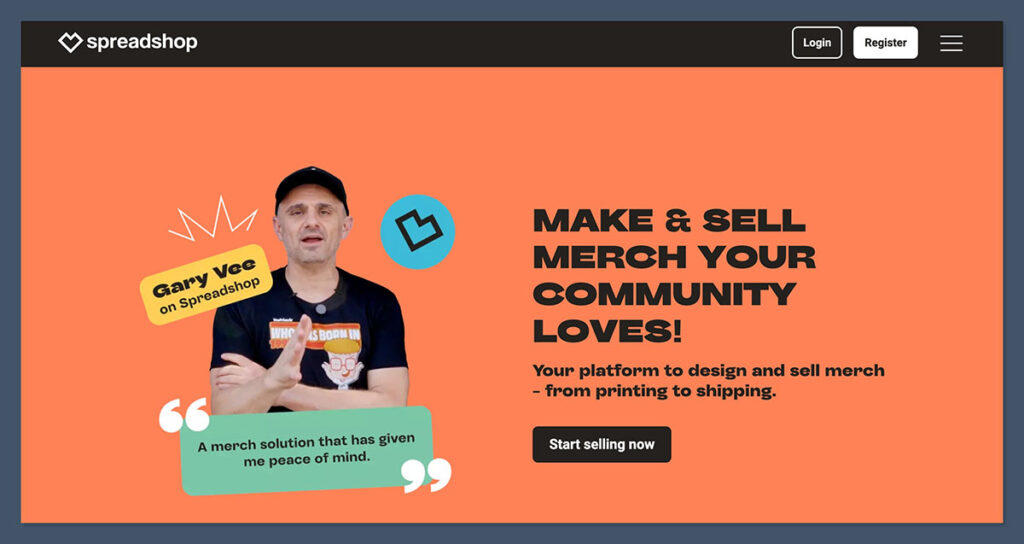
Τιμολόγηση: Δωρεάν (βάσει περιθωρίου κέρδους) Μηνιαία χρέωση: Καμία YouTube Analytics: Ναι
Το Spreadshop είναι μια άλλη δωρεάν πλατφόρμα POD με επίσημη υποστήριξη για τις Αγορές YouTube και δεδομένα αναλυτικών στοιχείων ορατά στο YouTube Studio. Είναι μέρος του Spreadshirt οικογένεια, η οποία δραστηριοποιείται στον κλάδο της ένδυσης κατά παραγγελία για πάνω από δύο δεκαετίες. Όλες οι παραγγελίες τυπώνονται στις ΗΠΑ και παράγονται εντός 48 ωρών, γεγονός που της δίνει πλεονέκτημα ταχύτητας έναντι των πλατφορμών που βασίζονται σε κατανεμημένα δίκτυα εκτύπωσης.
Το μοντέλο λειτουργεί με τον ίδιο τρόπο όπως το Spring: κάθε προϊόν έχει μια βασική τιμή, ορίζετε ένα περιθώριο κέρδους και κρατάτε τη διαφορά. Το Spreadshop προσφέρει επίσης μπόνους απόδοσης βάσει όγκου που μειώνουν το βασικό σας κόστος καθώς πουλάτε περισσότερες μονάδες, γεγονός που βελτιώνει τα περιθώρια κέρδους με την πάροδο του χρόνου. Ένα ανδρικό μπλουζάκι ξεκινά από μια βασική τιμή περίπου 13.99 $, αλλά με 50 μονάδες ανά μήνα η βασική τιμή μειώνεται στα 12.98 $ και με 250 μονάδες μειώνεται περαιτέρω στα 12.37 $.
Ο κατάλογος προϊόντων περιλαμβάνει πάνω από 300 είδη και το εργαλείο σχεδίασης με μεταφορά και απόθεση είναι αρκετά απλό για δημιουργούς χωρίς εμπειρία σχεδίασης. Το Spreadshop παρέχει επίσης εργαλεία κοινωνικής κοινοποίησης που δημιουργούν έτοιμες εικόνες μακέτας μεγέθους για Instagram, Facebook, Twitterκαι το Pinterest, το οποίο είναι μια ωραία πινελιά για την προώθηση εμπορευμάτων σε όλες τις πλατφόρμες.
Το κύριο κενό είναι η προσαρμογή της βιτρίνας και η έλλειψη βάσης δεδομένων πελατών. Δεν μπορείτε να συλλέξετε διευθύνσεις email, να εκτελέσετε επαναστόχευση ή να δημιουργήσετε οποιοδήποτε είδος άμεσης σχέσης με αγοραστές. Τα αναλυτικά στοιχεία περιορίζονται στις πωλήσεις και τις πληρωμές. Για πληροφορίες σχετικά με την επισκεψιμότητα, πρέπει να ρυθμίσετε την παρακολούθηση του Google Analytics ή του Facebook Pixel χειροκίνητα μέσω του backend του Spreadshop.
Τι μας αρέσει στο Spreadshop
- Επίσημα υποστηρίζεται από το YouTube Shopping με ενσωμάτωση αναλυτικών στοιχείων
- Εντελώς δωρεάν χωρίς μηνιαίες χρεώσεις
- Παραγωγή με έδρα τις ΗΠΑ με 48ωρη εκπλήρωση παραγγελιών
- Μπόνους όγκου που μειώνουν το βασικό κόστος καθώς αυξάνονται οι πωλήσεις
- 300+ προϊόντα με εύκολο εργαλείο σχεδίασης με μεταφορά και απόθεση
Τι δεν μας αρέσει στο Spreadshop
- Δεν υπάρχει βάση δεδομένων πελατών ή συλλογή email
- Περιορισμένη προσαρμογή βιτρίνας σε σύγκριση με Shopify
- Τα αναλυτικά στοιχεία είναι βασικά. Η παρακολούθηση της επισκεψιμότητας απαιτεί χειροκίνητη ρύθμιση.
- Λιγότερες ενσωματώσεις από την Άνοιξη
Το Spreadshop καταλαμβάνει παρόμοιο χώρο με το Spring, αλλά με ένα μικρό πλεονέκτημα στην ταχύτητα παραγωγής και στο κίνητρο τιμολόγησης όγκου. Αν επιλέγετε μεταξύ των δύο για μια απλή λειτουργία εμπορικών προϊόντων στο YouTube, τα μπόνους απόδοσης του Spreadshop το καθιστούν οριακά πιο κερδοφόρο σε υψηλότερους όγκους.
Καλύτερο για: Δημιουργοί που θέλουν ένα απλό, δωρεάν κατάστημα εμπορευμάτων συνδεδεμένο με το YouTube Shopping με γρήγορη παραγωγή στις ΗΠΑ και βελτίωση των περιθωρίων κέρδους καθώς αυξάνεται ο όγκος.
4. Γραμμή καταστημάτων
Τιμολόγηση: Διαφέρει ανάλογα με το πρόγραμμαYouTube Analytics: Ελέγξτε τη διαθεσιμότητα
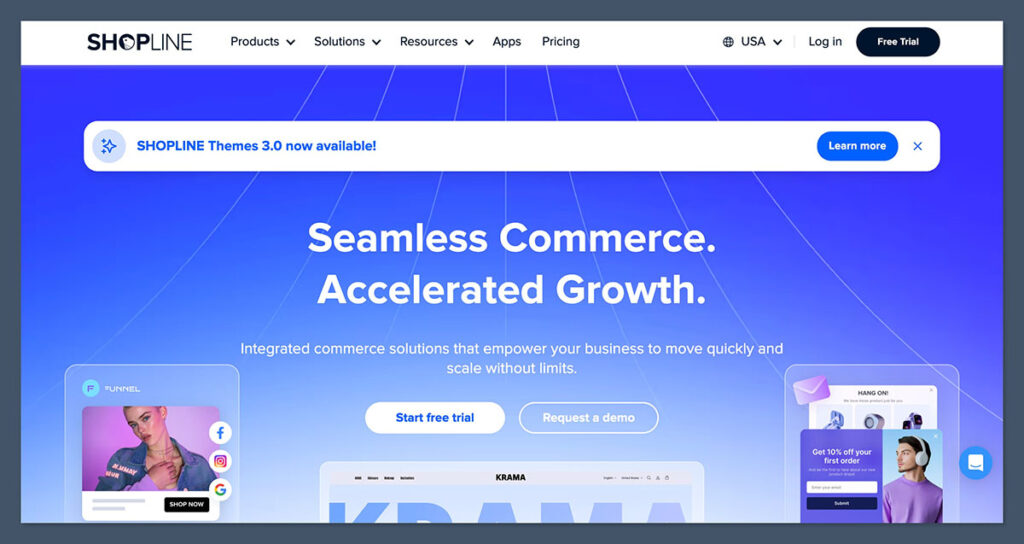
Το Shopline είναι μια επίσημη πλατφόρμα αγορών YouTube που εμφανίζεται στη λίστα υποστηριζόμενων πλατφορμών μέσα στο YouTube Studio. Είναι μια πλήρης πλατφόρμα ηλεκτρονικού εμπορίου, παρόμοιας εμβέλειας με Shopify, αλλά με ισχυρότερες ρίζες στις ασιατικές και αναδυόμενες αγορές. Εάν το κοινό σας επικεντρώνεται στις περιοχές Ασίας-Ειρηνικού ή EMEA, το Shopline προσφέρει τοπικές πύλες πληρωμών, πολυγλωσσική υποστήριξη και ενσωματώσεις logistics ανά περιοχή, τις οποίες οι πλατφόρμες με επίκεντρο τη Δύση χειρίζονται με λιγότερο ομαλό τρόπο.
Η σύνδεση Αγορών YouTube λειτουργεί με την ίδια ροή όπως και άλλες υποστηριζόμενες πλατφόρμες: συνδέετε το κατάστημα Shopline στην καρτέλα Αγορές του YouTube Studio, τα προϊόντα σας συγχρονίζονται μέσω του Google Merchant Center και μπορείτε να προσθέσετε ετικέτες σε προϊόντα στο περιεχόμενό σας. Το Shopline υποστηρίζει το κοινωνικό εμπόριο σε πολλά κανάλια, επομένως ο κατάλογος προϊόντων σας μπορεί να τροφοδοτείται ταυτόχρονα στο YouTube, το Facebook, το Instagram και το TikTok.
Η πλατφόρμα είναι λιγότερο γνωστή στους Δυτικούς δημιουργούς, πράγμα που σημαίνει ότι οι πόροι της κοινότητας, τα εκπαιδευτικά βίντεο τρίτων και το οικοσύστημα εφαρμογών είναι πιο περιορισμένα από αυτά που θα βρείτε με ShopifyΕάν το κοινό σας βρίσκεται κυρίως στη Βόρεια Αμερική ή την Ευρώπη και δεν έχετε συγκεκριμένες περιφερειακές απαιτήσεις, Shopify πιθανότατα θα ταιριάζει καλύτερα.
Τι μας αρέσει στο Shopline
- Επίσημα καταχωρημένο στις υποστηριζόμενες πλατφόρμες αγορών του YouTube Studio
- Ισχυρή υποστήριξη πολλαπλών γλωσσών και πολλαπλών νομισμάτων
- Τοπικές πληρωμές και logistics για τις αγορές APAC/EMEA
- Πολυκαναλικό κοινωνικό εμπόριο (YouTube, Facebook, Instagram, TikTok)
Τι δεν μας αρέσει στο Shopline
- Περιορισμένη αναγνωρισιμότητα επωνυμίας και κοινοτικοί πόροι στις δυτικές αγορές
- Μικρότερο οικοσύστημα εφαρμογών σε σύγκριση με Shopify
- Λιγότερη τεκμηρίωση και εκπαιδευτικά σεμινάρια διαθέσιμα στα Αγγλικά
Καλύτερο για: Δημιουργοί και έμποροι στις περιοχές Ασίας-Ειρηνικού ή Ευρώπης, Μέσης Ανατολής και Αφρικής (EMEA) που επιθυμούν μια σύγχρονη, πλήρως λειτουργική πλατφόρμα ηλεκτρονικού εμπορίου με άμεση ενσωμάτωση των Αγορών YouTube και ισχυρή υποστήριξη τοπικής προσαρμογής.
5. TeePublic
Τιμολόγηση: Δωρεάν (με βάση τα δικαιώματα) Μηνιαία χρέωση: Καμία
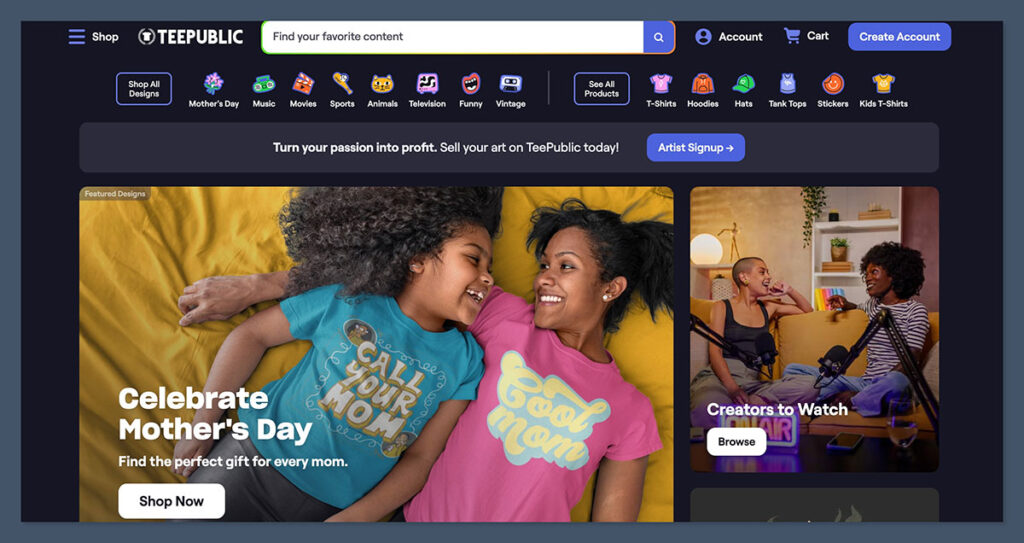
Το TeePublic εμφανίζεται στην επίσημη λίστα με τις υποστηριζόμενες πλατφόρμες αγορών του YouTube. Λειτουργεί ως πλατφόρμα αγοράς και όχι ως αυτόνομο εργαλείο δημιουργίας καταστημάτων, πράγμα που σημαίνει ότι εσείς ανεβάζετε σχέδια, το TeePublic χειρίζεται την βιτρίνα, την παραγωγή, την αποστολή και την εξυπηρέτηση πελατών και εσείς κερδίζετε δικαιώματα για κάθε πώληση.
Το πλεονέκτημα του TeePublic για το YouTube είναι ότι απαιτεί σχεδόν μηδενική λειτουργική προσπάθεια. Δεν διαχειρίζεστε κατάστημα, δεν ορίζετε τιμές αποστολής ούτε χειρίζεστε παράπονα πελατών. Το μειονέκτημα είναι ότι έχετε πολύ λίγο έλεγχο στην επωνυμία, την τιμολόγηση ή την εμπειρία του πελάτη. Τα προϊόντα σας βρίσκονται δίπλα σε σχέδια χιλιάδων άλλων δημιουργών και το TeePublic συχνά πραγματοποιεί πωλήσεις σε ολόκληρο τον ιστότοπο που μπορούν να μειώσουν τα κέρδη σας ανά μονάδα.
Το TeePublic λειτουργεί καλύτερα ως συμπληρωματικό κανάλι. Εάν έχετε ήδη μια κύρια πλατφόρμα εμπορευμάτων όπως Shopify και θέλετε επιπλέον παθητική προβολή, συνδέοντας το TeePublic με το κανάλι σας στο YouTube, προσθέτετε προϊόντα στο ράφι σας χωρίς να απαιτείται επιπλέον διαχείριση.
Τι μας αρέσει στο TeePublic
- Επίσημα υποστηριζόμενη πλατφόρμα αγορών YouTube
- Μηδενική προσπάθεια μετά την ανάρτηση σχεδίων
- Δεν υπάρχει διαχείριση καταστήματος, αποστολής ή εξυπηρέτησης πελατών προς διεκπεραίωση
Τι δεν μας αρέσει στο TeePublic
- Το μοντέλο αγοράς σημαίνει ότι δεν υπάρχει έλεγχος επωνυμίας
- Οι συχνές πωλήσεις σε ολόκληρο τον ιστότοπο μειώνουν τα κέρδη ανά μονάδα
- Δεν υπάρχει ιδιοκτησία δεδομένων πελατών
- Περιορισμένη ευελιξία τιμολόγησης
- Τα σχέδιά σας ανταγωνίζονται άμεσα με άλλους δημιουργούς στην ίδια πλατφόρμα
Καλύτερο για: Δημιουργοί που επιθυμούν παθητικό εισόδημα από εμπορικά προϊόντα μέσω των Αγορών YouTube χωρίς να έχουν κάποιο ηλεκτρονικό κατάστημα. Λειτουργεί καλύτερα ως δευτερεύον κανάλι παράλληλα με μια κύρια πλατφόρμα εμπορικών προϊόντων.
6. Άνοιξη (Teespring)
Τιμολόγηση: Δωρεάν (βάσει περιθωρίου κέρδους) Μηνιαία χρέωση: Καμία YouTube Analytics: Ναι
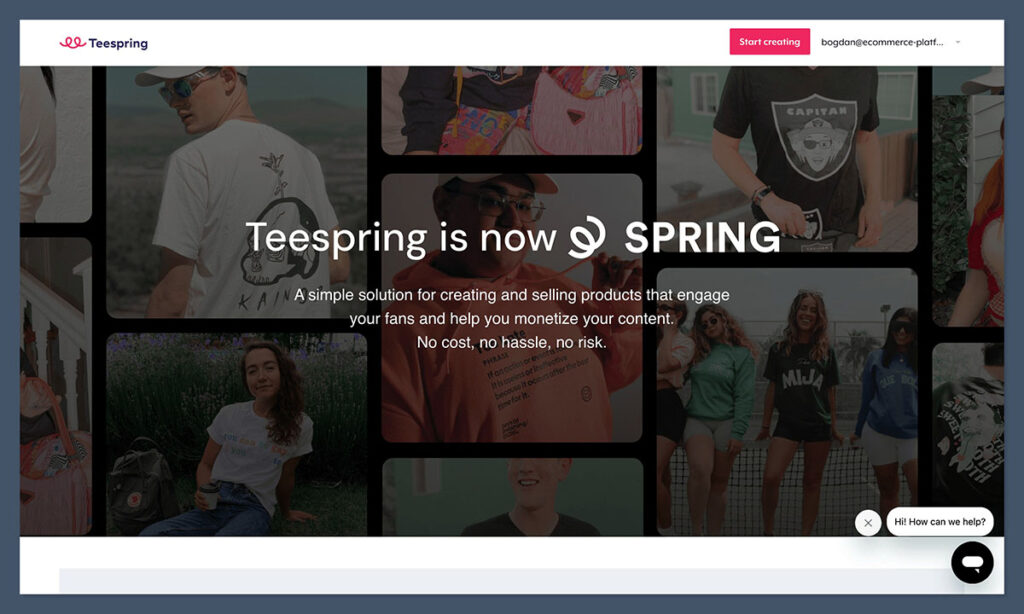
Η Spring ήταν ένας από τους αρχικούς συνεργάτες εμπορευμάτων του YouTube και παραμένει ένα από τα πιο αναγνωρισμένα ονόματα στα εμπορεύματα δημιουργών. Η πλατφόρμα συνδέεται απευθείας με το YouTube Shopping και είναι μία από τις πλατφόρμες όπου τα δεδομένα πωλήσεων εμφανίζονται στο YouTube Analytics. Η εγκατάσταση είναι απλή: συνδέστε τον λογαριασμό σας Spring με το YouTube μέσω του YouTube Studio, επιλέξτε ποια προϊόντα θα εμφανίζονται και το ράφι εμπορευμάτων σας θα δημοσιευτεί.
Το μοντέλο τιμολόγησης είναι απλό. Η Spring χρεώνει ένα βασικό κόστος ανά είδος και εσείς ορίζετε όποια τιμή λιανικής θέλετε πάνω από αυτήν. Η διαφορά είναι το κέρδος σας. Δεν υπάρχουν μηνιαίες χρεώσεις, δεν υπάρχουν επίπεδα συνδρομής και δεν υπάρχουν προκαταβολικά έξοδα. Η Spring αναλαμβάνει εξ ολοκλήρου την παραγωγή, την αποστολή και την εξυπηρέτηση πελατών.
Το Spring υποστηρίζει επίσης ενσωματώσεις με Twitch, TikTok, Streamlabs και Linktree, καθιστώντας το μια αξιοπρεπή επιλογή πολλαπλών πλατφορμών για δημιουργούς που δίνουν προτεραιότητα στα μέσα κοινωνικής δικτύωσης. Το ηλεκτρονικό κατάστημα είναι προσαρμόσιμο σε κάποιο βαθμό, αν και είναι πιο περιορισμένο από αυτό που έχετε με το Spring. Shopify.
Οι κύριοι περιορισμοί είναι η συνέπεια στην ποιότητα των προϊόντων, το υψηλότερο βασικό κόστος που συμπιέζει τα περιθώρια κέρδους σας και η έλλειψη εξειδίκευσης στο ηλεκτρονικό εμπόριο. Δεν υπάρχει ανάκτηση εγκαταλελειμμένου καλαθιού αγορών, δεν υπάρχει βάση δεδομένων πελατών που να ελέγχετε και υπάρχουν περιορισμένα αναλυτικά στοιχεία πέρα από τις βασικές αναφορές πωλήσεων. Το κόστος αποστολής μπορεί επίσης να είναι εκπληκτικά υψηλό, επειδή τα είδη συχνά αποστέλλονται από διαφορετικές εγκαταστάσεις.
Τι μας αρέσει στην Άνοιξη
- Άμεση ενσωμάτωση αγορών YouTube με υποστήριξη αναλυτικών στοιχείων
- Μηδενικό αρχικό κόστος και χωρίς μηνιαίες χρεώσεις
- Διαχειρίζεται όλη την παραγωγή, τη ναυτιλία και την εξυπηρέτηση πελατών
- Ενσωματώσεις πολλαπλών πλατφορμών (Twitch, TikTok, Streamlabs)
- Πλήρης έλεγχος των τιμών και των περιθωρίων κέρδους
Αυτό που δεν μας αρέσει στην Άνοιξη
- Τα υψηλότερα βασικά κόστη συμπιέζουν τα περιθώρια κέρδους σε σύγκριση με άλλες πλατφόρμες POD
- Η ποιότητα των προϊόντων μπορεί να είναι ασυνεπής σε διαφορετικές κατηγορίες προϊόντων
- Το κόστος αποστολής είναι υψηλό και τα είδη ενδέχεται να αποστέλλονται από ξεχωριστές εγκαταστάσεις
- Δεν υπάρχει ανάκτηση εγκαταλελειμμένου καλαθιού αγορών ή ουσιαστικά εργαλεία δεδομένων πελατών
- Η προσαρμογή της βιτρίνας είναι περιορισμένη.
- Η ακρίβεια των χρωμάτων στον ιστότοπο δεν ταιριάζει πάντα με το τελικό προϊόν
Η άνοιξη είναι ιδανική για ένα πρώτο βήμα στα εμπορικά σήματα του YouTube. Είναι η πιο εύκολη διαδικασία για να φέρετε προϊόντα στο ράφι σας και η άμεση ενσωμάτωση στο YouTube σημαίνει λιγότερα τεχνικά εμπόδια. Αλλά αν ενδιαφέρεστε σοβαρά να δημιουργήσετε μια επωνυμία εμπορικών σημάτων με υγιή περιθώρια κέρδους και διατήρηση πελατών, πιθανότατα θα την ξεπεράσετε.
Πώς αξιολογήσαμε αυτές τις πλατφόρμες
| Περιοχή Δοκιμών | Τι Αξιολογούμε | Βάρος |
|---|---|---|
| Ενσωμάτωση στο YouTube | Εάν η πλατφόρμα αναφέρεται επίσημα στην καρτέλα Αγορές του YouTube Studio, η ποιότητα συγχρονισμού προϊόντων, η ορατότητα έγκρισης/απόρριψης και η υποστήριξη του YouTube Analytics. | 30% |
| Ρύθμιση & Ευκολία Χρήσης | Χρόνος από τη δημιουργία λογαριασμού έως τα ζωντανά προϊόντα στο YouTube, αριθμός βημάτων που απαιτούνται, ποιότητα τεκμηρίωσης και πόσες τεχνικές γνώσεις απαιτούνται. | 20% |
| Τιμολόγηση & Περιθώρια | Μηνιαίες χρεώσεις, κόστος βάσης προϊόντος, τέλη συναλλαγών, ποσοστά επεξεργασίας πληρωμών και ρεαλιστικά περιθώρια κέρδους για τυπικά εμπορεύματα. | 20% |
| Ποιότητα Προϊόντων & Κατάλογος | Γκάμα διαθέσιμων προϊόντων, συνέπεια στην ποιότητα εκτύπωσης, ταχύτητα εκπλήρωσης και διαφάνεια στο κόστος αποστολής. | 15% |
| Χαρακτηριστικά Δημιουργού | Συνδρομές, ψηφιακά προϊόντα, ενσωματώσεις πολλαπλών πλατφορμών, προσαρμογή βιτρίνας και ιδιοκτησία δεδομένων πελατών. | 15% |
Τελική απόφαση
Shopify είναι η καλύτερη επιλογή εάν το κανάλι σας στο YouTube αποτελεί μέρος μιας μεγαλύτερης επιχείρησης ηλεκτρονικού εμπορίου. Εάν χρειάζεστε προηγμένη διαχείριση αποθέματος, ένα οικοσύστημα εφαρμογών σε βάθος, πωλήσεις σε πολλά κανάλια πέρα από τις πλατφόρμες κοινωνικής δικτύωσης ή σκοπεύετε να επεκτείνετε τα ετήσια έσοδα σε εξαψήφια ή επταψήφια ψηφία, ShopifyΗ υποδομή του δικαιολογεί το μηνιαίο κόστος.
Το Spring και το Spreadshop είναι και τα δύο αξιόπιστες, δωρεάν εναλλακτικές λύσεις για δημιουργούς που θέλουν την απλούστερη δυνατή διαδρομή για εμπορικά προϊόντα στο YouTube. Μεταξύ των δύο, το Spreadshop προσφέρει καλύτερα περιθώρια κέρδους σε υψηλότερους όγκους χάρη στα μπόνους απόδοσης και την ταχύτερη παραγωγή στις ΗΠΑ. Το Spring έχει ένα μικρό πλεονέκτημα στις ενσωματώσεις κοινωνικού εμπορίου σε πολλαπλές πλατφόρμες.
TeePublic και Wix συμπληρώστε τη λίστα με επιλογές ανάλογα με την περίσταση. Το TeePublic είναι χρήσιμο ως δευτερεύον κανάλι μηδενικής προσπάθειας και Wix έχει νόημα μόνο αν ήδη χρησιμοποιείτε τον ιστότοπό σας σε αυτό.
Συχνές Ερωτήσεις
Πόσους συνδρομητές χρειάζομαι για το ράφι προϊόντων YouTube;
Χρειάζεστε τουλάχιστον 1,000 συνδρομητές και πρέπει να συμμετέχετε στο Πρόγραμμα συνεργατών YouTube. Τα επίσημα κανάλια καλλιτεχνών εξαιρούνται από το όριο συνδρομητών. Το κανάλι σας δεν μπορεί επίσης να οριστεί ως Ειδικό για παιδιά και δεν πρέπει να έχει ενεργές προειδοποιήσεις παραβίασης των Οδηγιών κοινότητας για ρητορική μίσους.
Το YouTube εισπράττει προμήθεια από τις πωλήσεις στο Product Shelf;
Όχι. Το YouTube δεν λαμβάνει ποσοστό από τις πωλήσεις των εμπορευμάτων σας. Όλες οι συναλλαγές, οι χρεώσεις και οι πληρωμές διεκπεραιώνονται εξ ολοκλήρου από τη συνδεδεμένη πλατφόρμα (Shopify, Άνοιξη, κ.λπ.). Ο ρόλος του YouTube είναι η προβολή των προϊόντων. Η εμπορική πλευρά είναι μεταξύ εσάς και της πλατφόρμας σας.
Μπορώ να συνδέσω περισσότερα από ένα καταστήματα στο κανάλι μου στο YouTube;
Ναι. Το YouTube σάς επιτρέπει να συνδέετε ταυτόχρονα πολλά καταστήματα από υποστηριζόμενες πλατφόρμες. Μπορείτε να διαχειριστείτε ποια προϊόντα εμφανίζονται από κάθε κατάστημα μέσω της καρτέλας Αγορές στο YouTube Studio.
Γιατί τα προϊόντα μου δεν εμφανίζονται στο κανάλι μου στο YouTube;
Τα προϊόντα πρέπει να υποβληθούν σε έλεγχο ως προς τις πολιτικές περιεχομένου του YouTube και τα πρότυπα καταχώρισης προϊόντων του Google Merchant Center. Συνήθεις λόγοι απόρριψης περιλαμβάνουν πολύ μικρές εικόνες, περιορισμένες κατηγορίες προϊόντων, ελλιπή δεδομένα προϊόντων και αναντιστοιχίες μεταξύ περιοχών αποστολής.
Μπορώ να χρησιμοποιήσω Printful or Printify για το ράφι προϊόντων YouTube;
Όχι άμεσα. Printful και Printify είναι πάροχοι εκπλήρωσης, όχι πλατφόρμες που αναφέρονται στις υποστηριζόμενες πλατφόρμες αγορών του YouTube. Ωστόσο, μπορείτε να συνδεθείτε Printful or Printify σε ένα Shopify αποθηκεύστε και, στη συνέχεια, συνδέστε το Shopify από το κατάστημα στις Αγορές YouTube. Τα προϊόντα διακινούνται μέσω ShopifyΟ κατάλογος του 's συγχρονίζεται με το YouTube μέσω του Google Merchant Center.


Σχόλια απαντήσεις 0