

If you want a quick answer: Printful is still one of the best print-on-demand (POD) platforms available today.
It’s more scalable, more versatile, and offers better design tools, more integrations, and a more polished user experience.
However, Prodigi remains a solid choice if you’re looking for a simpler platform with eco-conscious values and lower base product costs.
If you're not looking to scale aggressively or need fewer customization options, it can be a great fit for smaller, purpose-driven businesses.
I’ve tested both platforms in detail. What follows is a breakdown of the core features, pros and cons, and side-by-side comparisons that will help you choose the right platform for your business goals.
Quick Verdict: Prodigi vs Printful
| Feature | Printful | Prodigi |
|---|---|---|
| Product Range | 350+ SKUs | 500,000+ SKUs (many are variants) |
| Customization Options | Extensive (embroidery, all-over print) | Basic customization |
| Sustainability | Good (some eco options) | Excellent (carbon neutral, local print) |
| Integrations | 20+ integrations | 6 integrations |
| Mockup Generator | Advanced, free design tools | Basic mockup generator |
| Pricing | Slightly higher base costs | Lower base costs |
| Subscription Plan | Free or $24.99/month Growth plan | Always free |
| Fulfillment Time | 2–5 days (some fast shipping) | 1–3 days (in many regions) |
| Customer Support | 24/7 live chat + email | Email only |
| Overall Verdict | Best for scaling and pro users | Best for simplicity and eco focus |
Pros and Cons Breakdown
Prodigi Pros
- Access to over 500,000 customizable SKUs
- Strong focus on sustainability and local fulfillment
- Supports Shopify, Etsy, WooCommerce, and other major platforms
- Straightforward design process with a clean user interface
- Free to use, no subscription fees
- Faster-than-average production for some items
Prodigi Cons
- Fewer integrations and ecommerce tools
- Limited customization features
- Print quality can vary across product types
- Limited mockup/design tools compared to competitors
Printful Pros
- Offers premium-level customization options
- Excellent mockup generator and free design assets
- Wide range of platform integrations (20+)
- Consistent print quality with owned fulfillment centers
- Paid plan with discounts, free digitization, and other perks
- Well-designed interface for power users and agencies
Printful Cons
- Slightly higher product costs (on average)
- Some reviews report slow customer support during high-volume seasons
- Fewer total SKUs than Prodigi (but more usable variety)
Product Variety and Customization
Printful's Product Range
Printful currently offers around 350+ unique SKUs, with high-demand categories like:
- T-shirts, hoodies, and sweatshirts
- Mugs and drinkware
- Tote bags and backpacks
- Wall art and posters
- Phone cases
- Embroidery-ready apparel
- All-over print and sublimation gear
What sets Printful apart is the depth of customization. You can add embroidery, custom labels, tear-away tags, inside labels, sleeve prints, and more.
The platform also provides:
- An AI-powered image upscaler
- Access to thousands of design assets
- Pre-built lifestyle mockups
- Layered design previews
These tools help ensure your products look polished and ready for ecommerce platforms.
Prodigi vs Printful: The Features Side-by-Side
Both Prodigi and Printful are easy-to-use print on demand platforms that offer access to various high-quality, customizable products you can sell through a range of channels.
They have a lot in common, such as eco-friendly printing options, global fulfillment support, and free plans for beginners.
However, there are some major differences between these platforms that stand out when you put them to the test for yourself (like I did).
Product Variety and Customization
Printful's Product Range

Printful currently offers around 350+ unique SKUs, with a strong focus on high-demand ecommerce categories. The platform’s product catalog includes:
- T-shirts, hoodies, and sweatshirts
- Mugs and drinkware
- Tote bags and backpacks
- Wall art and posters
- Phone cases
- Embroidery-ready apparel
- All-over print and sublimation gear
Printful’s strength lies in its depth of customization options. You can personalize products with:
- Embroidery
- Sleeve prints
- Inside and outside labels
- Tear-away tags
- Custom branding elements like packing slips and inserts
The design environment also includes:
- An AI-powered image upscaler
- Access to thousands of free design assets
- High-quality mockup generators with lifestyle backgrounds
- Layered design previews to visualise product layouts in real-time
This all adds up to a polished, flexible platform that caters to businesses wanting more branding control and creative flexibility, especially for fashion and lifestyle niches.
Prodigi’s Product Range
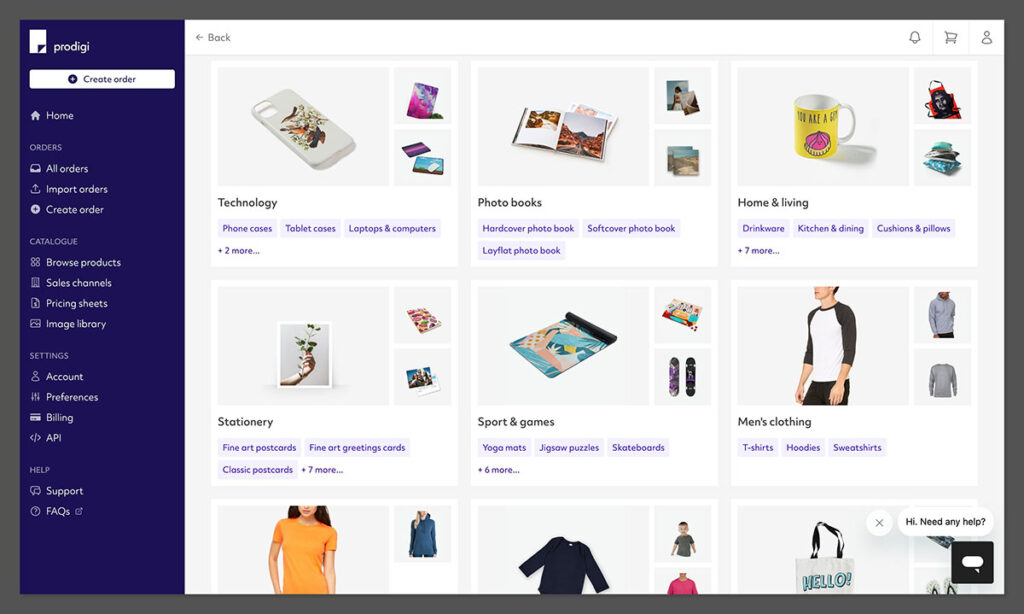
Prodigi claims to offer over 500,000 customizable SKUs, although most of this number reflects product variants (like size, color, and framing options). Still, the core catalog is wide and geared toward creative professionals. Their product selection includes:
- T-shirts, hoodies, and other apparel basics
- Framed and unframed wall art
- Custom photo books, calendars, and greeting cards
- Homeware items like cushions and coasters
- Niche offerings like photo tiles, puzzles, wooden prints, and fine art paper
Where Printful focuses heavily on wearable and lifestyle items, Prodigi shines in the art, photography, and decor space. Many of its bestsellers appeal to Etsy sellers, independent artists, and photographers who want to showcase work on premium print mediums.
When it comes to customization, Prodigi is more limited. You can upload and place designs on products, but the platform does not currently support:
- Embroidery
- Sleeve printing or multi-location printing
- Advanced branding options like custom labels or inserts
The design interface is straightforward, with a clean layout and drag-and-drop functionality, but it doesn’t include AI tools or preloaded design elements.
It’s ideal for those who have print-ready files and simply want to apply them across multiple art or home products without extra creative features.
Prodigi vs Printful: Product Quality
It’s hard to get a clear view of the product quality you’ll get from any print on demand platform. Even if you order samples, quality can vary based on your design files, the items you choose to create, and more.
The good news is that Printful has an excellent reputation for consistently excellent quality.
Most customers say the items they create with Printful always feature crisp, clean prints, excellent materials, and very few mistakes or issues.
This is probably because Printful invests in cutting-edge machinery, and a comprehensive “quality assurance” process.
Prodigi also promises exceptional quality, but I have noticed a few reviews online saying that the print quality can vary between items.
Some people also suggest certain products, like t-shirts, can be a little flimsy and transparent compared to what you get from Printful.
That being said, Prodigi’s base product costs are a little cheaper than Printful’s, particularly if you buy items in bulk.
However, that doesn’t necessarily mean you’ll be able to achieve higher profits – particularly if you can’t rely on consistent quality, so keep that in mind.
Plus, it’s worth noting that Printful has recently reduced the base cost of its items, making them a lot more affordable.
Integrations and Fulfillment
Both Prodigi and Printful offer worldwide fulfillment options, with distribution centers worldwide to ensure items can reach your customers as quickly as possible.
Prodigi does promise slightly faster fulfillment for some products, saying some options can be shipped to customers within two days.
However, it’s worth noting Printful offers some specific “fast delivery” products too.
Additionally, Printful gives you a lot more options for where you can sell your products.
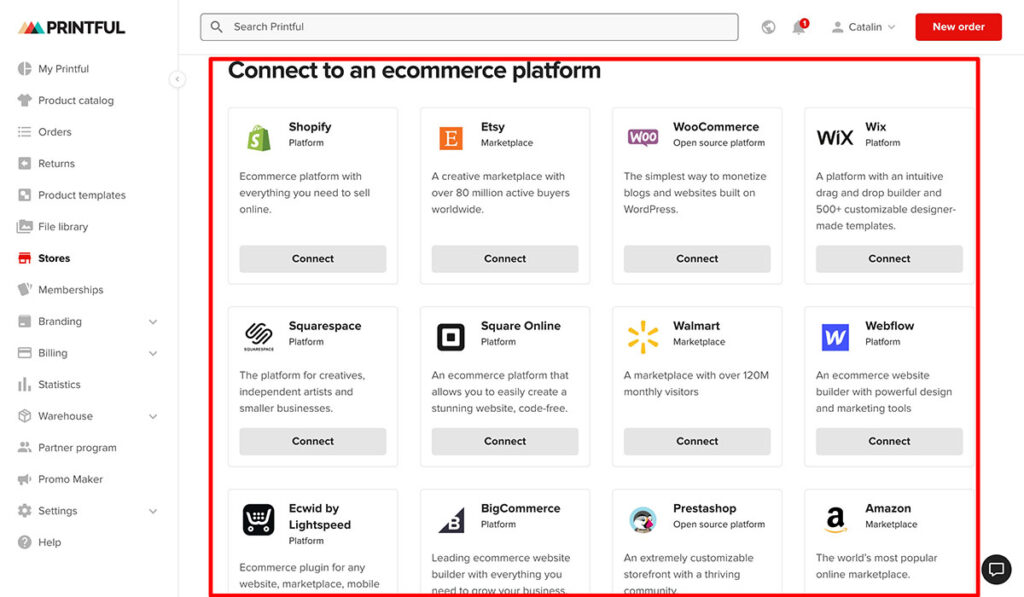
While Prodigi offers easy integrations with Squarespace, Etsy, Shopify, Wix, WooCommerce, and BigCommerce, Printful provides dozens of platforms to choose from.
Alongside all the channels that Prodigi supports, Printful also integrations with options like TikTok Shop, Webflow, Square Online, Storenvy, Ecwid, and Amazon.
If you’re based in the US, you can even use Printful’s “Quick Store” option to create a simple online store and start selling without the need for any integrations or additional platforms.
More sales channels means more options to potentially reach and convert customers, making Printful the more profitable choice.
Ease of Use and Customer Support
The truth is that most print on demand platforms are easy to use. You don’t need any business knowledge or expertise to get started with either Prodigi or Printful.
The process is as simple as creating an account, choosing a product, adding a design, and adding it to your store.
Prodigi might be a little faster to set up than Printful, because it gives you fewer tools for things like tracking analytics, branding, and creating lifestyle mockups.
However, for me, Printful is the more intuitive platform overall. The design tools are more flexible, and even give you options like an AI upscaler so you can enhance the quality of your images with a single click.
Printful’s platform also comes with more in-built support in the platform. There’s an onboarding checklist, and tooltips for every feature you might want to use.
If you need extra support, both companies offer plenty of self-help resources like videos, guides, tutorials, and FAQs.
Printful’s resources are a bit more comprehensive, with more screenshots and in-depth insights to help beginners, but both companies excel in this area.
For direct support from a customer support team, Printful gives you 24/7 chat and email, whereas Prodigi only offers email support. This means Printful can generally respond quicker to any questions you might have.
Plans and Pricing
Pricing and Plans
| Platform | Subscription | Base Product Cost | Paid Features |
|---|---|---|---|
| Printful | Free / $24.99/month | Medium to high | Discounts, branding, free digitization |
| Prodigi | Always free | Low to medium | No premium features |
Printful’s Growth Plan
At $24.99/month (free if you earn $12k/year), the Printful Growth Plan includes:
- 20% off DTG products
- Free digitization for embroidery
- Branded packing slips
- Premium product mockups
- Early access to new features
This is great for stores making consistent monthly sales.
Prodigi’s Pricing
Prodigi’s pricing is simple and free. You only pay for the product and shipping. Many of their base prices are lower than Printful’s, which can help small brands maintain margins — but that may be offset by quality inconsistencies.
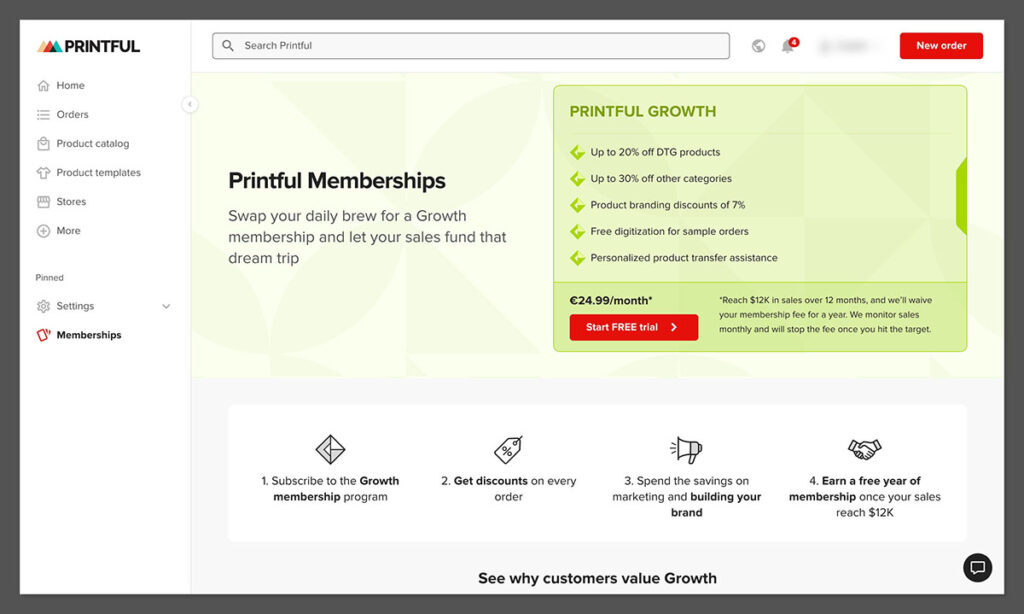
I think this plan is extremely valuable for growing businesses, thanks to extra discounts it offers on products, and branding options.
It even gives you free digitization for your embroidered products, and other bonuses that you simply can’t get with Prodigi.
Sustainability and Eco Focus
Prodigi’s Sustainability Commitment
Prodigi is built around sustainable practices and is likely the better choice for eco-focused brands. Their approach includes:
- Carbon-neutral shipping in many European countries
- Local fulfillment to reduce emissions
- FSC-certified paper and recycled materials
- A commitment to reducing plastic use in packaging
They also publish an annual Sustainability Report outlining progress and new initiatives, which gives them a level of transparency that most competitors lack.
For example, Prodigi publicly tracks and reports on metrics like carbon offsets, packaging materials, and energy consumption — data that many other POD platforms keep vague or don't share at all.
Their local production model also plays a major role in reducing their carbon footprint. Instead of shipping items from one central warehouse, Prodigi works with local print partners to fulfill orders near the buyer's location.
This not only speeds up delivery but also drastically cuts emissions from international shipping. For businesses that want to market themselves as ethical or sustainable, this gives Prodigi a distinct advantage.
In addition, Prodigi actively promotes its sustainability messaging throughout its platform. Sellers are encouraged to share the eco benefits of their supply chain with end customers, which can help build trust and improve conversion rates — especially in eco-conscious markets like Europe, Canada, and Australia.
Printful’s Eco Efforts
Printful has made big strides recently, including:
- Eco-friendly product lines (organic cotton, recycled fabric)
- Reduction of waste via made-to-order production
- Local printing in key markets
- Recyclable packaging for certain items
However, they don’t have as centralized a sustainability message as Prodigi. While many of their practices are genuinely eco-friendly, they aren’t always communicated clearly to end users.
For example, some eco-friendly items are available but not highlighted well within the platform, and their reporting on sustainability progress isn’t always easy to access.
To their credit, Printful has shifted its product development in the past few years toward sustainable materials. Organic t-shirts, recycled polyester, biodegradable phone cases, and other green options are increasingly present in their catalog.
They also use packaging materials made from post-consumer waste and avoid overproduction through their made-to-order model.
Still, if your brand’s values are heavily tied to sustainability, you may find Prodigi’s emphasis and communication in this area more aligned with your messaging.
Printful is catching up, but it doesn’t lead the way here the same way it does with customization and integrations.
Fulfillment and Shipping Speed
Fulfillment Centers and Delivery
| Platform | Avg Fulfillment Time | Locations |
|---|---|---|
| Printful | 2–5 days | USA, Canada, Mexico, Latvia, Spain |
| Prodigi | 1–3 days | UK, EU, US (via partners) |
Both platforms ship globally and print as close to the customer as possible. However, Prodigi sometimes wins on fulfillment speed, especially within the UK/EU. Thanks to its network of local labs, Prodigi can fulfill many products within 24–48 hours, even during peak seasons.
This rapid turnaround is especially beneficial for small to mid-sized stores that don’t want to deal with long shipping delays.
Since many of Prodigi's print partners are located in Europe, delivery times for local customers are often faster than what you’d see from US-based services — a real win for EU merchants.
That said, fulfillment speed can still vary depending on the product and partner. Not every item in Prodigi’s catalog qualifies for next-day production, and delivery times can fluctuate.
In comparison, Printful’s larger infrastructure is built to handle higher order volumes more predictably, which may benefit stores with high traffic or spikes during seasonal promotions.
Printful’s Fast Shipping Program
Printful has introduced a “Fast Delivery” program for selected products, where items ship out in 24–48 hours.
This initiative includes bestsellers like t-shirts, mugs, and hoodies — which helps merchants meet customer expectations in high-traffic seasons like Black Friday, Cyber Monday, or the holidays.
In the US, this is especially useful during Q4. They also offer priority fulfillment for customers on the Growth Plan and allow sellers to add express shipping as a delivery option.
This flexibility lets merchants create a premium experience or charge extra for rush orders, something that's harder to execute with platforms that rely on third-party labs.
Printful also uses regional fulfillment logic, meaning that when possible, it routes orders to the closest production facility to the customer.
This improves speed and reduces costs on shipping — a critical benefit for US-based businesses serving nationwide customers or tapping into Canada and Mexico for cross-border sales.
Prodigi vs Printful: The Verdict
So, which platform should you choose? In my opinion, the answer is easy.
Prodigi might be great if you’re looking for thousands of cost-effective products and ease of use.
However, Printful outperforms Prodigi in almost every other area.
It gives you more customization options, higher quality products, better design tools, more features (like an ad creator), and more sales channels to choose from.
You can even create a simple store with Printful if you’re in the US. Plus, Printful provides customers with better support too.
If you’re looking for the most scalable and robust print on demand platform, Printful is the best choice hands-down.



Comments 0 Responses